
Home
You’re currently viewing our content for All Regions.
You can switch to a different region:
September 22, 2026
A spreadsheet can produce a sustainability number. The harder question arrives when an auditor asks where it came from.
That distinction is becoming more consequential as mandatory climate reporting extends beyond Australia’s largest enterprises and into the mid-market.
Organisations coming into scope under the Australian Sustainability Reporting Standards (ASRS) must collect information from across the business, apply appropriate calculations and explain how every disclosed figure was produced.
Yet many lack a dedicated sustainability team, a central reporting system or the internal capacity required to manage the process each year.
For Liong Eng – Managing Director and CEO of Silverfern IT – this exposes a sizeable gap between the standard organisations must meet and the resources available to meet it.
“There is a group of medium-sized organisations in Australia that are now required to report to ASRS,” Liong shared. “They’re considered to be Group 2 organisations and there are approximately 5000 in Australia.”
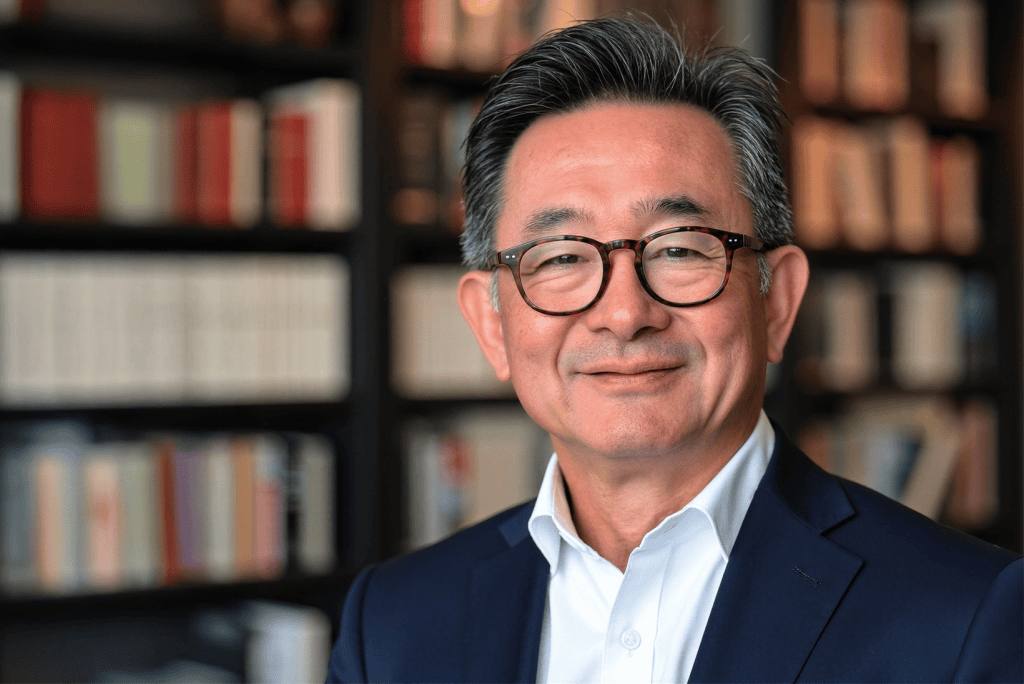
In response, Silverfern IT – a Perth-based managed service provider (MSP) – has launched Ecofern, combining IBM-powered software with sustainability expertise and an ongoing managed service.
The model adapts internal experience delivering enterprise sustainability projects for organisations unable to absorb the cost, complexity and internal workload of a conventional enterprise implementation.
“We have created a solution that will cater for the mid-market which is powered by IBM technology and bundled with our services,” Liong added.
The final climate disclosure represents only the visible output of a much larger data exercise.
Organisations must gather information from utilities, properties, fleets, suppliers and internal systems. They must place that information within the correct reporting boundaries, apply emissions factors and calculations, and maintain the evidence supporting each result.
“So much internal work is required because you need to make sure that data from your electricity supplier or water supplier all comes into the right place,” Liong explained.
“Many organisations still rely on spreadsheets to complete that work. The approach may be familiar and accessible, but it becomes increasingly fragile as the number of data sources, participants and calculations grows. It is prone to error and is a manual system.”
The weaknesses become more visible when external assurance begins.
Organisations must do more than publish a credible number. They must show auditors where the data originated, how it changed and which calculation methodology was applied.
“Having a system that allows people within the business to produce those reports is so important,” Liong said.
“There will also be an external auditor who comes in, wants to look at your report and says, ‘can you actually show me how you got to those numbers?’ With a proper system, all of those transaction trails are kept in an efficient manner.”
Ecofern is designed to automate and centralise that process. The service captures data from internal and external sources, organises it across reporting structures and retains a trail from the final disclosure back to the underlying evidence.
The result is intended to reduce the work involved in producing the report and supporting the subsequent audit.
This is the broader operational challenge behind ASRS because completing the disclosure once will not be enough. Organisations need a repeatable process that preserves their data and methodologies from one reporting period to the next.
Australia’s largest organisations can draw on established sustainability functions, specialist advisers and enterprise reporting technology.
But mid-sized organisations often enter the reporting process from a different position. Responsibility may fall across finance, operations, facilities or health and safety, with employees adding climate disclosure to existing roles.
“In this instance, we provide this offering bundled with our managed services,” Liong outlined.
“That means the business does not need a full-time sustainability lead or consultant working in the organisation. As you can imagine, there are a lot of internal resources required to do this work.”
Ecofern can operate as a virtual sustainability team or extend the capability of an existing internal function. Silverfern IT can manage the disclosure process or provide support across data management, gap analysis, reporting and audit preparation.
The underlying technology offers enterprise-grade reporting capability, but the MSP configures the environment around the requirements of a mid-sized organisation.
“We provide this platform, which is enterprise-class, but we can configure it in a way that will suit the medium size so that it remains cost effective,” Liong continued. “But we still provide all of that domain expertise to help them do the work well. That is really how we address it.”
This distinction sits at the centre of the Ecofern proposition.
The MSP is not attempting to reduce the reporting standard or replace the underlying work with a simplified spreadsheet. It is changing how the required capability is delivered.
Enterprise software can be configured around the data, reporting and audit functions the organisation needs. Silverfern IT then supplies the implementation experience and sustainability knowledge that may be missing internally.
“It is so important to really look at what businesses want,” Liong emphasised.
“Customer requirements, although a lot of them are very similar, can be driven by different reasons in different markets. The enterprise could be driven by a few other things. The challenges and requirements are all the same, but they’re driven by different reasons behind the scenes.”
Although Group 2 organisations provide an immediate market, Liong expects Ecofern to support Group 3 businesses as reporting requirements move further down the market.
“The Group 3 can come from Ecofern because this service can go even further down – the potential is significant,” he added. “The opportunity also spans industries rather than concentrating on one vertical. We’re talking about across the board. All different sectors.”
The reliance on spreadsheets creates another risk: the reporting process can become dependent on the knowledge of one employee or consultant.
That individual may understand where source information sits, why particular calculations were used and how reporting decisions were reached. If they leave, much of the organisation’s sustainability history can leave with them.
“You’ve got people who come and go within the organisation,” Liong highlighted.
“The corporate memory of that data or information leaves with the people who go and work for somebody else. Having a system in place keeps that IP, which belongs to the company, within the environment.”
The same problem arises when an external consultant completes the disclosure through a proprietary spreadsheet or manual process.
“The challenge for the client is that the IP doesn’t stay with the client,” Liong added.
“It stays with the consultant because they do the work. Next year, you have to ask them to come in and they will charge you another big bill. If an auditor comes in to audit your report, you need to bring the consultant back in to provide all that information. There are a lot of additional costs.”
By centralising the source data, calculation methods and supporting records, Ecofern aims to keep that knowledge within the customer’s environment.
Silverfern IT remains available to support the process, but the customer retains visibility of how the disclosure was produced. When an employee leaves, the company does not have to reconstruct its reporting logic from the beginning.
“You may have an internal resource, but you always face the challenge: what if he or she leaves? What are you going to do about that? The IP leaves with them,” Liong questioned.
“In this case, we are there. We will help you, and then you can bring your new people in. We can train that person, so the continuation is there. I think that is really key.”
Sustainability reporting therefore becomes an organisational-memory issue alongside a regulatory and data challenge.
The disclosure must remain understandable even as employees, advisers and auditors change. Otherwise, an annual reporting obligation risks becoming an annual reconstruction exercise.
Ecofern builds on a sustainability practice Silverfern IT has developed across commercial organisations, universities, infrastructure operators and government agencies.
The MSP’s largest current engagement involves on-boarding 61 Western Australian government agencies onto an enterprise sustainability platform.
“By the end of October, we will have achieved that objective,” Liong said.
Silverfern IT is now applying that experience to a wider commercial market as sustainability drives the company’s expansion beyond Western Australia.
The business has established a presence in Sydney, is developing opportunities in Melbourne and has added resources in India across data analysis, Power BI, software connectors and development.
“Sustainability is fuelling the expansion,” Liong added.
“We’ve extended our resource base to India now. We’ve got about seven or eight people there doing data analysis, Power BI development, building connectors and development work.
“They have great knowledge and a great skill set, and they make us a lot more competitive in the Australian market.”
The route to market will also include partnerships.
Silverfern IT can provide Ecofern as a specialist sustainability service without becoming the customer’s primary technology provider. It can also work alongside asset-management companies, technology providers and consultants that hold established client relationships but lack sustainability expertise.
“We are very happy to work with like-minded business partners,” Liong said. “Partners have customers that they know have those challenges, and they want to offer value-add. This is where we can come in and work with them.”
One recent meeting involved a large asset-management provider seeking support for customers facing sustainability requirements.
“They do a lot of asset management for their clients, but they don’t have expertise in the sustainability area,” Liong shared. “They want us to work with them.”
That collaborative model reflects the breadth of the reporting challenge. ASRS cuts across finance, governance, operations and technology. Few mid-sized organisations or service providers will possess every capability internally.
Ecofern is Silverfern IT’s attempt to fill the gaps without imposing the full cost and complexity of an enterprise implementation.
For Liong, the test is whether that model delivers the required outcome for organisations now confronting enterprise-grade disclosure expectations.
“Medium-sized organisation needs those outcomes,” Liong summarised.
“We focus on that. How are we going to get there? We’re using enterprise-class software and configuring it for smaller sized businesses. Enterprise software can do a lot of things, but we can configure it to do only the part they need. That is what we are doing.”
Inform your opinion with executive guidance, in-depth analysis and business commentary.

