
Home
You’re currently viewing our content for All Regions.
You can switch to a different region:
September 2, 2025
“We always get knocks on the door from businesses wanting to acquire us. But then they go, ‘wow, we didn’t realise you were that big?’ Then the conversation switches to whether we’d like to buy them instead.”
A throwaway anecdote that offers unique insight into the psyche of an entrepreneur comfortable out of the spotlight yet committed to scaling great heights in market.
Because even though two mountain peaks illustrate the logo of Olympus Technology Services, Paulo Mpliokas has built an iceberg.
“You know, there are perceptions around how a business owner should be, how they should act and how they should behave,” Paulo shared.
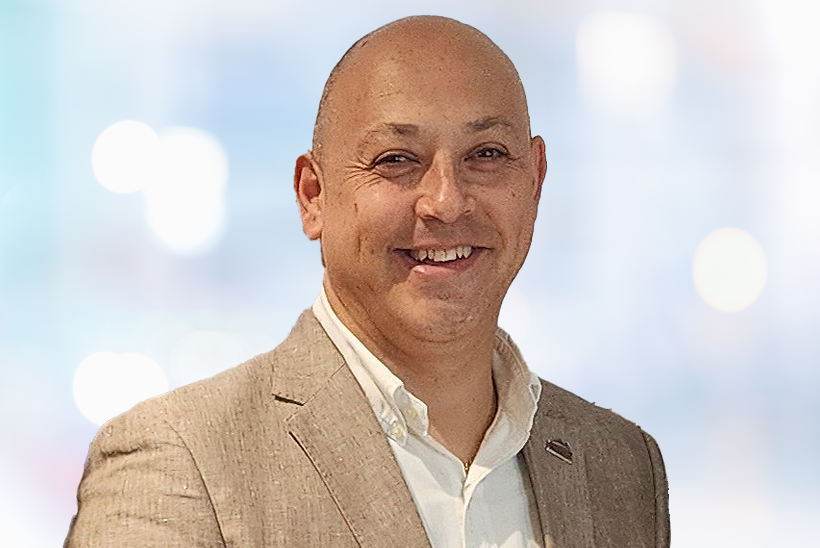
It’s hard to put Paulo in a box.
On the one hand, a high-flying entrepreneur who has built a $25 million business from the ground up – powered by self-confidence and seduced by struggle.
On the other, an occasional imposter prone to random bouts of embarrassment – How did I get here? Why would anyone want to hear my story? Am I adding value?
“There’s a fine line to carving out your own niche, your own personality and your own presence,” Paulo continued.
“Are you loud and obnoxious or just confident? Are you under the radar or missing in action? I’m self-confident but I don’t show it. I don’t go out there with arrogance.”
It’s that personality blend which has powered the engine room of Olympus Tech for the past nine years.
Not to be confused with the age-old analogy of rocks, pebbles and sand however, this is about cold hard discipline. Major goals and mundane tasks.
“I’m pretty stoic at the best of times,” Paulo assessed.
“When starting out, do the difficult things first and make sure you get them done. Lock them in early because others will always choose the easy path and when they face difficulty, they won’t be able to break down that door.
“Make your bets, decide what you want to be known for and then go all in.”
The story of Paulo and Olympus Tech began the hard way – muscling through mud on a march to the mountaintop.
In July 2016, the idea of scaling a start-up was an alien concept. This was a company man housing more than 15 years of industry experience, following sales management roles at Ingram Micro, DXC Technology, Cellnet Group, Harris Technology, Triforce and A2K Technologies.
So when the time came to part ways with Blue Central – a managed service provider (MSP) recently acquired by Nexon – the natural choice was to find a role at either a vendor, reseller or distributor within the technology channel.
Dust yourself off, go again and stay in your lane. Stick to what you know.
“There was a conversation about whether or not I’d be retained and the sentiment was, ‘hey, you’re really expensive and this isn’t the market that we’re in so what do you want to do?’,” Paulo recalled.
“My response was, ‘let’s call this what it is, here’s my resignation’. At that point, I was considering all of the normal options that someone with my experience would do.
“But one of my colleagues, Willie Lusted, was a little further on in his career and suggested, ‘why work for someone else when you can work for yourself?’ Well, yeah, that’s great but it’s not as simple as that.”
Both invested capital and agreed on a co-founder dynamic that worked. Paulo was the “enthusiasm and energy” while Willie provided the “experience” – ensuring the business remained on the right track during the early stages.
“We decided early on to do the hard yards first,” Paulo explained.
In short, that translated into the pursuit of:
‘Do the hard yards first’
From a customer standpoint, Olympus Tech prioritised placement on government panels from the outset and focused on commercial and enterprise accounts rather than small and medium sized businesses (SMBs).
There was an instant refusal to rely on transactional deals and instead lay the foundations – brick by brick – for high-value engagements as a boutique player.
“We started in July and it took us until September to get an order,” Paulo said.
Not to forget a customary spanner in the works given that Nexon made the play of contacting all previous customers advising them not to buy from this new company, Olympus Tech.
“Yeah, thanks again for that, awesome advertising, right?” Paulo laughed.
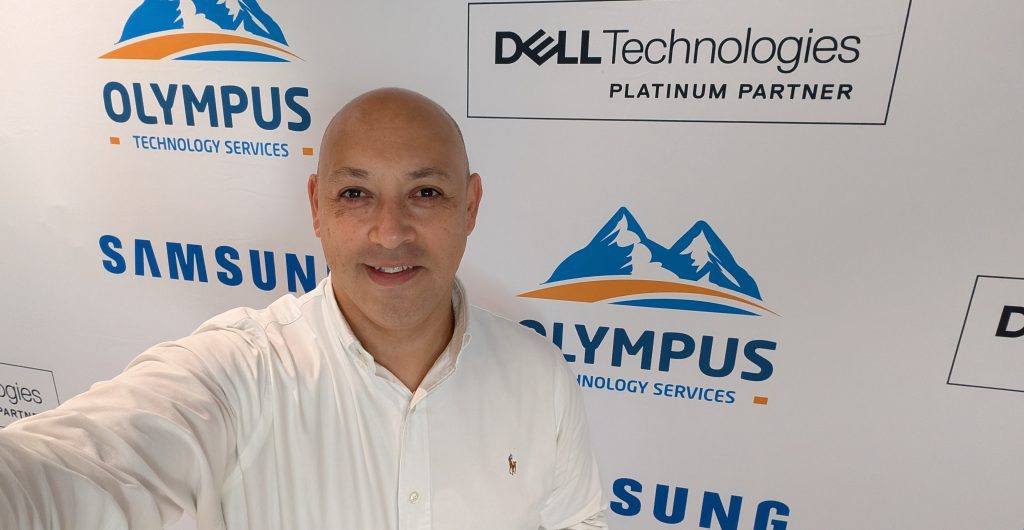
In every aspect, this baby of a business had front-loaded its fight for survival. There was no low hanging fruit, easy wins didn’t exist and competition was already fierce.
“The first part was knowing who to talk to and being able to knock on the right doors,” Paulo added.
“But getting through the process of procurement and vetting before then making the cut was tough. To do that, we built relationships beyond the buyers to include people in procurement and corporate strategy.”
The motivation was simple – to prove that this wasn’t some two-man band outfit working from a garage at home. Even if it was.
“You had to find the answers,” Paulo noted. “Are you a legit business? Can you stomach an order of $100 million, $200 million or $500 million? Are you able to scale with us?”
When pitching to customers at the top end of town, the capacity to actually take on the business and manage that business was without question the most critical requirement.
While an element of “smoke and mirrors” was deployed on occasions, Paulo persevered by taking bite-sized chunks out of large-scale customer accounts – “take lots of them, make them rapid and then build on it.”
In other words, the only way to prove it – to borrow a phrase from Nike – is to Just Do It. That resulted in no salaries taken from the business and no staff employed.
But every order resulted in more cash flow which equalled more money and enabled the business to increase credit to then take a “bigger bite of the pie.”
“For a couple of years, that was the gig,” Paulo said. “It was a hustle to get an order, manage that order and hand hold it through to the end. Then move onto the next one and start again.”
Every deal felt like the first but equally could have been the last. An entrepreneur always on edge yet somehow finding the motivation to deploy maximum effort to keep moving forward.
“It takes a lot out of you,” Paulo admitted. “But if you can accomplish something difficult then the other stuff obviously becomes easier, right?
“In business, if you can tackle those hard engagements with clients and make it work then that’s a much bigger accomplishment than working with a mate who will forgive you for all of your mistakes.”
After buying out Willie to become the sole owner of the business, by the end of 2018, it was all down to Paulo.
“I brought on a couple of mates, my nephew and his mate, some young kids and my brother was working with me for a while,” Paulo said. “It was literally a village housing the family vintage.”
By early 2019, that’s when momentum shifted.
“People were throwing all of these milestones in front of me,” Paulo recited.
“Oh, it’s going to take a while to reach your first million.”
“Well, we’ve done that.”
“Oh, but it’s even harder to reach $5 million.”
“Yeah, we’ve done that too.”
“Oh, but good luck trying to hire your first person.”
“We have 10.”
“We were running very fast, meeting all of these milestones and sort of lapping ourselves faster than what most people were giving us credit for,” Paulo said.
After pushing through the early pain, Olympus Tech was beginning to reap the gain.
Those disciplined early days had elevated the business to a trusted advisor status which came into sharp focus during COVID-19, when outsourcing credibility and value came under greater scrutiny.
Customers removed contractors, reduced third-party risk and decreased spend in non-essential areas which in turn significantly shrunk the list of providers in each account.

In tandem however, a core and select group of trusted partners were tasked with continuing operations and mission-critical activities.
“We had some fantastic opportunities inside our corporate and enterprise accounts, as well as with the NSW Government,” Paulo recalled. “Our initial approach had held us in good stead because we had already overcome the challenging hurdles and had all of our foundational work and trust in place.”
The decisions made in July 2016 were validated by December 2020 as the business doubled the number of staff and reached $15 million in revenue.
‘Be meaningful’
One of the early lessons learned was that markets are fickle and loyalty is subjective. The assumption that long-held vendor relationships at a personal level would yield support in this new venture was logical but naive.
“Whether we like it or not, volume talks in this market,” Paulo clarified. “You can create the best million-dollar business ever but you’re still only going to be a million-dollar business.”
As outlined by Paulo, the ecosystem across Australia is akin to a pyramid – very rigid and very well defined. Support is either based on volume or longevity linked to number of customers or certifications.
“Overcoming that pyramid is a challenge for any start-up today, especially if you lack a clear sense of direction,” Paulo cautioned.
“We thought we would work with some vendors but it didn’t happen and we ended up working with those that were more easy to engage with, such as Dell Technologies.”
Upon that realisation, Paulo acknowledged the importance of Olympus Tech becoming an attractive partner of choice in the other direction – whether to secure tier-1 vendor partnerships or access distribution credit.
“You can’t just be a drop in the ocean,” he advised. “You have to position yourself to secure the best possible outcome.”
Regardless of the direction, the approach is identical. Whether end-user focused at a customer level, or back via the channel with vendors and distributors – “be meaningful.”
Meaningfulness also extended to market fit.
Olympus Tech was born at the height of public cloud adoption in Australia with Amazon Web Services (AWS) and Microsoft stealing a march on the market due to accelerated demand.
As with all early-stage technology, the pendulum swings hard and fast at the start. Rhetoric is off the charts and obituaries are written without delay.
At a time when every second word was cloud, how do you best position yourself for market success? ‘Hey, we’re the infrastructure guys.’
“That was our line because we were committed to selling infrastructure which meant building a data centre, migrating and modernising servers and focusing on core storage, network and virtualisation capabilities,” Paulo added.
Naturally – as is the annoying habit of the industry to label different thinkers as dinosaurs – the ridicule soon followed. This is a declining market, you’re playing in the wrong space.
“Great, that means everyone can get out of the market and we’ll be the only ones left standing,” Paulo stated at the time. “We made a decision on how we can best add value and we stuck to that decision.
“Fast forward to today and businesses are bringing data back from the cloud so demand is back to modernise data centres.”
In the era of artificial intelligence (AI), modern infrastructure requirements are evolving at pace as organisations increase investment in low-latency networks, high-performance compute and scalable storage.
“All of the things that we’ve always been doing has come back into fashion,” Paulo said. “Technology always progresses but the fundamentals remain the same.”
‘Sustainable, repeatable, meaningful’
Today, Olympus Tech has 100% equity in tact and operates as a $25 million business with a “clear line of sight” to $30 million.
“There’s no magic number that we’re aspiring to,” Paulo confirmed. “We are on track to reach $50 million but who cares? It doesn’t really matter.
“It all goes back to being meaningful in market, whether that’s reaching a certain size or delivering a certain value.”
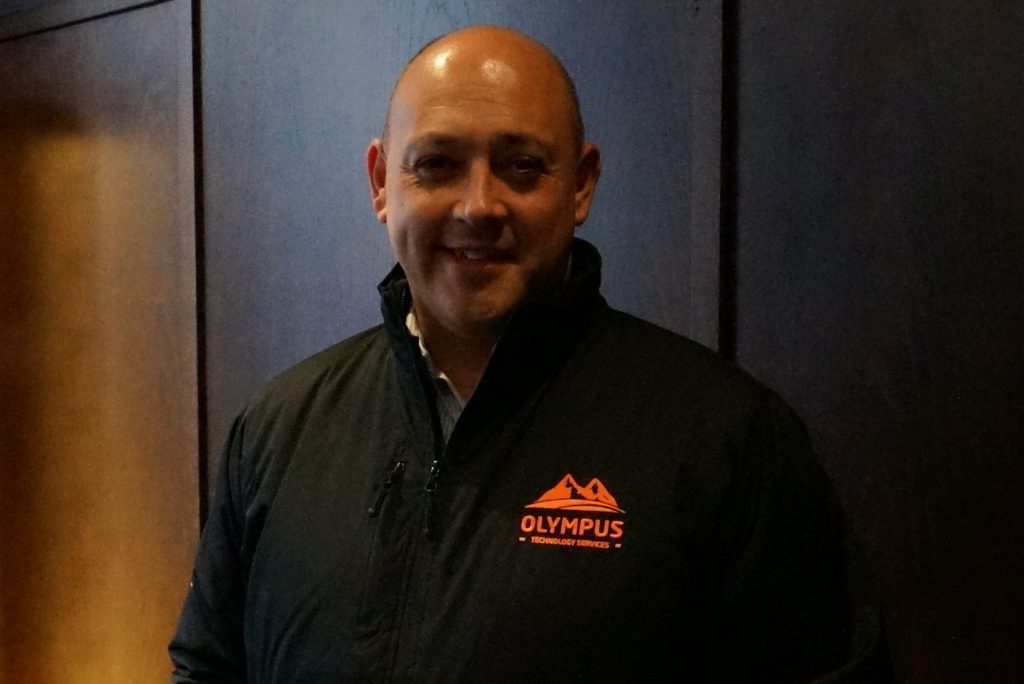
For Paulo, revenue is one measure – as is technical capability, customer depth and number of projects. All metrics add up to create meaningfulness in market.
“It has to be sustainable, it has to be repeatable and it has to be meaningful,” Paulo said.
Sustainability as a business is the first step. For example, building a revenue matrix in which $10 million is recurring, $10 million is project work and $10 million is product procurement.
“I know that split is sustainable and will have legs for a number of years,” Paulo calculated. “At a high level, that’s kind of the panacea – a third, a third, a third.”
Once that level is reached, repeatability kicks into gear and scale becomes a factor. Just keep feeding the business and growth will materialise in a rational and realistic manner.
“We don’t take that lightly,” Paulo added. “There’s been a lot of water under the bridge but I do feel like we’re still at the start, even if it has taken nine years to get to this point.
“We’ve built a foundation and now we’re expanding into Victoria, ACT and Queensland. We’re starting to spread out across the eastern seaboard which allows the new additions to our team to stand on our shoulders and build from there.”
Growing up in the 1970s, Paulo is the son of immigrant parents who ran a milk bar in West Ryde, Sydney.
The family-run convenience store was open 364 days a year – except Good Friday – and was the centrepiece of activity.
“There was no work-life balance, it was just life,” Paulo shared. “That’s the stance I’ve taken to my own career – it’s not something that defines me but it represents a very large part of who I am.”
Looking ahead, Paulo sees opportunity in a market entering a fresh wave of modernisation – the projects deployed during the pandemic are due for upgrades.
“The outlook isn’t quite roses, unicorns and rainbows but it’s as much in our own hands as it can be,” he summarised. “If we can be that destination technology provider that is boutique and meaningful then everything becomes worthwhile.”
Almost a decade on, Paulo is still motivated to build a business in his image and that of his wider team. Hard working, fair and willing to put in the effort – laced with humility.
“Remember, perfection is the enemy of good,” he warned. “It’s never finished so just keep iterating and growing. Never be afraid to move, shift and adjust.”
Inform your opinion with executive guidance, in-depth analysis and business commentary.

