
Home
You’re currently viewing our content for All Regions.
You can switch to a different region:
September 15, 2025
You can learn a lot about the character of a person when in deep conversation, open-ended questions triggering comprehensive answers.
For 45 minutes – in a boardroom offering panoramic views of Sydney, some 31 storeys high – Laura Malcolm was methodical and measured.
The topic was artificial intelligence (AI). Yet there was no exaggeration, no delusions of grandeur and no lazy headline statements.
Opportunities were highlighted, challenges were acknowledged. Areas of success spotlighted, debilitating roadblocks revealed.
“I honestly believe that 2025 is a turning point from an AI perspective,” outlined Malcolm, speaking as Managing Director of Australia at Datacom. “That’s because of the agentic element at play, more so than anything else.”

All other elements dominating news headlines – such as Microsoft Copilot and ChatGPT – are “welcome” in the sense that large language models (LLMs) have entered everyday life but on balance, the “step change” is all centred on agentic AI.
“For example, legacy modernisation has been such a pain point for almost every organisation for many years and now, agentic AI is beginning to crack that,” Malcolm explained.
“When I started my career in technology during the late 1990s, it was because I could see the way that computers could make our lives better. Looking back over that time period, we’ve seen billions of dollars spent with some benefits delivered and some not delivered.
“But the acceleration of agentic AI offers a true step-change opportunity in productivity that the market has been trying to unlock for decades. That’s what’s most exciting for Australian businesses today.”
For Malcolm, a wealth of demonstrable examples outlining the value that agentic AI now exist across public and private sector organisations. Such a shift in adoption has occurred within the past six months as Australian organisations realised the benefits being delivered by the rest of the world.
In addition to the cost saving impact, Malcolm also noted the potential of agentic AI to “transform” government infrastructure at speed and scale.
“We’ve been on that journey for quite a few months, especially in the public sector,” Malcolm said.
“It’s beyond the pilot phase and now into the execution work. It’s not all done and dusted in terms of being finished and delivered but we’re well on the way which is very exciting from a state government perspective.”
Specific to government, leveraging AI to drive modernisation continues to resonate as agencies accelerate the transition away from legacy systems and infrastructure.
“There’s a significant amount of government interest in this space because the use cases are emerging,” Malcolm added. “Anything that can speed up legacy modernisation cheaper and faster than before is certainly appealing.”
Meanwhile on the commercial side, interest is dependent on tailored use cases and opportunities. Clear growth areas exist in areas of low hanging fruit with the adoption of conversational AI and chatbots accelerating – customer service and support contact centre segments are primed for this type of transformation.
“Those kind of projects are certainly moving along,” Malcolm noted. “Plus anything to do with the security and the underlying infrastructure to enable it to move forward.”
As outlined by Malcolm – who was appointed to lead the Australian business in November 2024 – the AI revolution is happening faster than many organisations anticipated.
This has been fuelled by agentic AI that can solve problems and, in the right environments, augment – or replace – workers to drastically reduce project timelines and drive productivity.
“Tangible evidence outlining the benefits that AI can deliver is also stacking up,” Malcolm expanded.
According to IDC findings – The Business Opportunity of AI – for every $1 a company invests in generative AI (GenAI), the return on investment is $3.7x.
“At Datacom we’re embedding AI right across our business, to help our own team find better ways of working and to help deliver projects for our customers that – without AI – could take weeks or even months longer and might be prohibitively expensive in the current economic climate,” Malcolm added.
“Our software engineering team, for example, is in the middle of a significant project for a large Australian organisation, helping to update its legacy systems and applications.
“Rather than taking the usual developer-led approach to modernising these systems, our engineers are taking an AI-led approach, which is seeing them deploy AI agents to write up to 70% of the code – all under the governance of our human experts – and leading to cost savings of between 30%-50% for our customer and a significant reduction in time spent to complete the project.”
Organisations are also rolling out AI agents to rapidly reduce the time to complete tasks that would have previously taken a human 5-10 minutes to finish. That is now being crunched down to a minute.
“It takes two weeks to build the AI agent and that then delivers 12 weeks of time saving which is a very good and real use case,” Malcolm explained.
Beyond that, Datacom recently selected the ServiceNow AI Platform for a service delivery overhaul, enabling the business to “enhance and transform” customer experience levels on both sides of the Tasman.
With the first phase of deployment already underway, plans are in place to enhance functionality and migrate customers to the new ITO offering throughout 2025, which includes the provision of training, education and support.
Through the use of ServiceNow AI agents, the migration is designed to act as a “critical enabler” in enhancing service experiences, improving productivity and efficiencies, strengthening security and resilience alongside increasing digital agility and future-proofing.
Overcoming common challenges, showcasing AI potential
According to Moxie Research, 87% of Australian businesses will allocate additional budget to AI projects in 2025. In addition, 78% will build a cross-functional team to set AI strategy while 69% will define clear AI business objectives.
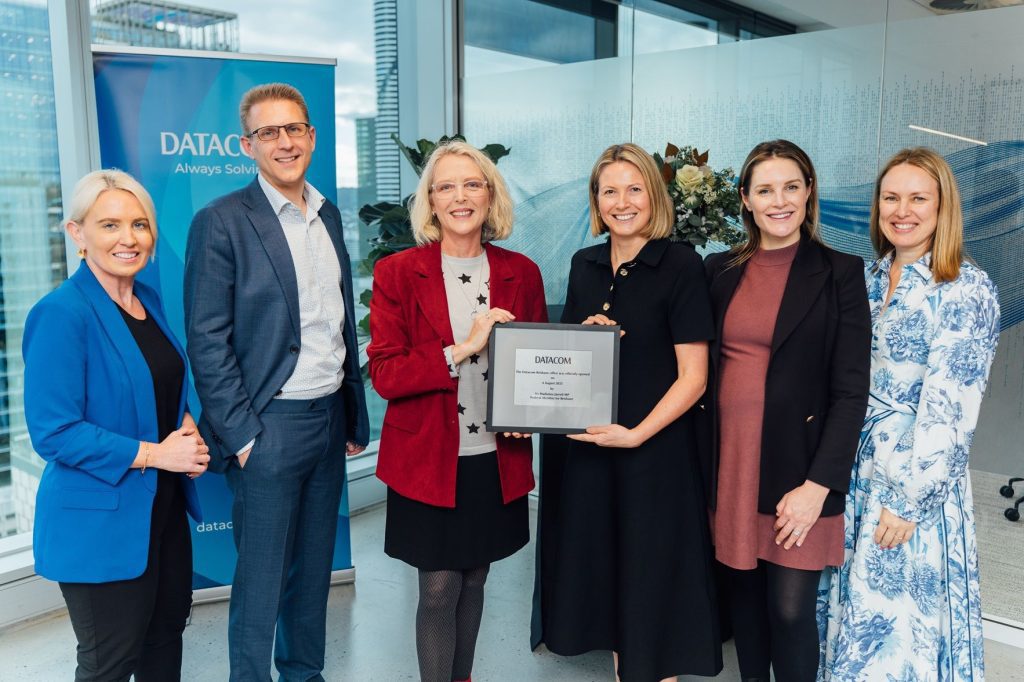
“One of the key differences with AI is that people want to see it, to believe it,” Malcolm added.
“Rather than the theory of the project being enough, the value now has to be shown which is why our first-hand experience of transforming ourselves from a service delivery perspective positions us well to have those conversations.”
Based on Moxie Research – which surveyed over 200 organisations across Australia in January 2025 – 84% of Australian businesses are currently running internal AI working groups to shape strategy and drive adoption.
While progress varies based on maturity, the key benefits of cross-collaboration between business units is to primarily drive efficiency and process optimisation (59%). This is alongside creating innovation and a competitive edge (51%), plus enhancing customer experience (50%) and kick-starting change management and integration processes (49%).
“We view AI as the showcase and the showroom,” Malcolm said.
“Here’s the showcase for AI in terms of the outcome and here’s the showroom which involves us bringing customers in to show them how the technology really works under the surface. It’s a different model and approach in that sense.”
Regardless of AI adoption appetite, the majority of technology leaders are taking a proactive role in laying the technical groundwork in the background.
Should a proof-of-concept (POC) need to be spun-up at speed and potentially at scale, IT environments must be primed and ready to deploy.
Based on Moxie Research, that translates into a commitment from CIOs and CTOs during the next 6-12 months in Australia to:
Within this context, the key pillars underpinning AI strategies in Australia are:
Despite the direction of travel, more than half of businesses across the country (52%) currently lack “modern, scalable data infrastructure optimised for AI”. Limitations are commonplace and capabilities in some instances can be described as “basic” at best.
Continuing this thread, should Australian organisations have their ‘house in order’ before embarking on AI projects?
“It depends on the use cases,” Malcolm clarified.
“But I do think some organisations are a little crippled by fear on the data front. It’s important to be aware of the risks and understand how to leverage AI safely and securely.
“Equally, use cases already exist that any business could utilise and much like any technology project, the key factor is in identifying the risks and mitigating for them by placing in guardrails.”
Malcolm said Datacom has “done enough of the groundwork” at government and enterprise levels to satisfy the concerns of many businesses. In other words, the proof is in the pudding and scepticism is waning.
“Yes, we have certainly turned a corner,” Malcolm confirmed.
“I also think one of the advantages of GenAI is that the investment – assuming you’ve got the foundational elements covered – is relatively low from a use case perspective.
“Take chatbots and conversational AI, that’s at a relatively low spend compared to what it would have cost previously to build. But cost does depend on the right foundations being ready.”
Prioritising productivity, skilling up on AI
Earlier this year Microsoft released its Annual Work Trend Index for 2025 and 53% of business leaders identified the need for productivity to increase, but the Index also found that 80% of the global workforce lacked sufficient time or energy to do their job.
To bridge that capacity gap, over 80% of leaders are expecting to use digital labour to expand their workforce in the next 12 to 18 months.

“Knowing all of this, it should be cause for concern that many Australian businesses are yet to implement any form of AI beyond basic automation or widely available GenAI tools,” Malcolm observed. “Australia is lagging.”
Drawing on research that Datacom commissioned with YouGov, Malcolm stressed that despite the compelling benefits of AI – and evident use cases emerging in the government space – many Australian workplaces are not taking steps to implement or prepare their workforce for what is coming.
The research results – drawing on surveys of more than 2000 Australian senior managers and employees – show that while nine in ten (91%) of employers encourage employees to use AI for regular work tasks, just 50% of employees are making use of AI in their day-to-day activities at work.
Significantly, despite employers talking about encouraging employees to use AI for regular work tasks, it’s evident that organisations are not backing that up with the necessary skills training needed to support genuine AI adoption, nor with the change enablement that is needed to drive successful AI uptake in Australian workplaces.
Just one in three (33%) of employees have received any technology skills training in the past 12 months.
Organisations that are frustrated about their workforce failing to use AI should take note that nearly half (49%) of employees who were not using AI for day-to-day work said they were interested in learning how to use AI to carry out day-to-day work activities.
“We are seeing the benefits of AI crystallise, but it is not a question of the rewards coming to those who wait,” Malcolm added. “Those organisations that wait will be left behind.
“We need to embrace AI by rapidly identifying the biggest opportunities, up-skilling and re-skilling, and committing to the change enablement practices that will drive adoption and maximise the joint capabilities of humans and machines working together.”
Building on this, Malcolm said organisations must “educate, enable and empower” workers with AI and be intentional about the challenges and opportunities that need to be addressed.
“The good news is we have a generation of emerging AI natives ready to help,” Malcolm said.
“There are obvious issues that we need to address: the safe, secure and ethical adoption of AI, ensuring AI uptake is matched by AI governance, planning around displaced jobs and critical training and up-skilling, equity and access to the right technologies. But the answer is not a ‘watch and wait’ approach.
“The long-promised benefits of technology have arrived. It is up to all of us to step up and make sure our organisations and the people we serve have access to those benefits.”
Once again drawing on an internal example, Malcolm referenced that a “clear level of expectation” exists within Datacom that in-house up-skilling and re-skilling is fundamental to future AI success.
In parallel, the organisation is also advocating experimentation among workers to complement structured forms of learning.
“We’re big believers in curiosity and people trying things out,” Malcolm shared.
“This is such a fast moving space so it’s challenging for any type of ongoing training being delivered to keep pace. The people advancing the fastest are the people out there in market using the technology which has represented a shift in approach in how we navigate this.”
In other words, Malcolm acknowledged a period of “getting her head around” how best to balance curated training courses with real-world learning out in the field.
“It’s more the mindset,” she expanded. “That commitment to continuous learning and in the AI space, you can learn just as much through your personal life than through your work life these days.”
This is in addition to the role modelling of leaders. Malcolm cited how leadership meetings are now taken up with experimentations around GenAI and knowledge sharing among peers – a practice which flows down into the wider organisation.
“It’s a fantastic way of sharing and learning across our national business,” Malcolm advised. “We have multiple chat groups sharing use cases and experiences which is a phenomenal source of constant intelligence.”
Honouring heritage, accelerating AI
Malcolm took the reins as Managing Director of Australia at Datacom in November 2024, drawing on extensive experience spanning large consulting and technology organisations in Australia, Asia Pacific, UK and EMEA.
Malcolm’s most recent role was as General Manager of Avanade, leading a team of more than 800 professionals for the IT consulting and services company in Australia.
Prior to this, Malcolm was the Growth and Strategy Lead for Avanade Growth Markets, spanning Australia, Japan, Greater China, Southeast Asia and Brazil. This was in addition to holding the positions of UK Digital Lead, COO across UK and Ireland (UKI) and as a Global Advisory Practice Lead having initially joined the company as CTO.
Malcolm has also held roles with Oracle, Capgemini, IBM and EDS, and several smaller technology start-ups.
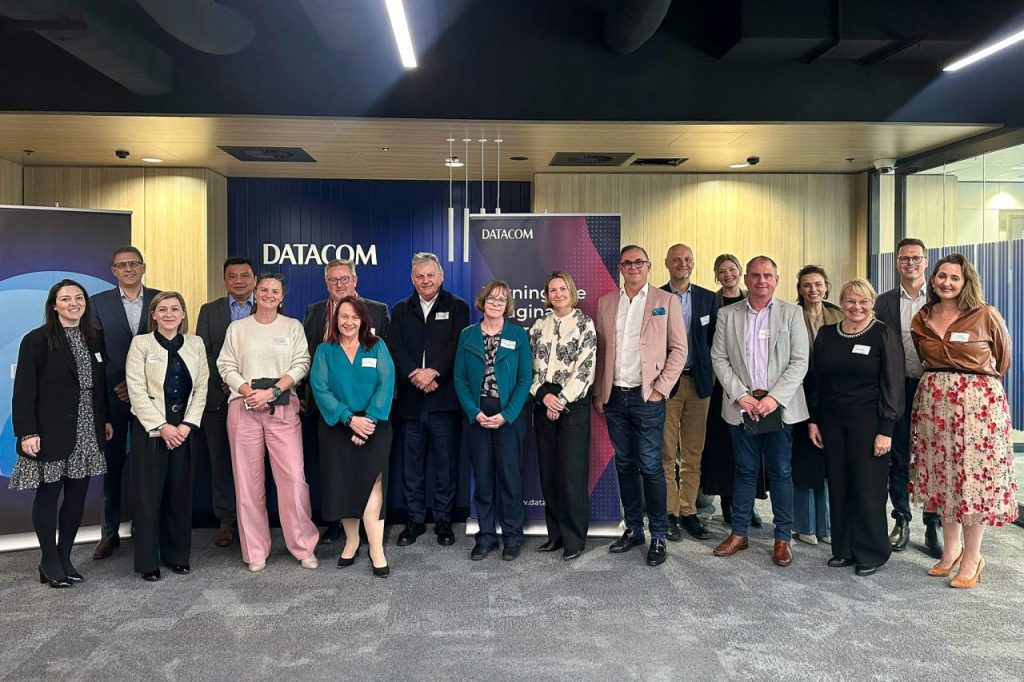
“There’s been a couple of big differences during my first 10-11 months,” Malcolm shared.
“One is the local ownership and working with a privately held board – the levels of engagement that we have and the ability to set our own direction and strategy. Not many organisations operating in Australia have that privilege which is a real differentiator and something I’m enjoying.”
But for Malcolm, such a dynamic comes with “great responsibility”.
“That’s very different and valuable,” she continued.
“The other difference that struck me most when first joining was the engineering excellence that is deeply inherent within our organisation. Perhaps that isn’t as well recognised externally but we have something very special here and we pride ourselves on deep technical excellence.”
In the world of AI and cyber security, never before has profound technical expertise carried such weight.
“The third is what we always talk about… always solving,” Malcolm explained.
“Having a truly customer centric mindset and not coming in with a particular agenda, solution or vendor. Rather, what’s the very best solution for this customer across the dimensions of what is important to them – whether that be technical, commercial or operational.
“I’ve never really liked the term agnostic because it’s been overused in our industry but that is our position.”
In looking ahead, Malcolm cited a “significant growth opportunity” for Datacom in Australia which builds on delivering breadth. Yes, end-to-end capabilities exist but market focus is also centred on delivering more value rather than surface-level engagements.
For example, a strong footprint in government is naturally extending into the commercial space as opportunities to engage more strategically emerge.
“How can we actually help our customers maximise the value that we can bring to them?” Malcolm asked. “That involves moving beyond traditional service delivery to taking on the surrounding work and projects, then up to consulting and advisory. That’s all important.”
Considered as a “foundational piece” of the growth puzzle in Australia – across both government and commercial market segments – Malcolm also recognised the importance of local talent in making this vision a reality.
That involves having the “right people in the right places” to support customers and drive local community engagement, linked to national capabilities and expertise.
“In the commercial space, it’s about focus and not spreading ourselves too thin,” Malcolm said. “There’s vertical specialisations that we are very differentiated in, as well as AI modernisation and certain sectors that we are targeting scale.
“There’s the balance of having the right people that are close to organisations and working strategically. Plus the consistency in terms of delivering services nationwide and expanding our strengths, such as our cyber security reputation in Western Australia or infrastructure product expertise in Queensland.”
In assessing the market landscape, Malcolm acknowledged that a “good amount” of consulting talent is currently available which dovetails into the customer facing element of the Datacom strategy. By extension, the focus is on people with deep customer connections and industry knowledge at state levels.
“There’s more people today looking to consult and contract which is an interesting dynamic,” Malcolm noted. “There’s good talent available and we’re focused on getting the right people focused on the right customer conversations across the local states.”
In tandem, having a “robust market engine” to help maximise the talent on show is critical. Market opportunities such as the Brisbane 2032 Olympics and Paralympic Games are therefore on the radar and under consideration.
“What does that mean for organisations in Queensland?” Malcolm asked. “How can we help businesses along that journey? What areas do we need to focus our teams around to capture that opportunity?”
Whether it be AI adoption or advisory acceleration, the market forces reshaping Datacom in Australia are in play and moving at pace. But don’t confuse change with cutting loose from heritage.
“This isn’t about changing who we are,” Malcolm qualified.
“We still need to have technical excellence, engineering excellence and strong service delivery. We just need to package all of that up as a customer outcome and help move businesses from A to B in the best way.”
Inform your opinion with executive guidance, in-depth analysis and business commentary.

