Home
You’re currently viewing our content for All Regions.
You can switch to a different region:
February 3, 2026
“I could feel my legs but they wouldn’t respond. From the airport, it was paramedics, neurosurgeon, emergency and medical advice to relieve the pressure.”
That was the surreal sensation engulfing Joe Craparotta as wheels touched down in Sydney, following a long-haul business trip to Dubai. Those 15 hours at a cruising altitude of 40,000 feet hammered the final nails in the coffin of an issue which started a few months prior.
“I was playing football and suffered a bad tackle which required emergency treatment,” Joe recalled.
“I recovered but that started the bulging of my L4-L5 disc into my spinal canal. It wasn’t so much the pain, more the discomfort but I pushed through for about six months, through to the end of year and Christmas.”
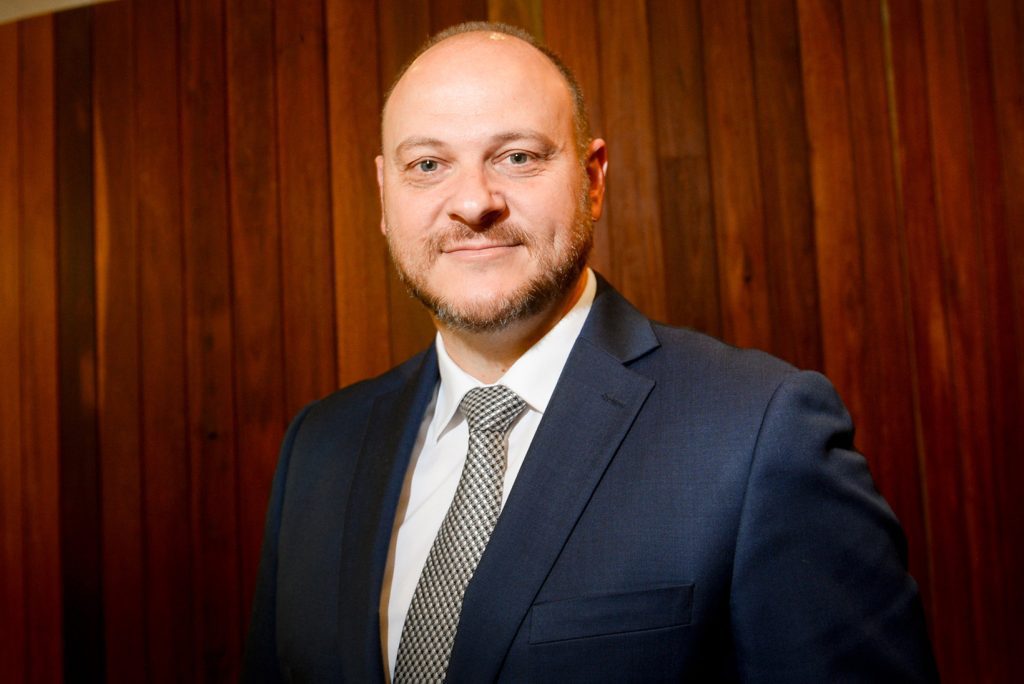
That was 2021. Australia was in and out of COVID-19 lockdowns and Joe – then Vice President of Cloud and Service Providers at Schneider Electric – was in ‘grin and bear it’ mode.
Located at approximately ‘belly button height’, the L4-L5 disc sits in the lower back, between the L4 and L5 vertebrae. Common treatments do not include ‘gritting your teeth or clenching your fists’ however.
“I was advised that an operation would take some pressure off but I refused – no one was going in, there had to be a plan B,” Joe shared.
“Instead, I just lied on my side for eight weeks until the discs reset and then followed that with three months of physiotherapy. We were coming out of COVID-19 and our company kick-off was approaching so that was the target – ‘you need to get me on that stage’.
“I made it, on crutches. But looking back at all of the photos and videos, I wasn’t in good shape.”
In many business cultures, ‘pushing through’ pain is still worn as a badge of honour. But when leaders override pain, fatigue or chronic discomfort, they normalise dysfunction.
Back pain becomes ‘just part of the job’, stress headaches are dismissed and poor sleep is treated as a temporary inconvenience rather than a systemic issue.
Over time, these signals compound.
“I did physiotherapy to the point that most people do, just when you start to feel better again,” Joe acknowledged. “But I didn’t get to the core of rectifying myself and I stopped everything around me – boxing, football, running – and instead, fully committed to work.”
Fast forward almost five years, to October 2025, and the muscle structure around Joe’s neck and back deteriorated to the point that his C2 to C7 collapsed.
That’s the vertebrae from the base of his skull to the top of his neck. C2 to C7, folding like a deck of neglected cards.
“Pure pain,” Joe grimaced. “Excruciating pain, 15 out of 10 pain. That collapse crushed the nerve so I had pins and needles on the left side of my body and the same neurosurgeon was clear – ‘look, you’re not in a good way’.
“Again, I was advised to have surgery – this time going through the front to shave off some vertebrae to create more spacing in between. But again, I said no.”
Only then did the penny finally drop.
Following approximately five years of ‘pushing through’ with quick fixes and high tolerance – that’s more than 1800 days of pain or discomfort, stretching over 44,000 hours.
At the end of December 2025, Joe called time on an executive career spanning 18 years at Schneider Electric.
“If you don’t do something, if you keep pushing through, by the time you’re 65 you won’t be able to walk,” Joe said. “That was the message from my doctor which turned a tough decision to leave my role into an easy decision.
“Time is undefeated. In your 30s you can bounce back and you can kind of bounce back in your 40s. But now I’m in my early 50s, the excruciating pain becomes much harder to overcome.
“If I don’t invest in myself now, I will feel the full force of this down the track.”
For many men in leadership, ‘pushing through’ pain is not just a work habit – it’s a learned identity. From an early age, men are conditioned to equate strength with stoicism, silence and endurance.
Vulnerability is framed as weakness, and physical or emotional pain is something to be ignored, managed privately, or outworked. In executive roles, this mindset is still often amplified rather than challenged.
“Vulnerability is a strength, especially for men,” Joe advised. “That stigma of being vulnerable and exposing a weakness or an issue hasn’t gone away. But it’s the ultimate sign of strength.
“If you’re struggling with anything, definitely talk about it and ask people for advice. There’s no shame in saying, ‘hey, I’m not feeling the best this week’ – let people around you support you.”
Take the announcement of his departure as a case in point. A raw and honest post on LinkedIn that garnered thousands of likes and hundreds of comments.
“I thought long and hard about that LinkedIn post,” Joe admitted. “What if people think, ‘oh look at Joe, he’s getting on and he’s not up for the next challenge’.
“But I know what I’m capable of and I know what I’ve achieved over many decades in the industry. The truth is, you have to put your body on the line and that comes at a cost – for me, that’s my neck and it requires my urgent attention.”
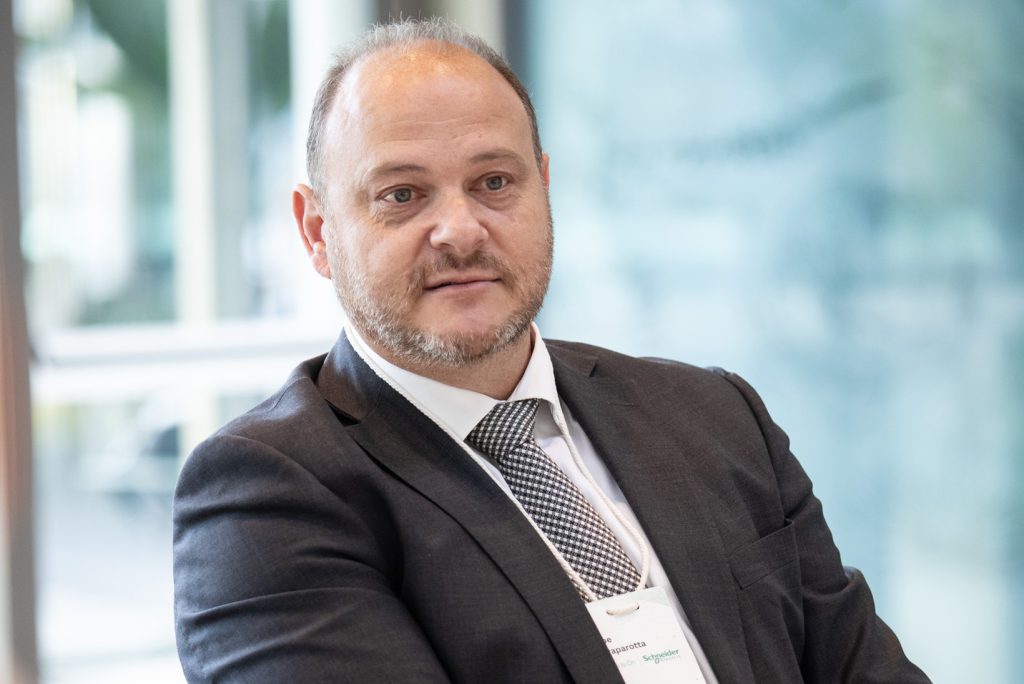
Avoidance comes at a cost. Suppressed pain doesn’t disappear; it accumulates. It shows up as irritability, reduced patience, poor decision-making and emotional withdrawal. Relationships suffer. Leadership presence erodes.
“Listen to your body and solve problems in the infancy,” Joe recommended. “Believe me, ‘pushing through’ is not a strategy and won’t help you be a better husband, father, uncle or brother.
“Like in business, play all the options. Work out the short- and long-term benefits of each decision and surround yourself with the right team to help you through it.
“I connected with different neurosurgeons and personal trainers but now I’ve found the right combination of people that I want to work with during the next 3-6 months. Those business philosophies continue to help my recovery.”
Work-life balance is everywhere. It’s in leadership panels, employer value propositions and glossy LinkedIn posts.
Yet for many executives, reality tells a different story. Hours are longer, boundaries are thinner and the expectation to be ‘always on’ has quietly intensified. Despite the rhetoric, very little has actually changed.
“Correct, we use these blanket statements around work-life balance but we don’t follow them in practice,” Joe questioned. “In reality, there’s so many roles that don’t have the ability to do a walking meeting for an hour.
“If you’re in a car driving from site to site, or working on customer sites, or a road warrior in sales doing your thing, you can’t afford six hours a week of walking here or walking there.
“Whether we want to admit it or not, time is money.”
Executives are forever searching for time efficiencies. What used to be an hour run is now crunched into 30 minutes of high-intensity training – the more sharp and succinct the better.
But even that is now under pressure. How about three circuits in 20 minutes?
“Yes, the digital world continues to accelerate but our human bodies are the same,” Joe reminded.
“They’ve been the same for a long time which means time to exercise, to rest and to heal. You have to do things slowly and consistently to see results that last longer.”
There is also a silent contradiction at play. Organisations promote well-being while rewarding overwork.
Leaders who are visible at all hours are still seen as more committed, more ambitious, more valuable. Executives absorb this message quickly, often sacrificing health, relationships and recovery to meet unspoken expectations.
“It always comes down to ownership,” Joe said. “I learned the hard way that I have to take responsibility because I dropped the things I loved that were part of my rituals, like boxing at 5am.
“Take accountability of your health because fit and healthy people show up better at work and at home. The market sees you working in a more collaborative way because you’ve got a more positive mindset – the science is clear around dopamine and the way we interact with each other.
“And who wants to come home in chronic pain and be unable to play football with your kids or go for a walk with your wife? Then you start putting on a kilo a week and before you know it, you’re carrying 30 more kilos and everything starts to deteriorate.
“All of that is on you.”
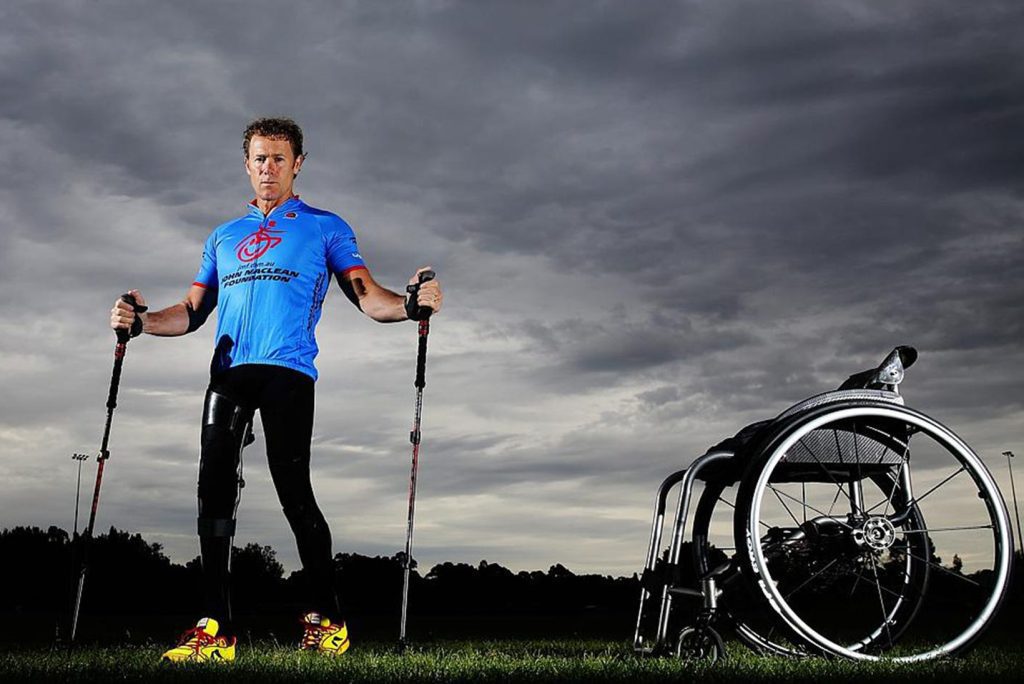
Referencing a conversation with long-time friend John Maclean – an inspirational paraplegic turned triathlete and two-time Paralympian – Joe addressed the issue of balance head-on by outlining the four hats that people wear.
“But you can only wear one hat at a time,” Joe caveatted. “John told me that many, many years ago and I forgot about the first hat, myself.
“I know sometimes the job calls for a sprint with intense focus but I’ve focused too much on my third hat. I haven’t been balanced because executives become very good at living regimented lives but as business intensifies, everything else falls by the wayside.
“Believe me, it doesn’t matter how early you get up. There’s a solid five or six different ways to connect to people today which makes complete disconnection impossible.”
At C-level, poor sleep isn’t just a personal inconvenience – it’s a compounding health risk amplified by responsibility, stress and duration. The combination of long hours, constant decision-making, travel and psychological load places senior executives in a uniquely vulnerable position when sleep is compromised.
“The science of sleep is so profound,” Joe admitted. “I never liked sleeping and have spent my life thinking it was a waste of time – just think of how productive you could be instead.
“I’d run on four hours of sleep a night. Work until midnight because there’s so much to do or take calls until 1-2am with the global team, then start my early morning routine to get a head-start for the day.
“That was my ritual for 30 years because you have to put a lot of your personal body on the line to build businesses. I’ve had many times waking up in a hotel room not immediately sure which city I was in or what time it was – you’re forever flying, having late nights and working at the extreme.”
There is also a dangerous cultural layer at play.
C-level executives often normalise sleep deprivation as leadership strength, masking warning signs and delaying intervention. This not only accelerates personal health deterioration but sets an unsustainable benchmark for the organisation.
“Only now have I come to realise that without good quality sleep, your body’s not going to recover at all,” Joe added. “As you get older, you have to give yourself every chance of doing that.
“You look at people on a screen and they look pretty good but under the surface is this constant throbbing mess of pain. Like anything in life, where there’s focus, there’s results, and I want to fully focus on my body.”
Now, a well-rested Joe is cramming days with personal training, physiotherapy, long walks and quality time. That could be early mornings ‘fumbling around’ at the gym alongside his sons – aged 27 and 25 – or coffee with his wife and friends in the afternoon.
Hat 1. Hat 2. Hat 4.
“I’m pain free as of a few weeks ago,” Joe confirmed. “That took six weeks of lifestyle change and the next phase is to stop the pins and needles on my left side. I’ve lost about 15-20% of strength on that side but we’re pretty close and expect to reach that milestone in the next 3-4 weeks.
“This is all about rebuilding and then increasing weights and cardio to move some weight. So yes, I’ve very much swapped business reviews for PT and pilates.”
In 2008, Joe started as a Northern Region Manager at APC, before transitioning into Schneider Electric post acquisition as General Manager of Industrial Automation. Progression to Vice President soon followed, spanning business units such as Energy, IT Business, Cloud and Service Providers.
“We finished on a record-breaking year so it was a good time to smash the ball over the boundary, pull up stumps and just focus on me,” Joe added.
“The company was great, they’re a great employer. I was the longest serving executive and I love the place and love the mission of the ecosystem that I’ve been fortunate enough to work with.
“From the start they have been as flexible as I needed them to be and sabbaticals were on the table – just taking time off to recover and come back. But they were right, ‘you need to get yourself fixed up’ which was a tough but the right call.”
Health issues at this level are rarely superficial. Chronic pain, cardiovascular risk, sleep disorders, burnout, anxiety and stress-related conditions often develop quietly while performance remains outwardly strong.
Executives are particularly skilled at functioning through deterioration, masking symptoms and delaying action until the cost becomes impossible to ignore.
“Lots of transformation and changes are coming but to navigate that, you have to be physically fit and physically sharp,” Joe said. “You have to put your body on the line to build these things through late nights and long flights so I didn’t want to place the business in jeopardy given I wasn’t pain free.”
Whether exiting the business or not, Joe – who was also a founding partner of Indicium Technology Group – is aligned to the belief that leaders must make themselves redundant to ensure continued growth and success.
“The quality of the team made the decision easier to close the door on this chapter,” he accepted. “I care about legacy like anybody else and I would never want things to be different because I’m not in the chair – hence the great team and great systems.
“The market is ferocious, especially in the data centre space. It’s the biggest show in town at the minute and you’ve got to have your wits about you to compete.”
The body is not an obstacle to performance – it’s the operating system. Pain is feedback, not failure. Leaders who listen early can adapt workloads, routines and expectations before damage becomes permanent.
In an era that demands clarity, energy and longevity from executives, real strength is not found in suffering silently but in recognising that sustainable performance requires respect for the body that carries it.
“I had to tackle the root cause,” Joe stated. “My lifestyle and behaviour had to change which is why I turned down surgery twice. When you have chronic pain of this nature, you have to rebuild your muscle structure and become fit and healthy.
“I opted for the conservative route which takes longer but gives me a long-term result. I love what I do – I love working, I love being physical and I love travelling. But my set-up was no longer good for me and I want to be able to enjoy retirement one day with my wife.”
Currently tracking ahead of his recovery program, Joe is targeting March or April to make a soft return to the industry scene. That will be in the form of assessing the current ecosystem landscape, outlining non-negotiable conditions and reconnecting with strategic contacts.
“I love the technology ecosystem and have been lucky to spend a large part of my career under the big pillars of the market – the digital world, the energy world, the data centre world,” Joe noted.
“There’s one more chapter of this book at the leadership level so I will explore the C-suite options. I’m open minded and will focus on Australia and New Zealand as priority markets.
“But for now, it’s all about becoming entirely pain free and focusing on my health.”
Inform your opinion with executive guidance, in-depth analysis and business commentary.

