
Home
You’re currently viewing our content for All Regions.
You can switch to a different region:
February 12, 2026
Leaning forward, cutting himself off mid-conversation, Nick Flood double backed… “I have to be candid. I was very concerned that I’d fail.”
Humble has become the safest costume in modern leadership. CEOs trip over themselves to wear it with self-deprecating anecdotes and carefully rehearsed vulnerability.
But this wasn’t some stock-standard line delivered as a brand exercise.
Because true humility is quiet. It shows up in listening more than speaking, in giving credit without needing to reclaim it, in making decisions that don’t centre the ego.
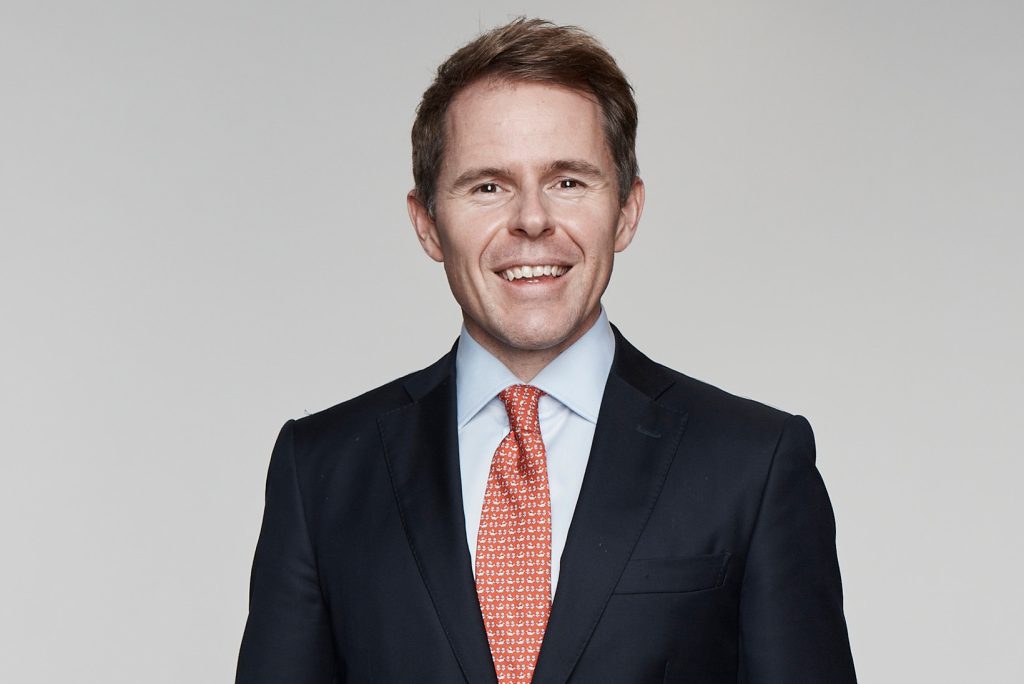
“I was probably energised by that concern, it fuelled me because I didn’t want to let the people down who had taken such a big risk,” Nick shared.
A risk?
“Yes, a risk,” Nick continued. “Given my age and tenure in the company, it was a very bold move and I felt a weight on me that I needed to live up to expectations.
“But I think that youthful confidence got me through. What really helped was having a quiet confidence that I’d found a way to be successful in challenging situations in the past and relying on that skill set.
“I knew I possessed that and that it would always help me navigate a good outcome even when at the outset, it wasn’t actually clear which way it would go.”
Appointed as the youngest leader in the now 94-year history of IBM locally, Nick became Vice President and Managing Director of Australia and New Zealand (A/NZ) at 37. Technically, 36, given his December birthday and official start date in January 2022.
That’s Big Blue, a titan of industry and a giant in the market. While outstanding in achievement, documenting such youthful brilliance would actually be a disservice however.
That isn’t the headline.
“Where the story all starts for me – and it shapes my leadership approach – is my upbringing in regional Australia,” Nick detailed.
Growing up in a small town in northern New South Wales (NSW), near Armidale, Nick had an “idyllic childhood” – fishing, camping, lots of time outdoors and great memories running around with mates.
“But even then, I knew I wanted more for my life and I wanted to do something exciting,” Nick added.
“I have a beautiful family that I’m just so blessed with – my mum and dad – and the other formative force at the time was my biggest sister, Paula, who was born with an intellectual disability.
“One of the big forces in my life was coming to an awareness that my sister’s potential was different to others and that it was very important for me to step up and use the most of whatever gifts and talents that I was given.”
This is a story about how a humble country boy climbed up the ranks of corporate Australia armed with the highest levels of ingenuity and inclusivity.
A star student and exceptional performer, anchored by a desire to listen and learn. An abundance of self-awareness yet no shortage of quiet confidence. Courageous in decision making yet egoless in consultation.
“I feel incredibly lucky to have zigged rather than zagged,” Nick noted.
In candid conversation, Nick offers insight into the man behind the title – a case study in the power of not always taking the obvious path or assuming the obvious persona:
The world today is wired to make rapid assessments. Backgrounds, titles, accents, attire, age, gender, experience etc – they all become shorthand. But shorthand is rarely the full story.
In leadership and business, the most enduring qualities are not always visible at first glance – integrity, consistency, judgement, humility, stamina. They reveal themselves over time.
Upon assuming the reins at IBM, Nick departed from tradition and sought the counsel of past IBM leaders – those that sat in the chair before him.
“There’s a tendency inside big companies to part ways with the past too expeditiously,” Nick observed.
“It’s so common to think, ‘oh well, I’m here because my predecessors were stuffing up and didn’t know what they were doing’. That couldn’t have been further from the reality.”
A humble leader recognises that wisdom doesn’t expire with tenure because former CEOs hold institutional memory that no board pack can capture.
Seeking counsel is not about outsourcing judgement, rather accelerating it. It shortens the learning curve, surfaces blind spots and reinforces continuity during transition.
“I got so much out of those calls,” Nick highlighted. “I took a positive approach by framing it around how I wanted to build upon what they had all achieved and stand on their shoulders.
“That was rather than taking the more arrogant view of, ‘I’m here to fix things and show how your approaches were flawed’. I was so excited to seek their counsel, some of which held the role before I even joined as a graduate.
“That’s consistent with my approach of making people feel respected and admired rather than diminished and deflated.”
Sitting down for an hour-long conversation at IBM headquarters in Sydney – off-the-cuff with no prepared notes – Nick was an open book. Effortlessly affable, authentic to a fault.
Such rawness is refreshing but often rare. It’s usually robotic generalities and clichéd remarks, one eye always on the brand – personal or company.
Underpinning such striking self-awareness was a generous acknowledgement of the leaders that have guided him along the way. Heartfelt references to those trusted peers, inspiring executives and close confidants that contributed to his meteoric career rise.
In deep-dive interviews with C-suite executives, one or two name references is par for the course. Nick shared 12 – each with a backstory and nugget of information.
Andrew Stevens. Kerry Purcell. David La Rose. Rob Thomas. Jason Codespoti. Brenda Harvey. Hans Dekkers. Reuben Bettle. Jo Dooley. Peter Campbell.
Outside of the day job, his inspirational sister, Paula and Dan, his Friday night poker friend when he first arrived in Sydney.
And many, many more.
“I like to have a support network – keep it broad but within reason,” Nick outlined.
“Because when you’re faced with challenging decisions, it’s important to bounce it off people and leverage unique points of view. I do it with former bosses and people who report to me.”
For Nick, the approach achieves two core aims:
“Sometimes I can potentially seek the counsel of others too much but I’m authentically seeking out wisdom which has an amazing snowball effect over time – now I have a wonderful community of people who feel valued and respected, and it works both ways,” Nick advised.
Abraham Lincoln famously assembled a ‘Team of Rivals’, deliberately surrounding himself with strong-minded peers and former opponents to stress-test decisions during the Civil War.
Barack Obama was known for convening small, candid advisory groups and encouraging dissenting views in private before making final decisions.
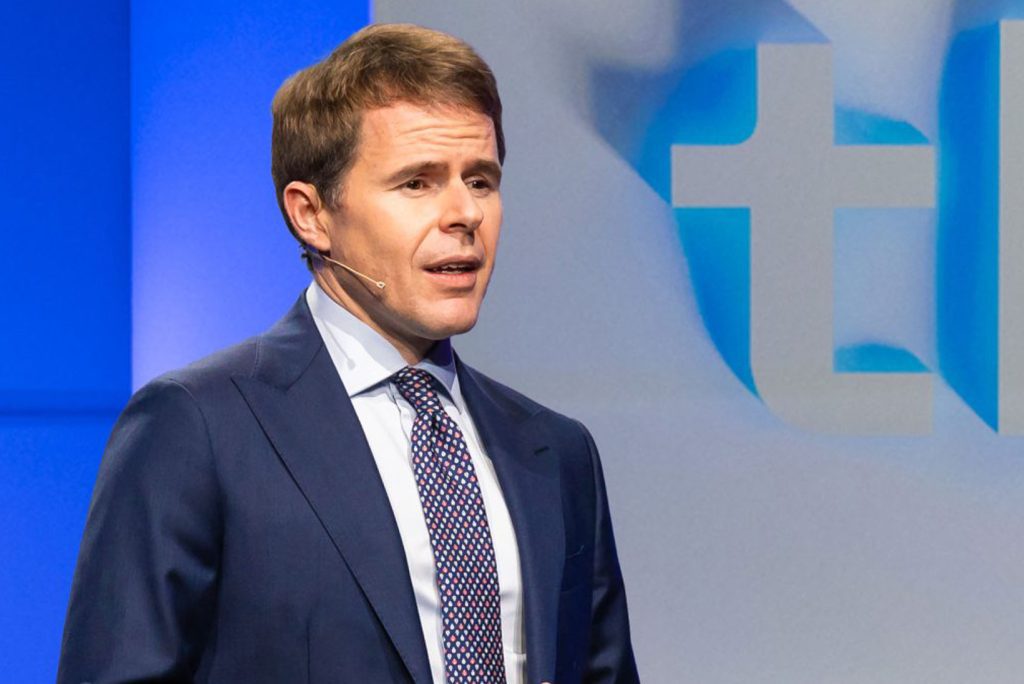
Across political systems, businesses and eras, the strongest leaders have consistently shared one habit – they created private spaces where they could think out loud, be challenged and admit uncertainty… without consequence.
Not performative, not broadcast. Just trusted peers, quiet counsel and real conversations.
“I’ve worked for amazing leaders like Jo Dooley who is now at Microsoft and Peter Campbell who is advising our business as part of a transformation,” Nick added.
“And David La Rose who is now a senior executive in the US – all of them committed to really pulling me up and stretching me to develop and grow.”
On day one, the weight of expectation and amount of execution can be paralysing for a new leader. The instinct is often to endlessly think it over before taking a single visible step.
But there’s a simpler, more powerful principle.
“My number one learning is, just get started,” Nick recommended.
As a self-labelled ‘podcast fiend’, Nick referenced a podcast by Jocko Willink, co-author of Extreme Ownership: How U.S. Navy SEALs Lead and Win.
“He has a metaphor, ‘if you’re lost, just start walking’,” Nick explained.
“So, if you’re in a field and you’ve lost your bearings, just start walking. Part of the process of walking is running across a stream or a road and from there, finding a bearing and starting to navigate.
“In leadership, it’s so important to get going. Have a plan and start executing.”
For example, many client engagements start discussing proposal X or technologies ABC. Then the sale closes two, three or four quarters later with a fundamentally different framework to what was started with.
“But it’s that process of engaging, listening, iterating and going again that unlocks success,” Nick added.
“Having a commitment and bias to action is crucial. Even if you don’t know the path, in acting, the path is going to become clearer.”
Building on this, the importance of curiosity is also fundamental to future growth – a trait found in Rob Thomas, Senior Vice President of Software and Chief Commercial Officer at IBM.
“Rob is a prolific reader and shared a great piece of advice, ‘if you out-read your peer group, you’re going to be competitively positioned relative to that peer group’ – if you’re innately curious and always work on yourself as a project of continuous learning then you can always overcome any challenge ahead,” Nick detailed.
Personal growth demands discipline and discomfort, which Nick acquires from three sources:
“I find that early warning system to be great,” Nick added. “You’re often leading in a particular way with a desired impact in mind, but it can be felt, seen, heard and experienced radically differently.
“But in the absence of a professional coach, having a small number of people that you’ve got a relationship with who can give you frank and fearless feedback is invaluable.
“Tell you straight about how you’re acting and whether it’s having positive benefits or deleterious impacts – that ally-ship inside an organisation really helps you grow as a leader.”
When Harold Macmillan – British Prime Minister between 1957–1963 – was asked what was the greatest challenge facing a leader, his reply hit the bullseye.
‘Events, dear boy, events.’
Today, a leader’s calendar rarely reflects their strategy. Despite the best-laid plans, a single incident can re-draw the day in minutes.
A customer escalation. A regulatory query. A system outage. A key resignation. Events don’t politely fit between scheduled priorities – they dominate them.
“You must allow your instinct on your priorities for the company to dictate your calendar and where you spend your time,” Nick recommended. “I see too many leaders bouncing between multiple issues.
“You might be talking about a super critical thing that’s going to impact a client or company performance for the next year and some leaders when the it comes to time are simply, ‘okay, I’ve got to go to my next one’.
“In my mind, how can you switch off from that? No, you don’t need to go to the thing your calendar is telling you, you need to stay and we need to finish this and navigate it to a good outcome.
“Don’t let your calendar dictate your priorities. Not everything is equal.”
Relying on instinct is the most effective way for Nick to make the most impact. That’s the blessing and curse of senior leadership roles – the upside is you get to decide what you’re working on, the downside is you get to decide what you’re working on.
Hans Dekkers – General Manager of Asia Pacific and China at IBM – conducts an exercise of opening up Nick’s calendar to offer a fresh perspective on how best to audit and identify any “empty calorie work”.
“Hans has a framework called the 3Ds – Drive, Delegate or Ditch,” Nick outlined.
“I find that process to be very valuable. Especially when I come back periodically to assess where I’ve been spending my time.”
The more infamous model is that by Dwight D. Eisenhower, former US President and Supreme Commander of the Allied Expeditionary Force in Europe during World War II.
The Eisenhower Matrix is a task management tool that helps leaders organise and prioritise tasks by urgency and importance, evaluated using the criteria Important / Unimportant and Urgent / Not Urgent.
In looking back on almost five years in the role, Nick is currently addressing a common yet profound leadership challenge – scaling through others.
Using a Formula One analogy – in a nod to IBM’s recent partnership with Ferrari – Nick outlined the difficulty in transitioning from being the “fastest driver around the track” to the Team Principal. From outstanding individual contributor to inspiring executive leader.
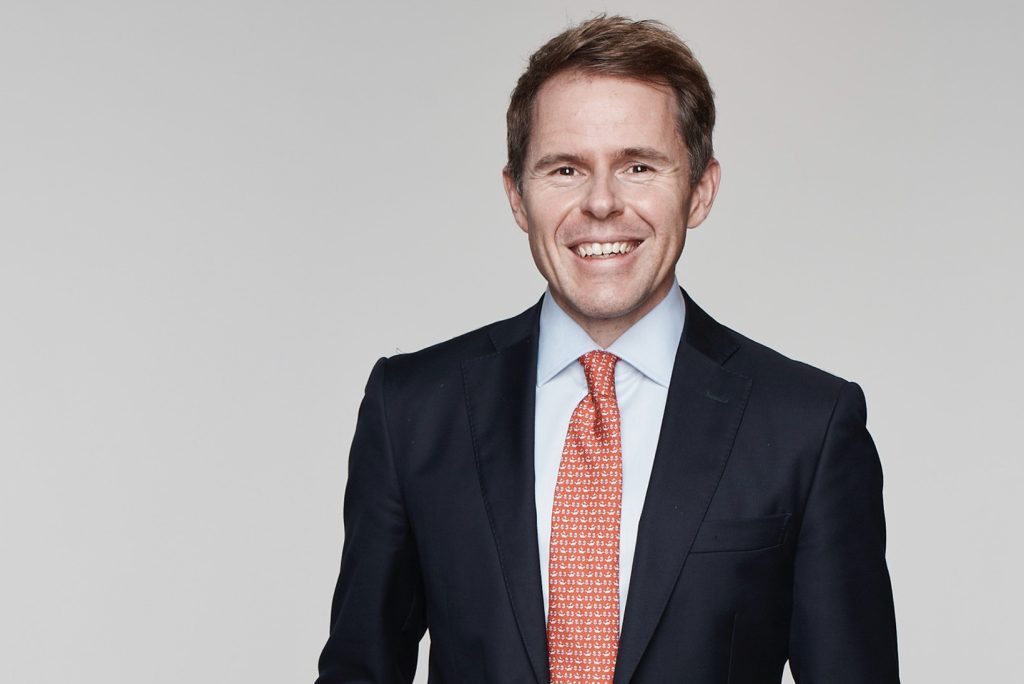
“If you continue trying to be the fastest driver around the track, you’re not going to be successful,” he cautioned.
“But I’ve found that shift hugely challenging, especially as a younger leader often leading people more senior and tenured than myself. How can you actually establish yourself in a way that unlocks growth through them, rather than being a kind of super sales rep?
“I still actively seek out a lot of guidance on this.”
Another learning exists on Nick’s whiteboard in his office, borrowed from Jason Codespoti as CFO of A/NZ at IBM. Known as the ‘Strategic Action Curve’, the graph consists of two axes – Y is difficulty and X is time.
“The longer you leave things, the more difficult they get,” Nick shared. “I need to act sooner on things that need to be addressed rather than leaving it longer and thinking it will get better.
“With the benefit of hindsight, things that just instinctively didn’t feel right initially or the data was telling me that issues needed to be addressed earlier, rather than waiting and delaying action. Give things an opportunity to recover but if they don’t, be more decisive and change earlier – particularly on talent or challenging client discussions.”
Every leader makes mistakes. But how quick should CEOs move on?
“I ruminate a lot and it’s something that I need to watch,” Nick acknowledged. “Going over old ground when I should be a lot more forward is something that I regularly work on because it’s just empty calories. It certainly doesn’t benefit you.”
Not all CEOs scale well however. Because it requires trust – hiring strong operators is one step, letting them operate is another.
At the core, the difference between a leader and a manager isn’t in the hierarchy but the focus and effect.
Andrew Stevens – formerly Managing Director of A/NZ at IBM and now Chair of Champions of Change Coalition – best illustrated this decisive difference.
‘Nick, you have to understand that to get the best out of your employees, be a leader that gives them a sense of forward progress on the front of their face. Not a leader that gives them the warm sensation of breathing down their neck all of the time.’
“I admire Andrew so deeply and I always come back to his advice time and time again,” Nick underscored.
“Don’t be dismissive of what’s come before you. Stand on the shoulders of those that have preceded you and appreciate all of the hard work by employees along the way.
“And paint a forward vision around where the business is going beyond organisational growth and profit objectives. Make that tie into the values and the ideals that matter to your employees and the communities that they live in.”
Armed by such a profound calling in his early life, a young Nick understood that education was his ticket to a different life and a move to the city in the pursuit of a fulfilling career.
The natural tactic was to throw himself into his studies and entertain an entirely different set of extracurricular experiences, with one eye on his first graduate appointment.
Stars aligned as Nick – who was in the middle of a Masters Degree that was heavily quantitative and statistical analysis based – applied for an internship hosted by the local MP, who at the time was Speaker of the New South Wales Legislative Assembly.
Working in the political office running data on electoral campaigning and how best to get re-elected, plus projects on zonal taxation incentives, Nick frequently visited Sydney and was fast approaching his first career crossroads.
NAB or IBM?
“It’s an interesting story,” Nick explained. “My path was very much in financial services given my skills and I had secured a placement with NAB as part of their graduate program.
“As part of my extracurricular activities, I was invited by the Prime Minister to go to Canberra as part of an Ideas Summit. I couldn’t afford a flight ticket so as a poor student, I got the bus down.
“At the bus stop was an advertisement by IBM around ‘let’s build a smarter planet’ which really resonated with me. I’m quite risk averse so the decision to join IBM was really not me in that sense but on reflection, I guess it tells me how loudly the proposition spoke to me as a young man at the time.”
Joining a cohort of over 150 graduates in 2010, Nick thrived due to a strong sense of community and strong support from senior leadership.
But it was outside of work that adjustments also had to be made. A country boy arriving in the big city isn’t easy.
“I don’t think it can be overstated how much of a barrier that can be for kids in the country,” Nick stated. “It’s just not as easy to pursue careers in multinational companies because unlike Sydney kids, they have huge relocation overheads and the worry of whether they are going to fit it.
“I was lucky to have a big sister move a couple of years prior so I had the benefit of a home cooked meal and knowing someone in my family had already made the move.”
But Nick is often the exemption, not the rule. Because ‘you can’t be what you can’t see’ and in regional Australia, the careers available are predominantly farmers, nurses, doctors, dentists or in the police.
Exposure to the full gamut of career possibilities and corporate Australia is rare.
“A good mate of mine, Dan, was a Sydney boy in the graduate program and he would invite us over for poker nights on a Friday,” Nick recalled.
“Almost 20 years later, I can’t tell you how much value I got from that – the fact that someone was prepared to open up their friendship network to someone starting a fresh.”
Nick had a unique graduate experience.
At the time, the perception of working for a large multinational company was being suited and booted in the office all day. The reality was very different however.
The first year was spent in a warehouse on the tools – using screwdrivers and installation skills to assemble a restaurant for McDonald’s or a branch for Westpac. Test all the computers, ensure everything is staged and working then package up the kit ahead of shipping to site.
“It was not a corporate job in that sense,” Nick recalled.
Then came recognition in the form of the IBM Inferno Recognition Award, annually bestowed upon the top performing graduate.
“On day one, I said to myself that I was going to win that award,” Nick shared.
“I was blessed to be honoured and used that opportunity to unlock career acceleration in the form of mentoring and development. One part was ‘Interest Interviews’ with senior executives which offered insight on how best to navigate a career at IBM.
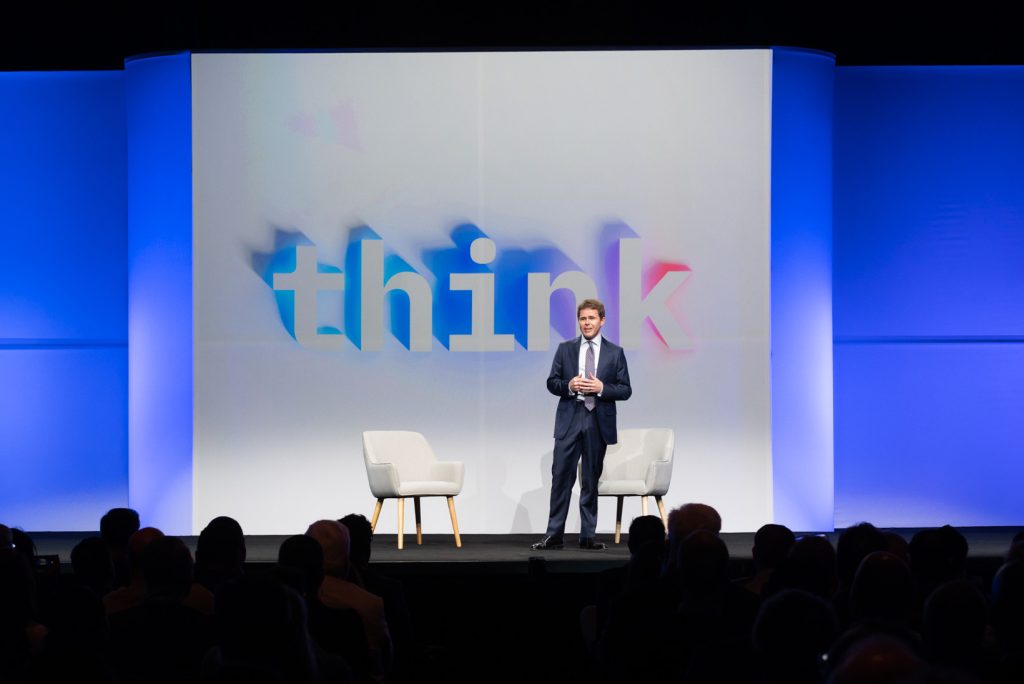
“I asked, ‘how can I sit in your seat?’ The response was, ‘you need to be in front of clients and you need to be managing and working every day on the front-end of our business’.”
Heeding such advice, Nick transitioned from project delivery work into the client management, sales and marketing division.
On paper and in practice, Nick was riding the Big Blue juggernaut at lightning speed.
From maximising the graduate program as a launchpad into the wider business, to excelling in new roles with growing responsibilities. By design, the path was carved and the next steps were clear.
Then his heart overruled his head.
“I was madly in love with my girlfriend, who I am now married to,” Nick reflected.
“Actually, not past tense, I’m still madly in love with her. Please put that in the article, actually as the headline – ‘Nick Flood… still madly in love’ – because that will help me out a lot.”
Delivered in jest but with a serious undertone.
Nick paused his blossoming career in Sydney to follow, Cassandra, a talented lawyer and government affairs expert, to Canberra.
“That made it easy,” he said. “And if it ever entered my mind that I was giving something up by relocating or that my trajectory or momentum would be impacted, it would have been for a nanosecond because I was so in love and wanted to pursue that relationship.”
Fate rewarded such a family-first approach.
Nick’s new reporting line ran up to Reuben Bettle, who was Director of Government and Health at the time. Kerry Purcell was Managing Director of A/NZ.
“When I arrived in Canberra, everything just clicked,” Nick recounted. “Reuben has developed into almost my big brother and I feel very close to him, as well as Kerry who I worked for prior to that. There’s a lot of big brotherly love for them both.
“They saw something in me and were committed to my development – even when I made mistakes. And I made tonnes of mistakes.”
Also clicking in tandem was IBM’s work with the Australian Government, notably on accounts such as Services Australia.
Delivering systems that supported the National Disability Insurance Scheme, supported working parents to receive childcare subsidies to re-enter the workforce, supported veterans managing their health after serving the nation and supported people going through hard times with critical income payments.
“That was back to why I joined IBM at the very beginning,” Nick connected. “From my own family story – where I grew up in the country, my sister Paula and our community – it was clear that not everyone is set up in life with the same opportunities to succeed.
“I had a great home life, I had a great boss and I had a purpose and passion behind the work we were delivering.”
The relocation to Canberra was another defining career crossroads moment for Nick – akin to starting on that early education path to reach Sydney, or listening to his gut instinct to join IBM over NAB.
“On all of my trajectories, I’ve been very grateful to find people to lift me up and propel me forward along the way,” Nick recognised.
“Although I’ve often gone down path B rather than path A, my gratitude to the people who have helped me along the way really fires me up in the belly to do the same and pay that forward to the next generation.”
Undoubtedly the most challenging episode in Nick’s career to date also arrived in Canberra – the Australian Census in 2016.
“I was at home and I remember getting a call, ‘Nick, turn on the telly’ – IBM botched the national census and Kerry had to front a government hearing to outline how this happened,” Nick said.
“We’d impacted a national initiative of Prime Minister Malcolm Turnbull, who was looking to establish himself as the ‘Digital Prime Minister’. As a consequence of that fall-out, IBM was in the freezer and we’d lost and broken trust.”
All public information in terms of the fall-out. But now 10 years on, what isn’t often understood is the foundational work undertaken by Nick and a core team at IBM to rebuild trust at the highest levels of government in Australia.
The next two years were dedicated to that simple but seismic cause.
“We were wearing out the soles of our shoes continually walking the hallways to visit clients, help with issues and get systems back up and running,” Nick added. “Those were our measures of success when revenue objectives were not as achievable.”
The culmination was a restoration of trust in 2018, illustrated by the awarding of a five-year Whole of Government agreement at a value of $1 billion in AUD.
“Our team was recognised by the Australian Government as being exemplars around how we were partnering and powering citizen, national and defence outcomes,” Nick said.
“Inside IBM, that core team won the Gerstner Award, the company’s highest honour for client service. Named in honour of the late Lou Gerstner, our seventh CEO who’s heralded as turning the company around and is often considered as the top CEO in Wall Street during the 20th Century.
“After receiving the award, we had lunch with Lou. It remains one of the proudest moments of my career, not because of the trophy but because of what it represented – trust earned, outcomes delivered and a team that truly put clients first.”
For Nick, this is a story of how a very strong relationship encountered a cataclysmic issue but recovered through a diligence that was patient and placed the client at the centre of all thinking.
“Even in the darkest of days, you can work your way through it and get back to lofty heights in a client-partner relationship,” Nick advised.
Under the leadership of Nick, the company returned to growth with Australia recognised as the top performing country in Asia Pacific for three consecutive years in 2021, 2022 and 2023.
In 2024, software revenues continued to grow faster than the market and hardware sales were ahead of budget for the fourth consecutive year. This uninterrupted and compounding growth continued in 2025.
“The birth of my boy, Rupert, last year was a timely reset and shifted my thinking to who I am rather than the roles I have,” Nick summarised. “I have someone that I want to be proud of me so it’s more about who you are as a leader and the positive impact you can have on others.
“At the end of the day, how will you be assessed by someone that you love?”
Inform your opinion with executive guidance, in-depth analysis and business commentary.
