
Home
You’re currently viewing our content for All Regions.
You can switch to a different region:
April 28, 2026
At its core, insurance is a data business – assessing risk, pricing uncertainty and managing claims.
Which is why AI is no longer a future-state ambition for many organisations in the industry. It’s already embedded across underwriting, claims, pricing and customer engagement – quietly reshaping the operating model of the market.
The road to innovation doesn’t end there, however.
AI isn’t just optimising insurance, it’s redefining it – best illustrated by the ambitious work of TAL through the Australian life insurer’s largest ever technology deal.
A new five-year agreement with Microsoft will accelerate TAL’s advanced cloud and AI capabilities through infrastructure and skills investment to support employees in delivering relevant, accessible life insurance and retirement income solutions.
“We’re investing in the tech and in building skills that will help our people respond to the next generation needs of Australians,” said Hinesh Chauhan, CIO at TAL.
“Expanding our longstanding partnership with Microsoft means we can significantly scale and speed up our innovation in products and services all underpinned by TAL’s principles for ethical and responsible AI, ensuring a secure operating environment for our customers, partners and people.”

TAL is setting the AI pace in a market motivated to innovate.
For CIOs, the question is no longer whether to adopt AI – but how to industrialise it at scale, safely and with measurable business impact.
Yet for all the progress, many insurers still remain in transition. The opportunity is enormous but the execution gap is real.
According to Moxie Research, 74% of organisations within financial services in Australia house a leadership team that champions AI initiatives and actively drives AI strategy. Such strong sentiment is translating into businesses embracing a phased approach to innovation during the next 6-12 months.
Based on Moxie Research, Australian businesses within financial services will allocate increased priority to the following AI initiatives:
Phase 1
Phase 2
Phase 3
As AI adoption in insurance moves beyond experimentation into core operations, TAL is a leading example of how to pragmatically progress through each phase of AI adoption. That process started by first building the foundations before scaling.
At TAL, that journey began with Microsoft 365 Copilot, deployed enterprise-wide in FY24 and achieving an 87% adoption rate among employees within the first 12 months.
According to Moxie Research, the most common AI uses cases for financial services firms across Australia are:
This mirrors the momentum building inside TAL with AI already delivering real benefits to customers and employees.
For example, TAL’s chat-based knowledge assistant is delivering fast, accurate answers to claims employees by tapping into the company’s knowledge base.
Since launching, it has responded to over 37,000 claims-related queries, saving an average of seven minutes per question and earning 93% positive user feedback. Following its success with claims consultants, TAL has now scaled this solution across HR and customer service teams.
Another example is TAL’s AI-powered post-call summarisation tool, integrated with its core claims system to automatically transcribe and summarise claims-related calls in real time.
This allows claims consultants to stay fully focused on supporting customers during conversations and review notes afterward. Since launching, the tool has processed and summarised over 120,000 claims-related calls.
Fast forward to today – and as part of the new agreement – Microsoft will jointly invest in TAL’s engineering capability to consolidate the company’s data on Azure and build a suite of AI tools.
“Life insurance is deeply human,” added Georgina Croft, Chief Claims Officer at TAL.
“Customers contact us during some of the most challenging times of their lives, as they navigate illness, injury or loss. Our people are shaping the AI tools that enable them to be fully present with customers and deliver a compassionate high-quality experience.”
AI is reshaping roles across underwriting, claims and actuarial functions with traditional manual processes being replaced with AI-assisted workflows.
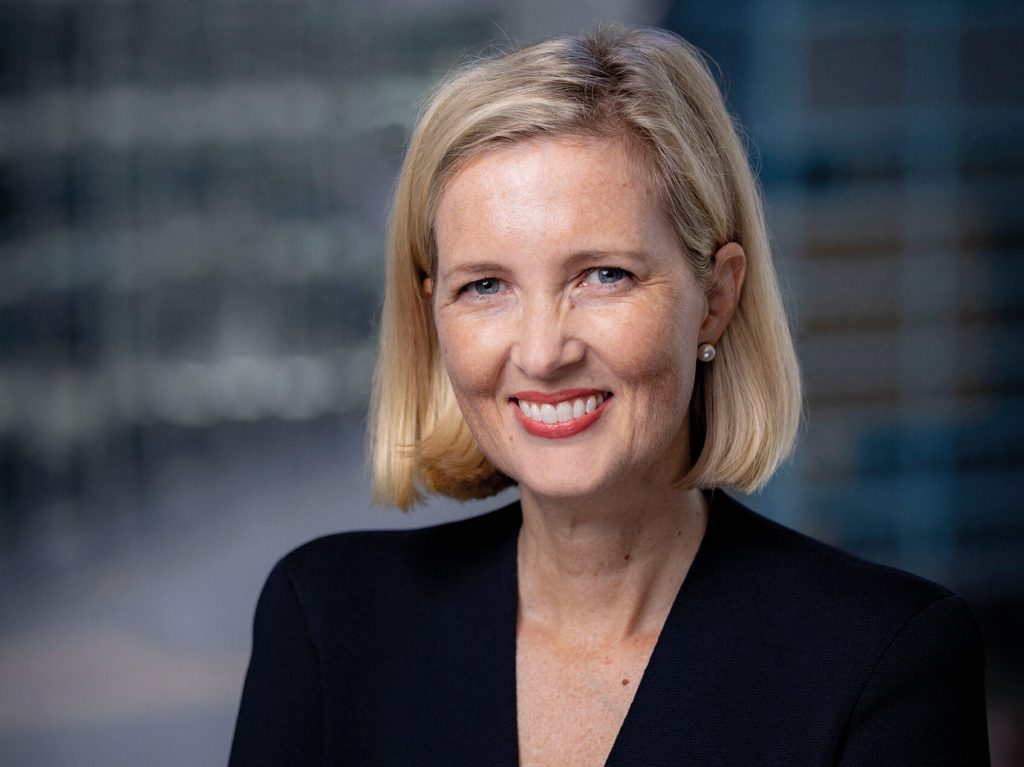
For Chauhan, technology alone will not deliver AI transformation – the defining factor will be talent.
As part of the expanded collaboration, TAL will work with Microsoft to design programs that build AI skills across the organisation.
“AI is intuitive for some, newer for others and we’re focused on closing that gap, giving employees an edge in their careers and ensuring they’re set-up to safely use data and AI to help customers and innovate for the future,” Chauhan added.
“This is about building experiences customers love, and that our people love to build. Our expanded collaboration will also see our engineers working with Microsoft’s engineers and scientists to develop solutions together to deliver impact faster.”
This is a consistent message from Chauhan and the team at TAL.
Speaking at the Fund Executives Association Limited (FEAL) in July 2025, Chauhan cited AI as a “cultural priority” for the business.
“Coding used to be the sole domain of software engineers,” Chauhan outlined. “With AI, the English language is the new programming language that is enabling anyone to build, create and solve complex challenges.
“We’re at a point where AI isn’t just a set of tools, it’s a mindset. As leaders, we need to be clear on where AI fits into our operating model and how it can help solve real challenges for members.”
The insurance industry has historically struggled to attract top technology talent but AI presents an opportunity to reposition the sector – from traditional and process-driven to innovative and data-led.
Businesses that succeed will be the ones that invest early in AI skills development, build multi-disciplinary teams and create environments where technology and business leaders collaborate closely.
“By unifying its data in Azure and weaving AI into the fabric of its operations, TAL is reimagining how an insurer works from the inside out,” added Duncan Taylor, General Manager for Financial Services A/NZ at Microsoft.
“It’s exciting to see them innovating at this scale and we’re proud to support TAL as it sets a new standard for customer focused innovation in life insurance.”
As evidenced by TAL, AI is not a future disruptor of insurance – it’s already reshaping the industry. But the gap between ambition and execution remains wide.
For CIOs, CTOs and CDOs, the mandate is clear:
The next phase of competition in insurance will not be defined by organisations that possess the best AI models. It will be defined by businesses can operationalise AI – at scale, responsibly, and with measurable business impact.
And in that race, execution will separate the leaders from the laggards.
Findings shared in this article are based on proprietary data by Moxie Research. Data published is extracted from the financial services survey segment of ‘Australia on AI’ – this covers 57 financial services firms, taken from a wider cross-industry pool of 302 organisations. The survey was first published in May 2025.
Inform your opinion with executive guidance, in-depth analysis and business commentary.

