
Home
You’re currently viewing our content for All Regions.
You can switch to a different region:
May 26, 2026
“Why didn’t you share this, Sojung? This is important. Don’t be ashamed of your story.”
Profound words from Ginni Rometty, one of the most consequential CEOs of a generation.
Imagine sitting opposite such a force of nature? A titan of technology as CEO of IBM, the first woman to head up Big Blue and widely recognised as one of the most influential leaders on the planet.
That conversation not only changed the leadership trajectory of Sojung Lee but more importantly, transformed how she viewed herself as an individual.
“I still remember waiting outside Ginni’s office for the first time – I so was nervous because her aura is immense,” Sojung recalled.
“It felt surreal – gigantic office, security everywhere, a private helicopter on standby. The scale of IBM at that time was unbelievable.”
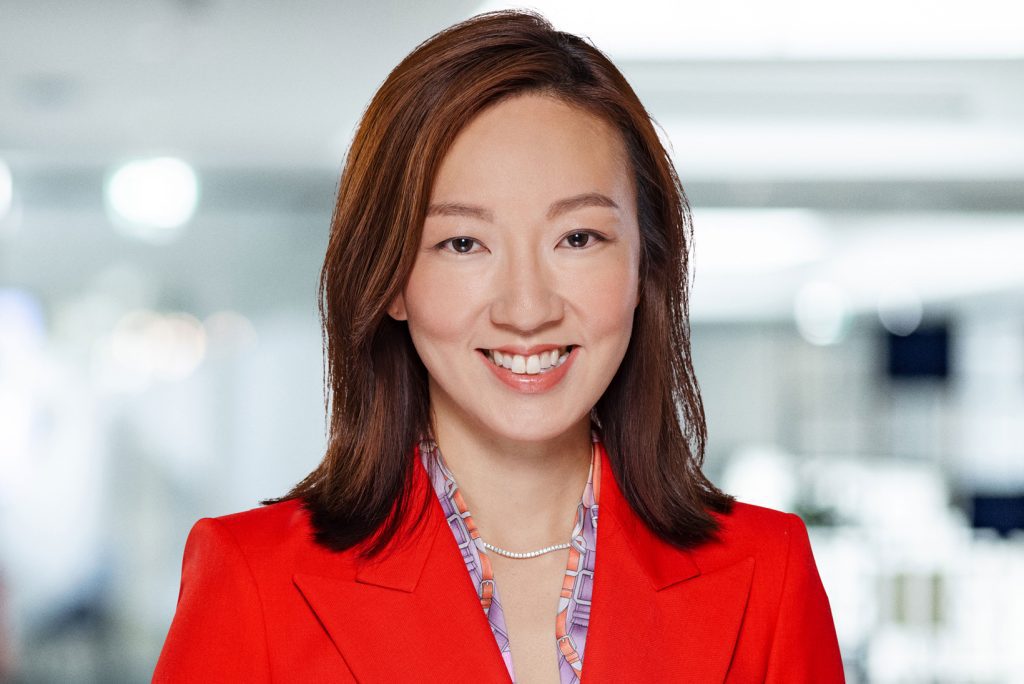
Based in New York – some 11,000km from home in Korea – a young Sojung was rising through the ranks having joined via the General Manager Leadership Development Program.
Each participant was assigned a mentor from the Senior Leadership Team, which in this case was Kelly Chambliss. The program itself was directly overseen by Ginni and afforded each participant 15 minutes of one-on-one conversation yearly – in a business housing 320,000 employees, this was a coveted spot.
“That one conversation with Ginni stayed with me forever,” Sojung recalled.
Sitting there with a one-pager on all things Sojung Lee, the backdrop of the conversation was a relocation to Africa on corporate assignment to support increased investment in the region. The time may have been short but the questions were intuitive and on point.
“I looked at Ginni and said – ‘I’m a single mother, I have a son and I’d like to go back to Asia’,” Sojung shared.
Ginni stopped, scanned the notes and asked… ‘Sojung? There is no information here that you have a son.’
Whether summer or winter, annual leave was always reserved for travel back to Asia to see her young boy but nobody knew the true reason for the visits beyond generic family time.
In uttering the words ‘I’m a single mother’, that was the first time that Sojung had shared her personal circumstances within the walls of IBM – to the CEO moments before an international relocation.
Cue Ginni – line after line…
Only then did Sojung take a breath, relax the shoulders and start to feel comfortable.
“That’s when she looked at me and said those words,” Sojung continued.
“Ginni taught me that inclusive cultures only work when people feel safe enough to share who they are. That conversation completely changed how I viewed myself.”
The second lesson imparted by the ninth Chairman, President and CEO of IBM – who transformed the 100-year-old company by reinventing 50% of its portfolio and building a $25 billion hybrid cloud business – also continues to resonate today.
“I still repeat it constantly today – ‘growth and comfort don’t coexist’,” Sojung recalled.
“IBM pushed me every day. My English wasn’t perfect. I was far from home. I was trying to prove myself constantly. But looking back, that environment gave me confidence because every single day forced me to grow.”
Today, Sojung is President of Asia Pacific at TeamViewer, based in Singapore. But to understand the unique journey that shaped this leader, it’s best to start at the start.
After graduating from law school in Korea during the late-2000s, the new university graduate joined STX Corporation – a shipbuilding company – and was placed into the legal department.
“But I got bored very quickly,” Sojung admitted.
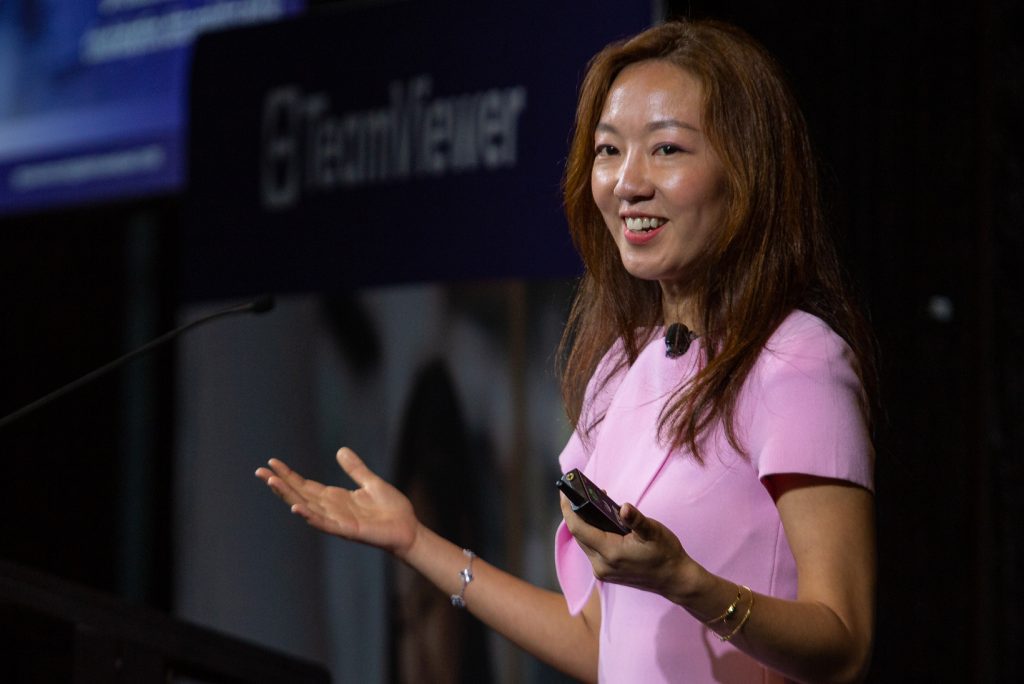
During a new employee orientation, an executive presentation of international sales captured the attention. Travelling to New York, negotiating with buyers, working with customers and coordinating large-scale projects across shipyards.
“I found it fascinating and that was the first moment I realised sales was not just about selling,” Sojung said.
“It was about understanding customers, connecting people internally, coordinating outcomes and solving problems. Compared to reviewing contracts in legal, it felt incredibly dynamic and multi-dimensional.”
The presentation ended with an opportunity. STX was building a larger international sales team and invited people to apply internally.
In a traditional Korean conglomerate, that kind of movement almost never happened – people joined one function and stayed there for life. Especially after graduating law school and joining the legal department.
“But I raised my hand anyway,” Sojung shared.
Less than six months later, the fledging lawyer transferred from legal into international sales. The original plan was to study law in the US so working for two years in sales before leaving appeared logical.
Because of that mindset, Sojung wasn’t afraid to try something different – “I’m leaving anyway, so why not?”
Joining the sales organisation kick-started an obsession with learning, however. The business unit leader would send weekly emails with a recommended reading list, one being by Lee Kun-hee – former chairman of Samsung.
“I read every single book on the list,” Sojung said.
“After each one, I wrote a short essay and sent it back to him with my reflections. I later discovered that his executive assistants monitored those emails, and he became very aware of my attitude and curiosity. Eventually he took me to New York for a major negotiation.
“The funny thing is, my actions accidentally created extra work for the rest of the sales team because he then told everyone they also needed to read one book a month and write essays. They hated me for it.”
While delivered with a laugh and smile, Sojung’s actions offered an important early career learning… “curiosity matters, initiative matters.”
That philosophy extended to China as Seoul was swapped for Shanghai in the pursuit of career growth and experience.
“But at that time, I wasn’t operating from confidence – I was operating from survival and determination,” Sojung shared.
“After moving to China, I became a single mother. I was in a difficult personal situation and was trying to rebuild my confidence and independence. I realised very quickly that material comfort alone would never make me happy.
“I wanted to learn. I wanted to grow. I wanted to build something for myself and for my son.”
That led Sojung to complete an MBA in China, which opened the door to working for JCDecaux, a French media conglomerate. Managing Korean enterprise customers entering the Chinese market meant regular engagement with iconic brands such as Samsung, Hyundai and Amorepacific.
“What fascinated me there was the cultural complexity,” Sojung explained.
“The French leadership team and the Chinese teams operated very differently, and somehow, I became the bridge between them. I was translating not just language but expectations, communication styles and ways of working. That experience taught me a lot about leadership, alignment and people.”
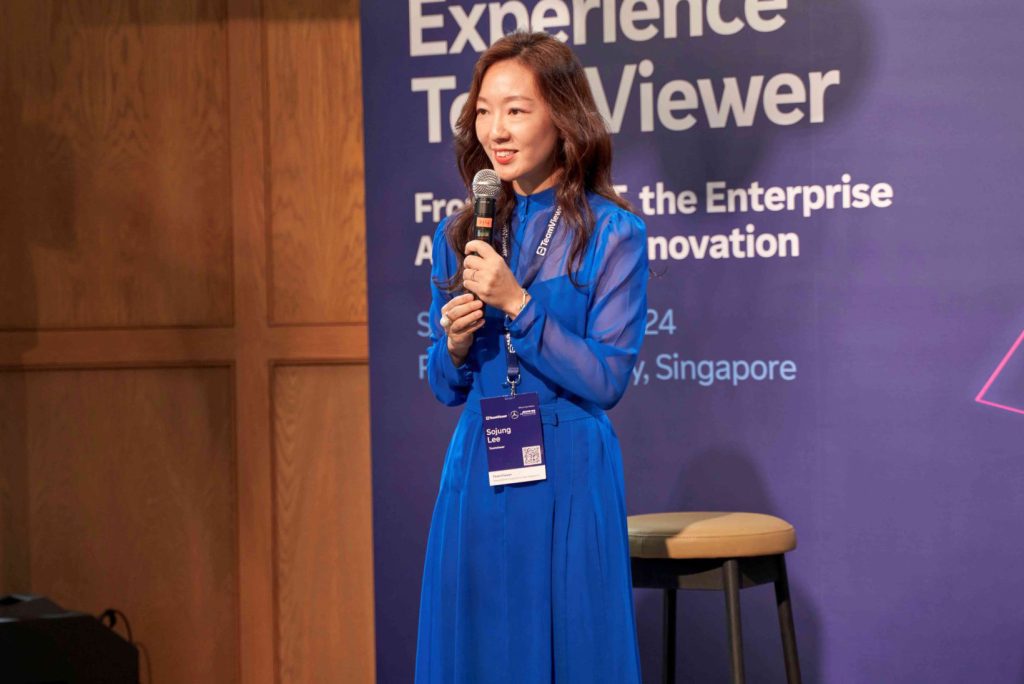
Sojung was then approached by her business school to apply for a newly launched program at Yale – the Master of Advanced Management. The Ivy League was within reach.
But during the interview, the Dean asked a very direct question… ‘Why should we hire a Korean living in China when we came here to recruit Chinese students?’
“I told him that I already represented the type of global citizen that the program wanted to develop,” Sojung answered.
“I spoke Korean, Chinese and English. I had lived across different cultures and understood how to operate between them. Thankfully, I was accepted.”
After Yale, IBM came calling. The recruitment process was intense and involved multiple days of case studies, team exercises, networking sessions and interviews.
“The group interviews were especially intimidating for me,” Sojung acknowledged.
“Everyone spoke perfect English. They were incredibly polished and confident. I remember feeling very nervous, so instead of trying to dominate the discussion, I grabbed the pen and started summarising the group’s thinking and organising the conversation.
“Eventually I received an offer, which genuinely surprised me. That program changed my life.”
From having the curiosity to explore during an internal shipbuilding presentation, to possessing unique initiative to continually strive for self-improvement and growth, Sojung scaled in parallel with her attitude and ambition.
Within the space of six years, this graduate lawyer had evolved into a strategic sales leader across Seoul, Shanghai and New York – representing small local business, global titans of industry and an Ivy League School, before arriving at the office of Ginni Rometty.
“Challenges naturally attract me,” Sojung assessed. “When something feels difficult or unfamiliar, my instinct is to lean in because I know there will be learning on the other side of it.”
The story of Sojung could easily end here. Inspiration aplenty and a lesson that ambition is important and self-improvement matters.
There is no shortage of examples in why possessing the drive to grow, learn and push forward is often what separates people who stand still from those who evolve.
But ambition without discipline is just intention.
Perhaps James Clear – author of best-selling book, Atomic Habits – articulates it best… “you do not rise to the level of your goals, you fall to the level of your systems.”
The reality is that long-term progress is rarely built on will-power alone – motivation changes daily, energy fluctuates, confidence rises and falls.
Discipline is what carries people through the days when excitement disappears and the work still needs to be done.
“I’m very intentional with my routines – I organise my day, every day,” Sojung said.
“Every morning I run or do yoga. Those are non-negotiables for me because they ground me mentally and emotionally. I even organise my day on holidays because I like to do things, travel and find new experiences.”
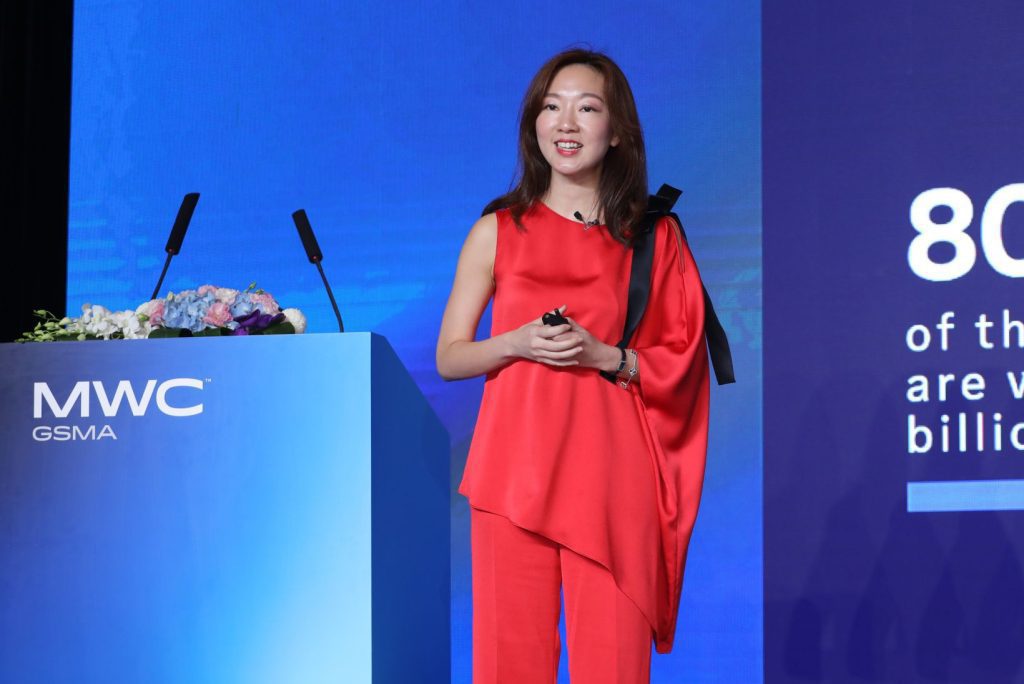
Organisation matters because modern business and leadership reward consistency over chaos. The people who execute well are often not the loudest – they are the ones who build systems, manage priorities and follow through repeatedly under pressure.
“I also organise my life very deliberately,” Sojung added.
“Some people find my intensity exhausting, but structure helps me stay focused and positive. I think deep down I’m just someone who constantly wants to grow, improve and experience new things. That curiosity keeps me moving forward.”
Ambition opens the door but discipline is what keeps you in the room.
At IBM, Sojung constantly volunteered for difficult projects, new markets and additional responsibilities. There was no downside to personal growth.
“The more challenges I took on, the more I learned, and the more relationships and sponsors I built across the organisation,” Sojung expanded.
Eventually, Sojung was appointed as one of the youngest directors at IBM, heading up the Mid-Market Software Unit across Asia Pacific.
“But over time I realised I wanted greater ownership,” Sojung continued.
“In large organisations, execution often happens in-country, and sometimes nobody truly owns the outcome. That’s what attracted me to SolarWinds. Suddenly I owned the number. I owned the region.”
After joining the business in February 2020 – at the start of COVID-19 – Sojung spent almost two years as Vice President of Asia Pacific and China at SolarWinds.
Then came TeamViewer in December 2021. President of Asia Pacific was a new position within the vendor’s organisational structure, forming the main pillar of a new set-up in the region.
“TeamViewer became another major step because it wasn’t just sales – it was full P&L accountability across the region,” Sojung acknowledged. “Sales, marketing, solution engineering, customer success – everything. That level of ownership excited me.”
In joining a German company for the first time, Sojung initially struggled with the direct communication style. In American companies, feedback can be more subtle while in German culture, it is often more pointed.
“At first, I became defensive,” Sojung acknowledged.
“I used to be very good at giving feedback and very bad at receiving it. Then one of my leaders said something very important to me – ‘feedback is a gift and people don’t waste time giving feedback to people they don’t care about.’
“That completely shifted my mindset. Now, even if feedback still makes me uncomfortable sometimes, I try to sit with it differently. I reflect on it rather than reacting emotionally to it.
“That has probably been one of the most important personal growth areas for me as a leader.”
In assuming the leadership role in region, Sojung was also initially challenged with building belief internally.
At IBM, it was easy to attract talent because of the brand. Likewise at Google, Microsoft and Amazon Web Services (AWS), with executives walking into meetings with automatic confidence because everybody knew who they were.
“At TeamViewer in the early days, it was very different,” Sojung recalled.
“TeamViewer required people to explain the company and the value proposition constantly. So one of my biggest challenges was building belief internally – helping people feel proud of what we were building and creating a culture where people genuinely had each other’s backs.”
Building culture across fragmented regional teams as a new President is one of the hardest leadership challenges in modern business, however.
Different offices develop different habits, communication styles and operating rhythms over time. Without deliberate alignment, distance can quietly create silos, inconsistency and mistrust.
Culture cannot be mandated through PowerPoint presentations or company slogans. It is built through visibility, consistency and shared experience.
“When I first joined, every country operated independently,” Sojung explained.
“Japan did its own thing. China did its own thing. India did its own thing. We had to create one regional team culture. That took time, and honestly, I made mistakes along the way.”
In regional businesses, trust travels slower than strategy. That means culture is not built in one announcement – it is earned repeatedly through disciplined leadership and consistent execution over time.
“There were moments where I probably moved too quickly with organisational changes,” Sojung accepted.
“In hindsight, while some decisions were right, I could have spent more time understanding the broader ripple effects across teams, partners and customers. Leadership decisions affect real people and real families so that’s something I now think about deeply.”
In such instances, curiosity becomes a competitive advantage.
The most effective leaders are rarely the ones pretending to have all the answers, they are the ones asking the best questions. An approach that has shaped Sojung’s journey from Seoul to Singapore – and everywhere in-between.
“I’m endlessly curious about leadership because leadership carries responsibility,” Sojung added.
“People join your organisation trusting you to help create growth, opportunity and stability. That’s a huge responsibility.”
Markets are shifting too quickly for leadership to rely purely on experience or legacy thinking – AI is changing workflows, customer expectations are evolving, talent dynamics are different and entire business models are being reshaped in real time.
Leaders who remain intellectually curious are far better positioned to adapt before disruption becomes damage.
“I read constantly, especially during long-haul flights,” Sojung said.
“I love physical books because digital reading distracts me too easily with emails and messages. Reading makes me happy because books allow me to learn from people who have already experienced things I haven’t yet experienced myself.
“I also rely heavily on mentors and trusted peers across the industry. I ask questions constantly. I reach out to leaders I respect. I seek perspectives.”
In many ways, curiosity has come full circle for Sojung.
It began as a personal trait – the willingness to learn, question and explore – but over time has become a cultural force that shapes how an organisation thinks, operates and evolves across the region.
Curious leaders build curious businesses. They create environments where people are encouraged to challenge assumptions, test ideas and continuously improve rather than simply protect the status quo.
“I don’t think leadership is something you ever fully master,” Sojung summarised. “For me, leadership is a continuous process of learning, reflecting and growing.”
Inform your opinion with executive guidance, in-depth analysis and business commentary.

