
Home
You’re currently viewing our content for All Regions.
You can switch to a different region:
July 21, 2025
“There’s a difference between building a tool to modernise distribution, versus becoming a platform business.”
This was an important distinction for Sanjib Sahoo to make – one that was repeatedly referenced and constantly clarified.
Because who doesn’t claim to be a platform business nowadays? Whether via investor presentations, shareholder updates or corporate marketing, organisations are obsessed with rebranding in this manner.
Problem is, most are simply modernised tools, systems or processes. Wrapped up in platform packaging with a public relations bow on top.
“It’s different,” said Sahoo, speaking as President of Global Platform Group at Ingram Micro. “We’re solving a bigger problem in our industry, not modernising distribution.”

Sahoo’s observations strike at the heart of the platform debate in IT distribution – a channel that has traditionally struggled to deliver B2C-grade experience for a B2B market.
“We all know that B2B is hard – it’s complex and it’s challenging with longer sales cycles and complex quoting,” Sahoo suggested. “But B2C is blurring with B2B and today, everybody wants a different experience in the form of consumerisation.”
Using Ingram Micro as an example, a typical quote historically involved three companies, 12 people and took up to 72 hours to process.
“Think about that for a second,” Sahoo paused. “On average, our customers transact hundreds of orders every single day yet this is how the industry works.”
As a $50 billion behemoth, Ingram Micro has been in the distribution game for more than 45 years, now servicing over 1500 vendors and 161,000 customers to support millions of businesses and consumers across the world.
“On average, an Ingram Micro product touches six vendors and 90% of the world’s population,” Sahoo said. “That’s a lot of complexity and efficiency that we have had to deal with but it’s not only our problem, it’s how IT distribution has always worked.
“Now we have a better way to bring speed, scale and service to the industry.”
Hence the creation of Xvantage, a digital experience platform ecosystem built from the ground up to “reimagine distribution”.
“We thought, there should be a better way to solve these problems,” recalled Sahoo, who joined the business with this mandate as Executive Vice President and Chief Digital Officer in June 2021.
“We operate in an industry that creates, sells and supports infinite solutions with a $5 trillion total addressable market. A big industry with lots of inefficiencies.”
Path to platform business status
Many companies aspire to become platform businesses – such as Amazon, Meta or Apple – but almost all fail due to a fundamental misunderstanding of what a platform truly is.
A platform is not just a product or marketplace; it’s a dynamic ecosystem that enables value creation between two or more interdependent groups, typically producers and consumers.
Companies often focus too narrowly on building products rather than enabling interactions, missing the network effects that define platform success.
“The largest taxi company in the world does not own a single taxi,” Sahoo stated. “The largest hospitality company in the world does not own a single hotel. The largest content company in the world does not own a single piece of content.
“They are platforms, building the technology while also solving the chicken and egg problem of building an ecosystem.
“At Ingram Micro, we already had the network so we started building the technology through our Xvantage platform.”
Armed with a key differentiator – an ecosystem of interconnected vendors, resellers and managed service providers (MSPs) – Sahoo and his team started the process of laying the foundations for future growth via a customised platform, shaped by three key focus areas:
“Firstly, a platform company needs a network and we had a network,” Sahoo said.
“The lines are not linear anymore – vendors, distributors, resellers and end customers. It’s actually changing which is why we built a platform to bring everything together into one single ecosystem, rather than just a support tool.”
On talent and expertise, Sahoo recruited the most influential leaders from the best platform companies in the world, notably Google, Meta and Amazon.
“Ingram Micro has amazing people and expertise in distribution but we brought in outside talent,” he explained. “The expertise we had in-house matched with the art of possible with technology created a healthy balance for how we approached this.”
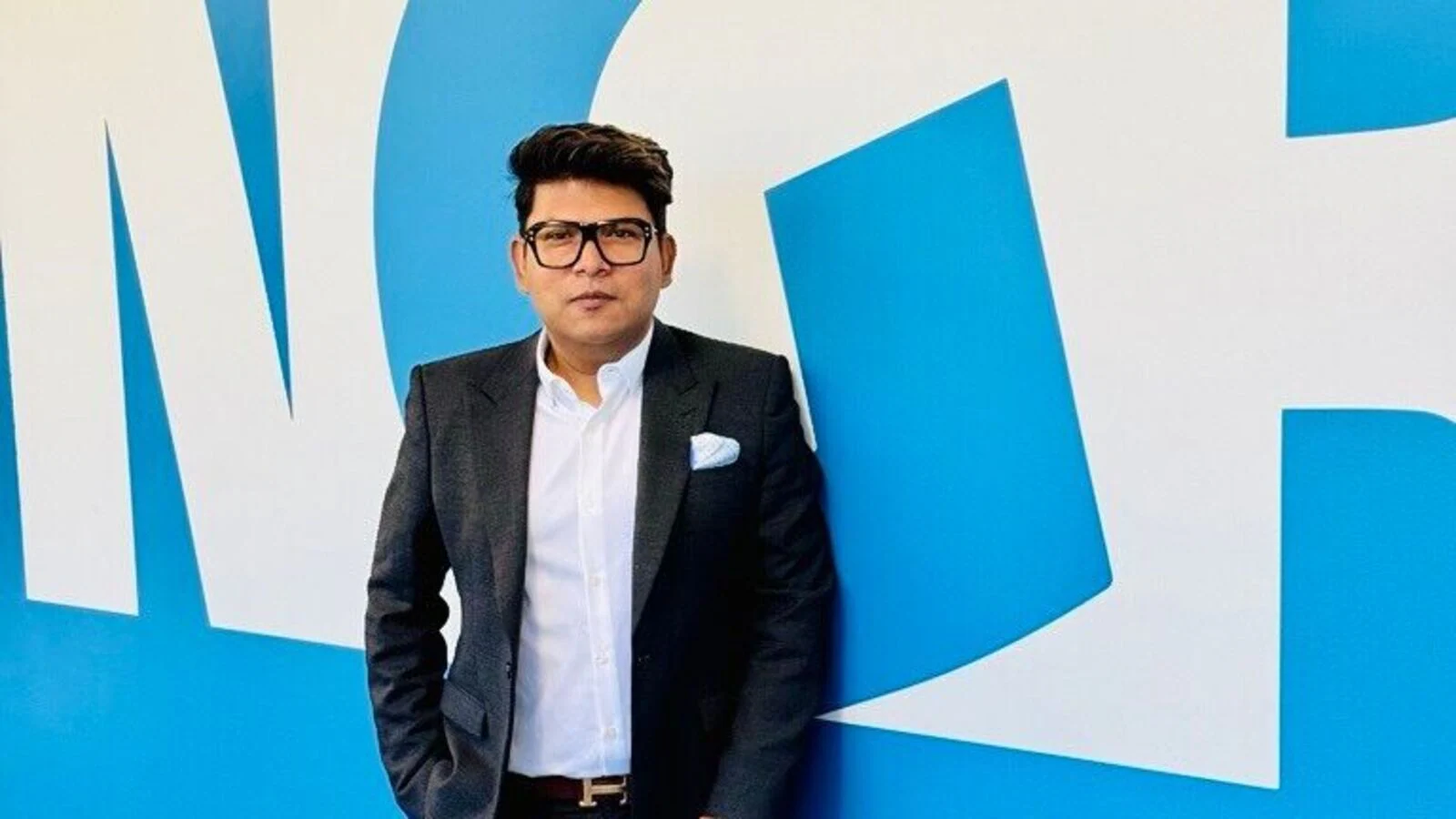
Specific to maximising the sheer volume of information at the company’s disposal, initial plans centred on unlocking over 40 years and four petabytes of data.
“When I joined the business four years ago, my first hire was a Chief Data Officer [Mukund Gopalan] who focused on that 40 years of learnings through our data,” Sahoo added. “But we didn’t just jump into building algorithms, first we looked at the many inefficiencies and complexities to solve.
“It needed data to create seamless and meaningful exchange but it also needed an amazing experience. It’s difficult creating a B2C experience in B2B.”
All in on AI
Success for Sahoo and his team could only be achieved by committing for the long haul however.
Building a platform takes time, investment and tolerance for ambiguity. Those expecting quick returns often abandon the model prematurely, missing the exponential gains that come later.
“How can you unify software, hardware, cloud and services into one single platform?” Sahoo asked. “This couldn’t be a fragmented experience so we worked on our patent pending design for a single pane of glass.”
This layout was recently award three iF Design Awards for Excellence in User Experience and Innovation.
“We are using AI to reimagine the B2B journey,” Sahoo continued. “From customers to vendors to the supply chain – plus quoting and pricing – we actually started imaging this journey through the power of AI.
“The journey is designed to remove siloes to create a comprehensive ecosystem, not just a website.”
Across the Xvantage platform, the AI journey spans:
“Xvantage stands between the demand and the supply,” Sahoo summarised.
“Everyone says they have a platform for the industry or distribution but can it personalise experiences for every single persona? Can it support software, hardware, cloud and services subscriptions in one single platform? Does it have insights powered by AI to help partners with future prospecting? Can it solve special pricing in real-time?”
For Sahoo, solving such an endless list of questions for Xvantage are five core building blocks:
“A platform company depends on architecture,” Sahoo said. “Our platform is powered by a real-time data mesh plus AI and ML driven engines.”
Sahoo also acknowledged a “very important aspect of operational efficiency” following a ransomware attack on the company in early July.
“Platform companies are resilient,” he noted.
“We experienced a ransomware incident in our internal systems. We took proactive actions and immediately turned down our systems, worked with some cyber security third-party experts to reach containment and remediation very quickly within days.
“The fact that we could turn back our operations pretty fast and quickly is because of the breadth and ability of our Xvantage platform.”
Now “fully live” in 21 countries, the platform is building muscle on a daily basis. By the numbers, Xvantage can be broken down as housing:
“A transaction happens in any country, that flows into a real-time data mesh and feeds into our Custom AI Factory,” Sahoo documented. “This is at the heart of Xvantage and we’re working with data scientists to build and train AI models.”

From an efficiency standpoint, AI is also converting product SKUs into PDFs and condensing multiple vendor pricing into a single quote – delivered via a multi-channel and mobile experience.
Through an enhanced integration hub, Xvantage is designed to “meet partners where they are” in terms of connecting to whatever systems and technologies they use in-house. Whether CPQ, CRM, Sticky Notes or Excel, data can be input once and integrated from the outset.
“Through our AI model, IDA [Intelligent Digital Assistant], we are examining signals and propensity through all the code data and figuring out new opportunities for our partners,” Sahoo said.
“Our teams are proactively reaching out with those signals and knowledge to better enable our partners. We’ve moved from order taker to order maker because of the data exchange through our Custom AI Factory.”
When the rubber hits the road
Building a platform is only the beginning – getting the market to adopt and actively use it is an entirely different challenge.
Many companies invest heavily in creating technically sound, feature-rich platforms, believing that if they build it, users will come. But platform success depends not just on infrastructure, but on achieving critical mass, trust and sustained engagement from multiple sides of the ecosystem.
And for Xvantage, it’s playing out in the numbers.
During the first quarter of 2025, the platform registered 12 million searches for hardware, software, cloud and services for end-customer solutions. Meanwhile, self-serve orders more than tripled year-over-year and thousands of dormant customers were also reactivated.
“We’re solving a problem in our industry, not modernising distribution,” Sahoo stressed.
“We are creating a platform business through the technology that we have built. This is helping to reduce the cost to service while driving demand generation and showing growth.
“Ultimately, this is leading to increased scale and differentiated value in market.”
According to Anurag Agrawal – Chief Global Analyst at Techaisle – Ingram Micro is “fundamentally redefining itself”, moving from a traditional distributor to a platform company powered by Xvantage.
“This isn’t just an e-commerce site,” Agrawal explained.
“It’s a comprehensive digital experience platform, backed by significant investment, designed to make B2B tech transactions as frictionless as B2C. The goal is to seamlessly connect supply with demand, freeing partners to focus on higher-value activities.”
For Steven Dickens – CEO and Principal Analyst at HyperFRAME Research – Ingram Micro is placing a “very big bet” on Xvantage.
“The success of this platform will hinge on its ability to consistently deliver on these ambitious claims, providing real, measurable value to its extensive partner network,” Dickens analysed. “The underlying technology seems robust, and the strategic direction appears well thought out.”
Looking ahead, Sahoo – who was promoted to President of Ingram Micro’s Global Platform Group in January 2025 – is tasked with continuing to execute on the company’s vision to become the global technology ecosystem’s B2B platform of choice. This includes leading the continued development and deployment of its digital twin in the form of Xvantage.
“Xvantage is helping our customers and vendors to work faster, smarter and with more intention,” Sahoo said.
“A platform business creates a network effect. We are bringing that flywheel effect to the channel through the power of data, network and technology.
“As we bring in more vendors and become more efficient, we then bring in more skews and products which means more bundles and more aggregated solutions. This will attract more ecosystem partners and lead to better pricing and promotions.”
For Sahoo, that’s the power of the platform.
Inform your opinion with executive guidance, in-depth analysis and business commentary.

