
Home
You’re currently viewing our content for All Regions.
You can switch to a different region:
October 22, 2026
So often in business, new CEOs are cast as rescuers.
That age-old script of a company losing its way, the board looking outside for fresh leadership and the newcomer arriving to steady the ship, cut what isn’t working and save the day. A familiar narrative since the dawn of time.
The appointment of Tom Allan as CEO of Murdoch Webster is the opposite, however.
“What I want to be clear on is that I’m not here to completely change the business,” Allan outlined.
“Our customers know and love Murdoch Webster for who it is, and a lot of that is relationships. That’s not going to change. What we’re doing is strengthening and evolving the services that we offer to the market.”
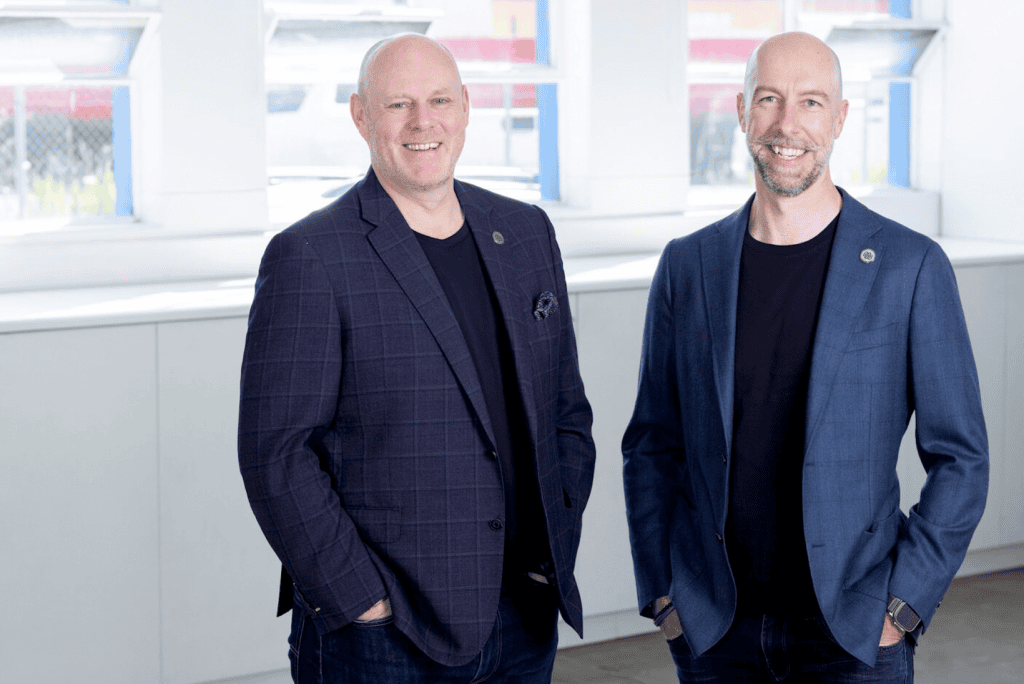
This is a leader taking over a business that isn’t broken, at a point when the hardest work has already been done.
During the past 6-12 months, the Melbourne-based managed services provider (MSP) has gone back to the drawing board on service delivery and solution expertise – deepening cyber security capabilities, rebuilding managed services from reactive to fully proactive, and creating its own platform, Murdoch Webster Assure.
The founder – Chris Mearns – isn’t leaving either.
In other words, the foundations are laid and now, the planned handover takes effect.
“From the start, Murdoch Webster has been about doing right by our customers, keeping our word and delivering what matters to them,” Mearns added.
“You earn trust that way, and I’m proud of the relationships we’ve built over the past 20 years. Tom understands what it takes to build a strong technology services business and shares that commitment. He’ll lead the business as CEO, and I’ll stay closely involved with our customers, technology and partners. I’m looking forward to what we can do together.”
The timing is deliberate too.
Mearns – who started Murdoch Webster in 2006 – moves into the role of Founder and Executive Director and will remain actively involved with customers, technology partners and the team.
The appointment lands as the company turns 20. Some customers have been present almost from the start, through every change in infrastructure, cloud computing and cyber security since.
“I wanted to lead a business where I could spend time with customers, work alongside the engineers and see the difference our decisions make,” Allan noted.
“Murdoch Webster has customers who have trusted the team for almost 20 years. That tells you something about how people here work. There’s a lot we can build on, and I want to help the team do that while keeping the personal service customers know us for.”
Allan did not arrive through a recruitment process, rather joining the business via the side door as a strategic adviser. Such a route goes a long way to explaining why the handover is smooth and structured from the outset.
As Founder of Basis Networks – which was acquired by CyberCX in July 2020 – Allan later served as COO of CyberCX before creating an independent advisory firm, Allanex.
Through his consultancy, Allan served “two sides of the same coin” – investors wanting a forensic view of a services business before they buy into it, and owners wanting to grow their business to the point where they have real choices about its future.
“Firstly, to help people looking to invest in businesses like Murdoch Webster look under the covers and identify whether there’s real opportunity there to grow the organisation,” Allan explained.
“I’ve done that before, from the other side of the fence. The second part was to help those thinking about how to grow their business effectively, with a view to at some point selling or exiting, or at least scaling to a point where they could make that choice. Chris reached out to me to come in, have a look at Murdoch Webster and give him a hand.”
The two CEOs already knew each other.
Basis Networks and Murdoch Webster grew up in the same Melbourne market at the same time, with similar vendor partnerships, and, now and then, similar customers.
Allan’s first job at Murdoch Webster was diagnostic: work out what the business did well, where it could improve and where Mearns should put his own time. As that work went on, Mearns began to think about what came next for the business and for himself.
“Through that period, Chris was thinking about what next, and part of that was a leadership change and bolstering the skills and experience within the business,” Allan added.
This was the most strategic way to choose a successor.
Before either side committed, the incoming CEO had already looked at the business with a critical outside eye, and the incumbent CEO had already watched how his likely successor viewed the company. By the time the title changed hands, neither side was guessing.
Because there was no turnaround story to sell.
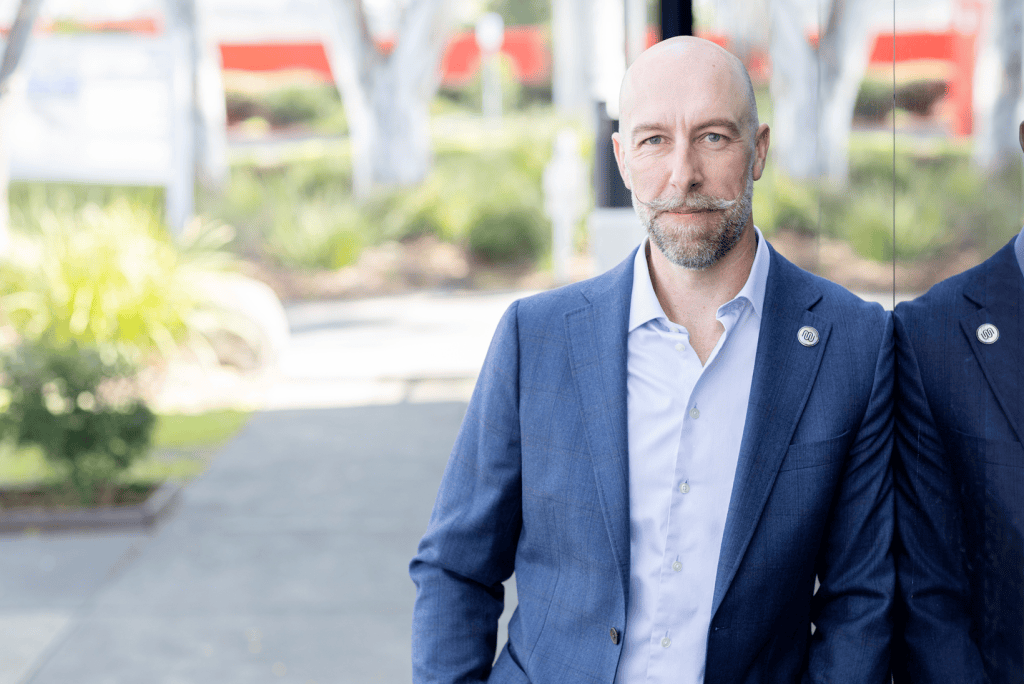
What won Allan over were two things that take years to build and can’t be bought – both sitting at the centre of any services company worth its salt in such a competitive Australian market.
“I love building businesses that are all about delivering great outcomes to clients,” Allan outlined.
“Everyone says that, right? But great outcomes come through real depth of experience and relationships, which is really important in the market, and through having a team that really enjoys what they do.
“If we can deliver a great outcome for a client through very skilled and capable people, everyone enjoys what they do. It’s cyclical. You get repeat clients who come back for more work, your team is happy, and you want to invest more in them because they’re going to stay.”
In that sense, Allan was quick to give the credit to the founder and the team he inherits as new CEO.
“What I liked about Murdoch Webster was the really great, long-standing relationships,” Allan shared.
“Chris has built this amazing 20-year business. Everybody knows Chris, as you’ll appreciate. He’s got good relationships with vendors and with his customers, and we’ve got customers that go back nearly the full 20 years of the business. That really says something.
“We’ve also got a really strong team and a really good culture. It’s a small business, but the team gets on very well and understands how each other works. What I saw was a very good platform to grow from, but still a real opportunity to take that and do something different with it.”
The appointment of a CEO with such strong market pedigree could easily be read as the start of a reinvention. But Allan was quick to reframe the positioning.
Murdoch Webster works in three disciplines – infrastructure, networking and cyber security – which are positioned as “strategic guardrails” rather than a list of offerings. Vendor partnerships remain central also and within those limits, the MSP uses its size to its advantage.
“For Murdoch Webster, it’s a huge benefit and differentiator that we’re small enough to be very agile, but incredibly focused on the disciplines we work in,” Allan stated.
“Those are our guardrails; that’s where we work. And we’re very good at working with our vendor partners, and with the skills in the team, to evolve that space so our customers still get the right outcomes.”
Most of the change has already happened, during the 6-12 months before Allan’s appointment was made public. The business looked hard at what it is known for and, more to the point, at how it delivers services and solutions.
For Allan, who describes himself as “a very process-driven person”, it was a return to the drawing board.
“Firstly, have we got enough depth of experience across those pillars?” he asked.
“For the most part the answer was yes, but there were some areas we wanted to double down on. My background for a long time has been cyber security, and I’ve brought additional cyber security capability into the business over the last six months.
“But how we deliver those services to the market has been the much more interesting one: how we interact with our customers, how we make sure we’re very efficient in getting back to them, understanding their problem, proposing the right solution, and getting it done to a very high standard.”
The expanded security bench now covers managed detection and response (MDR), cyber resilience and recovery, vulnerability management, and AI security, including visibility into the shadow AI tools employees use outside of approved systems.
The bigger structural change was in managed services, which Murdoch Webster took apart and put back together as one integrated offering across networks, infrastructure and security.
“Our managed services business has been completely rebuilt,” Allan expanded.
“We’ve implemented new technologies internally, everything from the integration of our platforms, and we’ve launched a new, fully proactive managed services offering.
“Where we were more reactive and more traditional before, we’re now very proactive: looking at a customer’s environment on their behalf, so they don’t need to know when issues pop up, and resolving them very quickly.”
Proactive service creates an awkward problem that every solid MSPs knows and few talk about, however.
The better the MSP does its job, the less the customer sees of it. Problems get fixed before anyone notices, tickets never get raised, and the monthly service review turns into a quiet meeting where the customer starts to wonder what they are paying for.
Hence the building of an in-house managed services intelligence platform – Murdoch Webster Assure – to solve exactly that.
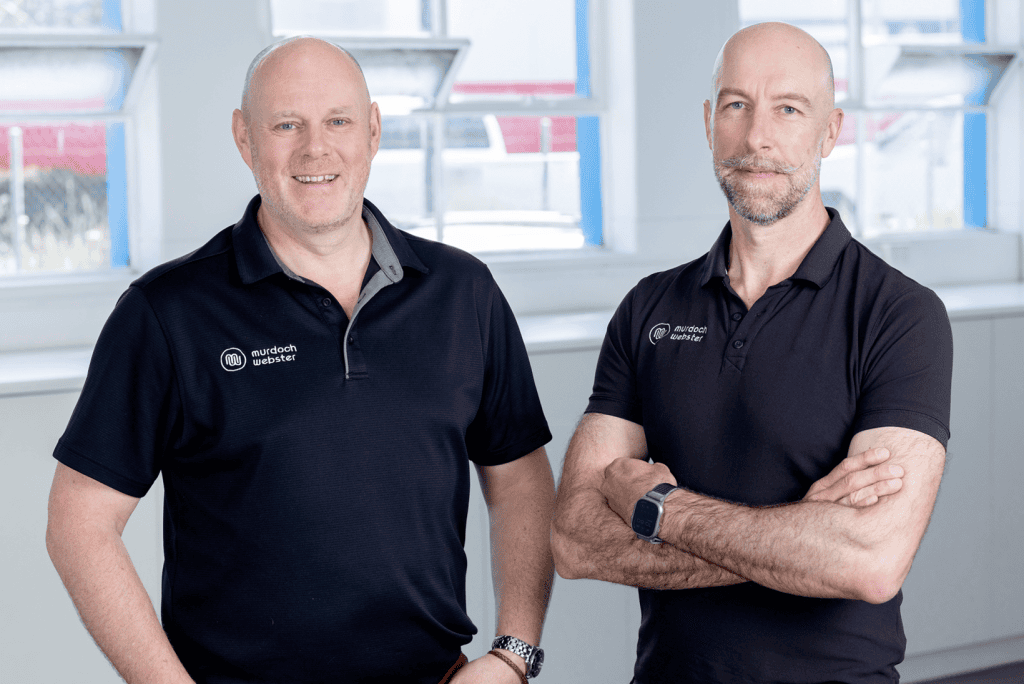
“There are plenty of MSPs out there,” Allan explained.
“We like to think we’re very different and that we do the right thing by our customers at all times. But part of that is: how do you prove it? A really good MSP that’s managing a customer’s environment very well often doesn’t get to showcase the work it does.
“If there are no issues, the customer isn’t needing to log tickets and we’re proactively resolving concerns, then in the monthly service review they sit there and go, ‘We haven’t heard from you guys very much this month. What’s going on?’”
This is a bigger risk than it sounds, especially in the mid-market.
According to Moxie Metrics – Mid-Market Outlook: Australia FY27 – only 37% of Australian mid-market organisations are satisfied with their current MSP. Another 41% are informally weighing up options while 22% are actively reviewing alternatives.
After rising costs and skills gaps, the most common reason for switching is a lack of innovation or proactive guidance (26%). When the best work goes unseen, a quiet month can easily be read as an MSP standing still.
Hence why Assure sits over the top of the systems Murdoch Webster and its customers already use, and brings everything into one view: performance, security posture, threats and alerts, and the provider’s own activity.
Every alert, every issue, every ticket and the contract status of every device is pulled into the one place. Customers can run real-time reports whenever they like instead of waiting a month for one.
Once the transparency problem was solved, the platform began to fix other things.
Vendor support contracts, which are easy to lose track of, became visible. So did software versions that had reached end of life and carried known vulnerabilities. Threat feeds from the security platforms Murdoch Webster manages followed.
“It went from being a transparency and accountability platform to asking, what other value can clients get out of it?” Allan continued. “It’s not a SIEM and it’s not a SOC. It’s very much an end-to-end management platform that gives customers that level of visibility.”
The platform addresses a gap the mid-market already feels in Australia. More than half (57%) of mid-market organisations lack fully unified visibility across security tools, according to Moxie Metrics.
Accountability shapes the business’s view of AI too, which Allan describes as “the big unknown and the big variable” for the market. Because in the mid-market, customers are caught between two pressures.
IT budgets set aside for projects that would support the business have come under real pressure from global pricing. At the same time, the flood of AI claims has made it harder to tell which tools are worth the money, and some customers are starting to “freak out a little” about what it means for security.
Moxie Metrics’ data captures both pressures.
Rising operational costs are the biggest challenge facing mid-market organisations (48%) in Australia, and cost optimisation is the leading driver behind current investment decisions (39%). On AI, security concerns are the most common obstacle to deployment (53%), and AI security now tops the mid-market’s cyber security priorities for the next 12-24 months (63%).
“There’s a lot of noise about what amazing things you can do with AI,” Allan observed. “But it causes a lot of confusion because clients have spent a lot of time analysing different solutions to assess what they’re going to get out of them.”
In other words, the role of Murdoch Webster is the hold steady as the market churns.
“Our job is to maintain security, resiliency and trust within a customer’s environment while that noise is floating around,” Allan clarified. “We can be the ones who adopt and evolve things, deploy those services and technologies for our clients, and make sure they still get the same outcome.”
Inside Murdoch Webster, AI is already part of how the work gets done as an “AI-optimised business” – plus the tooling was part of the services rebuild.
“AI can take repetitive work off an engineer’s desk, but customers still need someone experienced who understands their environment and takes responsibility,” Allan explained.
“We’re using AI and automation to give our people more time for that work, while keeping personal service at the heart of our customer relationships. And with Assure, customers can see what’s happening across their service, from an open ticket to a security threat. Our customers value that level of visibility and transparency.”
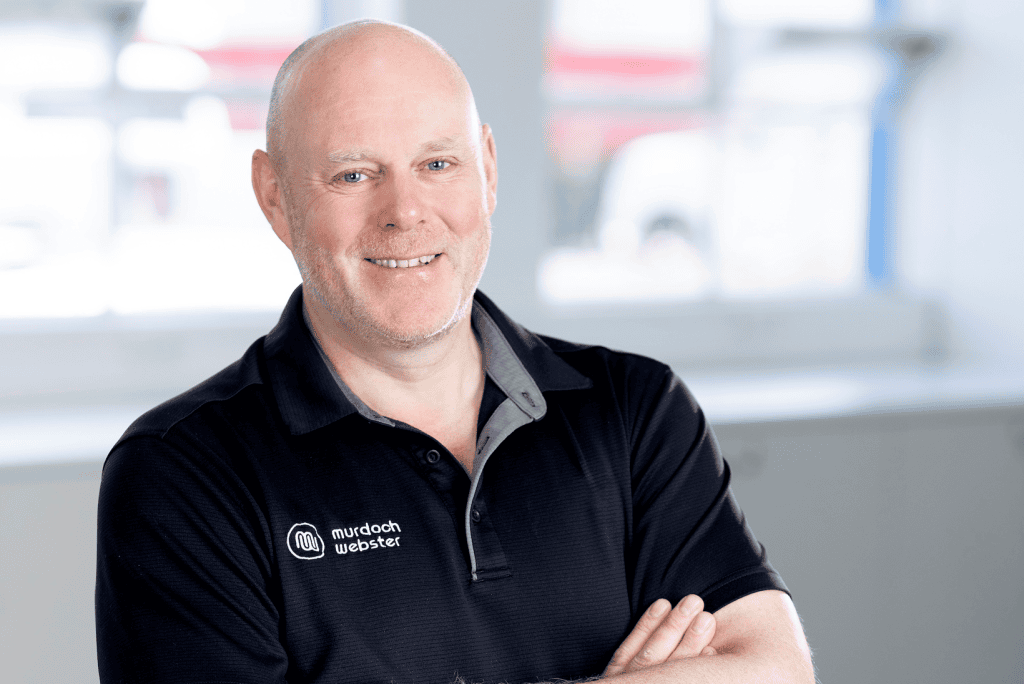
Doubling down further, Allan drew a firm line at the point where the customer meets the business, and he states it more bluntly than most MSPs would.
“We’re very much a human-oriented business,” he stressed.
“All of our customers have a direct interface into senior consultants with real experience, who may leverage tools to get a great outcome, but they’re never going to stick you in front of a chatbot. We’re never going to have AI responding to tickets. We don’t believe in that. That’s being very well received because we’re not divorcing ourselves from the accountability of what we need to do for our clients.”
Murdoch Webster supports more than 90 organisations across local government, education, healthcare and business. Most sit in the mid-market and upper mid-market, up to a few thousand seats, with a few much larger clients and a handful of small, long-standing ones.
Allan considers the mid-market, which makes up much of the Australian economy, as the place where the evolving MSP adds the most value. These organisations face the same outages and security incidents as the enterprise, often with far less technology capacity of their own to deal with them.
“We position ourselves as an extension of those teams, from a capacity and a capability point of view,” Allan added.
“Whether it’s a professional services play, where you need to buy something new and we advise you and help you adopt it, or the managed services play, where we work with our customers to give them the outcome they need.”
That fits how the mid-market already works.
According to Moxie Metrics, 80% of mid-market organisations in Australia outsource at least part of their cyber security operations, and hybrid SOC arrangements (51%) are about twice as common as fully managed ones (25%). Skills shortages, at 38%, are the second biggest organisational challenge they face, behind rising costs.
“There are small providers who are great and small providers who are not great,” Allan noted.
“Equally, there are large providers who are great and large providers who are not great. I don’t think there’s any real stereotype around size. What I would say is that in smaller businesses, particularly if they specialise, know what they’re good at and double down on that, you can really deliver an exceptional service.”
What makes the difference is the same thing that drew Allan to the business: relationships, and the ability of a leader to stay close to them.
“In a smaller business, you have the ability to interact with clients at all levels, and with people within your business at all levels,” Allan continued.
“Chris and I are out there all the time making sure our clients get what they need. We’re there to help them scope and identify what’s going to solve their problems, and we make sure our team does the right thing.
“You do lose a bit of that personal touch as you get into larger organisations. You can’t scale it beyond a certain point. Honestly, that’s one of the things I love about being in this part of the market.”
Set revenue aside, and Allan will judge his first 12-18 months as CEO on two critical measures of success.
“It’s fairly simple for me,” he outlined.
“How happy are our customers? That’s repeat business, and there’s a lot of that already; Chris and the team have done an amazing job. But as we move more heavily into our services, it’s about taking on more clients in professional services and managed services and making sure they get a great outcome.”
The second critical marker of success is the internal team.
“We’re not looking to grow at an astronomical pace,” Allan qualified.
“We’re looking to grow with the right people, continue to evolve the business, and make sure our team has the right employee experience, because your employee experience and your customer experience go hand-in-hand.”
For a business whose reputation was built one customer at a time over 20 years, the pace is the point. The services have been rebuilt. Now they have to bed in, win new customers and still feel like Murdoch Webster to the clients who have been there from the start.
“Chris is a core part of the business, now and going forward,” Allan added.
“That’s the question that pops up all the time: what’s happening with the leadership change? For us, it’s about everyone playing to their strengths. I’m bringing different perspectives and a slightly different focus, but Chris and I are very aligned on where Murdoch Webster is going.”
Inform your opinion with executive guidance, in-depth analysis and business commentary.

