
Home
You’re currently viewing our content for All Regions.
You can switch to a different region:
October 20, 2026
A trusted customer of many years asks for something outside of scope – beyond the core offering and into unknown territory.
Perhaps a first AI project, a review of a cloud bill that has grown out of control, or a security question the board now wants answered.
The request is reasonable and the customer expects a yes. But the capability isn’t there, or the experts who have it are already committed to other work.
Every managed service provider (MSP) knows this moment.
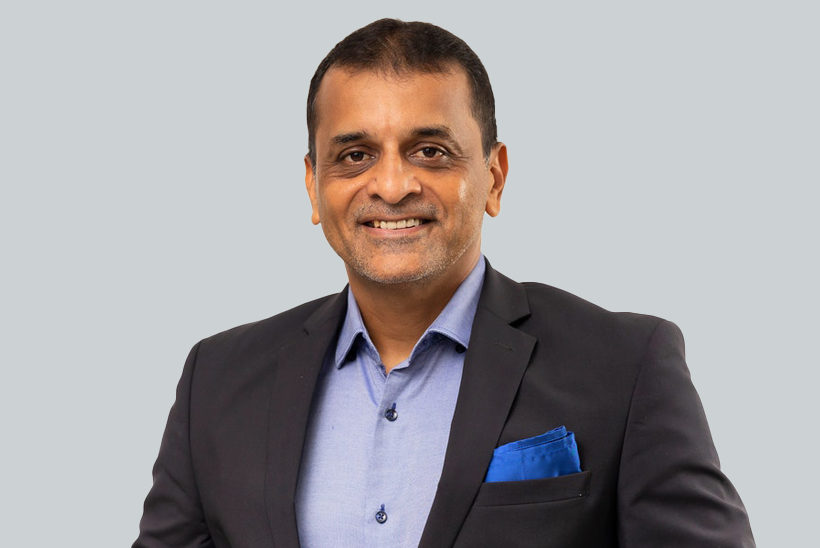
“MSPs sit there thinking, how do we deal with this?” questioned Mathew Howard, General Manager of Channel across Australia and New Zealand (A/NZ) at SoftwareOne. “Do we say no? Do we let our competitor come in and do that body of work? Do we build the capability ourselves?”

Each of those three answers costs an MSP something.
Saying ‘no’ leaves the customer to look elsewhere, and in the SMB market, the customer is already looking.
According to Moxie Metrics – SMB Outlook: Australia FY27 – only 32% of Australian SMBs are satisfied with their current MSP. Almost half (45%) are informally weighing up alternatives and a further 23% are actively reviewing options.
In other words, 68% of MSPs serving SMBs are currently on notice. Therefore, once a customer finds help elsewhere, it may not come back.
Meanwhile, building the capability in-house takes time, money and hiring in a market that commands large salaries from small talent pools.
For Howard – based on feedback from more than 200 partner conversations on both sides of the Tasman this year – a fourth option exists.
“Why not partner first?” he asked.
“All of our combined capability as SoftwareOne is now available to partners. We are an extension of their business meaning that partners don’t have to say ‘no’ as often as they did before.”
That conviction now has a bigger platform behind it.
SoftwareOne and Crayon have completed the integration of their channel businesses in Asia Pacific under the SoftwareOne brand, bringing together two established technology organisations to create a broader and more connected channel business for partners across the region.
The combination brings together complementary strengths from both organisations, including established partner relationships, technology expertise, vendor alliances and capabilities across software asset management, cloud, cyber security, data and AI, and managed and technical services.
The result is a single SoftwareOne channel business with greater breadth of capability and access to a wider technology ecosystem, while maintaining the partner relationships and customer ownership that have been central to both distributors.
“Crayon delivered professional services through channel, but SoftwareOne has a very rich history in professional services that dates back decades, dealing with some of the largest global organisations in the world,” Howard said.
“All of that capability is now available through the channel. It’s a much deeper and broader capability than we had before, but the same people you were dealing with yesterday are there to support you today and tomorrow. We simply have a bigger arsenal.”
On partner transformation, most distributors will offer advice. Howard’s argument is that advice rarely closes the gap between identifying an opportunity and delivering it.
“We don’t just advise partners; we’ll hold their hand through that process,” he explained.
“Partners get to see our pre-sales interact. They get to see our delivery teams interact. They might even want to project manage the service delivery that we’re doing. We can hold their hand through building up the certifications and specialisations they need internally to tap into the hyperscaler programs and customer opportunities that are available.”
In practice, a partner can win new customer work on SoftwareOne’s expertise, watch it being delivered, put its own project manager in charge and come out the other side with the accreditations to do it alone.
Howard sees that as a genuine point of difference in distribution.
“Because of our rich professional services experience, we’re the only distributor that can not only advise, but lead you through that process,” he clarified.
The gap that Howard is describing shows up clearly in the Moxie Metrics‘ data.
Skills and capability gaps are the second most common reason an SMB would change an MSP in Australia (29%), behind only rising costs (39%).
And when it comes to AI, the quality SMBs value most in a partner is the ability to manage a project end-to-end, from strategy to implementation (51%). Yet only 27% currently work with an MSP on AI, well behind business consultancies (41%).
The demand is there and customers want one accountable partner. But the channel has yet to show it can meet such demand at scale.
“The market is so dynamic at the moment that no one organisation can do everything,” Howard said. “Partners are getting more requests for things that may not be core to them.”
At first glance, it would be easy to assume a ‘partner-first’ approach is exclusively targeted at MSPs lacking in-house expertise. But for SoftwareOne, services support also scales up as partner businesses expand.
Take blueAPACHE as a leading example in Australia. An established MSP targeting the mid-market with a revamped services model and value proposition – leveraging a deep partnership with SoftwareOne to capitalise on the opportunities available.
“In many instances, and in certain areas, blueAPACHE has as much capability as we have, if not more,” Howard explained.
“Yet they still use us extensively in professional services when they have a capacity issue in their business. They don’t want a competitor coming in to do a body of work if their team is already fully deployed on projects, so they bring in SoftwareOne as a strategic partner to help deliver it.”

SoftwareOne’s services model supports delivery to, through and with partners. This includes services that can be delivered under a partner’s own brand, as well as collaborative delivery where SoftwareOne and the partner work together on larger or more complex engagements.
This allows partners to extend their offerings without necessarily having to build every capability, hire every specialist or establish every delivery function themselves.
The model is intended to complement rather than compete with the partner’s own business. The partner retains ownership of the customer relationship, while SoftwareOne provides additional capability where it can add value.
“We’re the best-equipped distributor to work in partnership with partners looking to build capability in their business that they don’t have today,” Howard added. “Then, as they build that capability, they may still lean on us when they have capacity issues.”
In short, the combination of SoftwareOne and Crayon means partners can draw on a larger pool of specialist resources as customer requirements become more complex.
This includes solution architects, security and vendor specialists, bid support, practice development and technical expertise across areas including cloud, security, AI and productivity. Rather than requiring partners to build every specialist capability themselves, these resources can be brought into opportunities and practices where additional expertise is required.
“Bringing these businesses together gives us the opportunity to put more capability behind our partners,” noted Varun Paliwal, President of Asia Pacific at SoftwareOne.
“They can continue to work with the people and relationships they know, while gaining access to a broader range of expertise and services.
“Whether a partner is looking to develop a new practice, pursue a more complex opportunity or extend what they can deliver to an existing customer, we can bring additional capabilities to the table. The ambition is to make our partners more capable and help them pursue opportunities they may not have been able to pursue on their own.”
One of the clearest places for MSPs to start saying ‘yes’ is in areas that every SMB is already committed to – spending less.
According to Moxie Metrics, rising operating costs are the single biggest pressure facing Australian SMBs (48%) with reducing operational costs the most desired outcome from current technology investment (50%).
Cloud optimisation is long-standing SoftwareOne work, and the numbers are large enough to change a conversation.
“Our history is delivering around 30% savings on most of those engagements,” Howard said. “If these enterprise organisations are spending millions, multiply that by 0.3 and you can see it’s quite substantial savings.”
But the savings are only half the story. Howard is more interested in the question that rarely gets asked once the bill comes down.
“Customers then have two choices,” he continued.
“They can save a bunch of money and put that to the bottom line but then, what now? Or maybe, they could deliver that first AI project and get it off the ground which will have a multiplier effect on the business.”
The same work gets a partner through the door of a new account.
Only 34% of SMBs treat technology as a strategic business enabler, according to Moxie Metrics. The rest buy in response to an immediate operational problem (37%) or on price (29%), so the strategic conversation tends to come after the first problem has been solved.
“What a great way for partners to conduct a first engagement with a prospect – save them a bunch of money and instantly establish rapport in that account,” Howard recommended. “And as they work through that engagement, they can also ask: if we save you 10, 20, 30%, what will you do with those savings?”
SoftwareOne is aligning with vendors holding the same logic. Its newest addition is Spotto, born-and-bred in New Zealand.
“Spotto does a lot of work in the Azure optimisation space for MSPs, so it’s perfect for us, because of the demand coming from MSPs around right-sizing cloud expenditure,” Howard said. “We just launched and we’ve already got the first handful of deals that have transacted.”
The next step, controlling what AI itself costs to run, is “a topic of discussion, for sure”, in Howard’s words, though not yet mainstream. It may arrive sooner than many expect, however.
Among SMBs already deploying AI, cost management is the most common challenge they report (43%), according to Moxie Metrics.
Security is where saying ‘no’ is hardest to justify. And it’s also where AI has raised the stakes.
SoftwareOne has been running a series of roundtables with partners and their customers under a single theme: data protection in an AI world. The problem they are all trying to solve is a familiar one.
“Data is not all in one central place,” Howard explained.
“Most organisations are cloud-first or becoming cloud-first. Most are multi-cloud or exploring multi-cloud. They have SaaS investments across the organisation, and they’re exploring AI. That’s a very complex environment in which to manage data.
“So, how can businesses embrace and adopt AI in a safe and secure way? AI is driving more of a focus on security than anything we’ve seen in the past.”
SMB findings from Moxie Metrics endorse that position.
Data protection and privacy compliance ranks as the most pressing cyber security challenge for SMBs in Australia (52%) today, with data security (56%) and AI security (44%) topping security priorities during the next 12-24 months.
Yet the discipline hasn’t caught up with the concern.
Only 37% of SMBs review their cyber security roadmap quarterly or more often, and just 18% can clearly show that their security investment has reduced risk.
That gap is the opening for a partner that can say yes, whether through SoftwareOne’s security capability via Microsoft, or via the tier-two and tier-three security vendors it reaches through emt Distribution – acquired by the business in 2021.
Saying ‘yes’ more often solves one problem and creates another for partners. MSPs are naturally built on recurring revenue, and a run of one-off projects doesn’t pay the bills in the same way.
“MSPs love recurring revenue, so they don’t want to just undertake a whole bunch of one-off engagements,” Howard acknowledged.
“If a partner is going to focus on cloud cost optimisation, how do they turn that into a service? If they do something in the security space, how can they turn that into an ongoing service? Or AI readiness: how can they turn that into an ongoing service?”
Crucially, the appetite is there.
According to Moxie Metrics, 61% of Australian SMBs already outsource some or all of their cyber security operations while 82% consider a partner providing ‘continuous improvement and tailored guidance’ over time as ‘important or critical’ to the business.
The economics can also work in the partner’s favour.
“For example, a partner could leverage funding from one of the hyperscalers to deliver a one-off engagement at no cost to the customer,” Howard said. “How do we then turn that into a repeatable service that the partner can take advantage of?”
That is where the thread ends up. The partner that starts with a funded assessment, delivers it with help from SoftwareOne and builds the practice along the way ends up with a repeatable service, and a customer who never had to look elsewhere.
And the partner never had to say ‘no’.
“Asia Pacific is a region where local context matters,” Paliwal added.
“Partners need access to global technology and expertise, but they also need people who understand their market, their customers and the way they operate.
“Bringing Crayon and SoftwareOne together gives us an opportunity to combine those strengths. We can bring greater scale and breadth to the relationship without losing the local knowledge and partner relationships that have made both businesses successful.”
While the combination creates a broader channel business, the fundamental role of the partner remains unchanged.
Partners retain ownership of their customer relationships, while gaining access to additional expertise, services and technology capabilities through SoftwareOne.
This includes SoftwareOne’s Cloud-iQ platform, which helps partners simplify the operational complexity of managing cloud and software subscriptions through capabilities including subscription management, automated billing, usage intelligence and business insights.
Together, the combined capabilities give partners additional ways to build their businesses, whether by developing new practices, extending services, accessing specialist expertise, pursuing more complex opportunities or using technology to simplify their own operations.
“The most important thing is that the combination creates more possibilities for our partners,” explained Vikas Bhonsle, Head of Channel across Asia Pacific at SoftwareOne.
“We can bring more expertise into their opportunities, more services into their portfolio and more connections into their ecosystem. If our partners are able to grow, win new opportunities and deliver more value to their customers, then the combination is doing what we intended it to do.”
The combined entity has a presence in more than 70 countries and around 12,000 professionals, with access to more than 7,500 software vendors through its global marketplace.
“A prior integration taught me the need, particularly in channel, to be very externally focused,” Howard shared.
“During the past 12 months, I wanted to meet partners in their boardrooms, not on Teams, to understand their business, where they see value in the partnership today and, more importantly, where they see the opportunity for us to drive growth in the future.”
That principle is reflected in SoftwareOne’s broader approach to distribution, which puts partner growth at the centre of the relationship rather than focusing solely on individual transactions.
The model is built around understanding a partner’s business, growth objectives, target markets and services, and aligning relevant sales, technical and advisory resources to those objectives.
But despite such a declaration, Howard is clear on how the combined business will be judged.
“If our partners don’t see more value from us tomorrow than they’ve seen in the past, then the transition hasn’t been effective,” he stated.
“Can we help our partners build more capability? Can we bring deeper expertise to their organisations? And ultimately, can we work together to win more and help them grow their business faster? That’s how partners will judge our success.”
Inform your opinion with executive guidance, in-depth analysis and business commentary.

