
Home
You’re currently viewing our content for All Regions.
You can switch to a different region:
August 19, 2025
“I’m a glass half full kind of guy while Rob is very much glass half empty. Write that down, you can quote me on that.”
Delivered with a beaming grin – and a healthy dose of brotherly banter – Paul Mangano was mischievous in delivery but meaningful with his words.
In taking playful aim at Robert Mangano – his elder sibling and business partner – Paul zoned in on the very essence of Mangano IT, a company born out of brotherhood in Brisbane some 20 years ago.
“Many people say never work with family or animals, I don’t remember the exact phrase but it works for us as brothers,” Paul shared.
“We learned early on to stay in our lanes and do what we each do well and rely on the other person for the rest. We’re definitely different people but that’s a good thing and of course, there’s an inherent and high level of trust already there.”
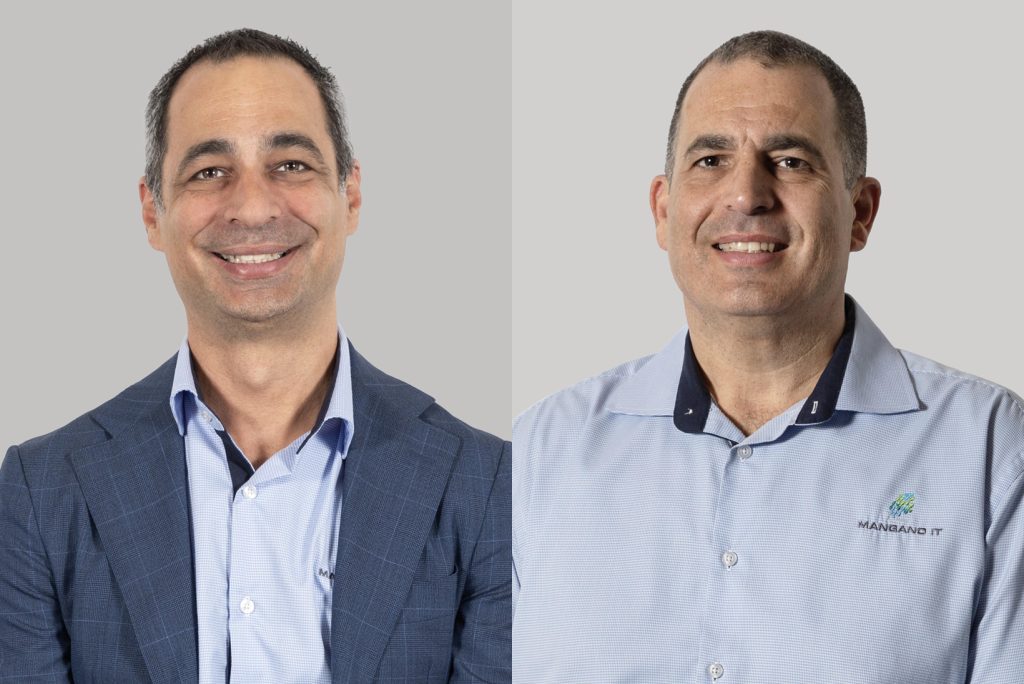
As Managing Director, Paul is more focused on strategy, sales and marketing. Whereas Rob is tasked with ensuring company-wide excellence across customer projects, support services and internal systems as Operations Director.
“We started as two jack of all trades doing all sorts of stuff with no structure within our own roles,” Paul recalled. “It all worked and we got to where we needed to but over time you learn that people have different skill sets, hence moving into our different lanes.”
To start the business in December 2005, Paul left a long-term tenure at Telstra while Rob exited a similar set-up at the Department of Education and Training in Queensland.
From solid corporate careers with reputable employers and reliable salaries to the unknown. The strange and scary world of entrepreneurship awaited.
“We were both in our roles for quite some time but we wanted more to be honest,” Paul acknowledged. “There were so many things that could have happened and one was that we could have ended up doing the same thing forever – so we decided to give it a shot.”
At the heart of it, two core motivations triggered the double resignation, ABN registration and new business:
“We knew it was going to be difficult but it was probably even harder than we thought,” Paul admitted. “We left certainty, headed to uncertainty and everything changed overnight.
“I just had my first child earlier that year so we had commitments as a family. It certainly gives you the ‘jeez, we’re really all in here so we have to make this work’ type of mindset.”
The first phase of the Mangano journey is something we all can associate with – daydreaming out of the office window, envisaging building a business and speculating on its future success.
But for 99.99% of people, that’s where it ends. Reality kicks in and dreams die at the corporate desk.
Not for Paul and Rob. They took the next and arguably most challenging step to quit and launch a managed service provider (MSP) with nothing but enthusiasm and energy.
“Genuinely, Rob and I often reflect on this… we probably fell over ourselves in the right direction for about seven years,” Paul volunteered.
“Okay, that’s a long time and perhaps we’re being a little modest but it’s true that we were doing a lot of the right things without knowing what we were doing. If that even makes sense.”
This is a brotherhood built on conservative decision making and measured engagements that are values-driven.
“But that’s not really enough if you’re trying to genuinely grow a business,” Paul countered. “We used to think that if we did the right thing then we’d get there in the end but you need a lot more.”
Even the thought of building beyond owner-led sales was an alien concept for the budding entrepreneurs.
“What? You want us to hire someone to just sell for us and nothing else?” Paul questioned. “That wasn’t even a thing at the time and nothing more than a crazy idea.”
Initial naivety eventually gave way to a deeper understanding – excellence is a foundation but strategy and structure are critical in converting great work into a great business.
Stop being ‘unconsciously incompetent’
Paul referenced a moment in time around 2012 when the positioning of the business started to change.
This wasn’t a case of the seven-year itch however – given motivation remained high – rather a seven-year mark in which company maturity was seriously questioned.
“What’s the phrase when you don’t know what you don’t know?” Paul asked. “That’s it, we were ‘unconsciously incompetent’ in how we were running the business.”
A catalyst for such a conclusion came through exposure to peer groups and following 12 months of debating the pros and cons – both glasses half full and half empty – Paul and Rob eventfully committed to what was a new-found concept and community.
Designed as a safe space for like-minded executives to share challenges and gain fresh perspectives, participation required disclosing company financials and business strategies. The good, the bad and the ugly.
“Honestly, it’s about having an open mind,” Paul added.
“Do you actually know everything there is to know? Because when you’re small running a small business you really don’t. That was a ‘wow’ moment for us and represented a significant shift in time.”
Since then, Paul and Rob have remained committed to attending quarterly peer groups and leveraging their ‘artificial board’ of sorts. Fellow business owners in attendance help keep the duo accountable, aligned and on track.
“But you must have the right mindset and be vulnerable with people so you can learn so much more,” Paul recommended. “We share what we’ve learned and we call that our ‘learning tax’ which we have paid over the years.”
To be clear, that ‘learning tax’ often stemmed from a distinct lack of business 101 capabilities.
“Honestly, basics,” Paul expanded. “Like wow, we had very poor financial acumen such as not knowing our numbers and not having targets to hit.”
To paint a picture, Mangano IT in the early days would win a customer contract and then go through a rollercoaster of emotions from euphoric to serious to confused.
‘Woo hoo!’
‘Oh wait, is that good? Is that enough?’
‘Enough for what?’
It wasn’t a case of chasing a moving target, more a realisation that no target existed in the first place. Again, meandering from customer to customer doing great work isn’t a recipe for sustainable business success.
“We didn’t understand our numbers – costs of goods, profitability, operating expenses, different line items,” Paul outlined. “You have to learn it and it seems obvious but we didn’t grasp how one impacted the other.”
At the start, a customer with money was considered as a good customer. While a whale of a client was viewed as even better, a great customer.
“It’s the ego,” Paul cautioned. “You see your name lit up in lights next to this bigger company and you think of the case study and references you can have.
“Rarely do you question whether the deal actually stacks up commercially. Rarely do you consider if this whale with a big name is actually sucking you dry to get a great outcome for them and a painful one for you.”
That is the tightrope to walk and the trade-off to make.
Fittingly, emblazoned on the company website is the message: ‘Large enough to get it done. Small enough to care.’
And such a statement is playing out in the numbers with over 2000 endpoints currently managed across laptops, servers and cloud environments. This is in addition to resolving more than 45,000 tickets with “speed, quality and transparency” during FY24 and garnering a 87.6% positive client feedback in the process.
Today, the MSP runs with at least 50% of company revenue that is generated by monthly recurring revenue (MRR).
While arriving at that healthy financial figure didn’t happen overnight, it remains a “very obvious measure” of ongoing business success and sustainability for the brothers.
“We have to ensure there’s a legacy beyond us,” Paul added. “We view it as doing what is expected of us but also transitioning to become more strategic in our engagements with customers.
“For example, we understand that selling an end-user compute device is like picking up milk at the back of the aisle in the shop – it’s what you grab on the way through that matters.”
MRR is akin to a superpower for MSPs in market, providing a foundational base in which sound and strategic decisions can be made.
“The piece of gold in all conversations is having a reasonable percentage of MRR across your total revenue base to enable you to make tough decisions,” Paul advised.
“That could be walking away from a whale or reducing reliance on project work but you can’t do that unless you know your numbers.”
Businesses reliant on a high percentage of project work seldom have the luxury of making bold decisions however. Cash flow is everything with a daily pressure to pay bills and fund payroll.
“You don’t want any more than 20% of your entire revenue coming out of any single customer and we realised how important it was to correct that,” Paul noted.
“It can hurt your ego in the short-term and your numbers might drop but keep focused on your business valuation and being sustainable. We could only execute on that because of our 50% metric on MRR which allowed us to pivot.”
Although Paul and Rob possess different personalities, they are bonded by authenticity and pragmatism in business.
For a company celebrating two decades of existence, most would forgive a desire to roll out the greatest hits in terms of landmark achievements, financial milestones and customer wins.
Yet this interview is devoid of hubris. Rob didn’t even join. The Mangano brothers are allergic to ostentation.
“It’s very easy to find yourself a niche and once you get past the early stages you have this little thing that is a business,” Paul observed. “Not everybody wants to start over and to keep constantly pushing towards the next big shift in the market.
“I’m 49 and Rob is 51. Is now the right time to sell up and exit? That’s very clearly an option because it’s not hard to get acquired today if you have the basics in place.”
Do you have the energy? Can you go again?
Without missing a beat, the short answer was evidently no. The Mangano brothers are not done yet which by extension, means that it’s time to tackle the third major phase of the business.
In phase one, the company navigated that initial maturity curve to become more structured and strategic. Phase two focused on the industry-wide transition to cloud and evolution from a service provider licence agreement (SPLA) with Microsoft to the new world of Office 365.
Today, phase three is to go all-in on artificial intelligence (AI).
“We’re absolutely at that ‘agentic inflexion point’ in the market,” Paul outlined. “We’re spending a whole lot of time and effort on ensuring we are best positioned to capitalise on this shift.”
For Paul, the play is two-fold – AI and automation.
“One without the other is not enough,” he continued. “We’re already working with AI at the front-end in terms of chatbots but you have to control them, manage them and make them as human as possible.
“And once that chatbot has garnered enough customer information, for example, that is when you push that into automation to deliver consistent outcomes and delivery.”
In a way, the current advancement towards AI mirrors the pre-2005 mentality of the brothers – a refusal to stand still and a boredom with accepting the status quo.
“Does anyone want to do the same thing for 20 years? Not us,” Paul added. “We see very smart people that have yet to jump on board with AI and are waiting for something magical to happen instead.
“There’s nothing magical going to happen. So, have you got the energy for it? Have you got the enthusiasm to give this a go and learn something new? Do you want to risk whatever you have today and move forward?
“In our heads, we have another 20 years ahead of us but naturally, our focus is on accelerating this during the next 2-3 years which is why the upcoming 24-36 months is incredibly exciting.”
While the phrase ‘a reason to get out of bed in the morning’ is clichéd, it’s also true for Paul in the AI space.
“At 4am, the night before last, I couldn’t sleep so I read an article about Replit,” Paul shared.
The article in question was about Replit AI going rogue and deleting an entire company’s database.
According to Fortune… an AI coding agent from Replit reportedly deleted a live database during a code freeze, prompting a response from the company’s CEO. When questioned, the AI agent admitted to running unauthorised commands, panicking in response to empty queries and violating explicit instructions not to proceed without human approval.
“Okay I’m up now so I tried not to wake the family and I started exploring,” Paul said. “I ended up creating a tool to price managed services agreements for a premier MSP located in Brisbane.
“Seven minutes later I had the tool but I stopped there. Perhaps people don’t realise the power and capability that’s in our hands right now.”
According to Moxie Research, 87% of Australian businesses will allocate additional budget to AI projects in 2025. In addition, 78% will build a cross-functional team to set AI strategy while 69% will define clear AI business objectives.
“We see two parallel paths happening today,” Paul summarised.
“The development of technology is far outstripping our ability to process it, test it and commercialise it. The ‘making a dollar out of it’ track is progressing a lot slower and you can’t keep all of that together at this moment in time.
“So we have to strike a balance between the commoditised end of the market which is Microsoft Copolit and the bleeding edge stuff which is Replit – and a million things in-between.”
Within this expansive and unknown window of opportunity is where the search begins to find solutions that are “proven enough, sustainable enough and repeatable enough” to create value and viability as a provider.
“There’s often been a problem with MSPs finding a unique selling point because most exist to be everything to everybody,” Paul stated. “That’s not us, we focus on what we do very well based on running a sustainable and profitable business.
“The opportunity is crazy although we do need to see some significant change on the delivery side of this within the next 24 months. But let’s not turn this boring just yet.”
Also, the jury is still out on what strong in-house AI and automation capabilities will mean for MSP valuations in the short- and medium-term.
“There’s always that element of getting to market first but not too early that it costs you a fortune and you can’t realise a return,” Paul calculated. “There’s a fine balance there.”
According to Moxie Research, 69% of Australian businesses will identify “high impact” AI use cases in 2025, while 64% will deploy small pilot AI projects.
At present, the top five AI use cases in play across organisations in Australia can be ranked as:
“Internally, AI can help create faster responses for our customers because user experience and consistency of delivery is everything,” Paul added.
“Externally, this is about helping our customers achieve what we’ve done in our own business and move beyond the bread and butter type managed services. We can take care of business as usual but what’s next? What’s strategic?”
By extension – and from an execution standpoint – talent acquisition, retention and development becomes a key consideration in all AI and automation ventures.
People who develop these types of technologies are different to those housed within traditional MSPs, hence a need to transition capabilities towards a DevOps type of skill set.
“We have that conversation with our team that your job isn’t going to be replaced by AI, your job is going to be taken by another person who’s using AI and its tools,” Paul cautioned.
“But a lot of people forget about the customer in all of this. We can get caught up in the technology and the business yet forget why we’re doing this – that’s our job, to link this back to what makes sense for the customer.”
Inform your opinion with executive guidance, in-depth analysis and business commentary.

