
Home
You’re currently viewing our content for All Regions.
You can switch to a different region:
September 23, 2025
Seldom, if ever, do interviews start this way. But the dynamic was different when Michael and Maryanne Demery sat down.
Akin to a lawyer advising their client to keep quiet while the police charges are being read out – this appeared to be heading into mouth shut, damage limitation territory without delay.
“I remember when we started the business, I was actually on good money…”
“Oh, I know this story. Mick, please don’t share this story.”
“Basically what happened was…”
Within 30 seconds, the unique essence of Seccom Global – a Sydney-based company created in March 2003 – was on sparkling show.
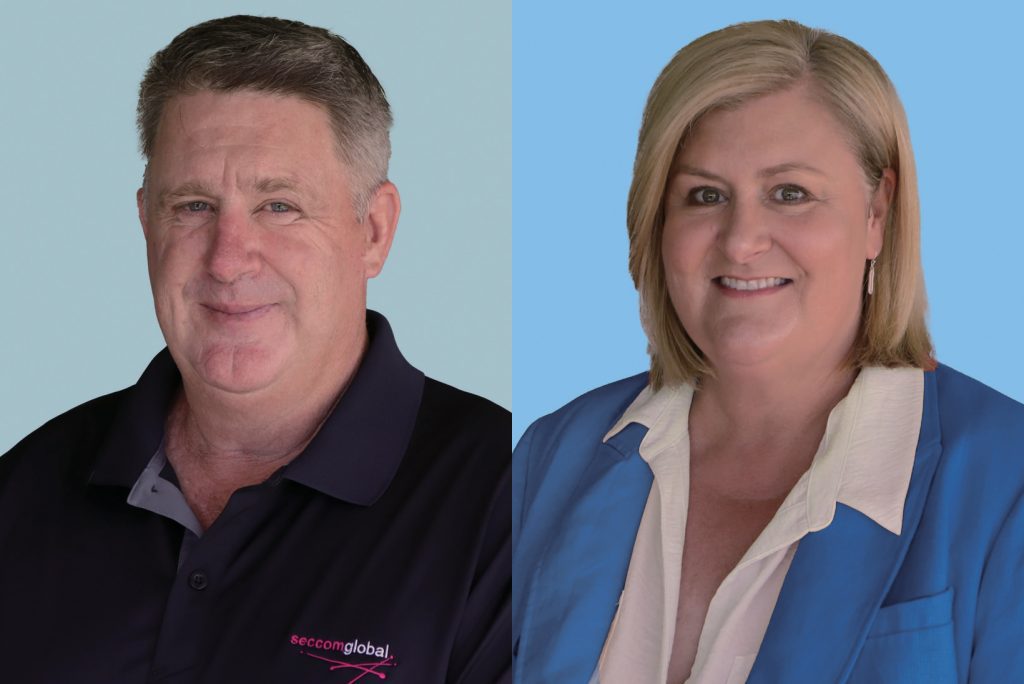
Husband and Managing Director. Wife and Chief Operating Officer. Owners. Founders.
All rolled up into one partnership that meanders between the personal and professional – a marriage that built a family and a family that built a business.
“So, I had a very nice car at the time, a Toyota Landcruiser Prado,” Michael continued. “It was a little flash but I told Mez, ‘we have to sell the car to build the business, we need the money’.”
“Just for the record,” Maryanne interrupted, “I wasn’t on board. Not at the very beginning.”
60 seconds in. Objection number two, Your Honour.
“I rang up my brother who owned a car yard,” Michael added. “I arranged to bring my car down to sell and replace it with something cheaper so we could get by for a couple of months.
“I left home, drove up to Tamworth to meet my brother and handed over my Prado. In return he gave me a Ford Telstar… it was orange with red velour seats, a homemade muffler and the horn in the middle of the wheel was broken. I drove that back from the yard.”
An anecdote to end all anecdotes. One to be emblazoned on the entrepreneurial boilerplate. Episode one of the ‘Blood, Sweat and Tears’ podcast.
Not quite. This was real life. It wasn’t inspiring. And it certainly wasn’t funny.
“We can laugh about it now but I burst into tears at the time,” Maryanne admitted. “We went all in. We sold our car. We sold our house.”
Sat across the boardroom table at company headquarters in Sydney, Maryanne is detailed and disciplined with a pile of carefully crafted notes. Michael is rocking back and forth, nodding along as the conversation flows.
“At least once a year, for the entire 22 years of the business, I have wavered and questioned everything,” Maryanne affirmed.
“Businesses aren’t built in a straight line. Mick didn’t draw a wage for the first six months and it took him five years before he started earning what he was earning before. It’s not for the faint-hearted.”
Big risks, big belief
At the time of launch, Sydney could count the amount of managed security service providers (MSSPs) in market on one hand. There was no need for the acronym, security and services weren’t much of a thing in the early 2000s.
Yet somehow, Michael spotted a gap in the market.
An extensive cyber security background started with a six-year stint at Deloitte in Australia and the UK, building expertise in the evolving world of network services, servers and connectivity.
This was followed by two years at Westcon specialising in Check Point Software before assuming the role of Chief Security Officer at Biodata, a facial recognition company many years ahead of its time.
“My background and my passion was security,” Michael said. “The internet at the time was still relatively fresh and new for most big organisations so adoption remained low.
“An opportunity existed to support with some form of security strategy which was the early day, MSSP. At the time, nobody knew what that was so the first half of every meeting was describing what an MSSP did – the second half was explaining who Fortinet was.”
Recognised as one of the first Platinum Partners in Australia, Michael made a bold technical bet on a vendor which only launched three years prior in 2000.
When Seccom Global signed up, only two people represented Fortinet in country at the time – Andrew Draper and Peter Watson who worked out of a serviced office in North Sydney.
“Our business was founded on a single vendor,” Michael noted.
“My background was Check Point but Fortinet had a solution that we could take to market and wrap an entire managed service around which started us down the path of building a security operations centre (SOC).”
Oh yes, the infamous SOC. How could Maryanne – who has a legal background specialising in contract law – forget.
Objection number three, Your Honour.
“Go on, say why we couldn’t go out at night or anywhere at weekends…” Maryanne probed.
Rocking forward, Michael continued with his trademark opening defence line.
“Basically what happened was…” he recalled. “In the early days, I was doing all of the selling and then implementing the devices because I was also the engineer.
“Then I became the actual person at the back-end supporting during the night. We were selling a 24/7 SOC but it was really just me.”
Recognised a pattern yet?
“Mick is a big risker taker,” Maryanne outlined. “I would have to say that I am also now given what we’ve built but I’m actually more risk averse.
“That hasn’t always been a match made in heaven but Mick always had a desire to build something. That was always driving him and eventually, we were always going to end up here, no matter what the industry.”
But this was a deep-rooted desire, not surface-level disobedience such as a refusal to have a boss or take orders. It was much more focused on leaving a legacy behind, being competitive and achieving something that would stand the test of time.
“Mick was under no illusions about that,” Maryanne explained. “I think some people have rose coloured glasses in that respect and think running their own show without a boss is great. That can’t be the motivation.”
A young Maryanne was raised in an entrepreneurial family. Her mother ran her own business and she watched first-hand the work-rate required to simply survive, never mind thrive.
“Sheer work ethic and resilience got that business built,” Maryanne shared.
“Because of that we’ve never had rose coloured glasses but we definitely underestimated the journey. Although sometimes it’s no bad thing because if you’re always a realist you probably wouldn’t do it – even Jeff Bezos nearly went under a few times.”
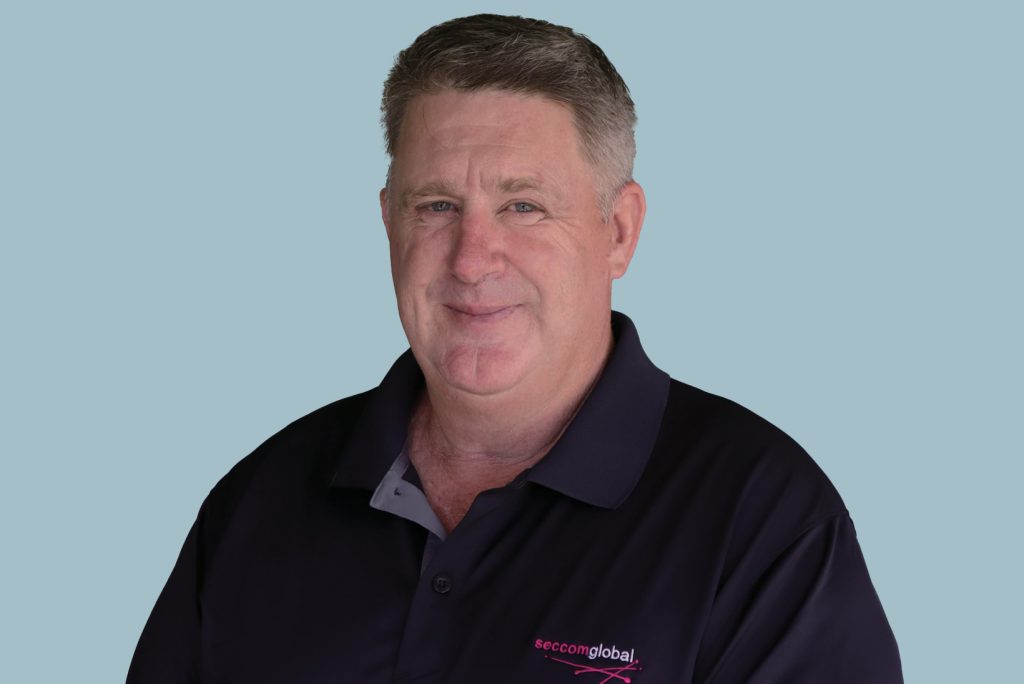
During the dot-com bust, Amazon’s stock plummeted from $113 to $6, and the retail giant was losing $60 million per month. Today, the behemoth has a market capitalisation of $2.42 trillion in USD.
“If you don’t truly believe you can achieve something, then you’ll never achieve anything,” Michael advised.
Growing pains, scaling smart
For any new business, growing pains are inevitable and often invisible to outsiders.
What begins as an exciting vision quickly becomes a balancing act of scaling systems, hiring the right people and preserving culture under pressure. Revenue might rise while profit and clarity dip. Decisions get heavier, mistakes get costlier and the weight of responsibility sharpens.
“Fail your way forward,” Maryanne advised. “We certainly made plenty of mistakes and I’m not precious about admitting that.
“But I think a lot of people don’t want to admit the failures. You speak to people and they always say, ‘oh yeah, we’re doing amazing’ – trust me, the journey is never always amazing.”
Actually, the reality is a collection of “very tough times” condensed together over a hugely stressful period. That’s when entrepreneurs, hand on heart, take a breath and learn a lesson the hard way.
“If you can take something away from a failure then it’s not a failure, unless it completely tanks you,” Maryanne added. “But most are very good learning opportunities even if it is difficult to see sometimes.”
For the avoidance of doubt, regrets are regular for Maryanne.
Three out of the five days a week, the love is there. The other two, plus weekends?
“Again, I don’t mind calculated risk but as the business gets bigger, the risks get bigger and you’re carrying that risk all of the time,” Maryanne continued. “That’s one of the biggest pressures on us as a couple.”
Michael interrupted in the interests of clarity – “I’ve never regretted it.”
“Yes, Mick has been unwavering but we certainly have different personalities,” Maryanne acknowledged. “You actually need both.”
In the early days, Seccom Global was scaling from a one-man-band into a serious player in the untapped MSSP space. Despite the addition of 15 back-end technical staff, the business was still standing on the shoulders of Michael’s technical expertise, commercial acumen and extensive address book.
This enthusiastic entrepreneur was the sole market-facing figurehead with initial growth during the first seven years attributed to a passionate belief in helping the customer. Something that is easy if you truly believe in that mission to your bones.
“You actually learn a lot about people,” Michael shared. “When I was working with Deloitte, I had a group of people close to me that I thought I could go back and call upon when we launched. I figured they were just going to come and work with me.”
The truth is far more sobering. Nobody followed. Nobody ever does.
Old contacts rarely support new businesses because familiarity often breeds complacency. They’ve known you in a previous context – colleague, friend or peer – and often struggle to see you as credible.
Their perception is anchored in your past, not your potential.
As a result, early belief and backing usually comes from strangers who judge your idea on its merits, not your history.
“Friends will never be customers and customers will end up being friends,” Maryanne stated.
As scaling accelerated, strengths and weaknesses were amplified in tandem. Processes that worked when small cracked under pressure, exposing hidden inefficiencies and fragile systems.
“One piece of advice,” Michael proposed. “Start your business how you want to finish it. When we launched, we didn’t have any processes or procedures, we would just go out and sell stuff then implement it.”
During the first three years, the blossoming business never lost a customer. Execution was sharp and engagements were personalised.
“Then your company grows and you start bringing in more people with different personalities dealing with the customers,” Michael continued.
“But because we didn’t have any processes or policies, we started losing customers. We’d put them on one end and lose them out of the other end – then customers talk and your reputation gets damaged. That meant no growth and stagnation.
“It wasn’t until we brought Mez into the business to build the processes and structure the company in the correct way that we could close the leaky bucket and get back to growth.”
Very quickly, scaling was no longer about growth. It was about upgrading structures, creating processes, instilling discipline and maturing fast enough to keep pace with expansion, or risk magnifying small problems into existential threats.
“Every growth period teaches you what you don’t have,” Maryanne emphasised. “Whatever you don’t have, gets scaled and we identified that was structure and process very early on.”
Alongside operational changes, Michael battled with striking a balance between control and empowerment. Letting go is almost impossible for those who built the business in service of the customer – this wasn’t some start it and sell it scenario, the work mattered.
“There’s actually two answers to that,” Michael suggested.
“The business won’t grow unless you’re prepared to let go because if you hold it close to your chest, you have no chance of success. You have to eventually come around to the belief that running a business is about employing better people and letting them do what they do best.”
But. And it’s a big but.
“It’s very hard,” Michael continued. “It’s something all founders struggle with because I reached the stage where I didn’t actually have a place in my own business. Then I had to find a role and way to get myself back in.”
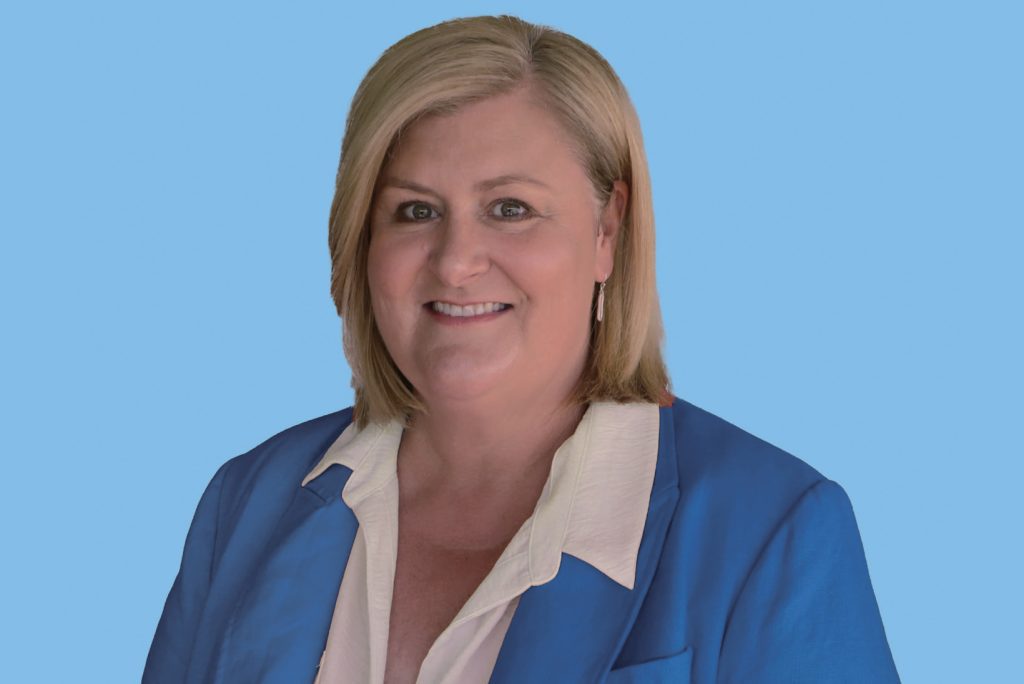
Letting go doesn’t mean detaching. It means empowering capable leaders, setting clear guardrails and resisting the urge to micromanage.
Retain ownership of purpose but not every process.
“I realised I still had to be the person at the front with the guide on, outlining the direction that we wanted to go,” Michael acknowledged. “Then we brought in talented people to drive that forward and if they went off track, I’d pull them back on.”
Creating space for others to lead increases focus on strategy, culture and innovation. This balance protects energy, prevents bottlenecks and ensures the business can thrive without constant founder presence – transforming it from founder-led to founder-inspired.
Don’t neglect relationships however. They can’t be delegated.
“That’s another lesson,” Michael noted. “Build deep relationships and don’t have one person in your business holding all of the relationships.
“That could be a sales person solely working with a customer and then when they move, the customer follows. You can’t always be in the weeds but keep those key relationships.”
Culture eats strategy for breakfast
As a business, Seccom Global now houses close to 60 staff across Australia, India and Sri Lanka with seven headcount due to join in Malaysia imminently.
Longevity is a hallmark of the company.
Take Ryan McNally – Network Security Engineer – who recently reached 20 years of tenure.
Known internally as ‘The Church of Ryantology’ due to his ability to solve any challenge, this unique milestone was honoured by a team dinner with everyone dressing in blue and gold in honour of his favourite rugby league side, Parramatta Eels.
“Ahh, the wonderful Ryan,” Maryanne smiled.
The organisation is reaping the benefits of a “real period of longevity” since addressing cultural challenges six years ago. Building something special as a place of work was non-negotiable.
“I can pinpoint the exact moment when we sat down one day and thought, ‘this isn’t want we envisaged and this isn’t what we dreamed about’ – it was very toxic,” Maryanne admitted.
“We had a couple of talented people with massive egos and there was a lot of niggling in the team. It wasn’t how we wanted the culture to be.”
Following advice from a business coach, the management team regrouped and intentionally pictured what the company culture should be.
This was penned down on paper and from there, deliberate decisions were made to start building a new work environment that was more reflective of the company’s true values.
“We created a wish list and marked everyone against that,” Maryanne outlined. “But we all agreed that if someone didn’t meet this criteria then they had to leave the business. We let go of five staff and it was a terrifying experience.”
Great on paper but damaging in practice, this was not a decision taken lightly.
But any self-doubt was surrendered to a resolute belief that building an environment that nurtured work-life balance, protected mental health and created a pathway for growth was paramount.
“You’re a little scared to make the move because you’re unsure of the outcome and it’s like jumping off a cliff,” Maryanne cautioned.
A tough decision at the time has paid dividends in return. Never underestimate the importance of having people in business that mirror company values. This is an authentic couple that are the same whether at a family dinner or a boardroom presentation – always honest, forever humble.
“This is the best team we’ve ever had,” Maryanne added. “It’s probably the most technical team and they’re all so humble and amazing. We have zero politics and zero egos – just people supporting each other and delivering for the customer.”
A core part of the team is tasked with expanding the business into Malaysia.
Trevor Ings – Head of Assurance – and Navin Jayaram – Security Network Operations Centre (SNOC) Manager – are leading the charge in Southeast Asia with plans to augment security capabilities in Sri Lanka and India while capitalising on an emerging cyber region.
For example, Fortinet is continuing to invest in a cyber hub in-market, in recognition of increased commitment from the Malaysian Government to secure critical infrastructure as a national priority. The new Cyber Security Act 2024 also aims to strengthen Malaysia’s cyber defences and enhance the country’s resilience against an increasingly volatile threat landscape.
“Navin is Malaysian and has been a real driving force behind this,” Maryanne said. “There’s so much going on – we’re building new products, creating new services and on-boarding new staff.
“Plus, our overseas expansion into Malaysia. We’re hiring technical talent currently and plan to recruit sales and open that up as an actual market in due course.”
As Seccom Global scales onto the next horizon of growth, the husband-and-wife dynamic that has delivered more than two decades of success will continue in parallel.
Even if the relationship can be both rewarding and challenging.
“One of the things we agreed upon, particularly in the last few years, has been actively separating the two to whatever extent we can,” Maryanne acknowledged. “You can never switch fully because the business is 24/7 but we are intentional in creating balance when we can.”
The dynamic works best when each partner brings complementary skills and clearly defined responsibilities.
Often, one may lean toward strategy, vision or external relationships while the other excels in operations, finance or team leadership. This division allows them to cover more ground without duplicating effort, while still aligning around shared values and long-term goals.
In that sense, trust becomes the cornerstone of the working relationship. And of course, couples have the benefit of deep familiarity with each other’s strengths, weaknesses and decision-making styles.
“I think it’s very important to understand how we communicate and be open,” Maryanne outlined. “That’s certainly evolved because during the first year – when I originally planned on coming in for three months and of course, never left – we nearly killed each other.
“Mutual respect is also super important. We have deep respect for what each other brings to the table.”
Inform your opinion with executive guidance, in-depth analysis and business commentary.

