
ASEAN
You’re currently viewing our content for ASEAN.
You can switch to a different region:
November 9, 2026
Every services business knows the playbook for navigating a tough market.
Budgets tighten, deals slow down and the instinct is to protect the margin. Headcount gets trimmed until the team is running just below what the workload needs.
Engineers are measured on tickets closed, managers are paid bonuses on profit, and customer satisfaction, the thinking goes, will take care of itself.
Kyle Page has run that playbook in reverse.
And in a tightening market, the Sydney-based managed services provider (MSP) is growing.
“Profit is important, but it belongs in the boardroom, not on the operations floor,” Page outlined.
“If the simplified job of the operations team is to keep customers happy, then measure customer happiness – and pay against that measure. It is the input behaviours that drive outcomes in every business, not the lag indicators.”
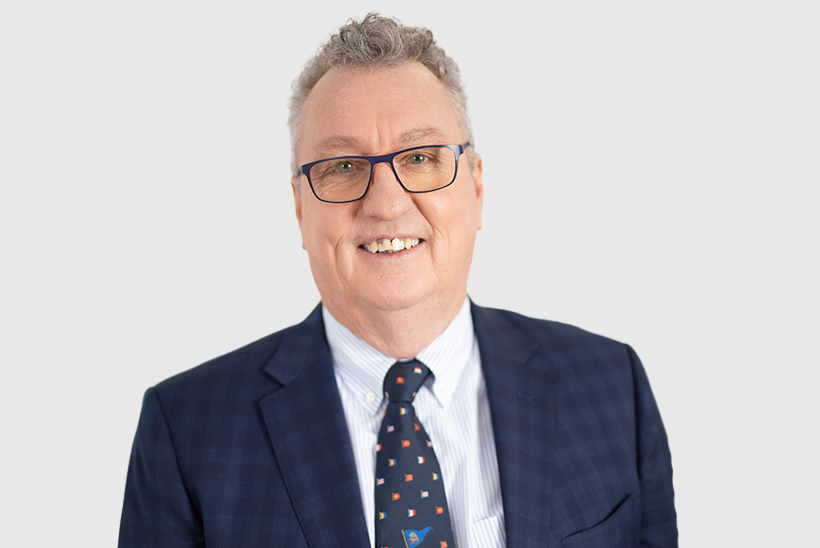
Such conviction didn’t come from a management textbook, rather an uncomfortable number.
And it now shapes how Page thinks about almost everything: how Ericom opens a sales conversation, where it spends money when others are cutting back, and why the MSP as the industry knows it has already been overtaken.
The uncomfortable number arrived when Ericom started asking customers what they thought.
Like most MSPs, the business had measured itself the way the industry always has: on margin, and on the number of tickets left open at the end of each day. Bonuses were tied to profit, on the assumption that customer satisfaction would follow good numbers.
Page decided to test that assumption by introducing CSAT through SmileBack, a lightweight, NPS-style score captured on every customer ticket which was acquired by ConnectWise in December 2021.
“When we first introduced CSAT, the results were confronting,” he recalled.
“We believed we were doing a good job, yet our average score was around 30 out of 100. That insight forced change. We moved to rewarding teams for improving CSAT, not protecting margin.”
This is a confronting weakness to acknowledge. An MSP with a score like that would usually call it a measurement problem, or blame a handful of unhappy customers.
Ericom changed what it paid people for instead, and the score improved considerably.
“Two years later, we were consistently operating above 80 every month across all customers,” Page explained. “For the last four years we have operated above 90, with an average of 94 out of 100.”
Page is clear that the climb becomes steeper near the top.
The early gains came from fixing the obvious. What now remains is more challenging and more expensive to address but this is a cost that the MSP is happy to keep paying.
“Moving the needle now, even by 1%, requires a huge investment in people and processes,” Page continued.
“But the outcome is simple: happy customers don’t look to move. Retention, advocacy and expansion follow naturally when experience is genuinely prioritised.”
Few MSPs can say that in a restless market.
According to Moxie Metrics, only 37% of mid-market organisations and 32% of SMBs are firmly satisfied with their current technology provider or MSP. The rest are either weighing up alternatives or actively reviewing them.
Then comes the line that undoes the logic of the downturn playbook, and the one most partners will find hardest to believe.
“We have learnt that our profit percentage increases as our CSAT increases,” Page added.
If the score is the outcome, Page is just as specific about the inputs.
“Price is not the defining issue – value is,” Page highlighted.
“If a competitor is cheaper, they should logically be delivering a lesser service. We choose to sit towards the higher end of the market because our intent is to elevate the service that customers receive and consistently operate beyond their expectations, not merely meet them.”
The second is people – which represents the biggest line on any MSP’s cost base, and the first place most operators look when margins come under pressure.
Salary increases and workforce expansion are the leading driver of rising operating costs for 65% of Australian partners, according to Moxie Metrics.
The usual response is to run a team slightly short, at minus one, and let everyone absorb the extra load.
Page runs Ericom the opposite way, and he has a shorthand for it.
“Our largest cost is people, and we consciously operate at +1, not −1, against workload pressures,” he calculated.
“That deliberate investment – having slightly more capacity than the minimum required – means each ticket gets that bit more time, care and quality. It’s not accidental; it’s a choice.”
Underneath is a belief about human nature that no market cycle has changed.
“What hasn’t changed is human behaviour,” Page expanded.
“Happy customers buy more. Happy staff create happy customers. That makes investment in people, culture and process non-negotiable – even though it’s harder than ever.
“The partners outperforming in today’s market understand that trust is built through experience over time. They measure it, invest in it, and protect it – even when the short-term commercial trade-off is uncomfortable.”
Service quality matters more now because the job itself has changed. Ericom has transitioned away from supplying technology and backfilling capability to become an MIP – Managed Intelligence Provider.
“The partner role has shifted decisively from transactional supplier to strategic capability backfill, and to MIP,” Page said.
“Most customers today have a baseline level of internal expertise – they’re not starting from zero. But their teams are lean, exposed and vulnerable to disruption. When a key role disappears – a CIO, Head of IT, Security Lead or Architect – there is often no depth behind it.”
The numbers support Page’s reading of lean, exposed teams.
According to Moxie Metrics, skills shortages are the second biggest organisational challenge in the Australian mid-market (38%), and when those organisations look for AI capability, 56% plan to lean more heavily on specialist partners rather than build it in-house.
When a mid-sized organisation lose its only security lead, or its IT manager of 15 years, the exposure levels escalate. What customers want in that moment is senior experience, quickly, for as long as they need it and no longer.
“That’s where modern MSPs and MIPs are increasingly expected to step in with a tap-on, tap-off model,” Page detailed.
“Customers want to be able to temporarily access senior capability – whether that’s CIO-as-a-Service, security leadership, or architecture oversight – for the period it takes to stabilise, transform, or recruit.”
That sets a high bar for the partner.
Page lists the non-negotiables: deep domain and commercial understanding, credibility at both executive and operational levels, a strong governance, assurance and security posture, and the ability to scale capability up or down without friction.
Just as important is knowing where the partner’s role stops.
“Customers don’t want to outsource ownership – but they do want trusted partners who can fill critical gaps without creating dependency,” Page added. “Partners who can operate at that level are becoming embedded; those who can’t are increasingly sidelined.”
Most partners are some distance from being embedded. Only 10% of mid-market organisations, and the same proportion of SMBs, consider their current MSP as a critical strategic adviser, according to Moxie Metrics.
Access to the customer has not translated into a seat at the table, however.
“It’s evolution – but it’s a decisive step change,” Page advised.
“The traditional MSP model was largely built around break-fix, SLAs and preventative support services. That model still matters, but on its own it’s no longer sufficient. Customers expect stability as a given – not as the value proposition.”
For Ericom, the step up from MSP to MIP is about going beyond keeping systems running to helping customers run the business better.
The problem it sets out to solve will be familiar to most executive teams. Organisations have spent a decade buying the best platform for each job, and now have a stack of excellent systems that don’t talk to each other, each with its own AI that claims to be the smartest in the building.
“Most organisations today run multiple best-of-breed platforms – Salesforce for CRM, Genesys for contact centre, ServiceNow for ticketing, HR and SLA tracking, and Xero for accounting,” Page stated.
“Each platform now comes with its own AI toolsets, each claiming to be ‘the best’ – but they all operate in isolation.”
In response, the role of the MIP is to help the customer to step back from the tools and ask better questions about the business.
“This is where the partner role moves from operating systems to orchestrating insight,” Page advised. “The technology already exists – the value is in connecting it in a way that is relevant, actionable and aligned to business outcomes.”
None of this replaces the day job, however. Patching, monitoring and the service desk still have to run, and run well.
But customers now treat those as the minimum, and the value has moved up a level. This is where the traditional MSP is losing ground.
“We still do the MSP requirements; that’s the norm, the expected,” Page added.
“The MIP elevates us to strategic, invested and massively relevant to all parts of the customer’s business. From our customers’ point of view, we are helping them orchestrate their own customers’ journey way beyond what was thought possible.”
Every growing MSP reaches the same fork in the road, and Page lays it out plainly. One path is scale: get bigger at what you already do well.
“Do we grow by scale?” he asked. “We’re good at cyber, so do we acquire more cyber companies, triple the number of desktops we manage, and drive efficiency through scale to deliver better profits?”
Ericom has taken the other path.
“Copy Woolies, Coles and Bunnings,” Page outlined.
“Once upon a time you went to the baker, the butcher and the greengrocer, and milk was delivered. Today you go to one store. They measure the average spend per customer visit, with the milk at the back of the store.”
The milk is the everyday staple that brings the customer through the door and walks them past everything else on the way.
In the context of Ericom, the job is to work out which service plays that role, and then to make sure the rest of the store is worth walking past.
“Our approach is to broaden our product offerings and work out what our milk is, to sell more to existing customers,” Page shared. “As we all know, it costs three times less to sell to an existing customer than to try to win a new one.”
That breadth comes from two places.
Some of it is built in-house which is a slower route. Some of it is bought, and when Ericom acquires a business, the cross-selling runs in both directions.
“Some technologies we build from within, which takes much longer than if we acquired a business already operating,” Page added. “We then take our products across their customer base, and the reverse – we take their products across our customer base. It works for us.”
The wider market points the same way.
Managed services contributed to the revenue of 86% of Australian partners in FY26, according to Moxie Metrics, and the same research concludes that, as new-customer acquisition slows, renewals, cross-sell and service expansion become the most efficient route to growth.
The strategy fits the rest of Page’s thinking.
A customer who scores the service at 94 out of 100 is far more likely to buy a second, third and fourth service than one who was won on price. The CSAT number and the growth strategy are, in the end, the same idea.
For years, partners treated a market slowdown as weather. Budgets dried up, deals stalled, and everyone kept their heads down until the cycle turned and spending came back.
Page doesn’t think this one will pass in a similar manner, however.
“The reality today is that uncertainty has become structural rather than cyclical,” he assessed.
“Demand still exists, but customers are far more deliberate. Deal cycles are longer, scrutiny is higher, and expectations have shifted materially – unless you can show a clear way to save money without sacrifice.”
Tighter budgets, longer approval cycles and closer scrutiny are now “the norm rather than the exception”, according to Page.
To explain how quickly buyers can change their minds, look at the car market. When fuel prices crossed an inflection point, consumer behaviour shifted almost overnight.
“People and organisations began moving rapidly toward EVs and hybrids,” Page observed.
“Not because they’re cheaper upfront, because they’re not, but because the ongoing cost model fundamentally changed. That shift happened in months, not years.
“Businesses and government buyers are now making IT decisions in exactly the same way. The question partners need to ask themselves is simple: are you positioned as fuel – a commodity – or as the EV in this market?”
This is a sharp question for an industry that has spent years competing on hourly rates and per-seat pricing. Because buyers are already doing the maths.
When mid-market organisations evaluate major transformation initiatives, they weigh long-term scalability (39%) and cost predictability (36%) most heavily, according to Moxie Metrics. What an investment costs to own and run over time matters more than the sticker price.
Page wants Ericom judged on that second calculation, and that explains a decision that runs against the grain of a tight market. When others reached for the cost-cutting lever, Ericom put more into service.
“We’ve been deliberate about where we invest,” he highlighted.
The business has resisted the instinct to pull back on service or capability to protect margin, choosing instead to double down on customer experience, service quality and insight.
“In uncertain markets, customers don’t just want suppliers – they want partners who can absorb complexity, provide stability, and step up when gaps appear,” Page said.
“The net effect is that while decision-making may take longer, relationships run deeper. Organisations that position themselves as trusted capability partners – not discretionary spend – continue to grow even under macroeconomic pressure.”
But the bigger change is in how customers decide under that downstream pressure.
When conditions tighten, customers don’t simply buy less – they buy more carefully. They are far less tolerant of complexity, ambiguity, or solutions that are hard to justify internally.
That has moved the battleground to the very start of the relationship. The technical pitch that once carried a first meeting, the slide deck of features, functions and benefits, now tends to end it.
“What’s fundamentally changed is that the first interaction now matters far more than the first solution,” Page said.
“We can no longer lead with feature-function-benefit narratives and expect trust to follow. The market is too noisy, budgets are too tight, and decision-makers are too time-poor.”
In response, Ericom rewrote its opening line.
The MSP now leads with an outcome an executive team can back straight away, and the detail on architecture comes later.
“We have changed how we show up at the very start of the conversation, leading with a simple, credible message: we can help your business save money, reduce risk, or operate more efficiently,” Page explained.
“That clarity creates permission to engage. In this climate, trust is built first through relevance and commercial understanding, not technical depth.
“Once trust is established, the conversation can move to architecture, capability and differentiation. But without that clear, outcome-led opening, many partners never get past the first meeting.”
Customers are asking for exactly that conversation.
According to Moxie Metrics – Mid-Market Outlook: Australia FY27 – rising operational costs are the biggest challenge facing Australian mid-market organisations (48%), and cost optimisation is the leading driver behind technology investment decisions (39%).
Therefore an opening line about saving money is not a sales tactic because it is the agenda that customers already have.
The cost of working this way is speed. Page is frank that the old volume-driven, speed-to-close model has given way to “fewer deals, deeper engagement, and a sharper focus on measurable value from day one”.
For a partner used to measuring the health of the business by the size of the pipeline, that can feel like going backwards.
But Page considers it as the price of relevance.
According to Moxie Metrics, 76% of Australian partners grew revenue during FY26, but only 10% credit better pricing or margins for any improvement in profit. Growth is still there to be had, but it is harder won, and very few partners can simply put their prices up to protect it.
The hardest change Page describes is the one he has had to make in himself.
If happy staff create happy customers, then keeping staff happy is a commercial priority, and the workforce has changed since COVID in ways that experienced leaders can’t ignore.
“Employing and retaining younger staff post-COVID has changed,” he said.
“The ways I used to think, communicate and lead are no longer always relevant. That’s forced a reset. Either I adapt, or I surround myself with younger leaders who can connect, communicate and engage in ways I can’t – and then trust them to do it well.
“That, too, is part of running a sustainable partner business in today’s climate.”
This is a refreshingly candid admission from a CEO.
The instinct of most leaders with a long track record is to expect a new generation to adapt to them. Page has concluded that part of his job is to step back from the conversations other people now have better, and to trust the people he has put there.
The same urgency is applied to AI, which he believes every business – Ericom included – must embrace across the whole organisation rather than leave to the IT team.
“Don’t be left behind by treating AI as someone else’s problem,” Page recommended.
“Every organisation should be engaging its entire business in AI centres of excellence as a matter of urgency – not as a technology exercise, but as a way to improve decision-making, customer experience and operational effectiveness. Those who delay will find the market has moved without them.”
That whole-of-business framing matters.
In the mid-market, the IT department is the main champion of full-scale AI use in 61% of organisations, while the CEO personally leads it in just 21%, according to Moxie Metrics.
An AI centre of excellence that reaches beyond IT is designed to close that gap – which brings Page back to where Ericom started.
Measure what matters, pay people for it and keep raising the bar. A business that has gone from 30 to 94 could be forgiven for easing off.
“Ericom still has a long way to go – spoken like an impatient CEO – but our people are really doing a great job,” Page concluded.
Inform your opinion with executive guidance, in-depth analysis and business commentary.

