
Home
You’re currently viewing our content for All Regions.
You can switch to a different region:
July 14, 2026
On day one as CEO of Veracity Business Solutions, Daniel Bayfield wasn’t sat in the Brisbane office meeting customers, reviewing business plans or introducing himself to the team.
He was in Tokyo.
Alongside fellow leaders from Lyra Technology Group – which acquired the business in late 2025 and sits within the broader Evergreen ecosystem of managed service provides (MSPs) – Bayfield was instantly tapping into the scale potential available.
“It was probably the first time I’d said the title out loud – CEO – and it was a kind of a surreal feeling,” Bayfield recalled. “There is a different mentality to get your head around when you’re taking ownership of the direction of an organisation.”
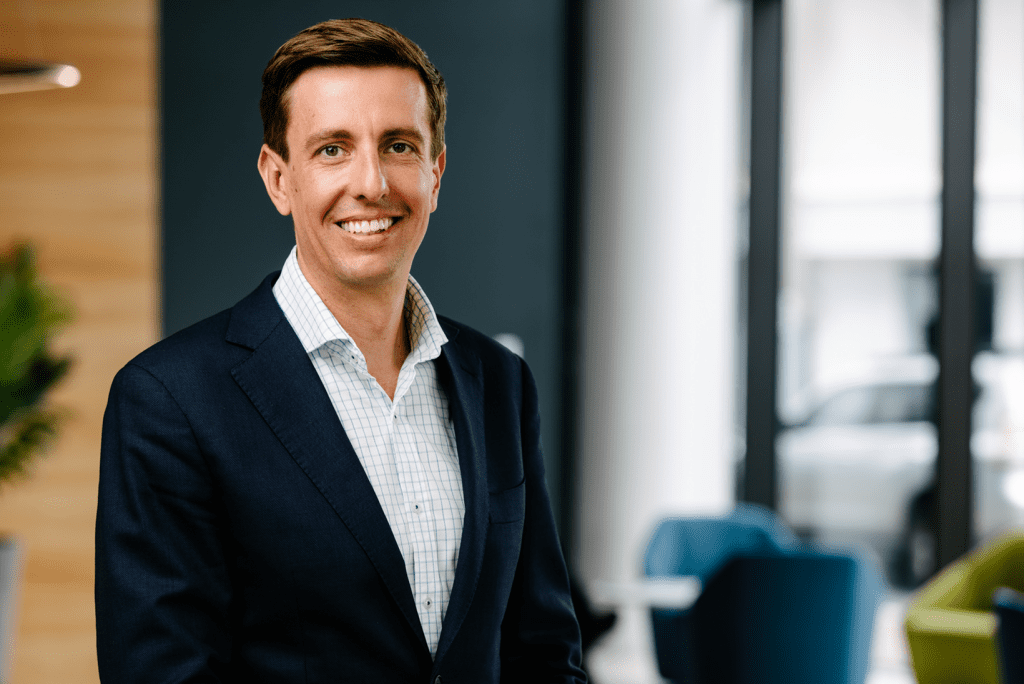
Albeit more than 7000km away, in many ways, the setting was symbolic.
While Veracity may appear from the outside to be a boutique provider in Queensland, this is a business with far greater depth than its profile might suggest.
Behind the local brand sits a mature organisation with a strong customer base, specialist expertise and now, access to a much larger ecosystem of MSPs through Lyra Technology Group and Evergreen.
“That’s one of the major advantages of being part of the broader Lyra and Evergreen network,” Bayfield explained.
“For our customers, it means they get the personalised service of a local provider while also benefiting from the scale, expertise and reach of a much larger global organisation. It’s genuinely the best of both worlds.”
Following the acquisition, Veracity will continue to operate under its established brand, with the same focus on business-led, technology-enabled solutions for organisations across not-for-profit businesses including arts tourism, charities and member-based organisations, as well as government and local companies.
“Veracity has built something genuinely special in the Queensland MSP market, a business-led IT partner known for deep client relationships, strong technical expertise and leadership in shaping IT and AI transformation strategies,” Bayfield added.
“I was particularly drawn to Veracity’s strength across the not-for-profit sector, and the way the team brings practical technology leadership to organisations doing for-purpose work. There is a real opportunity to build on that foundation and continue supporting clients through the next wave of digital change.”
That discovery became one of the defining reasons behind Bayfield’s decision to take on his first CEO role.
Bayfield joins Veracity with decades of leadership experience across the mid-market IT services sector, most recently as part of the Executive Team at blueAPACHE – bringing deep experience spanning technology and managed services, business growth, client strategy and partner ecosystems.
As part of the leadership transition, Bill Owens – former Managing Director at Veracity – will remain in the business as Founder, supporting value creation and strategic client relationships.
Chris Greathead – General Manager of Consultancy Services – has moved into the role of COO, bringing more than a decade of experience across client delivery, major technology projects, service desk leadership and consulting.
“I’m grateful that Bill will continue to play an active role in Veracity’s next chapter, and I’m looking forward to working closely with Chris as he steps into the COO role,” Bayfield said. “Chris brings deep trust across the team and client base, and his experience across service delivery, consulting, and operations will be invaluable as we continue to grow.”
Founded in 2006, Veracity goes to market as a specialist MSP across four core areas – Design, Build, Support and Protect. Core capabilities span AI, cloud, cyber security, data governance, application modernisation and managed IT services.
“I’m incredibly proud of the business we have built and the team that has made it what it is today,” Owens noted.
“Daniel brings strong sector experience, commercial leadership and a genuine appreciation for Veracity’s culture and client base. I’m excited to support him, Chris, and the broader team as they lead Veracity into this next phase. It’s the most exciting time of Veracity’s evolution.”
Unlike many leadership transitions, Bayfield is not stepping into a business requiring a reset.
Instead, he inherits an MSP that has spent years building trust within the Queensland market, developing long-standing client relationships and creating a reputation that has largely been fuelled through referrals and customer advocacy.
Much of that success comes back to the foundations established by Owens as Founder.
“Bill has really built the business up over the years through his own network and a strong referral base amongst our clients,” Bayfield said. “We’ve got a great team with great case studies and we’re really strong in the not-for-profit and arts community space, as well as the government organisations that we service.”
Those relationships have helped Veracity build a distinctive customer portfolio that includes organisations such as Brisbane Festival, Opera Queensland, Queensland Symphony Orchestra and The Healing Foundation among many others.
Rather than chasing growth through aggressive expansion, the business has largely grown through reputation and trusted relationships within tightly connected communities.
For Bayfield, that foundation is one of the MSPs greatest strengths.
“I can see so much potential in terms of where we can take Veracity in the market, building upon the very strong base that’s already here,” he said.
The opportunity has become even greater following Veracity’s acquisition by Lyra Technology Group, which sits within the broader Evergreen ecosystem. While Veracity retains its local identity and customer focus, it now has access to a significantly larger network of expertise and capability.
“Being part of that family and that group extends our capability through our sister companies and our reach through other MSPs that are located around Australia and New Zealand and globally,” Bayfield said. “That ecosystem that we can now tap into means that we can think even bigger in terms of what we can achieve in the market.”
Yet despite those ambitions, continuity remains important.
“Bill is planning to stay involved with the organisation and that’s crucial,” Bayfield said. “He’ll continue to be an ambassador for us and part of the organisation ongoing.”
The challenge Bayfield inherits is not one of reinvention. It is one of scale.
In outlining the future of Veracity, Bayfield’s focus naturally moves beyond traditional managed services given that the market has evolved significantly over the past decade. Infrastructure management remains important but customers increasingly expect guidance around cyber security, AI, governance and technology strategy.
That shift has fundamentally changed industry expectations.
“My personal passion is really around that customer experience and delivering a great customer experience, which is not always easy as an MSP when most of the time people are only calling when they’ve got issues,” Bayfield acknowledged. “Customers don’t call you to say ‘you’re doing great guys, keep going, everything’s working’.”
The challenge is delivering value across an increasingly broad spectrum of needs.
Customers expect strategic advice but they also expect flawless execution. They want guidance on AI adoption and cyber security strategy while still relying on their MSP to solve everyday operational problems.
“The SME and the mid-market are now looking for an MSP that can help guide the business from a strategic level, starting at the technology platforms to investments around AI and cyber security – then helping report that strategy to the board,” Bayfield outlined.
“At the same time, those same customers still need support with the basics. It’s everything right down to, ‘I can’t print this document, can you please help?’ That balancing act is becoming one of the defining characteristics of successful service providers.
“It’s everything in between, so you must look at the customer requirements from both ends and understand how to deliver that end-to-end service.”
For Bayfield, the ability to move seamlessly between boardroom conversations and day-to-day support interactions is becoming one of the most important differentiators in the market.
That evolution from technology provider to strategic advisory is reflected in the way Veracity engages with customers. Rather than beginning with managed services, many relationships start with strategic conversations around business objectives, technology roadmaps and future priorities.
“We do a lot around developing IT roadmaps with organisations,” Bayfield explained.
That advisory capability has become increasingly valuable as organisations attempt to navigate the complexity of AI, cyber security and data governance.
“We provide consultancy in this space as well,” Bayfield continued.
“Our strength lies in AI consultancy, particularly data governance projects in preparation for those implementations. In those scenarios, our role often extends far beyond traditional technology support. We’re very much operating as the vCIO within organisations to take them on those transformative journeys.”
For Bayfield, such distinction is important because Australian organisations increasingly require partners capable of connecting technology decisions with business outcomes – often at speed and almost always at scale.
“In the true sense, we’re now strategic advisors as well as technology providers,” Bayfield noted. “That shift is occurring across the industry as technology becomes more closely aligned with business strategy, risk management and organisational growth. That’s where we play and that’s what we’re doing well as a unique differentiator.”
Few topics illustrate that evolution more clearly than AI. During the past 12-18 months, organisations have moved rapidly from curiosity to urgency, often before they have fully understood where AI should be applied or how value will ultimately be delivered.
“There was a whole FOMO wave in 2025,” Bayfield recalled. “The market was in the phase of – ‘we need AI but we don’t know where and we don’t know how?’ That’s why demand for AI specialist MSPs is increasing because businesses need guidance on how to achieve this.”
Enthusiasm wasn’t the problem. Readiness was.
“Actually, you’re not ready to do that, because we need to do some foundational opportunities before you implement AI – that’s been a common conversation with customers,” Bayfield shared.
For Bayfield, successful AI adoption begins with understanding processes, governance structures and business objectives before introducing technology. Only then can organisations identify where AI can create meaningful outcomes.
Unlike cyber security solutions, which are often deployed broadly across an organisation, AI tends to be highly specific.
“AI solutions can be very pointed,” Bayfield said. “It’s uncovering what those opportunities are within our customer base and helping them deploy those sort of pointed solutions that can help deliver it.”
That mindset is particularly relevant within Veracity’s customer base, including charities, not-for-profits and arts organisations that are constantly looking for ways to improve efficiency and maximise resources.
“Anywhere they can find efficiencies in terms of processes and delivering, and also the experience that they deliver to their end clientele or their customer base, that is what they’re looking for,” Bayfield said.
Importantly, Bayfield believes those opportunities often sit deeper within business applications than many organisations realise.
“We probably, more so than other IT MSPs, get under the hood in terms of the actual application layer,” he added. “We actually do look at that application layer and the tools that they’re using and deploying, and then look at AI and how that ties into that existing application layer.”
That focus on practical outcomes rather than AI hype will become increasingly important as organisations move from experimentation to implementation.
Bayfield’s optimism about Veracity is closely linked to his optimism about Queensland. Having spent years operating within the local market, he believes the state is entering a period of sustained growth driven by population expansion, infrastructure investment and increasing business confidence as the Olympics in 2032 fast approaches.
“I think Queensland’s a fantastic market to be in today as an MSP,” he said.
Part of that confidence comes from what he sees across the broader economy.
“I think there’s a lot of optimism at the moment in the market in Queensland, so very much optimism for the next 10 years,” Bayfield said. “I think driven also by the Olympics 2032 and the population growth that’s going to occur up to that time.”
That optimism does not mean organisations are spending without caution, however. Businesses continue to scrutinise technology investments carefully, particularly around infrastructure and hardware refreshes.
“I think it just means that organisations are being a bit more conservative about how and when they spend their money,” Bayfield said.
However, demand remains strong in areas that either improve efficiency or reduce risk.
“Where businesses are wanting to invest still is in things that can help save them money – such as AI potentially improving processes and or cyber security to reduce risk,” Bayfield detailed.
Viewed through that lens, Queensland’s outlook remains compelling.
“I think up here, the next five to ten years is going to be all opportunity in Queensland,” Bayfield predicted.
Although only weeks into the role, Bayfield has already begun focusing on the foundations required to support the next phase of growth. Part of that work involves modernising Veracity’s own operations and ensuring the business can continue to scale while maintaining the customer experience that has helped define its success.
“We’re currently doing a platform deployment refresh internally around our IT ticketing,” he said.
“That initiative includes introducing AI-driven automation into service delivery operations, including some AI tools internally to help with automation and being able to close one-touch tickets very, very quickly for our customers.”
The company is also investing in new ways for customers to engage with support teams.
“It’ll be also introducing more frictionless ways that customers can reach us to raise tickets, so through Teams and chats, for example, to talk to our service desk,” Bayfield added.
For Bayfield, these investments serve a dual purpose. They improve operational efficiency internally while also providing a practical example of the outcomes customers are seeking.
“We will be our own case study,” he committed.
It is a fitting philosophy for a CEO entering his first leadership role. Learn quickly, strengthen the foundations and demonstrate value through execution.
When reflecting on those first few weeks, Bayfield admits the transition has been unlike any previous role.
“There is no onboarding plan for a CEO,” he acknowledged.
Instead, the new CEO has focused on immersing himself in the business, understanding the people, learning from customers and creating his own roadmap for success.
“The key thing for me was making sure I learned quickly and got across the people and the tools and everything I needed to be able to get across as quickly as possible,” Bayfield shared.
For Veracity, the next chapter may ultimately be defined by growth. But as Bayfield looks ahead, it is clear that growth alone is not the objective.
“We need to be able to grow sustainably but also not take our eyes off that exceptional customer experience that we deliver to the end user,” he summarised.
In a market increasingly shaped by AI, consolidation and changing customer expectations, that balance may prove to be Veracity’s greatest competitive advantage.
Inform your opinion with executive guidance, in-depth analysis and business commentary.

