
Home
You’re currently viewing our content for All Regions.
You can switch to a different region:
September 23, 2026
AI has made its way into the enterprise cost statement – infiltrating research, customer service, software development and the daily work of employees.
What remains much harder to find is its effect on the bottom line.
That tension sits at the centre of Kearney’s AI Is Everywhere, Except in the Returns. The paper argues that widespread use and rising investment have yet to produce equally visible enterprise returns.
The question now facing leaders is whether they are prepared to change the business around the technology they have bought.
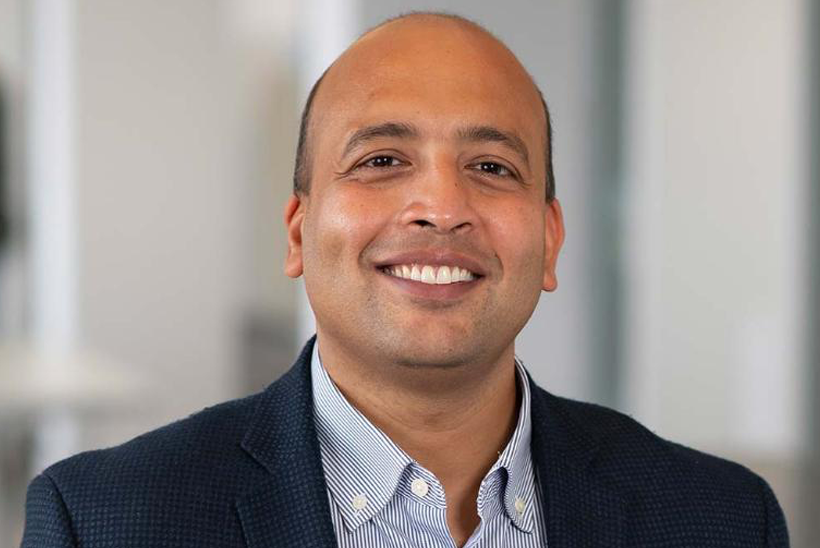
“In the last 12 months, the focus has really shifted from experimentation and use cases in pockets to how to implement AI systematically and scale for value,” observed Anshuman Sengar, Practice Lead, Digital and Analytics across Asia Pacific at Kearney.
The change is apparent in what clients ask the global consultancy firm to help solve:
These are more demanding questions than where to run the next pilot. They require an organisation to decide which work AI should change, who owns the result and how that result will appear in its financial performance.
Sengar spends much of his time helping enterprises work out what AI should change. At Kearney, he is having to answer the same question about his own business.
“AI is changing every aspect of our business including how to deliver our client projects, perform research, recruit staff, perform administrative activities and much more,” he added.
Sengar expects it to change the consulting pyramid itself: how teams are structured and how they deliver results for clients. That is a larger proposition than asking consultants to use AI in their existing work – it asks what the work should look like when some of it can be done differently.
The appetite for AI has survived the experimentation phase. The tolerance for activity without a business result may not.
Sengar sees pressure to prove value across customer and channel operations, corporate functions and engineering.
AI may improve customer experience, agents may take on back-office work, and coding workflows may increasingly be automated. Each offers a plausible benefit. Whether those benefits add up to a material return depends on what happens around the technology.
“The biggest disconnect is sometimes the belief that AI is a silver bullet that can fix everything without changing how you operate,” Sengar said. “If you are not willing to redesign your processes around AI or change the way you govern AI models, then you are unlikely to realise the promised value.”
The paper makes a related point: AI can improve individual steps while the wider process, and its economics, stay much the same.
Employees may find useful applications of their own, but those gains do not automatically become a better way of working across the organisation. Poor output can even create extra work for the people asked to check and correct it.
This is why Sengar wants the ambition for AI set at board level. Decisions about processes, investment, risk and accountability cross too many functions to be settled as a technology deployment.
“AI cannot be viewed as a technology decision alone,” he explained.
“It needs to be driven top-down from the board level with a clear ambition, otherwise you end up with 100s of mediocre pilots. Technology is an important enabler, but it should not be the primary driver of AI.”
The organisations scaling successfully, he says, get three things right: trust, value capture and technology foundations.
Trust must reach regulators, internal risk teams, leaders and the frontline. The systems and data beneath AI must be able to support it reliably. Between those conditions sits the question of who owns the business result.
“Value capture ensures processes are redesigned for AI, clear ownership, no pilot sprawl, and, ultimately, clarity in how an AI initiative moves the P&L,” Sengar said. “If it doesn’t deliver tangible value, don’t fund it.”
That test changes the discussion. A pilot can demonstrate what a model is capable of doing while a business case must show what the organisation will change, what it will cost to run and where the return will appear.
Kearney’s paper raises a further cost that may become harder to overlook as agent use grows: tokens. Agents can repeat tasks, reload context and run through multiple steps without a person issuing each instruction.
The paper also argues that enterprises will need greater financial discipline over model choice, usage and who pays for it. An efficiency gain is less convincing if the cost of producing it is poorly understood.
The rise of agents also changes the governance conversation.
Sengar said organisations initially developed AI governance models apart from their established structures. They are now bringing AI into existing oversight, while retaining specific risk settings such as limits on what an agent may do autonomously.
“There is an interesting shift that has happened with AI and governance – the need for real-time controls,” he said.
“AI agents operate in real time so governance needs to be real time as well. So boards are figuring out how to get the right controls in place to govern agents with the right guardrails and policies.”
An annual review or a policy written before deployment cannot, by itself, govern a system making decisions throughout the working day. Leaders need to know where an agent may act, when a person must step in and how its behaviour can be observed.
The stakes extend beyond internal oversight. Kearney’s paper argues that AI must maintain the trust of employees and the wider public as organisations change jobs and services around it.
Sengar’s emphasis on trust inside the enterprise speaks to the same practical challenge: people are more likely to rely on an AI-enabled process when they understand its limits and their own responsibility within it.
For higher-risk work, he sees explainability as a frontier of competitive advantage. Organisations that can account for an AI system’s decisions may be able to use it in places where others cannot yet establish sufficient confidence.
Before an agent can be trusted to act on an organisation’s behalf, it must be able to work with information the organisation itself trusts. Yet many enterprises discover how far they are from that position only when they begin building.
“We see many organisations thinking they can do it in BAU as they build agents, only to figure out they have five systems with five different views of the same customer,” Sengar noted.
For a person, that discrepancy may mean checking another screen or asking a colleague which record is correct. For an agent expected to work across systems, it becomes a question about which account of the customer should inform its next action.
“You need good quality and trusted data to train AI models or agents, otherwise you run substantial risk of hallucination, drift, and models making the wrong decisions,” Sengar explained.
Sengar argued for improving data in step with AI initiatives that have a clear business purpose. That gives the work an immediate priority without demanding that an organisation resolve every historical data problem before it starts.
“You don’t need to do two years of data cleansing before you can do AI, but it needs to be done in tandem, with a clear linkage to value,” he added. “We actually use AI agents for our clients to help them clean, de-risk, and uplift their data in a short period of time. It has been very successful.”
It is a useful example of the relationship Sengar describes.
AI needs stronger data foundations, but it can also help build them. The condition is knowing which data matters to the outcome and putting controls around how it is improved.
Sengar’s priorities for 2027 reflect the distance between an AI ambition and an enterprise capable of delivering it: roadmaps and business cases, whole-of-company operating models, scaling initiatives that work, and decisions about agentic AI investment.
“The next frontier for AI will be three-fold – customer, risk, and talent,” he highlighted.
In response, Sengar expects organisations to rethink customer experience around agents, including agentic commerce; make AI explainable enough to take on higher-risk tasks; and develop the people and skills needed to scale it.
None can be solved by deploying another tool alone. Kearney’s own changing consulting model makes that point tangible.
Sengar is advising clients on the consequences of AI while watching it alter how his firm researches, recruits and delivers its work. The challenge for both is to decide what should be rebuilt around the technology, then be able to show that the new way works.
Inform your opinion with executive guidance, in-depth analysis and business commentary.

