
Home
You’re currently viewing our content for All Regions.
You can switch to a different region:
November 16, 2026
Imagine the scenario – a side door at a school campus is propped open late on a Friday afternoon.
Someone forgets to close it. Instead, someone walks through it, finds an empty office and an unlocked laptop, and is gone 20 minutes later.
The cameras recorded every second. The access control system flagged the door as held open but neither alert went anywhere near the people watching the network, because in most organisations they were never designed to.
The CCTV belongs to facilities. The swipe cards belong to property. The laptop belongs to IT.
And the incident, when somebody finally pieces it together on Monday morning, belongs to nobody in particular.
Yes, this is a hypothetical scenario but hardly a far-fetched one. It also captures an emerging blind spot for many Australian organisations that believe cyber security is already in hand.
“A weakness in physical access can create cyber risk, and a cyber incident can disrupt physical operations,” observed Ferdinand Tadiaman, CEO of Nueva.
“Organisations are starting to recognise that door access controls, CCTV, alarms and 24×7 monitoring are part of the same risk conversation as identity, endpoint, cloud and data security.”
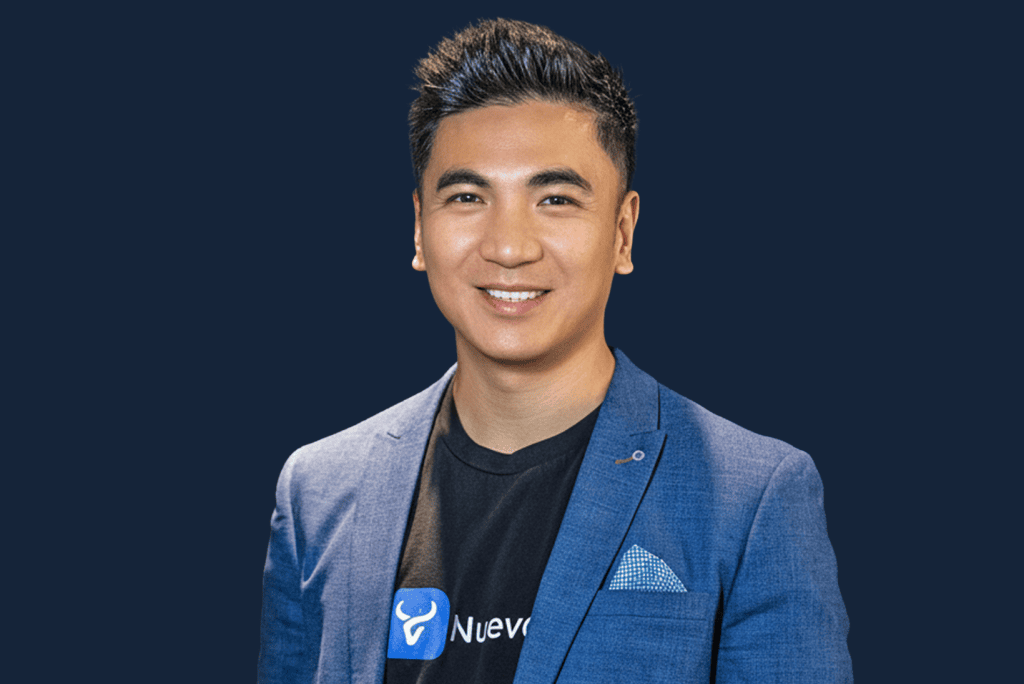
For Tadiaman, that recognition is the most significant change underway in how Australian organisations buy and run security.
This isn’t a new tool or a new threat. Rather the slow end of security as a collection of separate departments, each with its own budget, its own owner and its own idea of what a bad day looks like.
“A major shift we are seeing is the move towards end-to-end security,” Tadiaman expanded.
“Customers are increasingly recognising that cyber security, physical security and business continuity are connected. CCTV, door access controls, alarms and monitoring are not just facilities issues; they form part of a broader security posture that helps protect people, premises, critical infrastructure and sensitive environments.
“The future of security is more integrated, where physical access, digital identity, monitoring, response and governance work together.”
The pressure is strongest where buildings, people and data are hardest to pull apart: the hospital ward, the stadium concourse, the university campus, the government office that still runs on swipe cards.
“That convergence is becoming more important for sectors such as education, healthcare, government, property, sport, retail, not-for-profit and critical services,” Tadiaman added.
Despite Tadiaman’s assessment – who launched Nueva as a managed security service provider (MSSP) in Sydney alongside Cameron Cumming as CRO in late 2020 – the wider market hasn’t fully made the connection yet.
According to Moxie Metrics – Mid-Market Outlook: Australia FY27 – only 18% of businesses count securing operational technology, IoT and connected devices among their most pressing cyber security challenges. Yet the same group name those environments among the most vulnerable parts of their security stack.
Research surveyed 332 mid-market organisations (200 to 1,000 employees) in Australia.
Drilling down further into the smaller end of the market (under 200 seats), data from Moxie Metrics – SMB Outlook: Australia FY27 – highlights an even more concerning trend. Of the 400 SMBs surveyed, the figures drop to 10% and 8%.
Networked cameras, door controllers and alarm panels fall squarely into that category, and for now they sit at the bottom of the list.
If the shape of security is changing, so is the audience.
Tadiaman highlighted that the conversation has moved up the organisation with the executives now asking the questions less interested in which products have been deployed than in what happens when something breaks.
“The boardroom conversation has matured significantly,” he outlined.
“Security is no longer seen purely as an IT issue; it is now a business risk, governance issue, operational risk and reputational risk. Boards are asking more sophisticated questions about whether the organisation can continue operating, recover quickly, meet customer expectations and protect its people, data and assets if something goes wrong.”
The familiar threats still fill the agenda, however.
“The dominant topics remain ransomware, business email compromise, third-party and supply chain risk, identity compromise, cloud misconfiguration, data leakage, cyber insurance, regulatory obligations and incident response readiness,” Tadiaman continued.
“However, AI governance and physical security resilience are now increasingly part of the conversation as well.”
Drawing on 20 years of experience, Tadiaman is less concerned about the ever-expanding list itself, rather the misplaced confidence that often sits alongside it.
A recognisable brand on the firewall, a multi-factor authentication rollout or a freshly completed audit can provide a leadership team with the sense that the job is done. But when Nueva peels back the security layers, a persistent disconnect remains.
“The gap we often see is between perceived maturity and actual resilience,” Tadiaman cautioned.
“Many organisations believe they are secure because they have deployed well-known tools, implemented MFA or completed a compliance activity.
“But when we look deeper, there may be gaps in incident response, logging, privileged access, back-up recovery, vulnerability management, user awareness, security ownership, AI governance, or the integration between cyber and physical security controls.
“The real question is no longer just, ‘Do we have security controls?’ It is, ‘Do those controls work, are they monitored, are they integrated, and can the organisation respond and recover when something goes wrong?’”
Data from Moxie Metrics sheds further light on the disconnect.
In the mid-market, 60% of Australian businesses believe their security investment is ‘fully aligned’ to their risk profile and regularly reassessed – 97% claim at least some alignment.
Yet 51% of companies revisit their cyber security roadmap annually or less often, or only after an incident or mandate, and a quarter (25%) only open it again in response to a major breach or regulatory pressure.
Detection shows the same split. Almost half (46%) describe their ability to detect and respond in real time as advanced, while 26% concede that alert volumes are unmanageable and that critical incidents are frequently being missed or delayed.
None of this means budgets are drying up, however.
Tadiaman sees customers still spending, but with a discipline that wasn’t always there in the years when every new threat seemed to arrive with a new product attached.
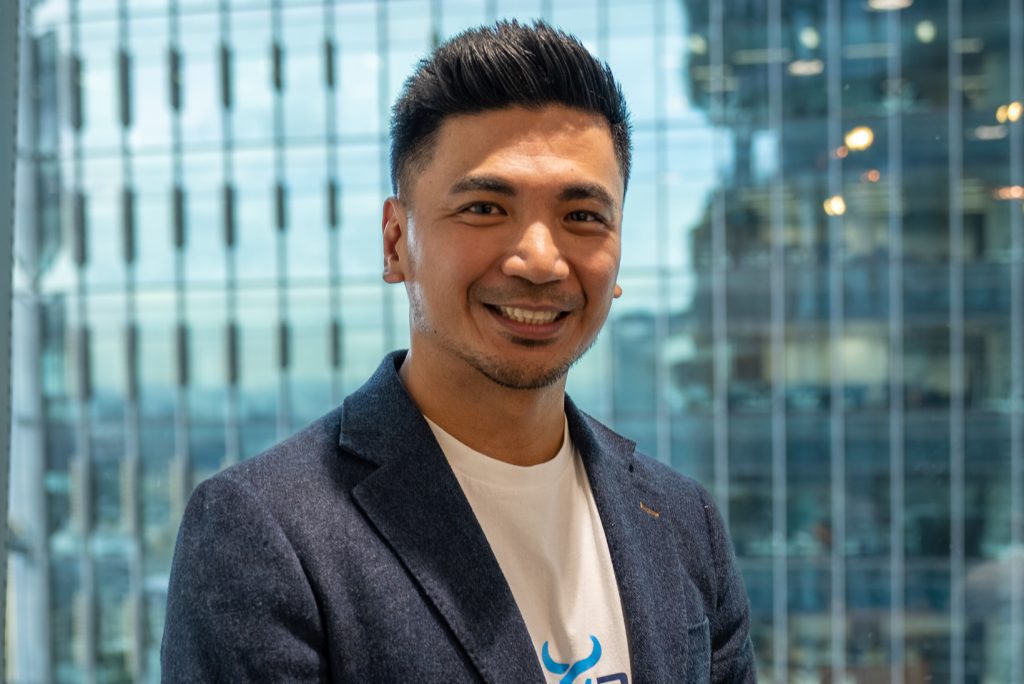
“Customers are still investing in security, but they are being far more deliberate about where that investment goes,” he advised.
“The current climate is not about unchecked budget growth; it is about smarter allocation, consolidation and measurable outcomes. Organisations are under pressure to do more with less, reduce tool sprawl and ensure every security dollar contributes to resilience, operational continuity and risk reduction.”
In other words, the money is flowing to a fairly consistent set of priorities, and increasingly to frameworks that give a board something concrete to measure progress against.
“We are seeing spend prioritised across managed detection and response, identity security, cloud security, vulnerability management, governance, risk and compliance, and practical uplift against frameworks such as Essential Eight [now ASD Essentials], ISO 27001, NIST and SMB1001,” Tadiaman said.
“Customers are also looking for partners who can help them connect cyber security strategy with real business outcomes rather than simply deploying another tool.”
The test that customers apply to that spend has become blunt.
“The key shift is that customers want security investment to translate into resilience,” Tadiaman continued.
“They are asking whether their investment will reduce risk, improve detection and response, satisfy board and regulatory expectations, protect their physical and digital assets, and support the business as it grows.”
It’s a test the mid-market already applies when judging the solutions in front of it. Detection and response performance (60%) is the most common yardstick for whether a security product is working, ahead of compliance and regulatory alignment (51%) and ROI and cost efficiency (46%), according to Moxie Metrics.
If there’s a single idea that runs underneath Tadiaman’s commentary, it’s that compliance and resilience are related but are not the same thing.
One proves that controls exist on the day of the audit. The other proves the organisation can take a hit and keep going.
Tadiaman doesn’t dismiss the first; but he simply refuses to stop there.
“There is definitely a shift from compliance-driven security to true resilience, but it is happening at different speeds depending on the organisation,” he explained.
“Compliance remains important, particularly for organisations dealing with government, critical infrastructure, financial services, health, education and enterprise customers. However, leading organisations are treating compliance as the foundation, not the finish line.”
What has tipped businesses over is a growing realisation in the executive suite that a clean audit offers little comfort at 3am in the middle of an incident.
“What is driving the shift is the realisation that passing an audit does not necessarily mean an organisation can withstand or recover from a security incident,” Tadiaman added.
“Boards and executives are now asking more practical questions: How quickly can we detect an incident? Who makes decisions during a crisis? Can we restore critical systems? Have we tested our response plan? Are our third parties introducing risk? Can we maintain operations if our digital or physical environments are disrupted?”
That last question brings the physical world straight back into the room. A ransomware attack that locks out the building management system, or an access control platform that fails open during an outage, is as much a continuity problem as a data one.
“Organisations are beginning to understand that resilience requires the protection of both digital and physical environments,” Tadiaman recommended.
“CCTV, access control, alarms, monitoring and response processes need to be considered alongside cyber controls, especially where physical premises, sensitive sites, critical infrastructure, staff safety or customer trust are involved.”
Tadiaman is just as candid about why so many organisations stall partway along that road, and some of it, he suggests, is self-inflicted.
“What holds organisations back is usually internal capability, budget constraints, legacy systems, unclear ownership and the complexity of the security market,” he acknowledged.
“There is also a tendency to focus on the latest tools before getting the fundamentals right. True resilience comes from combining governance, technology, people, process, physical security, cyber security and response readiness into one coherent operating model.”
Resilience, for now, still ranks surprisingly low on the shopping list.
Business continuity and resilience is a cyber security priority for just 32% of mid-market organisations over the next 12 to 24 months, according to Moxie Metrics.
Only 28% count strengthening back-up and recovery among their most pressing challenges. Both sit well behind the cloud, data and AI agenda.
AI cuts across every one of these conversations, and Tadiaman sees it arriving from three directions at once: inside the business as a productivity tool, outside it as a weapon, and in the security stack as a defence.
The first is the most immediate. Staff have been quicker to pick up AI than their organisations have been to set rules for it, and the clean-up work is only now beginning.
“Many organisations are experimenting with AI tools, copilots and automation, but they are now realising they need stronger governance, data controls, approval processes and risk management around how AI is used,” Tadiaman noted.
“This includes understanding what data is being entered into AI platforms, how AI tools are approved, how sensitive information is protected, and how organisations can safely capture the productivity benefits of AI without creating new security, privacy or compliance risks.”

That uncertainty has made it to the board table, alongside a newer fear about what attackers can now do with the same technology.
“AI has introduced a new layer of complexity,” Tadiaman accepted.
“Boards are asking who owns AI governance, what data is being exposed, whether staff are using unsanctioned AI tools, and how the organisation is managing the risks of AI-generated phishing, deepfakes, impersonation, social engineering and automated attacks. The challenge is that AI adoption is moving faster than policy, governance and assurance in many organisations.”
It’s also an additional reason that compliance alone can’t keep pace, accelerating the need to move beyond traditional compliance as an organisational framework.
“AI adoption introduces new questions around acceptable use, data protection, model usage, access control, monitoring, accountability and assurance,” Tadiaman shared.
“At the same time, threat actors are using AI to improve the speed, scale and sophistication of attacks, particularly in phishing, reconnaissance, impersonation and social engineering.”
The mid-market data shows the same imbalance between intent and structure.
Cyber security is the single most common pillar of mid-market AI strategies (66%), Moxie Metrics found, but governance and ethical AI features in only 43%.
The attacks AI is sharpening are also the ones customers already fear most. Phishing (58%) tops the list of mid-market attack concerns, with insider threats (45%), business email compromise (35%) and social engineering (30%) all relying on a person being fooled rather than a system being broken.
The third direction is the one that Tadiaman works in every day.
MSSPs are turning AI on the problem too, though he is wary of how much of what’s on offer lives up to the label.
“AI is also changing how security vendors, including MSSPs like Nueva, are tackling new threats,” he said.
“Technology vendors and MSSPs are using AI to improve detection, automate investigation, identify anomalies, prioritise vulnerabilities and support faster response. However, customers still need guidance to cut through the noise and understand which capabilities are genuinely valuable versus what is simply being marketed as AI.”
The services in demand read like a map of where internal teams are running out of road.
At Nueva, the most in-demand services are managed detection and response, virtual CISO and GRC advisory, penetration testing, cloud security assessments, identity and access management uplift.
This is in addition to vulnerability management, incident response planning, tabletop exercises, security awareness, AI security governance and end-to-end physical security services such as CCTV, access control, alarms and monitoring.
Behind such an extensive list are six internal capability gaps that are preventing organisations from truly addressing ongoing security concerns.
The first is the most common, and it’s rarely about a shortage of technology.
“Many organisations have security tools in place but lack the 24×7 monitoring, tuning, investigation and response capability required to make those tools effective,” Tadiaman said.
The second is language as much as process.
“Customers need help translating cyber and security risk into business language, building policies, managing third-party risk and preparing for audits or regulatory requirements,” Tadiaman continued.
The third is where the attack surface has moved as workloads have left the data centre.
“As organisations move more workloads into cloud platforms and SaaS applications, identity becomes the new perimeter,” Tadiaman noted. “Misconfigurations, excessive privileges and weak access controls are common areas of exposure.”
That gap matches what the mid-market reports about itself in Australia.
According to Moxie Metrics, cloud security and misconfiguration rank as the most pressing technology challenge in the segment (56%), and identity and access management complexity (42%) is not far behind. Limited threat detection and response capability – Tadiaman’s first gap – is flagged by 37% of businesses.
The fourth gap is AI governance, the policy work that has lagged behind adoption.
“Customers are adopting AI quickly, but many do not yet have the right acceptable use policies, data protection controls, approval processes or governance frameworks in place,” Tadiaman added.
“They need to understand how AI is being used, what data may be exposed, and how to manage security, privacy and compliance risk.”
The fifth returns to the side door.
“Many organisations still manage CCTV, access control, alarms and monitoring separately from their broader security strategy,” Tadiaman reminded.

“This creates gaps in visibility, accountability and response. As cyber and physical risks converge, customers need a more integrated approach that protects people, premises, assets and systems together.
“Sixth is execution. Many customers know what needs to be done, but they do not have the internal capacity to deliver it. That is why managed security services, advisory retainers and outcome-based security partnerships are becoming more important.”
The security gaps currently in play across Australia has changed what customers expect from an MSSP such as Nueva.
A one-off assessment or a product recommendation used to be a reasonable place for an engagement to begin and end. But that’s no longer enough.
“Our role has changed significantly,” Tadiaman highlighted.
“Customers are no longer just asking for a project, an assessment or a product recommendation. They are looking for a strategic security partner who can help them understand risk, prioritise investment, implement the right controls and operate those controls on an ongoing basis.”
The need for external MSSP capability is sharpest in the mid-market, where organisations are big enough to carry enterprise-grade risk but are seldom staffed like an enterprise.
“For many customers, especially in the mid-market, they do not have the internal resources to manage the full breadth of security,” Tadiaman acknowledged.
“They need access to expertise across GRC, offensive security, cloud, identity, endpoint, managed detection and response, incident response, security architecture, AI governance and physical security.”
That breadth is where Tadiaman has positioned Nueva.
“This is where Nueva delivers the most value – bringing those capabilities together in a practical and outcome-focused way,” he shared.
“We can help a customer assess their maturity, define a roadmap, implement the right controls, manage security operations, advise executives and support both cyber and physical security outcomes.”
Handing over more of the work doesn’t mean handing over the keys, though, and Tadiaman is careful to draw that distinction.
“The market is moving towards more end-to-end ownership, but customers still want transparency and control,” he clarified.
“They want a partner who can simplify security, reduce complexity and act as an extension of their business. That means helping them connect cyber security, physical security, compliance, AI governance and managed services into a single security strategy.”
Notably, mid-market buyers say much the same.
Strategic guidance (57%) is the quality they most want in a cyber security partner, ahead of deep expertise (56%) and a proven track record (54%), while cost-effectiveness comes last of all at 30%, according to Moxie Metrics.
A third (33%) already hand multiple core security functions to external providers, and another 47% outsource selected functions while keeping others in-house, which is the transparency and control Tadiaman describes.
Security relationships are also deepening: 43% describe theirs as strategic and long-term, 39% say they are becoming more selective and specialised, and only 13% remain transactional.
Tadiaman’s view of where this ends up is less about any single technology than about how security is organised in the first place.
“I believe the next generation of security leadership will be defined by integration,” he said.
“The strongest organisations will not look at cyber, physical security, privacy, AI and resilience as separate conversations. They will bring them together under a unified security strategy that protects the organisation from the boardroom to the frontline.”
Strip away the acronyms and what customers are really buying, Tadiaman argues, is something less tangible than a platform.
“At the end of the day, customers are not just looking for more tools,” he concluded.
“They are looking for clarity, confidence and a trusted partner who can help them build real security resilience across cyber, physical security, people, process and technology.
“The organisations that will lead the next decade will be those that treat security as an enabler of trust. That means simplifying complexity, securing both digital and physical environments, governing AI responsibly and building the resilience to operate with confidence in an increasingly unpredictable world.”
Starting, perhaps, with who gets the alert when the side door is propped open.
Inform your opinion with executive guidance, in-depth analysis and business commentary.

