
Home
You’re currently viewing our content for All Regions.
You can switch to a different region:
July 28, 2026
For many years – aligned to common industry practice – organisations strengthened network security by adding another product.
Each investment addressed a genuine challenge but together they often created environments that became increasingly difficult to manage, govern and defend. Today, the conversation is changing.
As hybrid work, cloud, AI and regulatory expectations reshape enterprise IT, the greatest risk is no longer a lack of security capability, rather operational complexity that has quietly accumulated around it.
The organisations moving ahead in Australia are not necessarily buying more technology – instead redesigning network architecture to become simpler, more resilient and easier to operate.

For Roger Millar – CIO and CISO of Angus Knight Group (AKG) – measuring the effectiveness of network and cyber security has very little to do with how many products an organisation deploys.
The benchmark is much simpler.
In this context, Millar assesses each solution through a mix of “hard data and experience in the business” – an executive formula which combines theory and practice to create a considered outcome tailored to enterprise requirements.
“Are we seeing fewer successful incidents in the area that tool is supposed to protect?” Millar asked. “Does it materially reduce risk on our key scenarios – ransomware, account takeover, data exfiltration, etc – not just score well in a lab test?
“Is the signal-to-noise ratio improving, do we have fewer false positives and less analyst fatigue, while still catching real issues? Is my team actually using it day-to-day, and does it fit smoothly into existing workflows and tooling?
“Can I show the executives and board clear before-and-after metrics in terms of control maturity, incident trends and outcomes that justify the ongoing cost?”
Such questions reveal something larger than product evaluation, they reflect how network security itself is changing. Because for much of the past decade, organisations have responded to every new challenge by adding another layer of technology.
A new firewall. Another SD-WAN deployment. Another cloud security platform. Another management console.
The challenge is no longer simply strengthening security controls, instead designing network architectures that reduce operational complexity, improve resilience and provide organisational confidence that networking and security functions are working together rather than alongside one another.
That shift underpins one of the most significant transitions occurring across enterprise network security in Australia.
As Executive Director of imei – a Sydney-based managed service provider (MSP) – Gavin Jones noted that organisations are now moving away from the network security models that have shaped the industry for decades.
“The priority for network security is transitioning from static, perimeter-based models to adaptive, identity driven architectures,” Jones said.
“Organisations are focusing on zero trust principles, improved segmentation, secure remote access, and greater alignment between networking and security teams. There is also increasing emphasis on operational simplicity, reducing tool sprawl while improving visibility, incident response and business resilience.”
The traditional concept of a trusted internal network protected by a defined perimeter has become increasingly difficult to sustain.
Applications now span public cloud, private cloud and on-premises infrastructure as employees connect from virtually anywhere. Partners, suppliers and contractors often require direct access into enterprise environments, while AI and automation are accelerating the volume of interactions taking place across corporate networks.
In this context, location has become less important than identity.
Trust can no longer be assumed because a user sits inside a corporate office or connects through a familiar network. It has to be established continuously through identity, context and policy.
That evolution is driving closer integration between networking and security teams but it’s also exposing another issue that has quietly developed over years of incremental technology investment. Many organisations have modernised individual components of their environment without modernising the architecture that connects them.
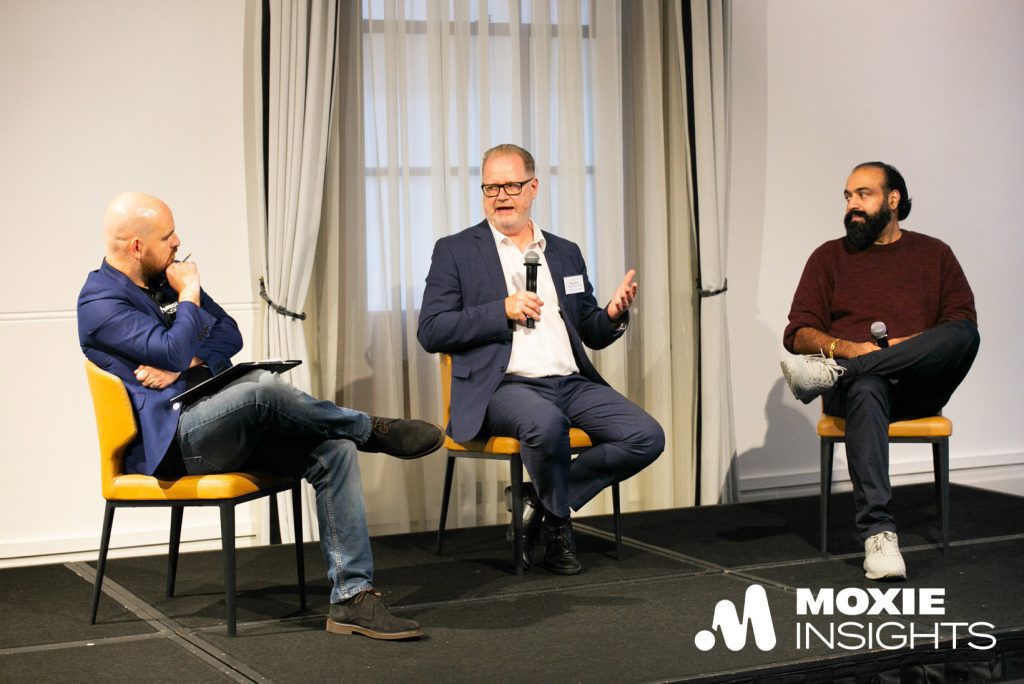
For Jones, successful network security projects now require organisations to align technology decisions much more closely with business objectives.
“We help organisations modernise and secure their networks by aligning security architecture with business outcomes,” he added.
“This includes secure network design, SD-WAN and SASE integration, threat detection, and compliance ready operations. Our value lies in translating complex security requirements into practical, scalable solutions, supported by local expertise, lifecycle services, and strong vendor partnerships.”
That distinction is becoming increasingly important.
Modern network security is no longer judged solely by how effectively it blocks attacks. Executive teams want confidence that the network supports resilience, enables change, simplifies operations and withstands growing regulatory scrutiny without introducing unnecessary operational burden.
For CIOs and CISOs, that means every investment ultimately comes back to measurable outcomes.
If technology cannot demonstrate fewer incidents, reduced operational friction and clearer reporting to executive leadership, its value becomes increasingly difficult to justify.
The network, after all, is no longer just infrastructure. It has become part of the organisation’s operational resilience.
If there is one theme consistently emerging across enterprise network security, it’s not a shortage of capability – rather the accumulation of complexity.
Across Australia, many businesses still underestimate the true cost of such complexity, however – not simply in licensing but in operations, governance and the ability to respond when incidents occur.
“I don’t think most organisations have actually done the maths,” observed Ian Woollett, Managing Partner of ASV Platforms.
“What tends to happen is businesses justify individual technology refreshes – a firewall here, an SD-WAN deployment there – but very few step back and look at the total cost of running the entire network and security environment.
“What we’ve ended up with is technology that’s accumulated over time rather than being designed as a single architecture. Different vendors, different contracts, different management consoles and different engineering skill sets. Every new product solves a problem but it also introduces another layer of complexity.”
Accumulated complexity rarely arrives all at once, however.
Networks evolve over many years, firewalls are refreshed at different times, SD-WAN platforms are introduced to solve branch connectivity challenges, cloud security services are deployed to support hybrid work and new monitoring tools appear as regulatory expectations increase.
Every decision is logical within its own context but few organisations pause to ask what those decisions look like collectively. The result is an environment where technologies co-exist without necessarily operating as a unified architecture.
“Take a typical environment running multiple firewalls,” Woollett explained.
“You might have three management platforms, three policy frameworks and three separate sources of threat intelligence. That’s not an integrated security architecture – it’s a collection of point products that happen to co-exist.”
That distinction between co-existence and integration sits at the heart of the modern network security discussion.
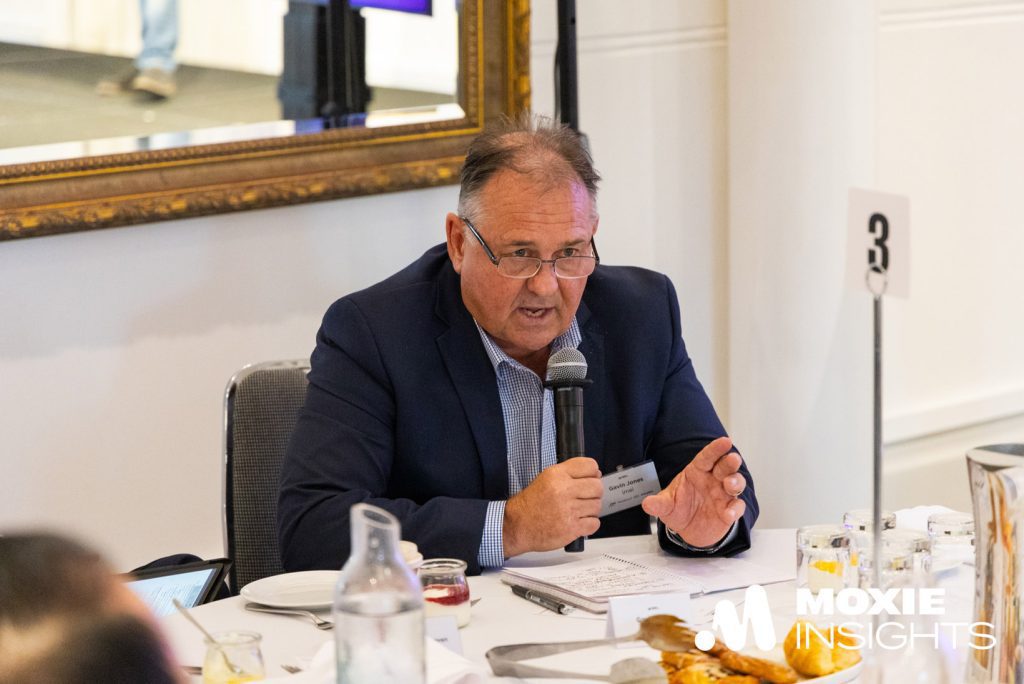
Multiple products can individually perform exactly as intended while collectively increasing operational complexity. Meanwhile, engineers move between management consoles, security policies are maintained across separate platforms and telemetry is collected in different places.
During an incident, teams may spend valuable time reconciling information rather than responding to the threat itself.
“The licence costs are only part of the equation,” Woollett continued.
“The bigger cost is the operational overhead, engineers switching between tools, slower change cycles, and incidents that fall between platforms because nobody has a complete picture.
“The conversation shouldn’t be product versus product. It should be outcome versus outcome. When organisations finally model the operational costs alongside licensing, that’s when the value of consolidation really becomes clear.”
According to Tim Fussell – Founder and CEO of imei – Australian organisations are also facing a rapidly expanding attack surface driven by cloud adoption, IoT, remote workforces and OT convergence.
“The challenge is no longer just perimeter security but achieving visibility, control and resilience across thousands of connected endpoints, many of which were never designed with security in mind,” Fussell explained.
“Compliance obligations such as the SOCI Act further elevate the need to demonstrably manage third party, supply chain and infrastructure risk while maintaining operational continuity.”
That shift from product comparison to operational outcomes mirrors the way that CIOs and CISOs are evaluating technology investment today.
If operational complexity continues to increase, the return on security investment becomes progressively harder to defend. In parallel, the argument for simplification is also changing.
“18 months ago the discussion was largely about operational efficiency but today it’s increasingly about governance, compliance and board accountability,” Woollett noted.
“Boards want confidence that the organisation has visibility across its environment, can detect threats quickly and respond consistently. That’s becoming much harder to demonstrate when network and security teams are operating across multiple disconnected platforms.”
This reflects a broader change in executive expectations.
Boards are no longer asking whether cyber security technologies have been purchased. They want confidence that those technologies work together, provide meaningful visibility across the enterprise and support consistent decision-making during an incident.
That expectation extends beyond internal governance.
“We’re also seeing regulators raise the bar,” Woollett said.
“Organisations need to show that operational resilience and cyber security work together, not as separate functions. If your telemetry is fragmented and your alerts are spread across multiple tools, that’s becoming difficult to defend.”
As a result, operational resilience has become inseparable from network architecture.
A fragmented network does more than complicate engineering workflows. It makes it increasingly difficult to demonstrate that risks are understood, controls are operating effectively and incidents can be managed consistently across the business.
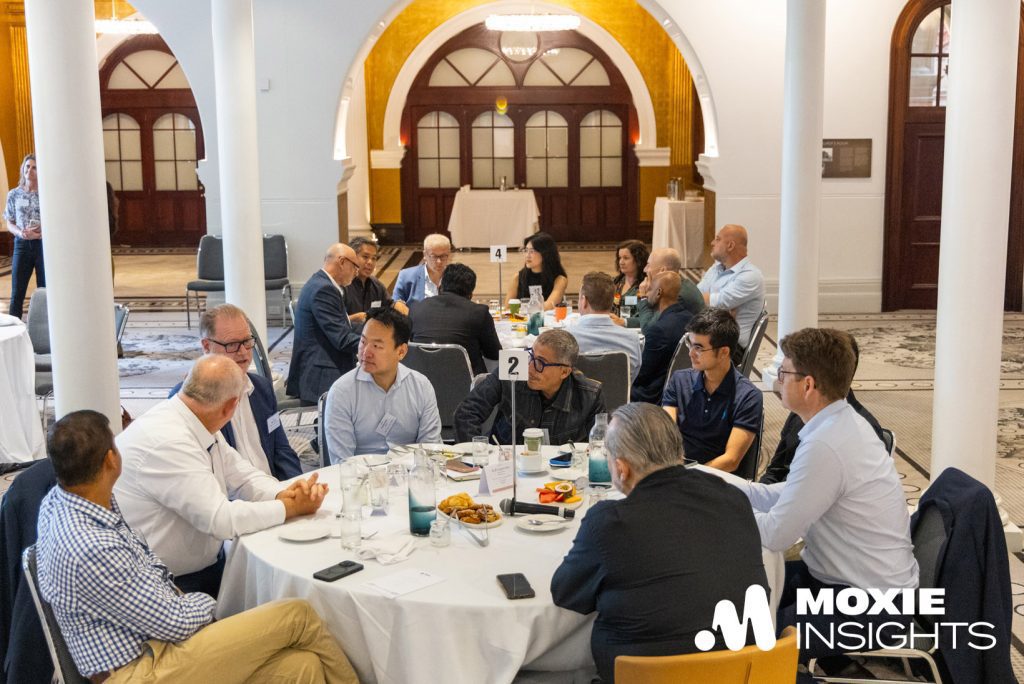
Those are exactly the outcomes that CIOs and CISOs identify when assessing whether a security investment has delivered genuine value.
Without unified visibility, answering those questions becomes significantly more difficult.
“One thing I’d challenge is the idea of a ‘single pane of glass’,” Woollett added.
“The real objective isn’t another dashboard. It’s creating a single source of truth where network performance, security events and operational telemetry come together, giving both the NOC and SOC confidence they’re making decisions from the same information.”
For Woollett, this is an important distinction. Dashboards present information while a single source of truth creates confidence that the information itself is consistent.
“The technology isn’t the biggest barrier,” Woollett expanded.
“Most of the challenges are commercial and organisational. Many organisations are locked into existing carrier, firewall or SD-WAN contracts, so there’s a natural tendency to wait until renewal rather than make a change mid-cycle.”
Commercial realities often shape technology strategy far more than architecture diagrams.
Long-term contracts, staggered renewal cycles and existing vendor commitments can delay broader transformation, even when organisations recognise that simplification would deliver operational benefits.
Internal alignment presents another challenge.
“Then you’ve got internal complexity,” Woollett explained. “Network, security, cloud, procurement and finance often have different priorities, budgets and reporting lines, so getting everyone aligned isn’t always straightforward.”
Each function understandably measures success differently.
Network teams focus on performance and availability. Security teams prioritise risk reduction and visibility. Procurement concentrates on commercial outcomes, while finance evaluates investment models and long-term cost.
Bringing those priorities together requires more than selecting a new platform. It requires agreement on what the future operating model should look like.
“There’s also a skills challenge,” Woollett outlined.
“Most organisations don’t have deep in-house SASE expertise, so they default to technologies they already know. At the same time, there are very few partners that can genuinely help customers consolidate across networking and cyber security rather than simply sell another product.”
That observation reinforces why trusted advisory relationships are becoming increasingly important.
Organisations are not simply choosing between competing technologies, they’re trying to untangle years of accumulated architecture while continuing to operate critical services, manage commercial commitments and reduce cyber risk at the same time.
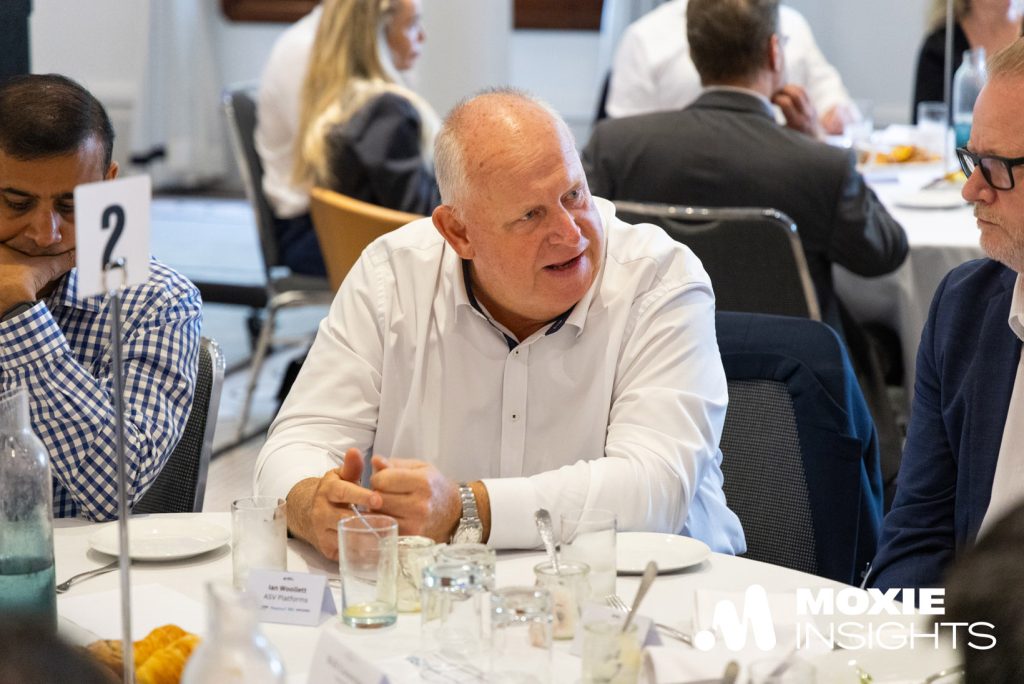
“Finally, there’s the ‘good enough’ mindset,” Woollett cautioned.
“If the network hasn’t suffered a major outage or breach, the urgency to simplify just isn’t there. In reality, change usually happens when something creates a forcing function – a regulatory requirement, a board question, a significant incident or a major contract renewal.”
The absence of disruption can create a false sense of confidence. Complexity often remains hidden until an incident exposes the relationships between disconnected platforms, fragmented policies and inconsistent operational processes.
That is why Woollett believes buyers have become increasingly cautious about promises of simplification.
“I also understand why buyers are sceptical – the industry has promised simplification for years, yet many organisations have ended up with even more tools,” Woollett acknowledged.
“That’s why the conversation can’t be based on promises anymore. It has to be backed by proven outcomes, customer references and a commercial model that genuinely reduces complexity.”
Rather than accepting another technology roadmap, organisations increasingly want evidence that the operating model itself becomes simpler, more resilient and easier to govern.
As organisations modernise networks, technology capability is no longer the only factor shaping provider relationships.
According to Millar, expectations are changing just as quickly as the technology itself.
“Vendor and partner relationships are becoming more like long-term alliances,” he said. “Deeper integrations and much higher expectations on transparency, AI use and supply chain security. I don’t like surprises.”
Millar shares a simple observation but one that reflects a broader shift occurring across enterprise technology.
Network security providers now sit deep inside critical business operations. They help manage connectivity, security controls, cloud infrastructure and increasingly the operational data organisations rely upon to make decisions.
As those relationships deepen, trust extends well beyond implementation expertise.
Transparency around AI, software supply chains, service delivery and operational governance has become part of the overall security posture. By extension that makes trusted partnerships a component of network architecture rather than simply a procurement decision.
“In 2026, a trusted security provider must be more than a technology integrator, they must be a risk and outcomes partner,” Jones shared.
“CIOs are looking for providers with deep industry understanding, clear accountability, and the ability to translate security investment into operational resilience and compliance confidence. Trust will be built on transparency, proven execution and alignment to the organisation’s long term digital strategy.”
That represents a noticeable departure from the traditional implementation model with the conversation no longer centred on deploying another platform or completing another migration project.
Increasingly, organisations want partners capable of understanding commercial constraints, simplifying operational complexity and aligning network security decisions with broader business priorities.
Technology remains important. Outcomes have become more important.
For Woollett – the partnership between ASV Platforms, Aryaka and imei – is primed to address different parts of the same network security challenge in Australia.
“I see the partnership as three organisations with very clear responsibilities,” he expanded.
“ASV’s role is to act as the trusted advisor. We help customers understand what they actually have today – their contracts, architecture, operational challenges and commercial constraints – before recommending a path forward.
“Aryaka provides the platform. The real differentiator is the managed service model, whether customers want a self-managed, co-managed or fully managed approach.
“Combined with an OPEX-based commercial model, it removes much of the complexity and upfront investment that traditionally slows these projects down.”
According to Woollett, imei completes the picture by providing local delivery, operational support and enterprise services capability across Australia and New Zealand.
“That local presence gives customers confidence that implementation, service management and ongoing support are being delivered close to home,” Woollett added.
Together, the partnership addresses the four most common challenges raised by businesses:
Those questions reveal that many organisations are not searching for another security product. Instead, the majority are trying to understand how years of incremental investment can be reshaped into a simpler, more cohesive operating model without introducing unnecessary disruption or cost.
“Organisations need to stop viewing this purely as a technology refresh,” Woollett said.
“This is really about reducing operational complexity and building a platform that’s fit for where the business is heading.
“AI, increasing regulatory expectations and a constantly evolving threat landscape are all putting more pressure on network and security teams. Continuing to add point products isn’t a sustainable strategy.”
That observation reaches beyond SASE, SD-WAN or any individual platform. It challenges a mindset that has shaped enterprise networking for years – the assumption that every emerging challenge requires another standalone technology.
Increasingly, organisations are recognising that complexity carries its own operational, commercial and governance costs.
“The organisations that move first won’t necessarily be the ones with the biggest budgets,” Woollett concluded.
“They’ll be the ones willing to step back, challenge years of accumulated complexity and ask a much simpler question: Is there a better way to operate?
“That’s where I think the conversation around SASE is changing. It’s becoming less about buying another technology and more about simplifying the entire operating model.”
After years of responding to change by adding another layer of technology, the next phase of network security may be defined by something far more fundamental.
The willingness to stop accumulating complexity and start designing for simplicity.
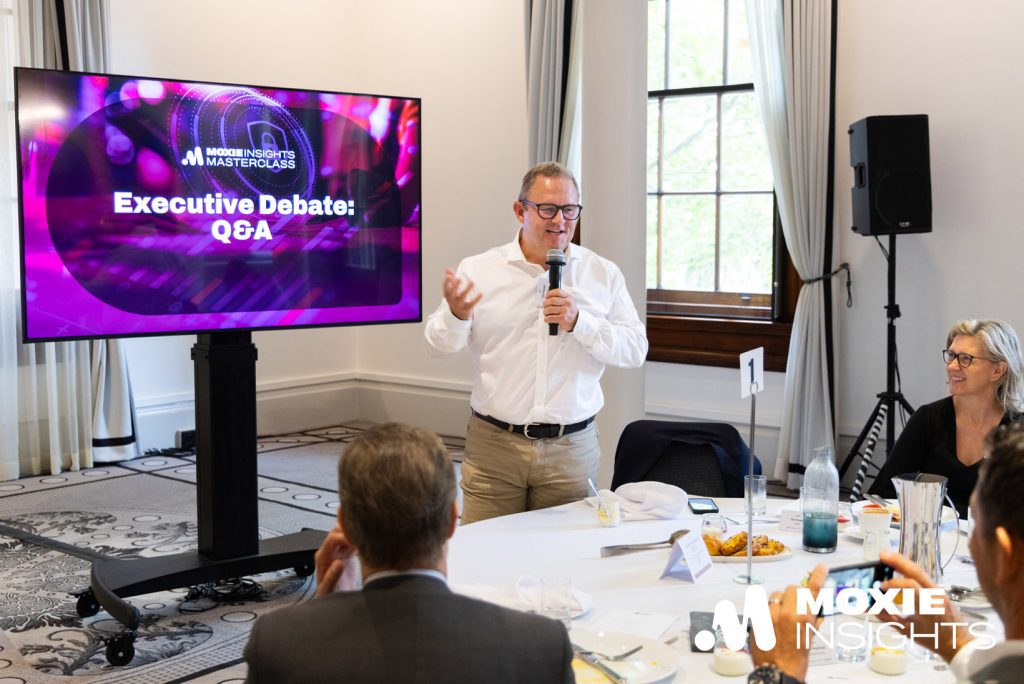
Executive insights were shared during Blind Spots Break Resilience: Securing Connected Businesses. This Moxie Masterclass – in association with imei, Phosphorus, ASV Platforms and Aryaka – outlined the resilience frameworks that address blind spots head-on, tackled new connectivity challenges and highlighted executive best practice amid network and security convergence.
Inform your opinion with executive guidance, in-depth analysis and business commentary.
