
Home
You’re currently viewing our content for All Regions.
You can switch to a different region:
October 21, 2025
The lift door opened at 2:58pm and out walked Angela Fox.
Fresh from hotfooting it across the city – balancing media commitments at ICC Sydney between spin-off customer and partner events at the Museum of Contemporary Art.
But this one-on-one interview on the sidelines of Dell Technologies Forum was different. There was no questioning on the morning keynote, no insight into the opportunities shared and no overview of the technologies showcased.
“I don’t like self-projecting,” Angela clarified. “I’m not a fan of the ‘oh, look at me, look at me’ style. So, should I just tell my story and we can take it from there?”
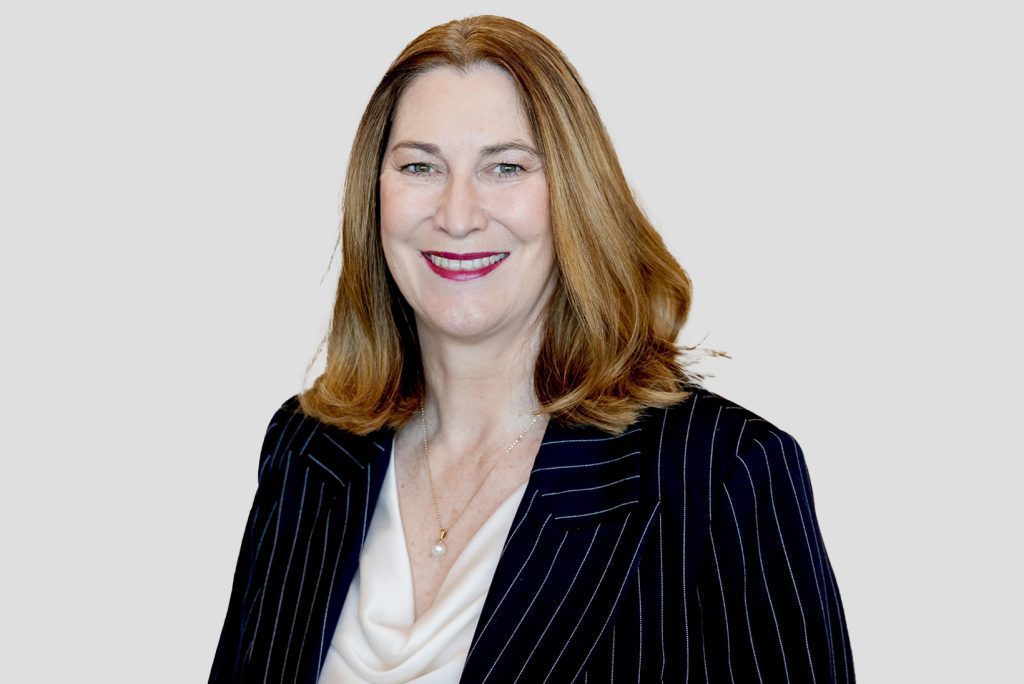
It’s 3:02pm and already, the ethos of one of the most highly respected business and technology leaders in Australia and New Zealand (A/NZ) is on show.
There was no premeditated PR pitch here. Rather an accommodation of a profile request by Moxie Insights that went against the talking points of the day and skewed an already jam-packed schedule.
Angela, you don’t like doing this type of thing, do you?
“Because, I guess, probably, some of it’s my background and my upbringing,” Angela added. “I came from humble beginnings in New Zealand where you demonstrate through your actions, not by putting yourself out there.
“Perhaps that’s the tall poppy thing or the toned down culture and more English roots but whatever it is, we were never brought up to be ‘look at me, look at me’. So it’s probably just my personality and family dynamic.”
But in holding the high-profile position of Senior Vice President and Managing Director of A/NZ at Dell Technologies, the spotlight is forever shining.
“Correct but I still keep an element of myself to myself, an element of privacy,” Angela continued. “I don’t wish to open myself up to the entire world because once you’re in a reasonably high-profile job, one of the balances to that is that your family didn’t choose to be in that position.
“I’ve always been very careful and selective about what I share. There’s a flip-side in that you can become a target for all the wrong reasons, from the wrong people.”
In this unfiltered and unwavering conversation, Angela offered intimate insight into a mentality that has shaped one of the most influential leaders in the industry today. This is an in-depth breakdown sharing five lessons in leadership:
Actions speak louder than words
Sharing openly on the condition of imparting knowledge and helping others, Angela started her story at the start.
In Turua to be precise. A small village community of 420 people on the banks of the Waihou River in the Hauraki Plains, nestled at the base of the Coromandel in the North Island of New Zealand.
The youngest of three girls, Angela grew up on a dairy farm, went to the local primary school, then the local high school before “spreading her wings” and attending Auckland University.
“I grew up in a family where I was the first to go off to university,” Angela expanded. “But that’s not to say ‘oh nobody else was successful’ – far from it, both of my sisters are in banking and finance.”
There’s that healthy dose of humility again.
“I went off to the big smoke and it was a big change from a very small country town,” Angela said.
A Bachelor of Science in Zoology soon followed with the intention of “probably being a teacher” even though the true passion was medicine.
“I always wanted to do something medical,” Angela acknowledged.
“I volunteered through school, I volunteered at St John and volunteered in geriatric wards and all that sort of stuff. I thought I was going to go into medicine so applied for nursing, physiotherapy and those sorts of things.
“But it was my now brother-in-laws who influenced me and advised, ‘hey, go see the world. Go to university, spread your wings and see what becomes of it – you can always come back to being a teacher, nurse or whatever’.”
One was a teacher and the other a soil conservation officer who had lived in the Northern Territory for many years. Their perspectives came at an influential point in Angela’s life with the mantra of ‘go try something different’ kick-starting a new chapter in the City of Sails.
After university in 1989, the real world awaited.
“It was still back in the day when people hired you for your attributes as much as your profession,” Angela recalled.
“I was a ward at one of the university accommodations, I’d done sport and I’d done different leadership initiatives. I think we’re coming back full circle to that because then it was about how you applied yourself.”
Applying to graduate schemes was the natural next step with IBM selected over Shell, BP and others. And that was day one in IT… as a graduate for IBM in Auckland, some 35 years ago.
“That was when they taught you everything from scratch,” Angela explained. “They selected you based on your attributes and your success so far – you didn’t have to have the highest marks and you didn’t have to be top of your class.
“It’s got a lot tougher today because there’s such a selection process now to weed people out but I still believe that people can stand out for some of those other reasons, even if it’s tougher.”
During a year-long training program, a Kiwi cohort of graduates would visit Sydney every quarter to learn the ropes at Big Blue. Visits lasted four weeks, commuting to North Sydney from apartments in Oxford Street.
“The point I make to the younger cohort today is that we played hard but we worked hard,” Angela added. “But it was kind of like university.”
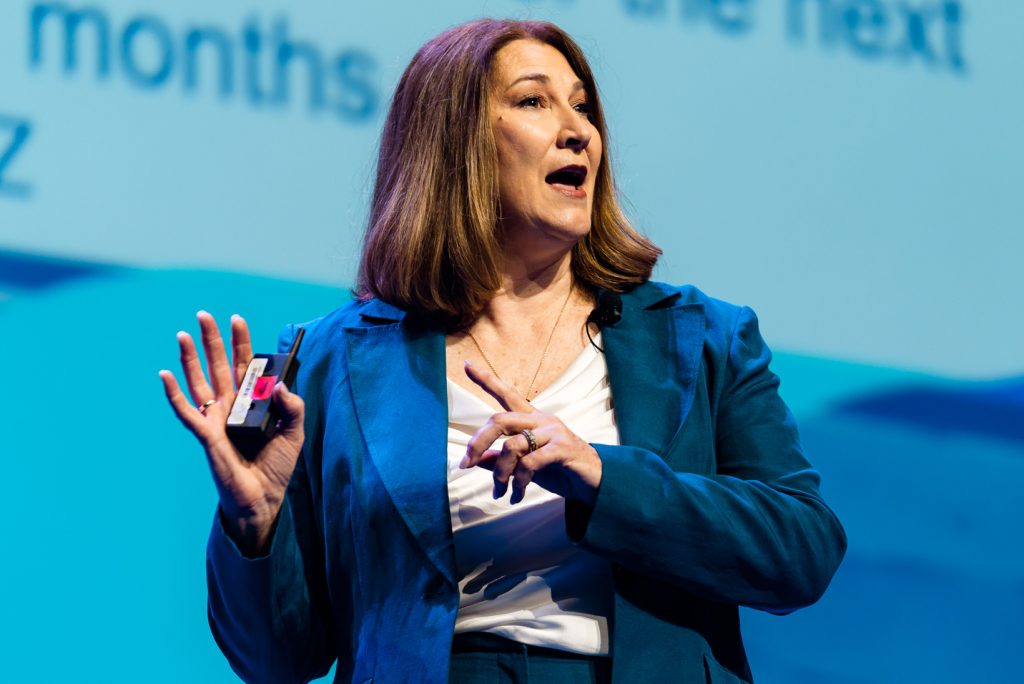
IBM’s method of training at the time involved ‘customer tailored sales plans’ which centred on identifying customer needs, building rapport and matching IBM solutions to customer problems. Sales training 101 with a twist.
“The stakes were high,” Angela said.
“We’d sit on this side of the desk, there’d be a customer over there and there’d be two people sitting behind us, judging us. We’d be working on what we called foil so no fancy technology – we had to literally print out our foils and do our presentation on this little binder that turned into a presentation.
“If you didn’t meet the mark, you’d be put on the next plane home.”
With the level of expectation sky-high – and assessments based on engagement, participation, passing tests and simulated, real-life environments – the pressure was unrelenting. Sink or swim.
“I thrived but you just got carried by it,” Angela shared. “We were learning stuff that was new and different and we’d just come from university so learning wasn’t new in that sense.
“Interestingly, there were also people in our cohort that had been redeployed in the business and were learning alongside us. There was a diversity of groups which was an incredible and fun experience – then you literally graduated from that and started your career.”
While advancing in the Auckland branch, Angela arrived at a personal crossroads. The future husband that she met at university was working for Shell in New Plymouth meaning several years of commuting in a long-distance relationship.
“That’s when we decided, it’s table stakes,” she said. “We either relocate to the same city to see if this works or we go off and do something. So we went overseas and did our big OE [overseas experience] in Europe.”
A leave of absence from IBM soon extended from one year to two years as travelling took centre stage. Not long after returning, the opportunity to relocate to Australia on assignment arrived to run inside sales.
“I’d worked on large conglomerate accounts like Fletcher, Air New Zealand and Telecom when I was an account executive in New Zealand but this was my first leadership role,” Angela noted.
After two years on assignment, the next crossroads arrived. Go home back to New Zealand or stay in Australia. That was more than 25 years ago.
“I liked the challenge of new and different experiences,” she continued.
“I was fortunate to have had a supportive partner that was also happy to take that journey and for us both, it was a case of ‘wow’ – how exciting to have the opportunity to see different parts of the world and live somewhere else.”
Boundaries are healthy, balance is everything
After excelling across the Tasman at IBM, Angela eventually parted ways with the company after 16 years.
IBM was a titan of industry and all a one-time medical enthusiast ever knew – to assign this moment as an inflection point from a career perspective would be a severe understatement.
“I worked my little tosh off,” Angela noted.
“I worked very hard don’t get me wrong but I probably did it in a far more unhealthy way. When you don’t have something to make you stop, and you’re ambitious, you have to check yourself sometimes.”
Executives often become consumed by relentless demands, blurring the line between ambition and obsession. The constant pressure to deliver results, make decisions and stay ahead can narrow perspectives until work eclipses everything else.
Personal health is usually the first casualty. Relationships suffer too.
“I gave it my all and I was fortunate – and still am fortunate – to be in a very stable relationship,” Angela added.
“But there’s compromises you make along the way and some people pay the ultimate price for that. I’ve not paid the ultimate price for that but when I reflected at the end of that career I thought, ‘you know what, I probably lost my balance’.”
Or was this just a natural phase in an advancing career? The head down era when putting in the hard yards was that 1% difference between success and failure.
“I think so,” Angela accepted.
“But I’ve also worked with highly inspiring and successful people in my career who have set boundaries. It’s not that they don’t work hard because everyone works hard in their own way but they were very specific and deliberate about the boundaries they were going to set.”
That comes with confidence and experience however.
“The more successful you are, or the longer you’ve been in a company, that’s when people know what you’re capable of and you feel less of a need to get out there and prove yourself,” Angela outlined.
“But I do just throw myself into things and I give 150%. You do learn with experience and maturity – okay, age – that sometimes the output doesn’t always match the outcome. It’s that classic saying of work smarter, not harder.”
Angela took this newfound philosophy into Dell as she joined her second large American corporate company.
“I took nine months to make the decision,” Angela admitted. “Actually, the person that hired me had given up then saw me at an industry event and used it as an opportunity to try and close again. It worked that time.”
This was a “very big and very difficult decision” to take for a leader that had risen through the ranks at a market leader. From a graduate fresh out of university to leaving as Business Unit Executive of System x (x86 Server Division) some 16 years later.
“There was a lot of soul searching,” Angela recalled. “Why was I leaving? What was it going to mean? I took the counsel of various people around me because this had been a relationship that had grown me to where I was.
“I wouldn’t have a bad word to say about my past and I haven’t looked back since making that decision. But that’s my character as well, you have to move forward.”
Set high standards, perfect the art of observing others
Perhaps it’s no surprise that someone who is shaped by an ‘actions speak louder than words’ philosophy should find inspiration in observation.
“I learn through observing people that I admire,” Angela advised.
Formal mentoring in the past proved successful to a point in specific areas but Angela has found value in the art of absorbing examples of excellence – simply put, listening and learning.
“You go through life and see other people and go ‘wow’ – then you take something from what they did or said,” Angela expanded.
“I always love listening to very senior executives in a company – whether my own, customers or partners – telling the story and watching how they deliver the message.
“Then I enjoy honing my own skills based on what I hear from them. If it’s recorded, I’ll listen back and make it mine – understand how they do it, take on board the great messages and then try and present it back in my own style.”
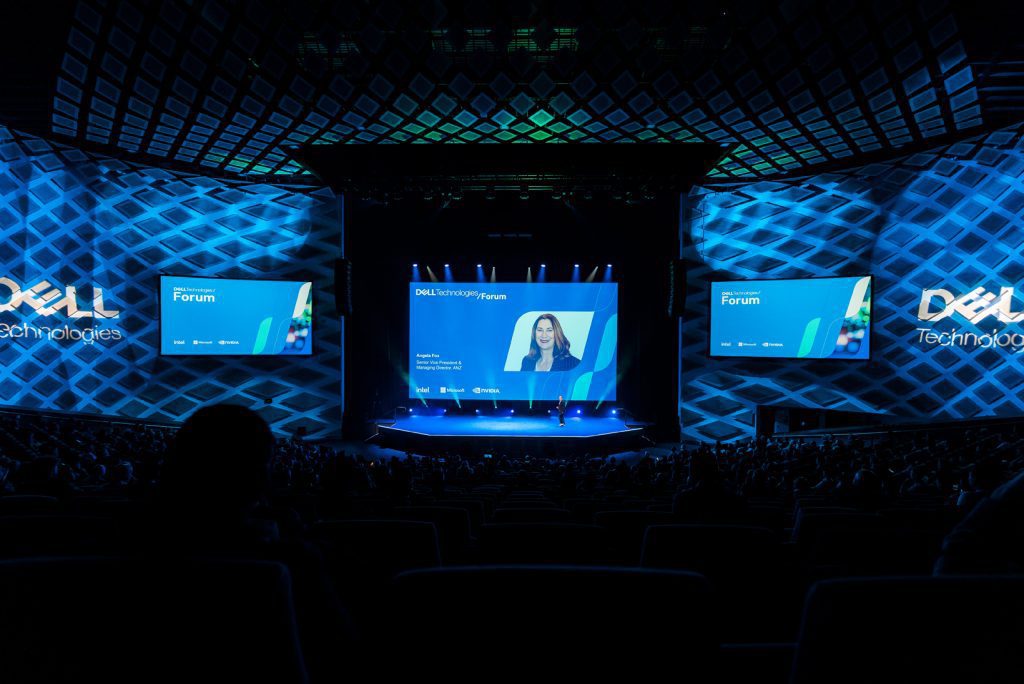
For example, Angela shared the stage during the opening keynote of Dell Technologies Forum in Sydney with John Roese – Global CTO and Chief AI Officer at Dell Technologies – hours before this interview.
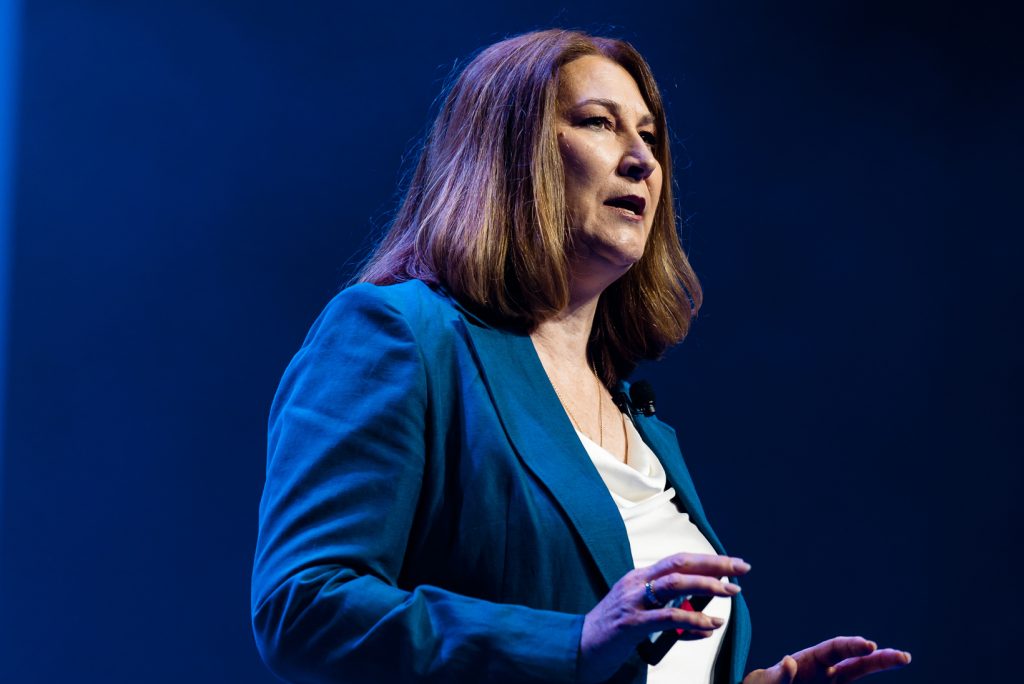
“I’m comfortable with presenting,” Angela said. “I’ve got better but that doesn’t mean I think I’m great at it – it’s part of my responsibilities so I practice and practice.
“I learn through watching people like John. I’ve got better at commanding a stage because I’ve done it more and now know the techniques that work for me to hone that skill.
“Whenever I’m not good, it’s because I’m trying to read from a script and there’s a confidence that comes with it. When you’re not confident with your content you naturally fall back into that even if it’s not delivered with energy or authenticity.”
Regardless of the responsibility, Angela is driven as a person and a leader by the standards that she sets for herself and her team. That isn’t always easy as a high bar can result in heavy criticism.
Don’t confuse standards with self-sabotage however.
“I’m always learning and always growing but I’m not a person that would sit in the corner lambasting myself,” Angela clarified.
Holding herself accountable in areas where genuine improvement can be made is mandatory. Holding onto such baggage without moving on is senseless and selfish.
“I’m not oblivious to what’s gone but I won’t beat myself up about it,” Angela added.
“I do see that more regularly in women, particularly working moms, but my approach is to make my choices and then sit comfortably with them. And if ultimately it’s not working then change it because life’s too short.”
Be intentional, personally and professionally
As evident in this intimate interview, Angela isn’t one to dwell on the past. There’s no daily daydream out of her office window in Chatswood wondering what might have been.
“But the last part of my IBM career taught me that modesty doesn’t always serve you well,” Angela highlighted.
It was at this point that those early years in New Zealand collided with the cut-throat realities of business in Australia. Always stay humble with a meritocracy mindset but do so with a small ‘c’ caveat – intention is everything in the real-world.
“I had the same skills and capabilities as some of my peers who were getting promoted ahead of me because they’d spent a lot more time curating their career,” Angela noted.
“They spent more time being overt about what they wanted and they would make that very well known. That’s something I’ve since learned because if you’re thinking it and nobody else knows it then fool you because people can’t read your mind.”
That penny dropped hard at a pivotal point in Angela’s career, having relocated to Singapore as Vice President and General Manager of Services across Asia Pacific and Japan (APJ) in 2012.
Fast forward two years and a global restructure – which is commonplace in multinational corporations – reshaped the organisation in a way that rendered Angela at risk.
“I was up the creek without a paddle to be honest,” Angela acknowledged. “I was displaced in a country where I didn’t see myself ending my career and I was displaced in a company where I didn’t see my time as coming to an end.”
A very clear choice emerged:
“I was very, very overt about letting people know about the skills that I had, why I thought I was valuable and what I wanted going forward,” Angela explained. “Call it fate or whatever but that’s when the opportunity to relocate back to Australia and lead Dell arrived.”
This wasn’t fate. Quite the opposite. In this game, you make your own luck.
“You can’t assume or rely on your expertise,” Angela added. “Some people have very curated careers and are very intentional at every move. I’m not quite that but I do think to not be intentional puts you at risk.”
In other words, back yourself and have confidence. Because when confidence is portrayed, command naturally follows.
“But you have to have substance, you can’t just be commanding with no guts to it,” Angela qualified.
“The good old… stand up, shoulders back. Your presence is part of your brand and it demonstrates how you can command a situation and lead a team.”
Once again drawing on that healthy dose of Kiwi humility – natively sourced at the base of the Coromandel – Angela is a strong advocate of always learning.
“The more senior you go, the more people want to have a shot at you but the reality is, we’re human too and we have flaws,” she highlighted.
“I’ve got strengths and I’ve got weaknesses. Actually no, I’d rather not call them weaknesses. I draw on my strengths and I’m aware of my opportunities and draw on other people who have a superpower in that area.”
Attributes are important, so is your network
Leaders today have a responsibility to understand technology beyond surface-level awareness. Because a CEO who lacks tech fluency risks blind spots that can stall innovation or expose the organisation to threats.
The same rules also apply to leaders of technology companies.
“Undoubtedly, more and more – I feel an obligation to keep learning,” Angela agreed.
“Clearly, proficiency is critical but you can’t just be a great leader today. In this era, you actually have to put in some pretty heavy yards yourself to stay relevant because technology is changing so much.”
The topic of leadership fills shelves with theories, models and step-by-step guides but the reality is far messier and more demanding than any textbook suggests. It’s not learned in neat frameworks but forged in difficult conversations, uncertain decisions and the weight of responsibility when outcomes affect people’s lives and livelihoods.
Theories don’t capture the sleepless nights, the loneliness of tough calls or the balance between conviction and humility.
“You learn on the job,” Angela said. “I didn’t come into this job knowing how to be a great MD – I’ve grown with experience and with knowledge.
“But if you’re hiring someone, you’ve got an hour to judge him or her across the table even though we all grew into our jobs. We’ve got to give those people – especially the young people coming up through the ranks – the breaks to succeed.”
When recruiting or nurturing talent in an organisation, most fall into the trap of being very tough on candidates. An intense focus on what someone doesn’t have rather than the skills they already have.
“I look for attributes,” noted Angela, in a nod to her early graduate days at IBM.
While this approach is dependent on the skill – for example, technical talent must first posses a certain level of competence – the make-up of an individual is still very much a deciding factor in Angela’s decision-making.
“What I have observed is that enthusiasm, drive and a willingness to learn and develop will carry the day in a lot of areas,” Angela stated. “Skills can be upgraded but it’s hard to train attitude – if a person’s got a lousy attitude then they’ve got a lousy attitude.”
Alongside attributes, the importance of “your network” should not be underestimated. This is more than simply collecting contacts or followers however, rather cultivating meaningful relationships that broaden perspectives, challenge thinking and open doors.
“Invest in your network and then leverage your network,” Angela advised. “I use the word invest because it’s like a relationship, you don’t get to take if you’re not giving.
“Then you can leverage your network for knowledge, for experience, for that rainy day when you need a different point of view. Or you need a parachute to get you out of a situation.
“But that’s when you’ll be judged as to how you’ve conducted yourself.”
How you have treated people and how you have gone about your business becomes the hallmark. They become your brand.
Consequently, being conscious of the brand you are building both intentionally and unintentionally is of mission-critical importance. Sometimes, leaders have unintentionally built brands that are serving them well but on the flip side, some have crafted a brand that is unintentionally not serving its purpose.
“Be aware and seek the counsel of people around you,” Angela shared. “People who are going to be honest with you and tell you the things that you may not want to hear, because that’s the best advice you can get.
“Yes, it might be tough to swallow at the time and it won’t always be comfortable. But sometimes it’s the best advice you’ll ever receive because those people have the courage to be honest with you.”
Inform your opinion with executive guidance, in-depth analysis and business commentary.

