
Home
You’re currently viewing our content for All Regions.
You can switch to a different region:
June 3, 2026
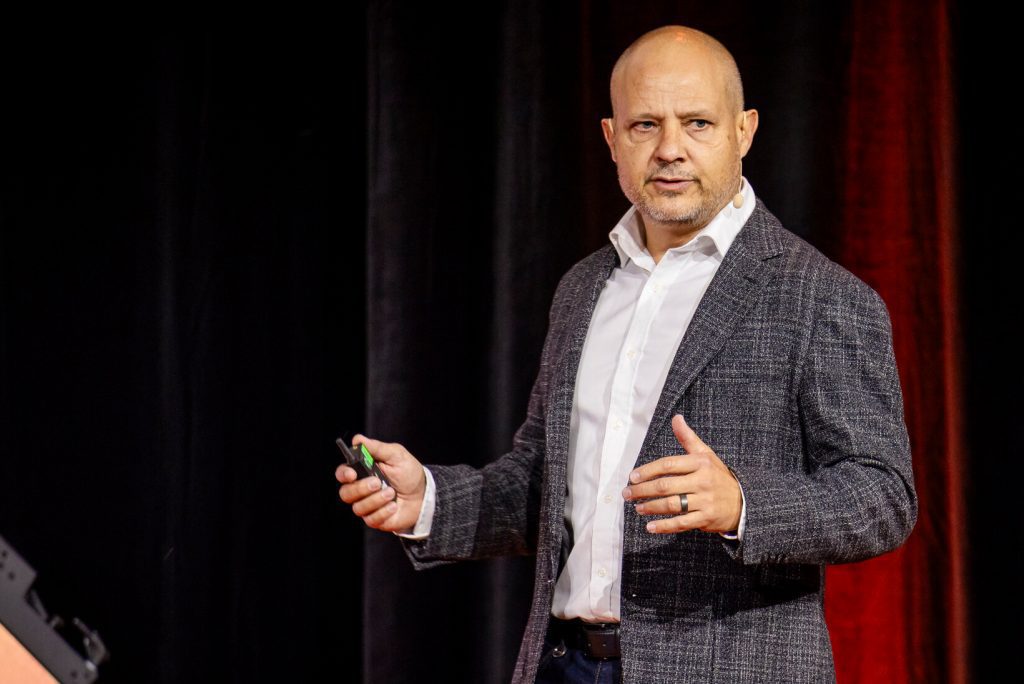
“I remember one employee who operated one of our most important and money generating machines,” shared Steve Manley, leaning forward in his seat.
“If he didn’t turn up for a night shift, I’d put on my overalls, run the machine all night, deliver the products to customers in the morning, sleep for a few hours and then come back to start my shift on the afternoon.”
Today, Steve is Regional Vice President of Australia and New Zealand (A/NZ) at Palo Alto Networks – scaling and leading one of the most consequential cyber security vendors of a generation.
But this is a man from humble beginnings, starting his career in engineering working in the family business in South Africa. There was no master plan, just a desire to work hard, earn respect and add value.
As one of the youngest in a company of around 100 people, no role was off limits.
“One of the biggest lessons was understanding what people actually do,” Steve said.
“I spent time on the factory floor learning every role. I rolled up my sleeves and learned how to operate the machines myself. I wanted to understand how people worked, why they worked that way and what challenges they faced.
“That kind of experience teaches you respect. People see that you’re prepared to help and understand their work. That was hugely formative.”
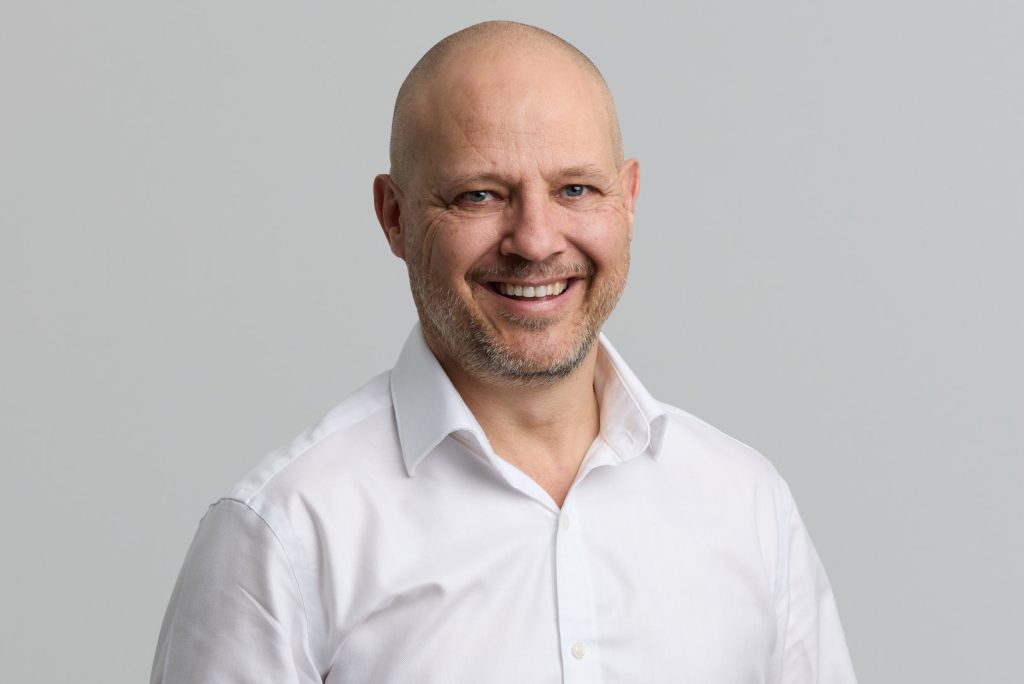
Working in a family business provides a grounding that is difficult to replicate elsewhere.
From an early age, Steve gained a front-row seat to the realities of running a company – seeing the long hours, the sacrifices, the difficult decisions and the responsibility that comes with employing people and serving customers.
Success is rarely the result of luck alone in these circumstances. It is built through consistency, resilience and hard work over many years.
“It was probably where I learned the most in my early career,” Steve added.
“It taught me foundational things like hard work and it remains the hardest I’ve ever worked in my life. Because when you’re running a family business, you’re putting food on the table not only for your family but for many others as well. There’s a real responsibility that comes with that.”
Within a couple of years, Steve was managing teams of 20 to 30 people despite being one of the youngest – learning how to work with people who were older and more experienced.
Working in a family business alongside his father provided a grounding that is difficult to find anywhere else.
Beyond learning how a business operates, Steve gained something far more valuable – the opportunity to observe the person behind it. Seeing the early starts, the late finishes, the pressure of making payroll, the responsibility of looking after customers and the resilience required to navigate good times and bad.
These are lessons that cannot be taught in a classroom or business school.
“Definitely from my dad – a lot of my early leadership lessons came from him,” Steve continued.
“The hard work came from him. The importance of understanding what people do, respecting their role and appreciating their contribution came from him as well. Even today, I love having people around me who are better than me in different areas.
“In the family business there were people who could operate those machines far better than I ever could. But they valued that I understood what they did, why they did it and how they did it. What mattered was understanding their craft and respecting it.
“I think that experience shaped the way I’ve led ever since.”
In looking back on the early days in a family business, to today leading a market pace-setter in cyber security – and every experience in-between – Steve can condense many decades of success down to three core attributes.
The world of work will continue to change but some principles remain timeless. Because careers are rarely defined by a single opportunity, they’re shaped over time by consistent choices, perseverance and character.
“Be intentional,” Steve advised.
“Think carefully about what you want to do and where you want to go. I probably didn’t do enough of that in the first half of my career, but I’ve certainly done more of it in the second half.
“Be resilient. There will be periods where your career is flying and periods where it feels like a grind. You need the resilience and self-belief to keep going.”
In other words, accept that setbacks and disappointments are part of every worthwhile journey, and view them as opportunities to learn rather than reasons to stop. Most importantly, stay true to your values and be genuine in how you deal with people.
“Be honest with yourself,” Steve recommended.
“There will always be areas where you need to improve. You need the self-awareness to recognise those areas and the humility to ask for help when necessary. There are things on my own roadmap today that I need to learn to be successful in my role. That never stops.
“Too often people avoid confronting the areas where they need to grow. The best leaders are honest about what they don’t know and willing to do something about it.”
When Steve left South Africa at the age of 23, he was leaving for opportunity. Having worked in the family business – and despite learning a “huge amount” particularly from his father – career growth was always going to be restricted if he stayed.
In holding a British passport through his mother who is English, Steve moved to London in the mid-1990s with a medium-to-long-term plan in mind – spending six years in the UK building his career in technology.
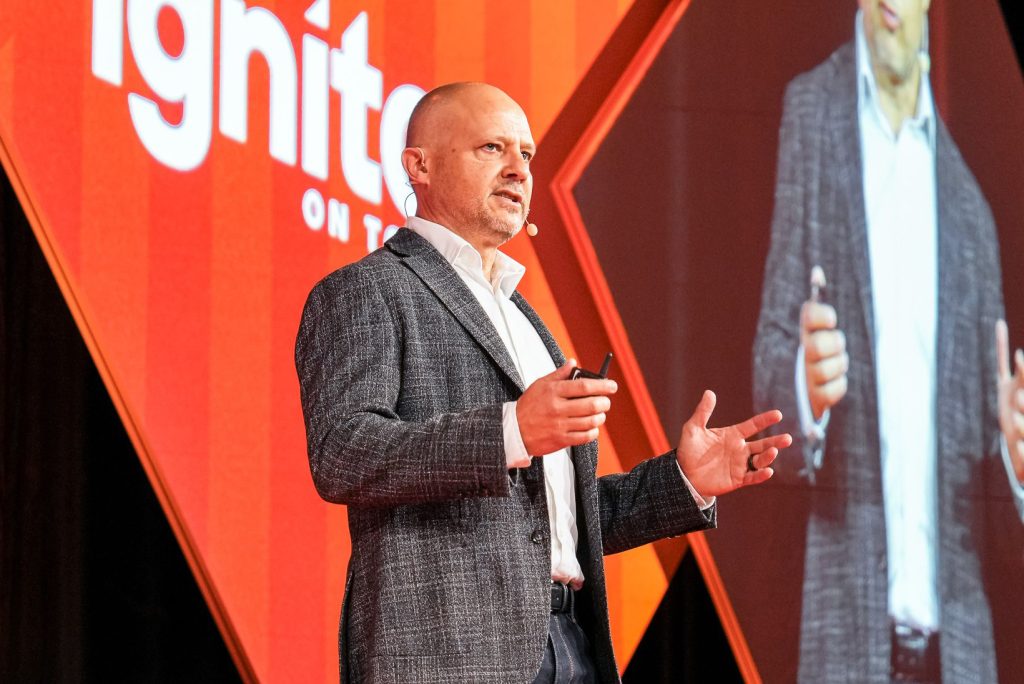
In the family business, Steve was tasked with setting up a network to share CAD diagrams and some basic systems. It was a small requirement and as the youngest, company consensus was that he had the best chance of understanding the technology.
“To be honest, my school success probably hasn’t matched my career success,” Steve acknowledged.
“But technology was something I found quite easy and something I genuinely enjoyed, so I was naturally drawn towards it. It was only when I moved overseas to London that I transitioned fully into technology.
“The industry I was working in didn’t really exist in London, so I thought I’d had a good run looking after technology in a small environment and got my first job on a help desk, starting at the bottom.”
Perhaps the ‘bottom’ in terms of position but not in terms of company prestige. This was HMV, the iconic music store embedded into British culture.
In 1898, Francis James Barraud painted His Master’s Voice, one of the most famous commercial logos in the world which depicted his late dog, Nipper, looking into the horn of a wind-up gramophone.
“What made HMV special was that everyone loved what they did,” Steve recalled. “Most people were passionate about music first and their function second. Whether it was music, games or video, people genuinely cared about the industry.”
Steve started on the help desk and worked his way through several promotions into network and infrastructure leadership roles, eventually managing teams and moving into management positions.
“It was an amazing environment,” Steve shared.
“We had incredible leaders. Andrew Clarke was our CIO and an amazing leader. Brian McLaughlin was the CEO at the time and was genuinely inspirational. You’d get into a lift and Brian would know your name. As a young employee, that had a huge impact.”
Few retailers experienced disruption as dramatically as HMV during the late 1990s and early 2000s.
For decades, this was one of the world’s leading music retailers, built around a simple model: consumers visited stores to browse and purchase physical albums, CDs and singles. The business thrived because access to music was largely controlled through physical distribution.
Then the internet changed everything.
“It was fascinating because we experienced that disruption firsthand,” Steve noted.
For HMV, the challenge was not simply competition from another retailer. The entire market was changing beneath its feet – customer expectations, distribution models and revenue streams were all being rewritten simultaneously.
HMV’s experience remains a powerful lesson in disruption. Market leadership offers no guarantee of future success when technology fundamentally changes how customers consume products and services.
“As a technology leadership team, we saw the dot-com challenge coming and built systems to support it,” Steve expanded.
“Looking back, we effectively replicated the bricks-and-mortar model online. While others were building lean internet infrastructure, we were building on enterprise platforms and mainframes. It was never going to compete effectively, but I learned an enormous amount from the experience.”
Steve always knew that London was going to be a medium-term chapter in his career.
With two sisters in Canada – and much of his family already overseas – it seemed logical that North America would be the next and final destination. That was the original plan until friends in London relocated to Australia, creating a reason to at least visit and experience an alternative option.
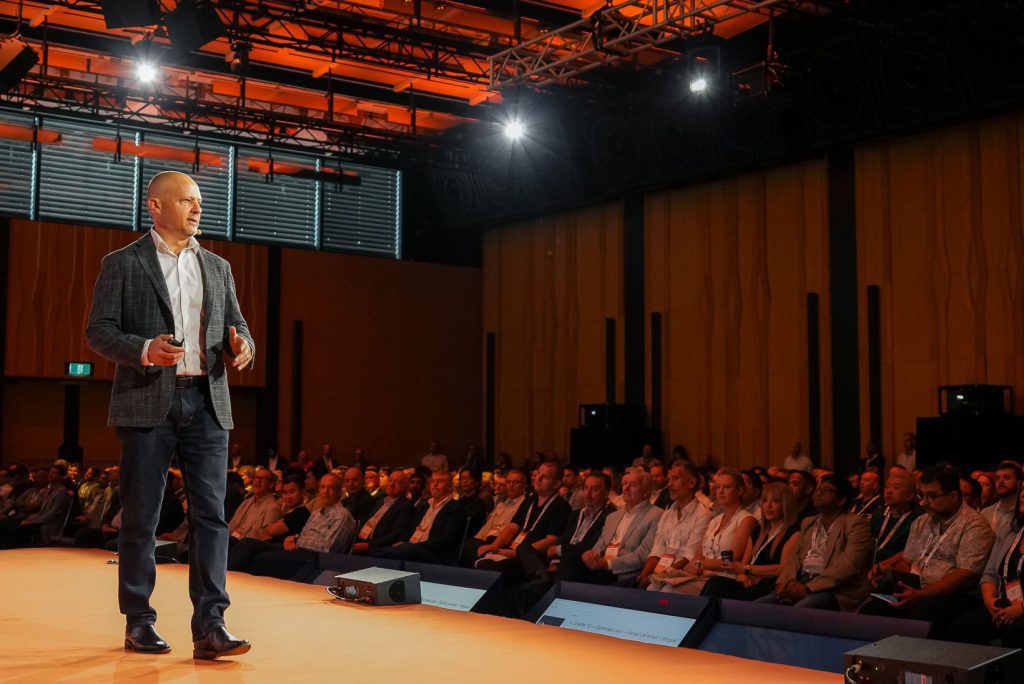
Sydney quickly moved from a pit-stop to a permanent home, however. About a year later he met his wife, Philippa, and the rest is history.
“Until I arrived in Australia, my career was largely opportunistic,” Steve acknowledged.
“I often describe my career as a bit of snakes and ladders. You work your way up, then you move somewhere new and start at the bottom again before working your way back up. Every relocation has been a little bit like that.”
Steve’s first role in the country at Trilogy came through relationships built on the supplier side while still in the UK. There was never a deliberate move in terms of company type or switching from customer to supplier.
“There was a point during that period where I realised the only person who owns my career is me,” Steve recalled.
“That was a major shift. I had conversations with my wife and started thinking seriously about where I wanted to go. I decided that, ultimately, I wanted to work for a vendor.
“Once I made that decision, I became very deliberate. I realised I needed experience in distribution and the channel. I needed to build relationships. I needed to understand the ecosystem. I spoke to Gavin Lawless, who has been a great influence in my career, and explained exactly what I wanted to do.”
Through those conversations, Steve moved into distribution with Avnet – now Tech Data – before eventually switching into the vendor side of the industry with NetApp in early 2008 as an account executive.
“From that point onward, I became much more intentional about my career,” Steve stated.
For many people, the trigger comes when they realise that careers don’t progress by accident.
Early on, it’s easy to focus on doing the job in front of you and assume opportunities will naturally follow. But periods of disruption, industry change or seeing once-successful businesses struggle can create a different perspective.
That realisation often sparks a more intentional approach to career development. Instead of simply working hard, people begin actively building skills, expanding networks, seeking new experiences and taking ownership of their future direction.
“Absolutely,” Steve said.
“I’ve got some anchors. I love my family and it’s family first – my wife and four children. I say that to my team as well, it’s family first. A lot of my purpose is making sure that I’m a good dad and a good husband and providing for them.”
At the time, Steve was sponsored by his company and felt trapped. He had all the reasons in the world why he couldn’t pursue opportunities – he was still on a working visa and too stubborn to go on a spouse visa.
“Looking back, I had a victim mindset,” Steve admitted.
“I’d speak to people about potential roles and immediately come up with reasons why I couldn’t do them. I had 20 reasons why I didn’t take jobs – such as I’m not sponsored etc.”
Eventually, Steve realised that he could control more than he thought. He went through the permanent residency process and suddenly the barriers he thought existed weren’t really barriers at all.
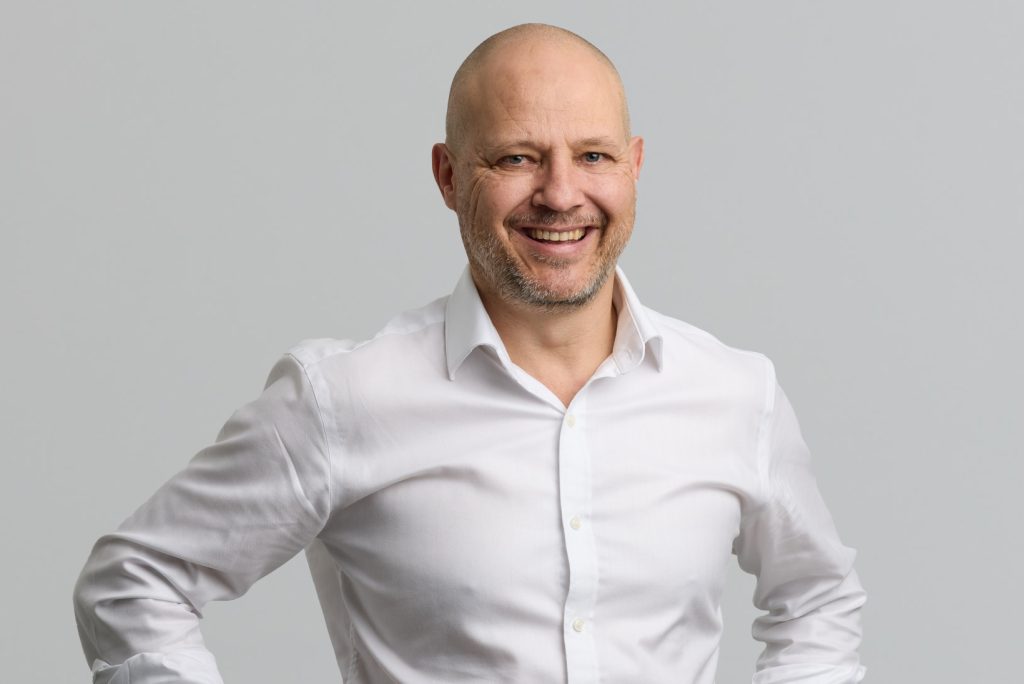
“I also do have a sense of loyalty,” Steve qualified.
“There was a part of me as well that felt like I needed to stay for a certain period of time. But that became a major turning point because I stopped thinking about what was controlling me and started focusing on what I could control myself.”
At NetApp, Steve participated in executive training for leaders guiding people through their careers and individuals on owning your career and assuming responsibility for the way your work life works – delivered by Beverly Kaye who authored:
Both books are Wall Street Journal best-sellers with the parallel coaching programs used by the largest companies in the world.
“It’s amazing training and I’d strongly recommend the books for anyone,” Steve advised.
“How as a leader can you guide people through their careers? How as an individual can you make conscious decisions about your own career? That’s when I recognised that I was being reactive and realised the direction that I wanted to go in and then put the steps in place to achieve that.”
At this time, Steve’s career was not only moving with purpose but also at pace – assuming the role of Vice President and Managing Director of A/NZ in early 2013, followed by the addition of ASEAN in late 2016.
“My career was growing really fast at that time so I didn’t have too much time to think about it,” Steve recalled.
“But I was very fortunate to be surrounded by an amazing team and leaders such as Simon Green and Rob Salmon who provided strong support.
“I’m competitive by nature and enjoy getting into ‘just go and do it’ mode. NetApp was an opportunity to rebuild the business and kick-start a tremendous run by implementing practices that were replicated globally.”
Aligned to being more intentional from a growth and career standpoint – Steve had also completed his MBA having started studying during his time at Trilogy.
“The MBA was a deliberate decision,” Steve added.
“As I moved from sales leadership into broader business leadership roles, I wanted to think more strategically. I wanted to develop different tools and frameworks.
“I found it incredibly valuable. It helped shape how I think. It exposed me to different people facing similar challenges and gave me new perspectives. I thoroughly recommend it.”
An MBA can provide valuable preparation for aspiring leaders because it broadens perspective beyond a single function or discipline. This helps connect those disciplines, developing a deeper understanding of strategy, leadership, organisational behaviour and commercial decision-making.
Although experience remains the greatest teacher, an MBA can accelerate learning, challenge assumptions and equip future leaders with a stronger foundation for executive responsibility.
“I remember completing one of my assignments while sitting in a hospital room on the floor when my eldest was born,” Steve shared.
“I probably took on more than I should have at times. But if the timing is right and your reasons are right, it can be incredibly valuable.
“I don’t think an MBA is for everyone. Timing matters. Capacity matters. Why you’re doing it matters.”
After more than 10 years at NetApp, Steve joined Palo Alto Networks in mid-2018 and boarded the security rocket ship.
Starting out as a single product vendor with 50-60 people locally to a platform player now armed with many acquisitions, housing more than 400 people on both sides of the Tasman.
To put that into dollars, this was a $2.3 billion global business in 2018 and totalled $9.2 billion in 2025 with a current market capitalisation of $240 billion.
“I saw a huge opportunity coming into Palo Alto because it had those key ingredients – the technology was good and the market reputation was good,” Steve said.
After leaving NetApp, Steve had allocated 12 months to find a new opportunity in market but when Palo Alto Networks presented itself, mindsets were aligned from the outset. Upon joining, it was clear that this wasn’t going to be a one or two-year project.
“At the time I said I can see a five-year career here and we’re now at eight years,” Steve continued.
In a high-growth security business, success is determined by technology and the quality of the team behind it. That requires leaders to build teams that can scale without compromising culture, customer experience or execution.
The challenge is finding people who combine technical capability with commercial awareness and a customer-first mindset. Skills can be developed, but attitude, curiosity and collaboration are often what separate good teams from great ones.
“We’ve been very deliberate in building a team housing different levels of skills and experience,” Steve explained.
“We have an even amount of people who have come through some of the growth from carrying a bag all the way to director level. People like Alberto Rivai who was employee number one here and is now running a big team, as well as Mauricio Sabena and Martin Harris among others.
“Plus, people who joined from outside of the organisation with senior experience and then, a number of us that have actually ran bigger businesses. Those conscious decisions and mix of talent have helped us get through problems we’ve never seen before.
“Collectively, the diversity is incredible.”
For leaders, every hire shapes the future organisation. The right team creates momentum, drives innovation and earns customer trust.
In a market where talent remains one of the most valuable competitive advantages, building the right team is not just an operational priority, it’s a growth strategy.
“Palo Alto Networks has reinforced the importance of a genuine growth mindset,” Steve added.
“We operate in an industry that changes every day so continuous learning isn’t optional. One initiative I’m particularly proud of was encouraging our team to spend an entire day each week learning.
“We didn’t care what they studied as long as they were developing. It could be technical training, leadership training, presentation skills, communication skills or strategic thinking.
“We tracked it, measured it and encouraged it. The results were incredible.”
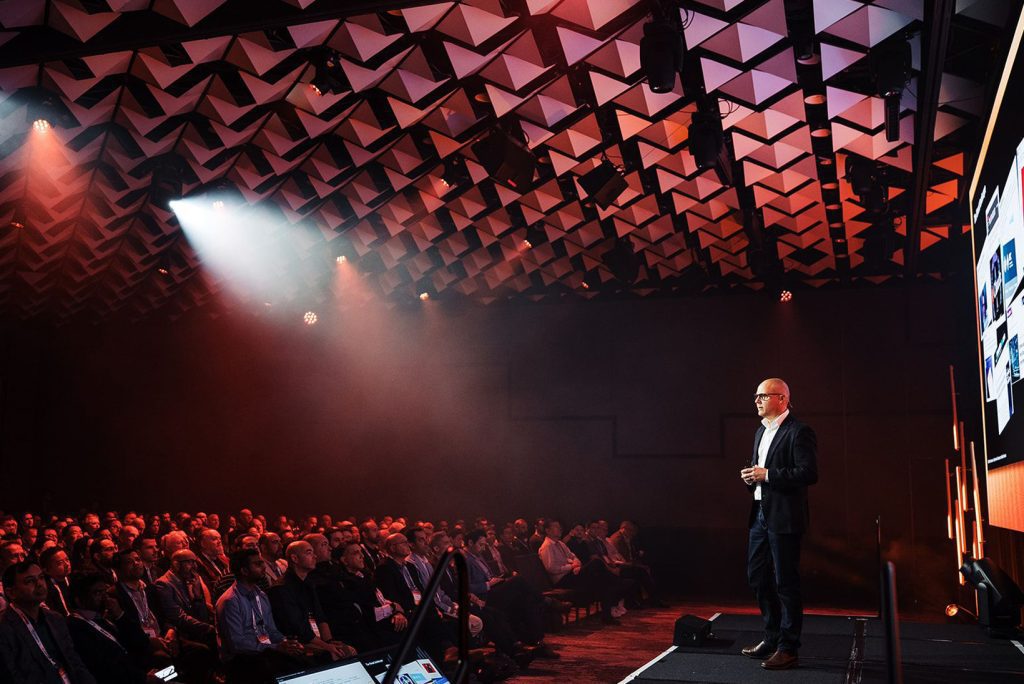
The best leaders rarely experience growth during periods of comfort. Growth often comes from challenge, uncertainty and exposure to situations that stretch thinking beyond familiar territory.
Ultimately, leadership growth comes from remaining curious. The leaders who continue to evolve are those who actively seek new experiences, embrace discomfort and view every challenge as an opportunity to learn.
“I’m fascinated by mastery in all forms,” Steve shared.
“Personally, I learn from many sources. I read books, listen to podcasts and learn from people around me. I’ve learned from sport. I’ve learned from medicine. We participated in a leadership program where we spent time with surgeons, triage nurses and police leaders, learning how they operate in high-pressure environments.
“You might only take one or two lessons away from those experiences, but those lessons stay with you forever.”
A few years ago, Steve and the team completed an exercise where they had to identify their core values. Most people choose six or seven values but each executive within the group was only allowed to choose three.
“Family was obvious,” Steve expanded.
“Loyalty is important to me. Fairness was interesting because, growing up in South Africa, I saw a lot of unfairness.
“I’m very conscious of being fair as a leader, although I’ve also learned that life isn’t always fair. You can’t always give everyone the same opportunities or outcomes. What matters is being thoughtful, caring and making decisions with integrity.”
Leadership is ultimately measured by decisions. Every choice a leader makes has the potential to impact employees, customers, partners and the broader organisation.
While speed and decisiveness are important, strong leaders understand the value of considering the wider consequences of their actions. They balance commercial realities with their responsibility to people, culture and long-term trust.
Integrity becomes most visible when decisions are difficult. It’s easy to uphold values when circumstances are favourable; the real test comes under pressure.
“One of the biggest lessons is that you have to genuinely care about people,” Steve concluded.
“I believe leadership starts with trust and care. You need to understand what matters to people and create an environment where they can succeed.”
Inform your opinion with executive guidance, in-depth analysis and business commentary.

