
ASEAN
You’re currently viewing our content for ASEAN.
You can switch to a different region:
November 9, 2026
Most managed service providers (MSPs) are built from the workbench up.
A technician who is good at fixing things hires more technicians, standardises the tools that work, and eventually prices up a bundled offering.
Natalia Scheidegger entered the industry from the opposite direction.
After taking over 3rdmill from her father in 2014, the business had been operating as a break-fix IT shop since 1997 – its name a nod to the third millennium it was preparing the market for.
“The business has seen pretty much every iteration of the MSP model that’s existed,” Natalia shared.
“I inherited a very typical break-fix IT shop in Sydney in 2014, and like everyone we rode the cloud and cyber waves over the ensuing 10 years bumpily, but arguably successfully.”
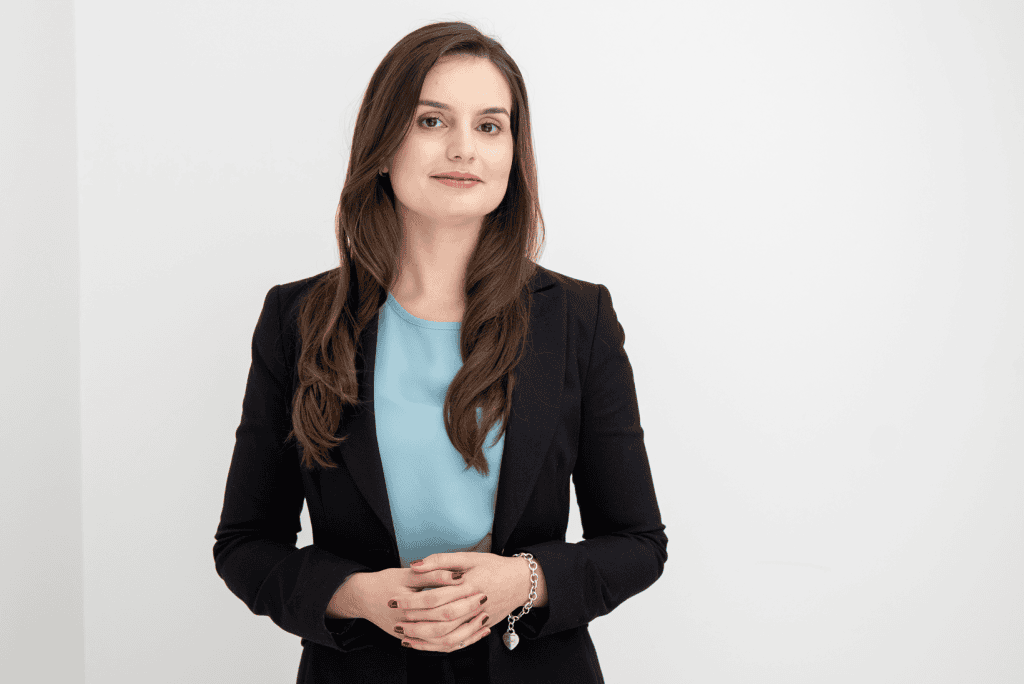
But Natalia was not an engineer. She had trained in strategy consulting at Deloitte, where nothing went to a client without a detailed hypothesis and strategic proposal.
“Unlike most MSPs, I didn’t have a technical background but rather a corporate consulting one,” Natalia continued.
“I was trained in hypothesis-based strategy, customer requirements gathering, and every proposal requiring some sort of bespoke tweaking. MSPs didn’t think like this. Their core focus was curating a set of tools and packaging them up into a ‘good’, ‘better’, ‘best’ model that they would then sell to the admittedly unsophisticated buyer.”
For much of that decade, the gap between how Natalia thought and how the industry sold was something to be managed rather than celebrated.
The tiered model made commercial sense when buyers knew little and wanted to be told what to purchase – repeatable, easy to quote and easy to scale.
As a leader who wanted to open every engagement with discovery questions, Natalia was swimming against the channel current.
The business grew regardless, to around 30 people across Sydney, Melbourne and Brisbane. But what has since changed is that the buyer has moved, and moved towards the direction of Natalia.
“I think the customer is much savvier now,” Natalia observed.
“They aren’t interested in buying products, they want outcomes – a security posture, AI readiness, data-driven decision making. The days of throwing a proposal over the fence with your standard stack are gone. The market is too competitive and everyone has the same or similar tools underneath.”
That last observation carries significant weight in such a crowded Australian market.
If every MSP or MSSP had access to the same security platforms, the same back-up tools and the same Microsoft licensing, the stack stops being a reason to choose anyone.
That’s when price becomes the tiebreaker in a race very few providers want to run.
The alternative approach is to compete on what sits above the tools: a genuine understanding of the business objectives and a plan the customer has helped to shape.
For Natalia – who spent her formative years in a consulting firm – this is home ground rather than new territory.
“The value now is in engaging with the customer, running workshops, talking through their needs and co-designing a roadmap – ironically exactly the same process I learnt in my Deloitte consulting days,” she added.
There is a price attached, however, and Natalia does not pretend otherwise.
A consultative sale moves more slowly than a quote-and-sign one, and MSP sales were never quick to begin with.
Relationships now tend to start with a small advisory engagement, progress through one-off projects as trust builds, and only much later turn into the recurring managed services contract on which the business model depends.
Every stage has to earn the next one, and an MSP that tries to skip straight to the end is out of the running before the race even starts.
“It does mean lead times on converting a customer have stretched out from what was already a lengthy process into something that can sometimes take years, as you move from pointy-end advisory through to ad-hoc projects before you finally land them as a true MSP customer,” Natalia added.
“Relationships are starting to matter more. In this market, if you’re still leading with a SKU list, you’re already irrelevant.”
Longer sales cycles would be easier to absorb in a buoyant economy. This is not one, and Natalia is blunt about the pressure, counting her own business in the assessment rather than speaking as an observer.
“Anyone who says macroeconomic conditions aren’t affecting their business isn’t paying attention,” she acknowledged.
“Budgets are tighter across the board, ours included. But what’s more interesting than the squeeze itself is how it’s reshaping what customers will spend on.”
What Natalia describes is a reordering of priorities rather than a freeze.
For example, mid-market businesses are still spending, but every project now faces a harder question about whether it will help the business make more money or spend less of it.
Work that answers yes moves to the front of the queue. Work that only reduces risk, however sensible, is increasingly broken into stages and funded in instalments, with the less urgent pieces pushed into next year’s budget.
“The big shift we’re seeing in the mid-market is that revenue-driving and cost-saving projects – AI and data initiatives that sharpen go-to-market, or back-end efficiency gains that cut overhead – are winning budget ahead of pure risk-mitigation work,” Natalia outlined.
“Security still matters, but customers are phasing implementations, funding only what’s essential now and deferring the rest. The money is following impact, not compliance checklists.”
According to Moxie Metrics, customer data in Australia tells the same story.
Spending is not drying up, with 76% of mid-market organisations expecting technology budgets to rise in FY27, but cost optimisation (39%) and workforce productivity (38%) lead the reasons for investing, while regulatory obligations trail at 17%.
The money is still there but it is simply being asked to prove itself first.
For an industry that rode the cyber wave for much of the past decade, that is an uncomfortable finding.
“We’re responding in two ways,” Natalia continued.
“First, our superpower is financial services. Having that industry niche means we’re not starting from scratch on every engagement.
“We already understand the compliance landscape, the regulators our clients answer to, and the specific risk profile of their data. That lets us skip weeks of discovery and get to the right recommendation fast, which matters a lot more when every dollar of spend is being scrutinised.”
The second answer cuts against one of the industry’s oldest habits.
“Second, we’ve rethought how we serve the smaller end of the market,” Natalia detailed.
“The owners and leaders in these businesses, particularly in highly regulated industries, are tech-savvy and largely cloud-based. They don’t want to pay for full IT support; they want cyber security and the freedom to call when something bigger comes up.
“So, we’ve decoupled cyber from our managed services model entirely. It keeps us competitive on price, it gives the customer exactly what they’re asking for, and it means we’re the first call when they’re ready for more.”
The research suggests that Natalia has read the smaller end of the market correctly.
Among SMBs, 61% already outsource at least part of their cyber security, but most do it selectively, keeping some functions in-house rather than handing it all over.
Moxie Metrics concludes that the opportunity lies in augmenting the customer’s capability through modular security services, not replacing it, which is close to a description of what 3rdmill has built.
It is also the logic of the longer sales cycle applied at a smaller scale. Give the customer what they value today, stay close enough to be trusted, and the bigger work arrives when they are ready for it rather than when the provider would like it to.
Press Natalia on where the real change lies and she moves past pricing and packaging to the advisory role itself.
Much of the channel still talks about strategic advice as the extra that sets a good provider apart from an average one whereas 3rdmill treats it as the thing being delivered.
“This is the real shift,” Natalia highlighted.
“If we’re not selling products but solutions – and if the customer is indeed savvier – then the strategic advisor role isn’t just a differentiator, it’s part of your whole delivery model.”
The difficulty is that MSPs were never built for that.
The people they hire, train and promote are often engineers, and engineering culture rewards the fast, competent resolution of whatever has just landed in the queue.
That is valuable work, and no customer would want less of it. But it is a different discipline compared to strategic advisory work.
“The challenge is the way MSPs are structured,” she explained.
“The majority of our capability has been geared towards engineers who are trained to solve problems in what I call a linear fashion – they solve the problem immediately in front of them.
“But a consultant thinks differently. They ask themselves: should I solve this problem? Is it the most important problem to solve? Is it cost-effective to solve this problem now?”
Most MSPs have always had some of that second kind of thinking. The trouble, as Natalia sees it, is where it has lived.
Usually, it sat with the founder or with a handful of technical account managers, it was frequently given away, and it rarely reached the engineers doing the day-to-day work.
A business that relies on its founder for every strategic conversation cannot scale its advice, and one whose engineers cannot see the customer’s wider business will keep closing tickets that never add up to a plan.
“The strategic work in the past was typically done by the founder, or technical account managers – often for free – and these conversations often remained siloed,” Natalia expanded.
That is why 3rdmill’s largest current investment is in its people rather than its tooling.
The aim is to give engineers enough understanding of the industries they serve, which means in the tightly regulated world of insurance, broking and financial advice, a solution can be assembled rather than a set of instructions followed.
Alongside it sits a commercial problem that is arguably harder to solve.
Once advice is what delivers the outcome, it can no longer be the free warm-up act for the support contract, and customers who have been given it for nothing for years have to be persuaded otherwise.
“At 3rdmill, our biggest investment right now is cross-skilling our team to consult and advise like business analysts, not just technicians,” Natalia said. “They need a working understanding of our customers’ industry so they can piece together solutions, not just implement tickets.”
The commercial case for that investment is clearest in AI, where the traditional channel is losing ground to firms that lead with advice.
Business advisory and consultancy firms are the most common AI partner for Australian SMBs, used by 41%, while MSPs sit at 27%. In the mid-market, MSPs (26%) trail IT vendors, software developers, data specialists and consultancies alike.
Without stronger advisory capability, Moxie Metrics warns, the channel will not own the AI relationship, and that is exactly what Natalia is trying to fix from the inside.
“The other side of that coin is getting customers to recognise that advice has commercial value,” she added.
“For years, MSPs gave strategic thinking away for free to win the support contract. We’re deliberately unwinding that. If the advisory work is what’s driving outcomes, it needs to be priced accordingly.”
With a list of changes that long – covering new buyers, new sales cycles, new skills and new pricing – it would be easy to declare that the partner model needs reinventing.
Plenty in the channel already have and Natalia is wary of the word.
In her view, however, the speed of AI makes the shift feel bigger than it is, and the noise hides how much of the job has stayed exactly where it was.
“I think we’re using the word reinvention because the shift seems large and overwhelming, particularly with the pace at which AI is running,” Natalia observed.
“But if you peel back to what’s actually required to deliver in this market, the fundamentals of the partner model haven’t changed.
“Success involves being close to the customer, understanding their environment, bridging the gap between what vendors build and what businesses actually need. None of this has changed. What’s changed is the delivery mechanism.”
The delivery mechanism still matters a great deal, because the money attached to it is moving.
Large projects, historically a lumpy but healthy source of income for MSPs, are shrinking as customers buy in smaller and more targeted pieces.
That leaves MSPs with a puzzle about how to keep earning from a customer once a project ends, without forcing a support contract on a business that does not want one.
The standalone cyber offer is one answer. Natalia expects AI governance to be another, an area 3rdmill has already built its own AI practice around.
“Large project revenue is declining for most MSPs, and engagements are getting smaller and more strategic,” Natalia stated.
“The commercial model has to follow. The trick is building recurring revenue that keeps you embedded with the customer after the initial project, without necessarily selling them a support contract.
“For example, I think we’ll start to see MSPs deliver AI Governance-as-a-Service. Is that reinvention, or just a more specialised version of the vCIO offerings we’ve seen for years? I’d argue it’s the latter.”
Asked what separates the partners pulling ahead in a tighter market, Natalia does not start with technology, scale or price.
Rather, honesty.
And the example shared is one where 3rdmill got it wrong first.
The firm went into its early AI conversations expecting clients to arrive with use cases already in mind. Most had not used the technology enough to know what to ask for, which made a product pitch the wrong place to begin.
“Two things separate the winners right now,” Natalia calculated.
“First, intellectual honesty. The partners that are outperforming are the ones willing to tell a customer, ‘You’re not ready for AI yet – here’s what you need to fix first.
“We learned this the hard way at 3rdmill. We expected customers to share use cases and know how to use AI, but they often didn’t even know where to start because they weren’t using AI day to day. The moment we started leading with education and honesty instead of a product pitch, it became a much easier conversation.”
Moxie Metrics finds the same gap between enthusiasm and readiness.
In the mid-market, 91% of Australian organisations say they have an AI strategy and 90% are increasing the priority given to AI funding, yet only 30% have a systematic process for measuring whether those initiatives are working.
Closing that distance is what Natalia’s approach is built for, and it directly links to the consultant questions that engineers must now also ask.
The second trait is the one that Natalia admits is hardest, and it is where her own experience is most revealing.
Clarity on go-to-market can sound like strategy-deck language until it is broken into questions, and the last of them asks partners to turn away revenue they could, in theory, win.
“Second, absolute clarity on your go-to-market and the commercial courage to stick to it,” Natalia explained.
“Who is your customer and why? Do they truly value the advice you provide, and are they willing to pay for something you’ve probably been giving away for free? Perhaps more critically, who are you saying no to? That last one is terrifying for most partners.”
It frightened Natalia too.
Committing a business that had served all comers since 1997 to a single sector meant accepting that some prospects would go elsewhere.
What Natalia had not counted on was that the specialisation would travel.
Financial services clients operate under heavier compliance demands than most, 3rdmill now holds ISO 27001 certification to match, and businesses well outside of the sector began to see that standard as a reason to pick the firm as well.
“When we committed to financial services, I worried we’d alienate everyone else,” Natalia acknowledged.
“But the opposite happened. We became the obvious choice within that industry and sought after in others, because regulated industries have a higher standard of compliance, and customers saw value in that.”
The leader who arrived without an engineering background, and carried a consultant’s habits into a business built on tiers of tools, has spent a decade watching the market come round to her way of working.
But that’s not the takeaway message to the channel. Don’t tear the model down.
Instead, do the parts that were always there, knowing the customer, being honest with them and charging properly for good advice, more deliberately than before, and to be clear-eyed about who the customer is not.
Inform your opinion with executive guidance, in-depth analysis and business commentary.

