
Home
You’re currently viewing our content for All Regions.
You can switch to a different region:
September 9, 2025
“You’ll like this. I recently checked out my ancestry and unfortunately, I’m 39% English, 25% Scottish, 17% Irish, 6% German, 5% Danish and 3% Cornish.”
Phil Cameron pointed at his British interviewer, inserted his Australian banter, smirked and continued.
“It gave me five traits as well which I reckon are pretty spot on.”
“I can’t remember the fifth but we all laughed in the office. It’s true that I recover well from exercise but I’m not a big guy so hardly surprising about the lack of physical strength.”
By his own admission, Phil Cameron is somewhat of a walking contradiction. You can’t quite pin him down.
Effortlessly informal yet always compliant. Easy going but insanely disciplined. Totally transparent in a corporate structure. A people person and a numbers man. Incredibly well connected yet under the radar.
A walking, talking oxymoron.
“People can read that wrong,” he admitted.
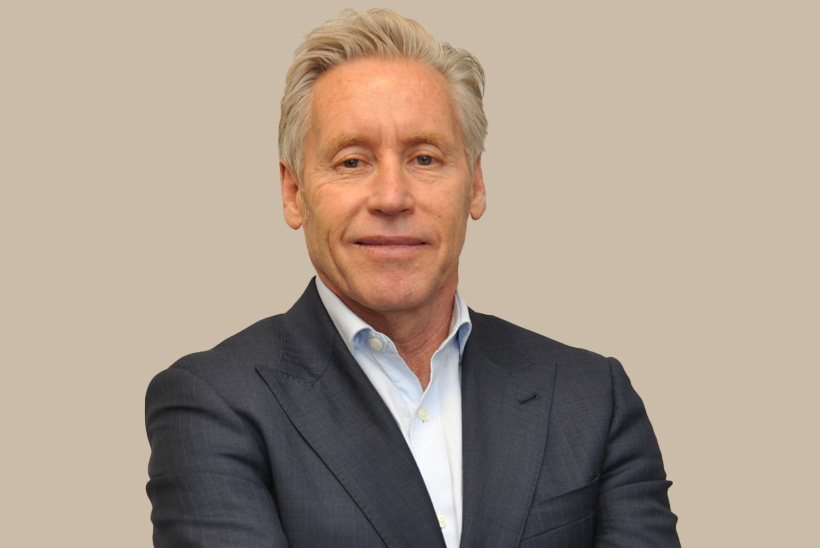
This is a man who declined to be interviewed for two years. From June 2023 until August 2025 the answer to Moxie Insights was always, can we make it about the team instead?
“I’m 65,” said Phil, speaking as Managing Director of Westcon-Comstor in Australia.
“I’ve reached a stage in my life where I don’t go chasing that type of stuff, I’m comfortable in my own skin and I don’t need to self promote anymore. I’m not looking for new friends.”
But this is a story that must be told.
The headline? A HSC dropout who rescued a failing business in decline, quietly adding $494 million in revenue within the space of seven years.
Turning around a $318 million business in the red with a negative EBITDA of $5 million. Reaching $812 million in the last financial year and now on track to hit $902 million.
Billion-dollar business status is within touching distance.
“No, that’s what everyone has said,” interrupted Phil, shaking his head in assertive disagreement. “That’s not important, that’s just an ego thing. That means nothing, nothing, nothing.”
Perhaps that’s the line that best summarises Phil. Someone who finds glory hunting uncomfortable and unnecessary.
“Believe me, the glory comes,” Phil explained. “But you have to focus on the process and enjoy it, that’s where the success is. We’re a humble business and we prefer talking one-on-one to people, building very strong relationships and demonstrating our value.”
Instead, it’s the discipline from day one that matters – a theme that runs as a constant throughout Phil’s personal and professional life.
Good luck trying to find someone in the world who qualified for the Ironman World Championship in Hawaii and didn’t participate by choice. Not because of injury or circumstance, entirely by choice.
“But that wasn’t the goal,” Phil clarified. “I have zero regrets.”
Pausing to pull out his wallet and unearth a crumpled photo of more than 35 years old, Phil leaned in and shared… “between the ages of 26 and 30, I’d put on more than 20 kilos. I was a big unit.”
A product of a typical bachelor lifestyle – free living, poor eating, heavy drinking, minimal exercise – Phil topped the scales at 82kg and was told by his doctor to lose weight and change direction otherwise “you won’t see 50.”
“But I’ve always been extreme,” he continued.
Casual on the surface but unmistakably “goal orientated and disciplined” underneath, an overweight Phil based his transformation on competing in triathlons. That’s an Olympic distance race spanning 1.5km swim, 40km bike and 10km run.
Then came long hours over many months training for a World Triathlon race in Manchester, UK.
“I crashed out in Manchester,” Phil recalled. “I came around the corner and collided with an American and a Canadian coming across a bridge. I was so fit but angry that I’d wasted 12 months of training.”
Once the disappointment dissolved, training resumed ahead of redemption in Hobart, Tasmania.
“That went okay, I placed 19th in the world for my age group,” Phil added.
Now at the opposite end of the extreme spectrum – with the ‘fat photo’ forever consigned to his wallet – peak fitness Phil targeted qualifying for the Ironman World Championship in Hawaii. This was, and still is, the pinnacle of elite triathlon competition.
To reach Hawaii, athletes had to break 10 hours and place in the top 10 in their respective age group during qualifying events. Oh, and the stakes were higher – 3.9km swim, 180.2km bike and 42.2km run.
“I knew my body was going to go into an extreme physical state because I’d never ran a marathon before,” Phil said. “My first attempt was 10:23 but I came back hard the following year.
“My three goals were to finish under 10 hours, place in the top 10 and qualify for Hawaii. I recorded 9:53, placed seventh and qualified – it’s funny how I still remember those times today.”
It was at this point in the interview when – following the lead of any self-respecting journalist – the natural follow-up question came… so, how was Hawaii?
“I didn’t take my spot,” Phil responded. “I have zero regrets because my goal was what I just told you – to qualify and I achieved that.”
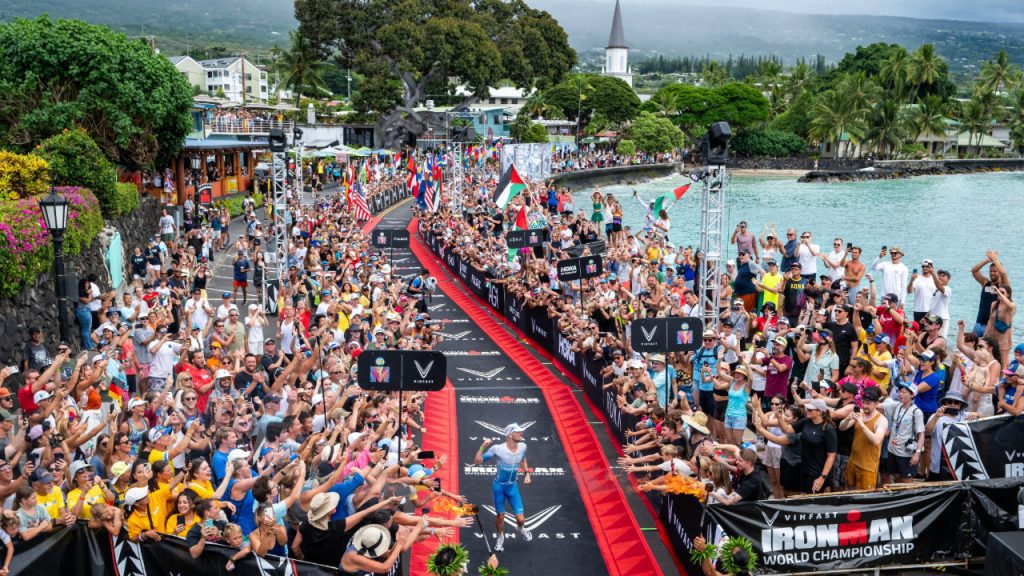
Whether professionally or personally, discipline has defined Phil’s life.
“Hmm, it’s funny how you’ve put that together but yes, it’s the process and the discipline that matters,” Phil acknowledged.
Street smart success
Phil – who was born in Sydney but relocated to Melbourne between the ages of six and 20 – “bummed around” in HSC and never went to university.
“I only turned up to two of my exams, English and Geography,” he shared. “I passed one, which was Geography with 69%. I never read any of the books or studied properly in English, I just watched the movies and got 49%.”
Post exams – and in true Australian style – Phil embraced the schoolies tradition by picking bananas and surfing with mates in Coffs Harbour. But once his HSC results landed, his father called him back to Melbourne to get a job.
“My aspiration of being a P.E. teacher was long, long gone,” Phil admitted.
“I knew that I had mucked around at school because all school was for me was mates, sports and girls. Those priorities fluctuated each week but it was all about having fun.”
Don’t confuse a lack of application with a lack of ambition however.
“I had high aspirations of building a career but I didn’t know what that was,” Phil recalled.
“In 1980, I bought a three-piece brown pinstripe suit with a wide tie and went for a job as an accountant. I didn’t last 10 minutes in the interview. So I thought, ‘that’s me then’.”
After Phil’s father was headhunted back to Sydney as National Sales Manager of Philips, the family relocation triggered new opportunities in sales.
“My dad saw a job advert in the paper that said, ‘Toshiba Sales Clerk’ which is the equivalent of inside sales today,” Phil explained.
“I didn’t know anything about Toshiba but my dad said they sold toasters and TVs so encouraged me to apply. I got the job but I didn’t know what I was doing, I just had a personality and that was about it.”
At 20 years of age, Phil was on the phone taking orders and dealing with stores that sold Toshiba consumer products. Long hours, low pay.
“Then I saw these sales reps with company cars, petrol allowances and overseas trips doing buggar all but taking all the glory and earning twice the money,” he said. “So I hassled my boss that much he gave me a sales job and a sales territory.”
Central West of NSW – Bathurst, Orange and Dubbo.
“Talk about a school of hard knocks and a first place to learn how to sell,” Phil laughed. “I’d leave early on a Monday morning in an orange station wagon with brochures in the back and do my route.
“I looked after that territory for a year and realised that the guy before me used to take five days but I could do it in three days. So I didn’t tell anyone and I would be at Mona Vale beach on Thursdays and Fridays hanging out with my mates.
“I got away with it but I still did the work. I’d just ring the stores and do deals like ‘buy 300 TVs and I’ll give you 10% discount’.”
It was then that Phil learned the art of deal making. And also the difference between a schooner and a pint.
“Those guys could drink and I figured out quickly to only visit stores in the morning and not the afternoon because to get an order, they’d expect you to take the entire staff to the pub,” Phil recalled. “It was old fashioned selling but I wasn’t a big drinker so again, I thought of a way around it.”
By 26, Phil relocated to Queensland and built a team of six people to drive expansion into the state. Four years later, a return to Sydney beckoned in the role of Channel Sales Lead.
“I wanted the National Sales Manager job but I was knocked back three times,” Phil added. “I wanted that job and I knew the three people who got it instead of me wouldn’t make it and they didn’t.”
Eventually appointed from 1995 to 2000, Phil enjoyed “one of the best jobs I’ve ever had” and completed his transition from Sales Clerk to Head of Sales within the space of 20 years.
Only then did his “wasted youth” come back to bite.
“I wanted to join a proper computer company to grow my career,” Phil said. “That’s when I applied for a job with IBM but before I would be accepted into a company like that, I knew I needed a piece of paper that said I had a tertiary degree.”
A Graduate Diploma in Management was acquired from the Macquarie Graduate School of Management (MGSM) in the early 1990s. At the age of 32, an ambitious executive rising through the ranks could finally tick the education box.
“I was extremely street smart and that came from attending a very tough public school,” Phil shared. “Being a little fella, I had to learn to survive on my feet and think quick because otherwise, I’d end up smashed into a locker walking down the corridor.”
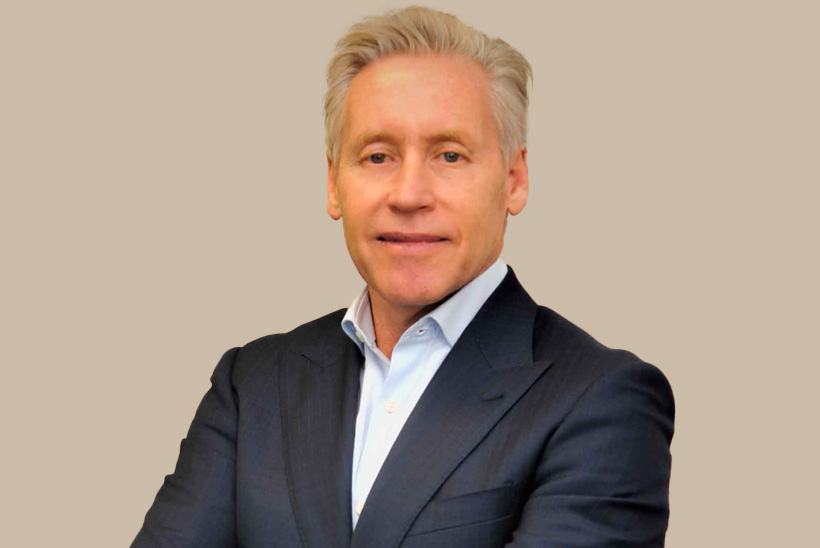
While Phil’s wife was quick to quip that he simply “paid his way to a qualification”, attending university proved to be beneficial in business.
Three core learnings stood out:
“But whenever I pick up a resume, I still don’t look at the qualifications,” Phil countered. “I’ve conducted 1000s of interviews and I always go for the end and look at the person’s story – those few lines that most people think are unimportant.”
A case in point is Sam Merton. After more than seven years at Westcon-Comstor, Sam recently left the business to start his own company, Bayside Golf in Queensland.
Before being promoted to run the Cisco Enterprise Networking division in 2020, Sam was interviewed by Phil. Prepped within an inch of his life, the conversation was not about switches and routers, rather how was high school?
“Ahh yes, Sam – how fantastic is that? He sent me a golf tracker the other day,” Phil said.
“But seriously, I assume that the hiring manager has gone through the basics of whether they can technically do the role. My focus is always on personality fit – everyone has a story.”
On that basis, Phil can make personality fit decisions within 15-20 minutes. While the ask is simple – share your backstory – the answers are often more challenging to generate.
“It doesn’t work if they’re not honest or if they’re trying to answer in a way that they think would appeal to me,” Phil explained.
“I don’t care if you’ve been out of work for two years because you built a house, helped a sick family member, decided to lose 20 kilos or visited your mother country – I just want honesty and to understand more about the person.”
On the one hand, that effortless informality shining through. But don’t confuse that with complacency.
“I interviewed someone recently and his first line was, ‘G’day mate, how are you?’ – that’s not a good first impression,” Phil continued. “He doesn’t know me, we don’t have a relationship and he hasn’t used my name, even though I’m at a Managing Director level.
“Now, that’s nothing to do with my ego it’s more a concern about how he would approach the CEO of a customer or partner. You can’t skip those steps when trying to build a rapport with someone.”
And back to the pendulum we go. That delicate balance between soft and hard skills, tradition and today.
Building the quiet discipline muscle
Okay, where were we? That’s right, IBM.
Phil first joined Big Blue as Channel Sales Manager for the PC division in late 2001, a role in which his indirect experience was acquired and enhanced.
Working back into an organisation built on direct sales created opportunities to better understand rules of engagement internally while balancing external relationships with key partner stakeholders. In a position that is often ‘selling by influence’, learning the art of strategic persuasion was paramount.
Within days of IBM selling its PC business to Lenovo for $1.25 billion in 2005, Phil and the team were deemed ‘in scope’ and faced a simple decision – take the offer and join Lenovo or be fired.
“There was no staying behind – it was a case of IBM on Friday and Lenovo on Monday,” Phil outlined. “As with these things, a third of people were very happy, a third of people were on the fence and a third of people were very pissed off.
“I was very excited by it because I enjoy change and the role was in high demand, it was an important position to hold at the time in market.”
Phil naturally progressed into the role of Managing Director but by his own admission, struggled to adapt to the cultural shift.
“It was high intensity and high inspection in very tough economic circumstances,” he shared. “I learned pretty quickly that I don’t suffer fools lightly and I wasn’t going to allow myself to be something that I’m not.
“I still remember in 2009, I was playing tennis with my mates at 9:30pm one night and I was sat at the corner of the tennis court doing a cadence call on the numbers. My mates just looked at me and said, ‘look at your life’.”
The next five years or so resulted in Phil exiting Lenovo to take on a regional role with CA Technologies, before returning to IBM until late 2014. That’s when Westcon-Comstor came calling.
Having started out as Director of Vendor Alliances across Australia and New Zealand (A/NZ) and then Asia Pacific, the first three years of distribution life centred on expanding strategic vendor partnerships into multiple markets across the region.
In parallel however, the Australian business was struggling and a leadership vacuum emerged. The company was in the red with revenue at $318 million and EBITDA at minus $5 million.
“I actually didn’t want to become Managing Director again after Lenovo because I realised how brutal those roles can be,” Phil acknowledged. “It’s a lonely job and you’re the target – look at how stressed some of the Country Managers at vendor level are today.”
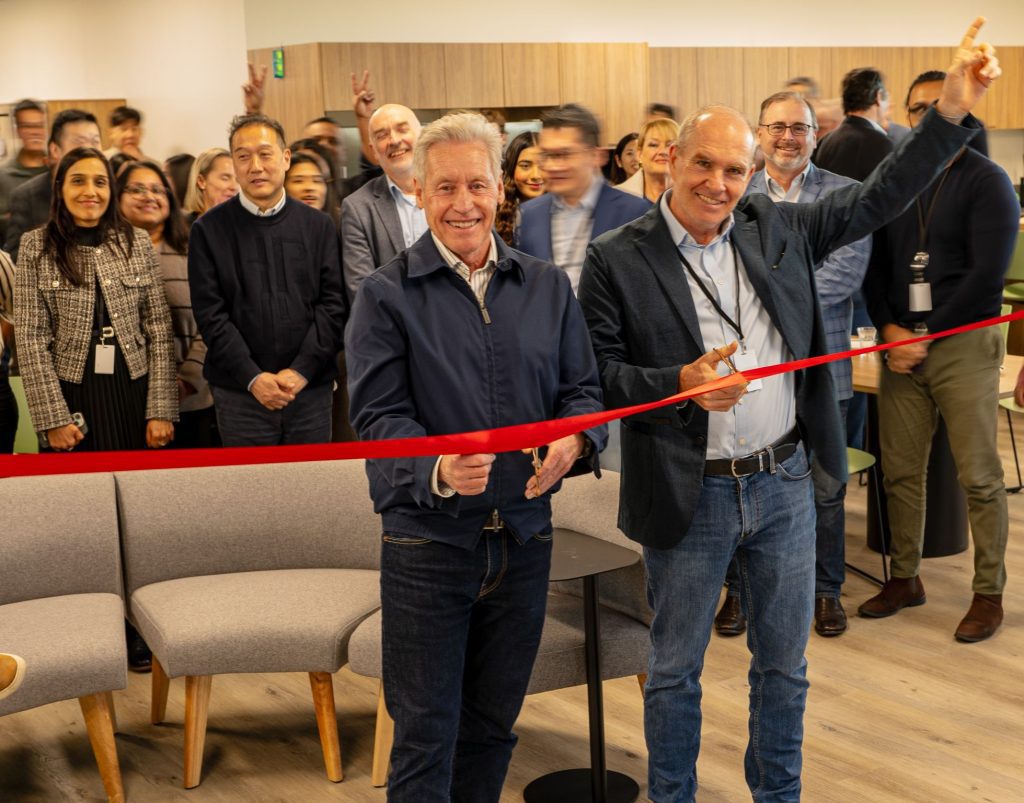
Following a back-and-forth with regional and global leadership, Phil took the job on the condition that he would have “full licence” to implement a complete restructure and overhaul the business from top to bottom.
With the trusted support of regional leader Patrick Aronson, Phil began quietly rebuilding from the ground up in March 2018 – underpinned by three core priorities:
“The first thing was for us to stop thinking like we’re a small company and to let go of the 15 years prior,” Phil detailed. “We had to break down all of the siloes, protect and promote the great people in the business and also bring in external talent to drive our growth forward.”
During this time in 2018 and 2019, John Poulter, David Peach, Belinda Balchin and Phil Rettenmaier were recruited at a leadership level to not only shape but drive change within the organisation. All three remain at the forefront of the business today.
The first step on the path to adding almost $500 million in revenue within the space of seven years was at the management and leadership team level.
“I picked people that are decent people who can make change,” Phil said. “That’s rule number one, you must have decent people.
“Then you must trust them and ensure that everyone feels physically and emotionally safe in the work environment. That’s a huge rule because of all the businesses that I have built, I’ve created a culture in which the team can openly challenge me and I won’t get annoyed.
“Of course I’ll challenge back if I disagree but I enjoy that. Everyone in the business must feel safe and able to contribute.”
Next on the list is a management system. Don’t just know the numbers, really know the numbers and have a best-in-class CFO alongside to support.
Success in distribution is centred on the ability to have “great control” on working capital, cash flow, accounts receivable, accounts payable, margin management, foreign exchange (FX) management etc.
“All mission-critical areas that distributors must run in single-digit margin,” Phil added.
“It’s the 101 basics of quoting, processing orders, order entry, order management, correct invoicing, money collection, on time payments etc. Then we can add the value on top around vendor management and how we work with partners to drive demand generation in market.”
On empowerment, Phil is liberal in his approach to team ownership by encouraging individual decision making and action.
“There’s very little I personally do now other than watching the numbers and giving my input because my team are fully empowered to hire, fire, promote, travel or whatever it is – they are trusted to do that,” Phil noted.
“When people wake up in the morning and they put their feet on the floor. Do they want to go to work? The majority of people want to do a good job and yes, sometimes people have a bad day but that happens so just keep the trust.”
For example, Phil conducted 36 all-hands calls during COVID-19 and while regular communication was important, genuine transparency proved invaluable.
“I still build my own decks and I’m working on one for Thursday now,” Phil referenced. “I like to give the team helpful content and be transparent on what’s working and what’s not working. That way everyone knows where we stand as a business and I trust people with those numbers.”
Maybe it’s down to the school of hard knocks upbringing. Growing up, Phil was always paranoid of competing against the bigger person and the smarter person until the penny finally dropped.
You don’t have to be the smartest person in the room. Instead, articulate the goals then leverage the team in a safe environment.
Empowerment also extends to candour.
“I was reading at the weekend that when you reach 65, that’s the time to just listen,” Phil said. “You don’t have anything to prove so you don’t actually have to say anything.
“But I do say what people think and will always be honest around improvements to make. I’m not sure people always like it but I see lots of people in the industry that have built careers from that advice at Toshiba, IBM, Lenovo and now Westcon-Comstor. I feel good about that.”
Predictable in approach and conservative by nature, perhaps such reservation has cost Phil little things along the way. But be in no doubt that stability is severely underrated in business and life.
“Regret is a negative word so I don’t have any,” Phil summarised. “I’m as loyal as the day is long and always start from a position of trust and offering the benefit of doubt.
“But I drop people quickly if they’ve done the wrong thing whether that be compliance, general bullshit or broken trust. It’s funny, when I make a decision I move on and genuinely forget about it – I always focus on today and tomorrow.”
Inform your opinion with executive guidance, in-depth analysis and business commentary.

