
Home
You’re currently viewing our content for All Regions.
You can switch to a different region:
May 6, 2026
When Sir David Stirling created the Special Air Service (SAS) – at the height of World War II in 1941 – the new elite force unit of the British Army needed a motto.
How best to describe the mentality of a small group of soldiers taking bold and calculated risks behind enemy lines?
Who Dares Wins.
It means that taking action – rather than waiting for safety – is necessary to succeed. It implies having courage, committing to difficult decisions and accepting responsibility for consequential actions.
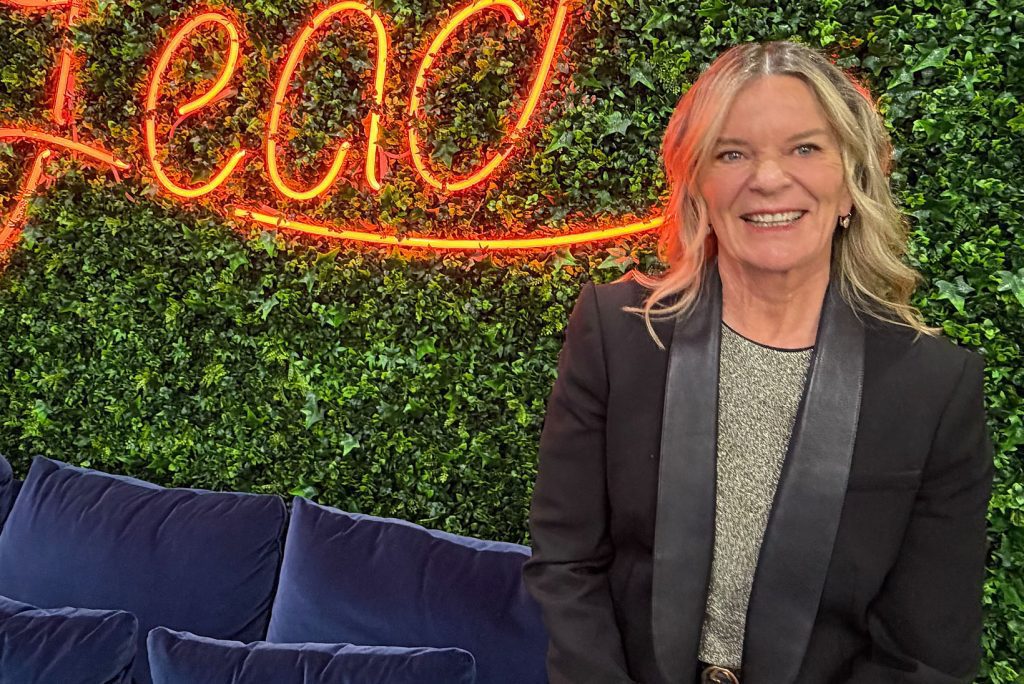
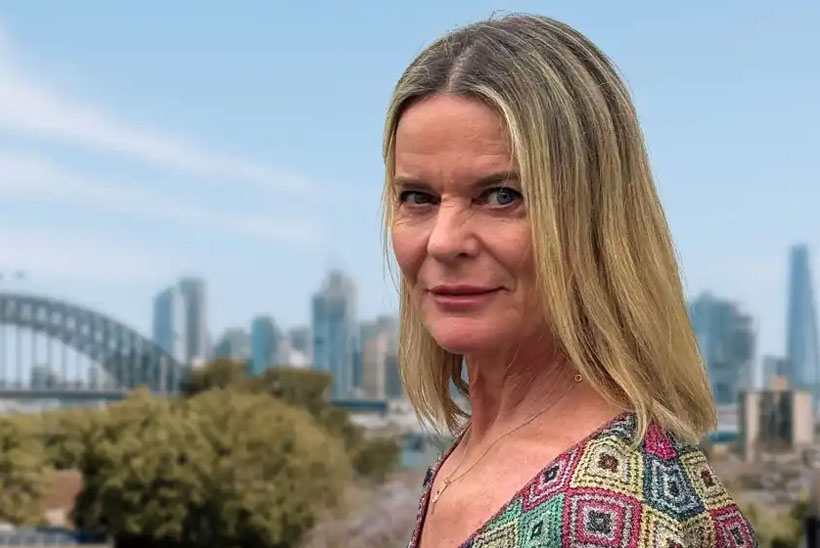
“I always wanted to be in leadership and I’ve never had any problem making decisions,” shared Wendy O’Keeffe, speaking as Regional Vice President of Australia and New Zealand (A/NZ) at Nextgen.
Born at Waiouru Military Camp in the central North Island of New Zealand, Wendy’s father served as an SAS trainer, one the originals in the country.
“My dad taught me the most in my early years and I took those learnings into my leadership journey – two lessons always stood out,” Wendy continued.
“First, make a decision. Just make a decision. Don’t procrastinate. Even if it’s wrong, make a decision. But fix it fast if you have to.
“Second, in leadership you can’t be a friend. You have to be friendly but you can’t be a friend. You’ve got to be fair.”
SAS training isn’t designed to create ‘super soldiers’ – rather to strip people back and reveal who can operate when everything is uncertain, uncomfortable and high-stakes.
It’s trying to identify and develop people who can operate independently, make sound decisions with incomplete information, stay calm and functional under extreme stress and above all, deliver outcomes where failure has real consequences.
There’s a moment Wendy can pinpoint – not in a boardroom, but in a boutique grocery store in New Zealand – where her leadership style first took shape.
“I was put in a leadership role as a 14-year-old,” Wendy recalled. “My dad helped me get a job at a dairy because the guy who owned it was ex-army. It ran shifts of four people per shift.
“Within six months, I was running that shift. I just orchestrated things, made decisions and got things happening. I was fast and took over. I’ve always operated that like.”
Was that the early signs of a decisive leader in action or simply a control freak at work?
“No, I think that’s fair – there was an element of that,” Wendy acknowledged.
“I think decisiveness is an asset. If you’re with people who can’t make decisions – and we’ve all had that in business – that, to me, is very frustrating. I’m a decision-maker and my view in life is, make the decision, even if it’s wrong. Fix it up after.
“But it’s also a learning I’ve had too. Other people get all the data, the facts, then they make the decision. So you have two types of leader.”
That instinct – to step in, take control and move quickly – would go on to define a career that has spanned multiple markets, multi-million-dollar businesses and the building of Asia operations from the ground up (twice).
It’s also the same instinct that only a seasoned leader can recognise as both the greatest advantage – and biggest risk.
Sitting in a noisy cafe at Martin Place in Sydney – sandwiched within a day of back-to-back meetings – Wendy didn’t hesitate when describing her early approach to leadership.
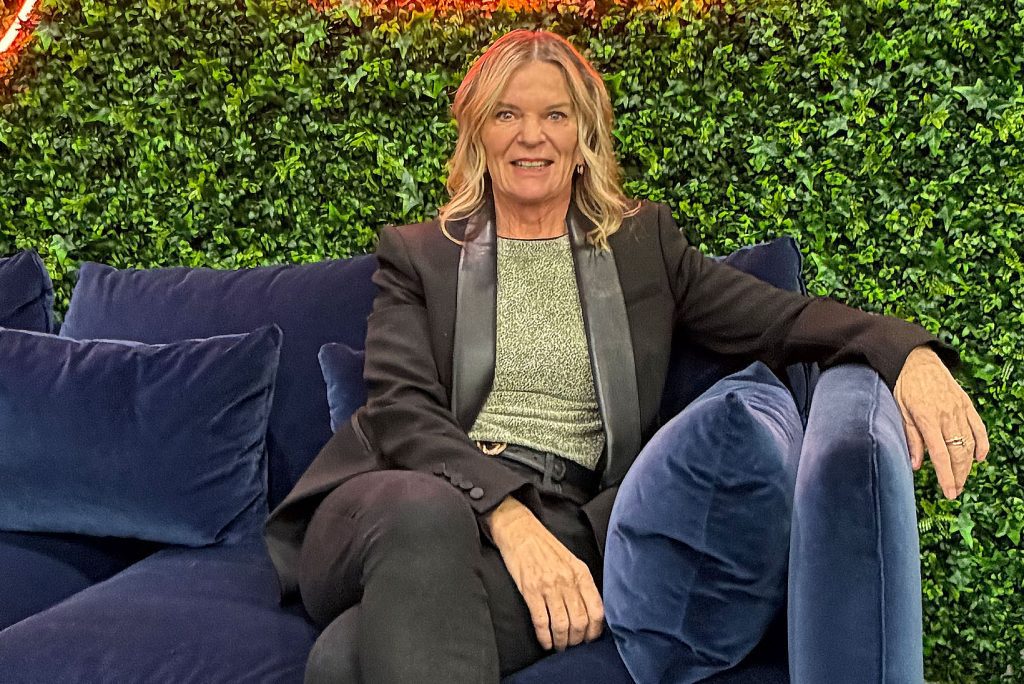
“When I was younger, in my 20s and 30s, I never thought anything I did was wrong,” she admitted. “Whether management, leadership or whatever job I was doing, I always thought I was amazing – not in an arrogant way but in a confidence way.”
That philosophy powered rapid progression.
Aged 24 – barely 18 months into her role as an account manager at Tech Pacific in Wellington – a fledgling Wendy informed her boss that she was ready to move into leadership.
“I think I need to be a sales manager now, Tony. It’s time.”
“Are you serious?” (Tony laughs)
“Yes, I’m serious. It’s time for my next step.”
Welcome to Perth. 1990.
After building a team of three, the business merged with Imagineering Australia – a local software distributor – to form a group of 10.
The pattern of stepping into the unknown without hesitation had repeated itself – new roles, new markets and new challenges. The default response was always the same: yes.
“I didn’t think that couldn’t do it, I never considered that,” Wendy affirmed.
“I’ve always been fearless. Give me anything and I’ll go for it. But that speed does come with trade-offs because in my early years, I ignored the peripheral. I would just make decisions without recognising everything around it.”
In other words, the decisive decision making that turbo-charged an executive career across the Tasman, finally ran out of road.
“The Melbourne business was a disaster at the time so three weeks after they asked me to fix it, I moved there with a brand new baby,” Wendy said.
“They put me into a larger team and that became a rocket ship. The learning was all around how to construct an organisational structure to make sure the business worked.”
With a strong reputation for troubleshooting developing in the market, Wendy was headhunted into a Managing Director position running NJS Technology.
“I took the role and I knew it was wrong,” Wendy conceded. “I could feel it but I ignored all of my senses because I wanted the title.
“It was terrible. I thought I was going to die – I’d just had my third baby, the business was broken and spiralling out of control and I hadn’t asked the right questions beforehand.
“I had a very clear direction from a career perspective and I needed to keep that momentum going so I ignored everything in pursuit of a goal.”
After 18 months, Tech Pacific approached Wendy with an offer to return. Face saved, back on track.
Below the surface however, a painful lesson had been learned. Fearless leadership is not only a double-edged sword but when combined with break-neck speed decision making, the consequences can carry sizeable weight.
Because Wendy isn’t just decisive, she’s instinctively fast, unapologetically so, shaped by military upbringing and reinforced through early leadership experience.
“Overall, it’s worked in my favour – about 80% in my favour I’d calculate,” Wendy estimated.
That blind spot showed up more than once in the early days, however.
On one occasion, an unprofessional and disrespectful vendor executive was thrown out of the company boardroom – “get out, you’re no longer welcome in the office.”
“That was all about how he had treated our staff so I stepped in from a moralistic and protective standpoint,” Wendy explained.
“But I hadn’t thought about the wider implications across the greater team in Australia because he represented one of our largest vendors. Our business was a rocket ship so I had the power and support of the business, although that could have easily been an issue.
“Would I do it again? Yes. I’d just do it in a more professional way.”
There’s that lack of peripheral vision again. That same instinct – the one that accelerates progress – can just as easily override judgment.
“I’ve made some poor decisions… and when I reflect, they’re all linked to the same thing,” Wendy identified. “That speed is what drives success. But it’s also where the risk sits when you don’t recognise everything around it – don’t ignore the peripheral.”
For a long time, Wendy built teams in her own image.
“When I was hiring as a young leader, I always hired people like me,” she noted. “In fact, I loved people like me because there’s a pace I work at so it was a case of, keep up and off we go.”
That approach worked until it didn’t.
The realisation came slowly and predictability the hard way due to several wrong decisions that impacted the business. This was timed with corporate training outlining how different people make decisions and how best to communicate with each persona.
“It took me a long time to realise I needed people who would say, ‘hang on – let’s look at the data’,” Wendy added. “That’s when I learned that I had to change and adapt because up until then, I thought everyone who made fast decisions was right.”
Following the acquisition of Tech Pacific by Ingram Micro in 2004, Wendy switched distribution lanes to take charge of Westcon Group as Managing Director of A/NZ. Westcon had acquired LAN Systems in 2000 – founded by Scott Frew and ran by Nick Verykios.
“I remember interviewing with Nick for the role,” Wendy recalled. “I came from Tech Pacific that was focused on working capital, inventory and margins.
“I was asking all of those questions and Nick looked at me puzzled and said, ‘what are you talking about?’ He looked at things a lot more entrepreneurially and not purely financially which taught me a lot about thinking more broadly beyond functions.”
When scaling from $80 million to $250 million, the look and feel of a business changes.
“As you grow, you’re growing transactionally – more customers, more partners – so you add more people,” Wendy continued. “Then you end up creating roles without really planning it which happens through accelerated growth.”
Today – after seeing firsthand how growth can outpace structure – Wendy thinks differently.
Now the first question is aimed over the horizon to best understand what the business will look like in five years, before working backwards to feed that growth as it arrives.
“I also made mistakes promoting people that I trusted into leadership roles, whether they were the right fit or not,” Wendy recalled. “That’s when I learned how to assemble a proper leadership team and the first thing I look at in any business today is the organisational structure.”
The instinct to move quickly is still there but it’s no longer unchecked. That balance – between instinct and input – is something Wendy actively manages.
“I’ve got people I trust who bring me data,” she explained. “I still feel the decision quickly but now I wait and I validate it.”
Likewise when tackling one of the most challenging and emotionally draining aspects of leadership – layoffs.
Old school layoffs were blunt instruments. No narrative, no nuance – just names on a list and a meeting invite that said everything without saying anything. Whole teams cut in a morning. Decades of loyalty reduced to a handshake and a cardboard box.
Leaders of the past hid behind ‘restructures’ while people walked out in shock, not strategy. There was no talk of well-being, brand impact or culture. Just cost out, move on.
It was efficient on paper and brutal in reality.
“I used to do layoffs very cold – that’s how we were always taught,” Wendy acknowledged.
“It was always a case of ‘here’s your notice’ and that was about it. Then I worked with a leader Dolph Westerbos – former CEO of Westcon Group – and he taught me how to do it with compassion, care and respect. That changed everything for me as a leader.”
Even small, everyday interactions have become moments of reflection, notably a brief encounter in a car park that remains lodged in the memory as a reminder of how to manage tough environments.
“I was in a car park and the guy taking payment felt agitated, I picked up his energy straight away and started feeling uncomfortable,” Wendy shared. “Normally, I would have reacted to that but in that split second I thought, ‘what would a better leader do here?’ and that approach changed everything.”
“How’s your day going?”
“I’m really stressed. I’ve got a play tonight and it’s my first time performing.”
What Wendy has initially interpreted as aggression was actually anxiety – offering a profound lesson in how to read situations and people.
“I pick up people’s energy very quickly but if you don’t manage that, you absorb it,” Wendy added. “So now I try to change the dynamic instead of reacting to it.
“Another thing I have learned is that whatever you like or dislike in someone else is often a reflection of yourself. If you meet someone and instantly dislike them, there’s usually something in that which reflects back on you.
“I used to do that a lot – judge quickly. Now I try to manage that.”
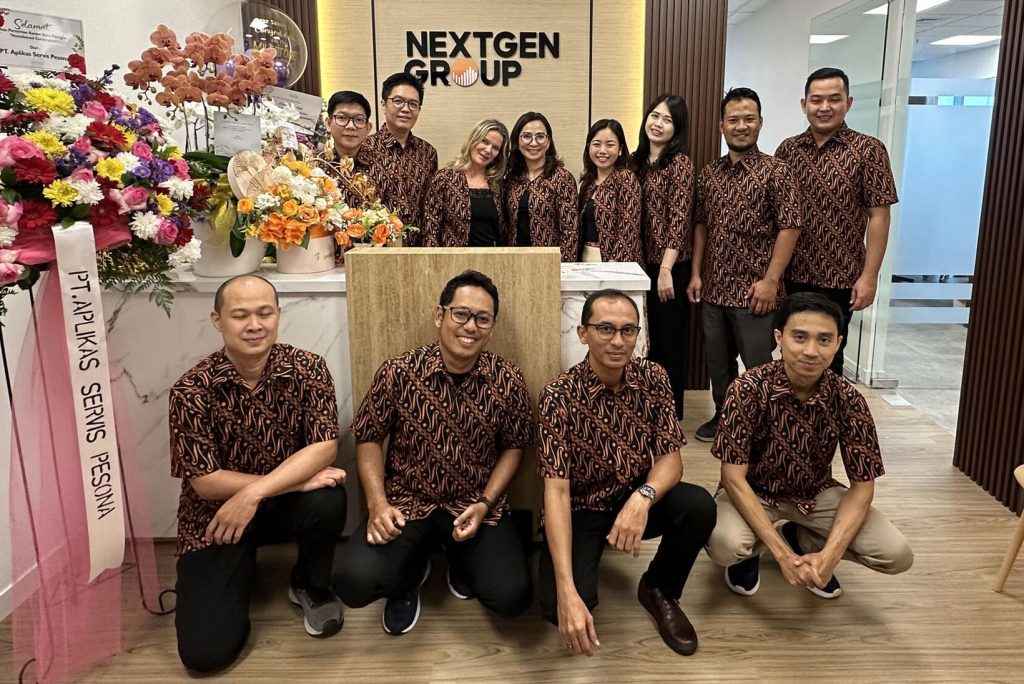
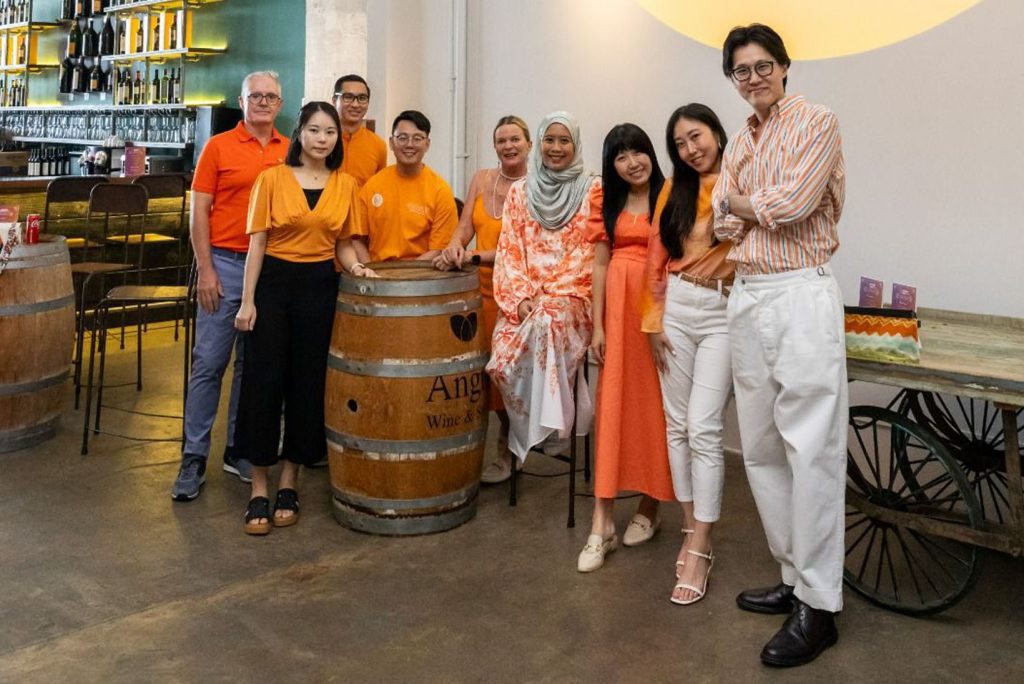
Nowhere is the evolution of Wendy as a leader more visible than in her work building operations across Asia, on two separate occasions for two different businesses – first with Westcon, followed by Nextgen.
After assuming the role of Executive Vice President of Asia Pacific in 2009, plans were underway to expand Westcon as a global distributor into an untapped region. In markets where hierarchy, culture and communication styles vary widely, a direct approach simply doesn’t work.
“Living and working in Asia taught me a lot about leadership,” Wendy stated.
“You can’t just tell people what to do, you have to be more consultative. If you micromanage, it won’t work. As soon as you turn your back, it stops.”
The adjustment required more than just changing how messages were communicated, it meant rethinking how decisions were made.
At Westcon, Singapore was selected as the hub and parent entity with countries across Southeast Asia and North Asia sitting underneath. Market entry points followed the money and mirrored were hyperscalers such as Amazon Web Services (AWS) and Microsoft were investing.
The key to unlocking such seismic potential was people, however.
Notably, Wilson Ho.
“Wilson helped me understand how to build in Asia and together we built a four-year business plan,” Wendy outlined.
“Then we went country by country and hired pre-made teams because if we couldn’t acquire companies, the next best approach is to hire the teams instead. We launched nine countries in four years.”
Second time around in 2020, the appeal of building in Asia was once again too attractive to ignore.
This time the dynamics were different. Instead of a global distributor expanding reach, Wendy would be converting a local distributor with a strong heritage in A/NZ into a regional player from the ground up – building on the vision of John Walters as CEO of Nextgen.
“John called and asked, ‘do you want to set up Asia?’ and my response was, ‘sure’ – no questions or discussions, just build a plan,” Wendy recounted.
On this occasion, decisiveness and speed mattered most.
“But I didn’t have a Wilson so I relied on hiring strong country leaders instead,” Wendy added. “That’s the key – hire the right leader and they can build the business.
“I told John if he funded a minimum number of people per country, then I would show how we could achieve ROI within 2-3 years. We followed the money and launched where demand existed, leveraging our strong relationships from Australia and replicating those successes.”
But early momentum was anything but guaranteed.
“Our first sale took four months, it was $3,700,” Wendy noted. “We printed the order and put it on the wall and the second sale didn’t arrive until months later – and it wasn’t much bigger.”
From dealing in high-end millions to low-end thousands, Wendy hit an entrepreneurial wall.
“I thought, this isn’t working,” she admitted.
“Singapore is hard because 30–40% of business comes through global deals and without that, it becomes a small market. The dynamic is established. Distributors are entrenched. Relationships don’t move.
“It took us three years to build momentum. The market tests you – it wants to see if you’ll stick around.”
Then the pendulum swung, accelerated by vendor relationships kicking into gear and an ASEAN market warming to the addition of a new player in an already crowded ecosystem.
“You can’t just show up as ‘another distributor’ – we had to bring something different which was services, ecosystem and value,” Wendy noted.
“We built demand at the customer level and brought it back to partners. That’s how we built credibility.”
The business also took risks to break into new markets. At one point, a vendor signed up for three countries – two of which Nextgen currently had no staff in. So country leaders were hired and the company went all in to drive growth, becoming fully operational within three months.
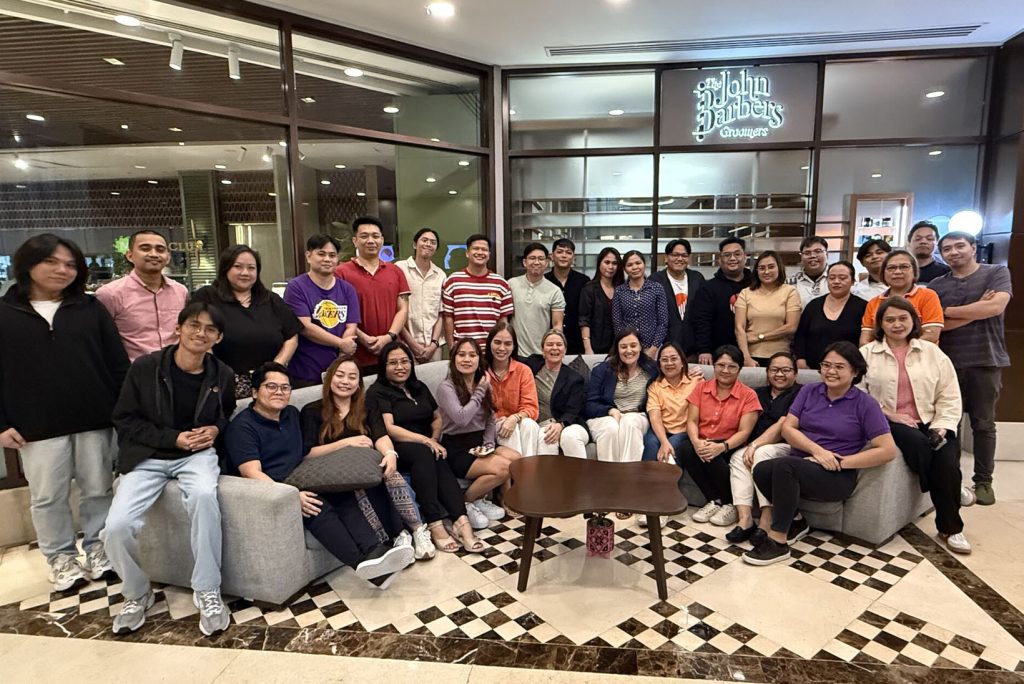
“Once you get momentum, it compounds,” Wendy advised. “But when you move into Asia, it’s a different game.”
Today, Wendy finds herself in a different position in replacing John, who retired as CEO on 30 April 2026 after the company was acquired by Exclusive Networks.
The job is leading a business that isn’t broken but thriving at a compound annual growth rate (CAGR) of 37%.
“Why would you change that?” Wendy asked. “It’s not about changing, it’s about maintaining consistency and taking the team on the journey. Also aligning with global ownership – that’s where my skill set comes in.”
In that sense, the challenge isn’t fixing or rebuilding – it’s preserving and evolving.
“Growing up, you never big-noted yourself or talked about your achievements,” Wendy added. “You just worked hard, got the job done and moved on to the next thing which is always my approach.”
But with more than 30 years of raw leadership experience to draw upon – from New Zealand to Australia and then Asia – Wendy is well-rounded and well-positioned to build on the legacy of Nextgen.
From making decisions alone, to making them with others. From moving fast, to moving deliberately. From instinct, to awareness.
The pace hasn’t disappeared – nor has the decisiveness – but it’s no longer unchecked. And that, more than anything, is what defines Wendy’s leadership today.
“I’ve made mistakes – in business and personally – and most of them come back to the same thing; ignoring the gut,” Wendy summarised.
“Or moving too fast without considering everything. But that same instinct is also what drives success. So it’s about balance and I’m getting better at it.”
Inform your opinion with executive guidance, in-depth analysis and business commentary.

