
Home
You’re currently viewing our content for All Regions.
You can switch to a different region:
July 29, 2026
“It all started with writing a list on the back of my wardrobe – what would I do with my time if I retired?”
Not a financial spreadsheet or life plan, rather a handwritten collection of everything that Julie Barbieri wanted to do once work was no longer at the centre of every day.
Whenever something came to mind, it was scribbled on the back of the wardrobe door in her home office.
“I had this huge list of things that I had put off for many years or things I hadn’t had the opportunity to do because I’d always been so busy,” Julie recalled.
That list quickly became an entertaining reflection of life itself.
Some items involved travel, exercise and learning a new language. Others were considerably less glamorous.
“It was a bucket list and a practical list,” Julie laughed.
“I’d think, ‘I can’t find that saucepan. Where is it in that cupboard? I need to clean out the whole thing’. Anything I could think of that I hadn’t done.”
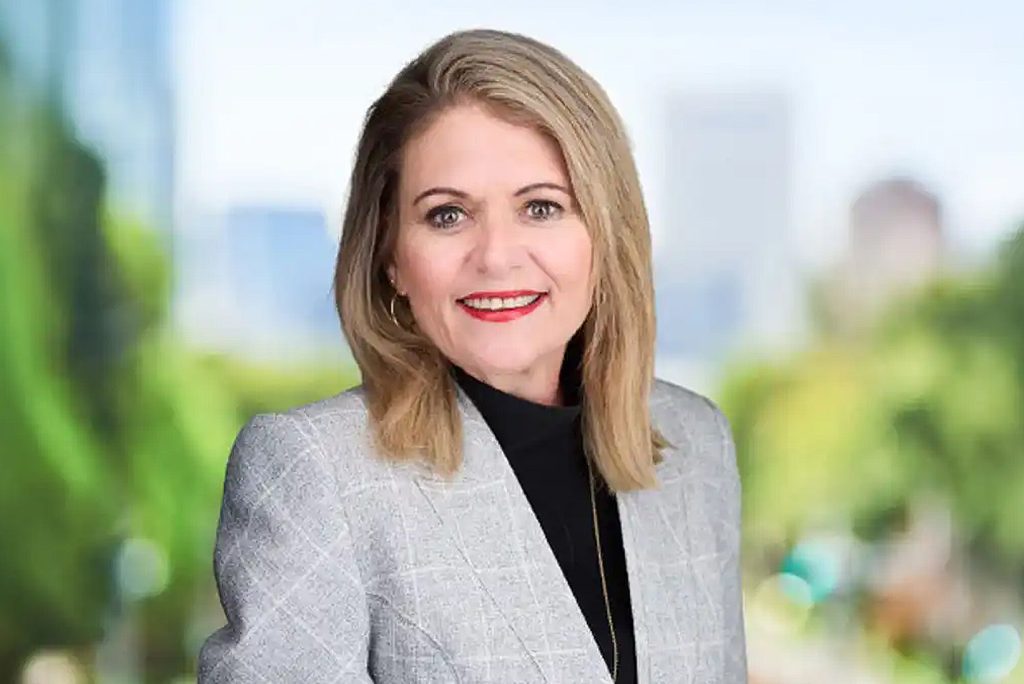
This story perfectly captures Julie’s personality. Practical, organised and quietly humorous, approaching retirement in exactly the same way as she approached leadership for 40 years – through preparation.
Julie turned 60 on 9 December 2025. Julie retired on 12 December 2025.
The final act of a four-decade career was stepping down as Director of Channel and Alliances across South Pacific at Hewlett Packard Enterprise (HPE).
“There are always a million reasons to continue,” Julie acknowledged.
“You can always tell yourself that someone needs you. Or that there’s another project, another acquisition, another initiative. But no, I actually felt really good about the decision. I knew it was right.
“If I’d been an emotional mess, I’d probably have been wondering whether I’d made the right decision.”
One conversation with a girlfriend who is also 60 helped put the decision into perspective.
“She said, ‘I don’t know how you’ve done it all these years – always busy, always working’,” Julie shared.
“Well, I did the hard yards earlier and now that I’m 60, I have the opportunity to retire whereas she still has another 10 years of work ahead of her. It’s about what you’re prepared to trade off and when you choose to do it.”
Most executives spend their careers thinking about what comes next – the next promotion, the next challenge, the next customer, the next financial year.
Far fewer spend time thinking about how they want the story to end.
After more than four decades in technology, Julie found herself asking a question that many leaders avoid until circumstances force them to answer it.
What happens when you’ve achieved what you set out to achieve? More importantly, what happens when you’re finally ready for something else?
Upon approaching her 60th birthday, the answer wasn’t another executive role or another chapter at a different organisation.
“I looked back and thought, do I want to be doing the hours?” Julie said.
“I don’t mind the work. I don’t mind the hours. I like being busy. Even in my personal life, I like being busy. But I thought, no, I’m tired. I’m tired and a little burnt out. I didn’t really want to go anywhere else after HPE, so I decided the timing was right.”
From the outside, the decision surprised many across the IT industry in Australia, especially given that Julie stood tall as one of the most respected leaders within the channel community.
But this was no knee-jerk reaction, rather 18-24 months in the making – not preparing to leave, simply preparing for what came next.
“I think a lot of people do wait too long,” Julie acknowledged.
“I’ve seen a lot of people retire, especially men, who don’t actually have a plan for what comes next. A lot of people don’t have hobbies when they’re working. They don’t think about what they’re going to fill their day, their week, their month or their year with.
“What purpose are they going to have when they get up in the morning? It’s really important to think about what you like in life, what you’ve neglected doing and what you want to do in the future.
“Then try to map it out. I wouldn’t suggest everybody becomes as diary-driven as I am, but I think structure helps.”
In general, the industry is bad at thinking beyond the finish line. This is a short-term game and the rules of the game are simple – stay in the game, quarter by quarter.
Because of this – and for many senior leaders – retirement exists somewhere in the distance. There is always another project, another sales target or another reason to postpone thinking about life beyond work.
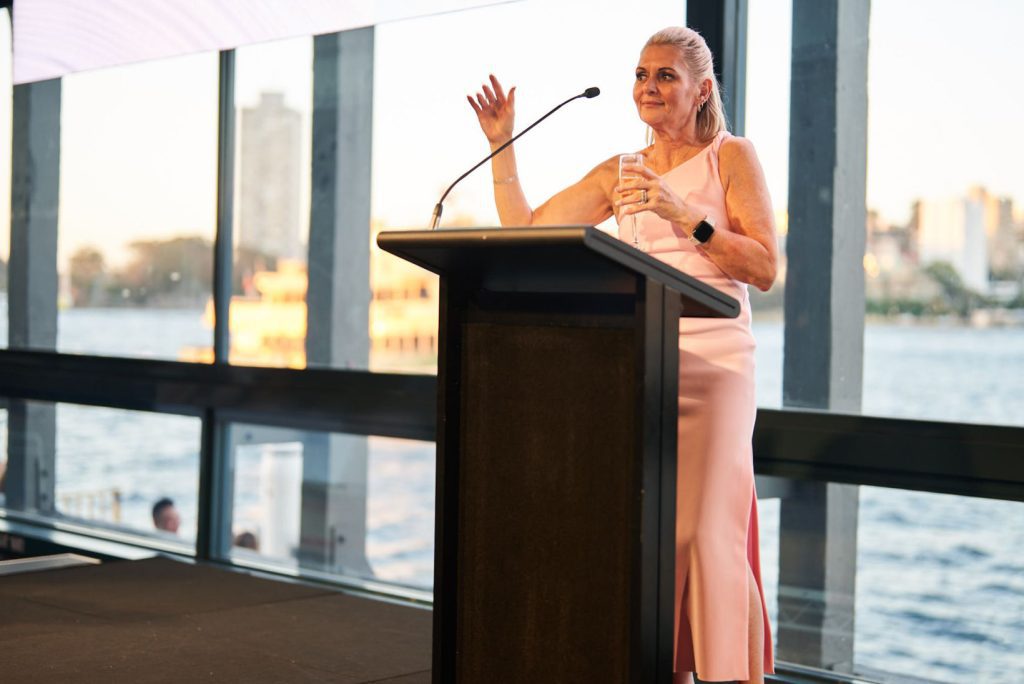
“I don’t really remember having those conversations with people in my 50s,” Julie recalled.
“We all think we’re invincible. We think we’re just going to keep going forever. But one of the things that definitely influenced me was watching my parents.
“My mother has Parkinson’s and vascular dementia. She has good days and bad days. My father had strokes and was bedridden for years.
“I looked at that and thought, I don’t want to be like that. If I don’t do something about myself, I could very easily end up down that path.”
Such a profound personal experience fundamentally changed how Julie viewed time.
Retirement was no longer simply about reaching a financial milestone or a particular birthday. Instead, it became about making the most of the years where good health, independence and freedom could still be taken for granted.
“Exactly but again, I don’t really remember people talking about retirement planning when we were in our 50s,” Julie reaffirmed.
“People tend to assume retirement happens at 65 or 67. But when you get there, there may not be as much time left as you think.
“You want to be able to get on a plane. You want to be able to travel. You want to be physically capable of doing the things you’ve dreamed about doing. Maybe you’ll still be able to do that in your 70s. Maybe not.
“Unfortunately, looking at my parents, I don’t think I’ve got the world’s greatest gene pool. That’s another reason why I thought if I can do it now, I should.”
One of the biggest mistakes that executives make is assuming there will always be another opportunity to start living differently. Too often, retirement planning focuses almost entirely on money while overlooking something equally important – purpose.
“Definitely,” Julie observed. “Sometimes it’s health that forces the decision, sometimes it’s redundancy and sometimes it’s circumstances outside your control.
“Then suddenly people stop and think, ‘What am I going to do now?’ Particularly if they’re older and they’ve spent decades getting up early, going to work and having that routine.
“If that suddenly disappears and they haven’t thought about it, it’s difficult. I think people need to think more about what brings them enjoyment outside of work. Not because retirement is tomorrow but because one day it will come.”
It’s an observation shaped by decades of watching colleagues, mentors, friends and family leave the workforce in very different circumstances. Some embraced the transition while others struggled with the sudden loss of routine and identity after careers that had defined so much of their lives.
Hence why retirement conversations should start much earlier – while people are still in their prime, while choices remain available and while there is still time to prepare emotionally as well as financially.
“My dad was a judge’s associate and just kept working, well into his 70s,” Julie shared.
“I watched him and saw somebody who had spent so much of their life working and then suddenly had to work out what to do with their time. So I always thought, what am I going to do when I’m no longer working? I didn’t want to get to that point and have no answer.”
When Julie’s dad eventually retired, he still sat in his office doing paperwork, numbers and other odd admin jobs. He travelled – which was a positive experience – but never really developed other hobbies or focused on exercise.
“He didn’t have a lot outside of that structure,” Julie added.
“I looked at that and thought, that’s not what I want. I want to have things that I enjoy and I want to have things I’m excited about.
“And now I have the time to actually go and do them. Even simple things. I can go and get my nails done and actually relax while I’m there instead of thinking about emails, escalations and meetings.”
Throughout a highly-distinguished career, Julie has demonstrated a consistent track record of delivering year-over-year revenue and profit growth.
Success has always been rooted in a set of core principles that include prioritising team well-being, treating everyone with respect, empowering individuals and maintaining the highest standards of integrity.
Not forgetting loyalty to the organisations she represented.
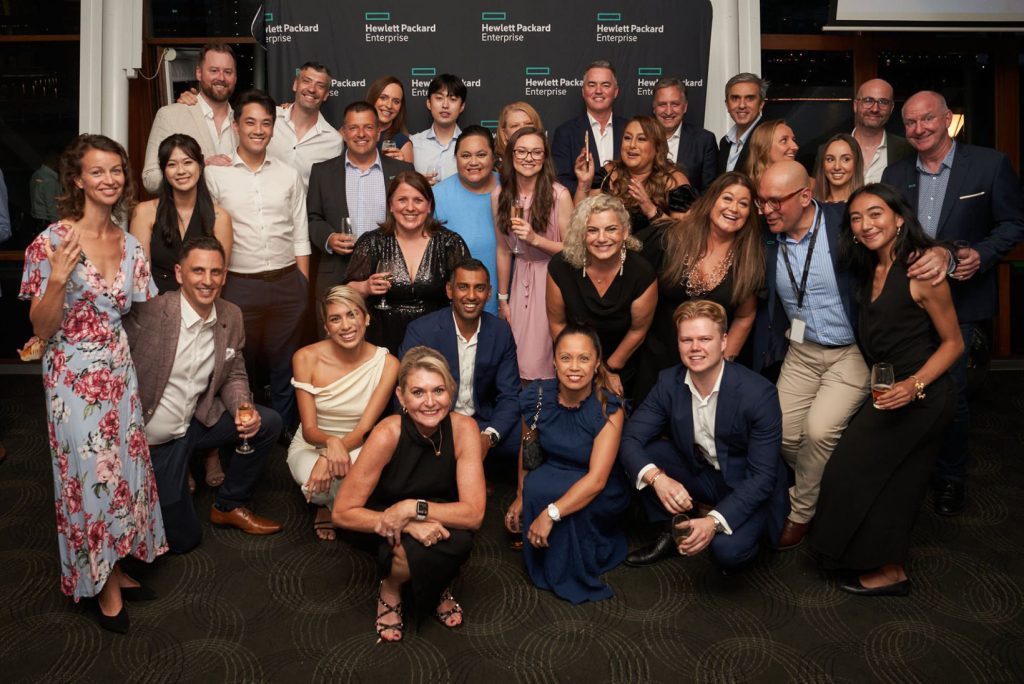
Digital Equipment Corporation. Avnet. Frontline Systems. NTT. Hewlett Packard Enterprise. Only five companies in 40 years – from June 1986 to December 2025.
“I’ve always believed that loyalty matters,” Julie said.
“If you’re going to work for an organisation, loyalty is a good thing. There are difficult times, there are stressful times, there are market downturns and there are moments where you worry about jobs and performance and everything else.
“But there are also great times. I’ve always believed in sticking with people and organisations through both.”
When Julie joined the industry in the mid-1980s, the world was completely different and technology was completely different. Work was with valves, PDP systems, toggle switches and lights.
Then the industry transformed, the companies within it transformed and the way we all work transformed.
“But at the same time, conceptually, a lot of things are still very similar,” Julie paused.
“It’s often the same idea with a different gloss on it. The technology is more advanced, it’s smarter and it’s faster but many of the underlying concepts are still familiar. Technology tends to be quite cyclical.”
In that sense, it’s obvious why Julie isn’t known to be carried away by industry hype.
“Probably because I’ve seen so much of it before,” she admitted. “The names change, the products change and the technology improves. But there are often similarities if you’ve been around long enough to see the cycles.”
In looking back, the consistent theme from almost everybody who has helped Julie throughout her career was simple – believe in yourself.
“If there’s something you really want to do, have a go,” Julie expanded.
“Just try. People often talk about failure but I don’t really think of things that way. If something doesn’t work out, you’ve learned something. You adjust, you pivot and you take a different path. But you keep moving.”
The experience of 40 years in business provides a perspective that is difficult to acquire any other way. Markets change, technologies evolve, companies rise and fall, but many of the fundamentals remain remarkably consistent.
Experience teaches that careers are rarely defined by a single opportunity or setback. Instead, they’re shaped by hundreds of decisions made over decades, each one building capability, character and resilience.
“My mindset developed pretty early,” Julie continued. “Even when I wanted to become an engineer in the 80s, that wasn’t exactly common for women. My father had no idea what half of it even meant but both my parents were incredibly supportive.
“Their attitude was simple. If that’s what you want to do, then go and do it. We’ll support you. That gave me confidence. Having people in your corner matters. Whether it’s family, mentors, managers or colleagues, having people who believe in you makes a huge difference.”
While progress has undoubtedly been made, women in technology continue to navigate challenges that extend beyond technical competence.
Representation remains uneven in many leadership and engineering roles, and unconscious bias can still influence recruitment, promotion and everyday workplace interactions.
“There will always be challenges,” Julie conceded. “But I genuinely don’t think there should be anything that stops somebody pursuing what they want. Male or female. Young or old. It doesn’t matter. If there’s something you want to do, go after it.”
For Julie, leadership demands emotional balance. Success and failure are both temporary, yet it’s easy to overreact to either.
Major wins can create overconfidence, leading organisations to believe every future decision will produce similar outcomes. Equally, setbacks can feel overwhelming in the moment, creating doubt that clouds judgement.
Neither extreme paints an accurate picture.
“My view has always been pretty simple,” Julie clarified. “You can only do your best and if that’s not good enough, then so be it.
“Put your head down, work hard, work smart. And whatever happens is going to happen. You can’t control everything and that’s just life.”
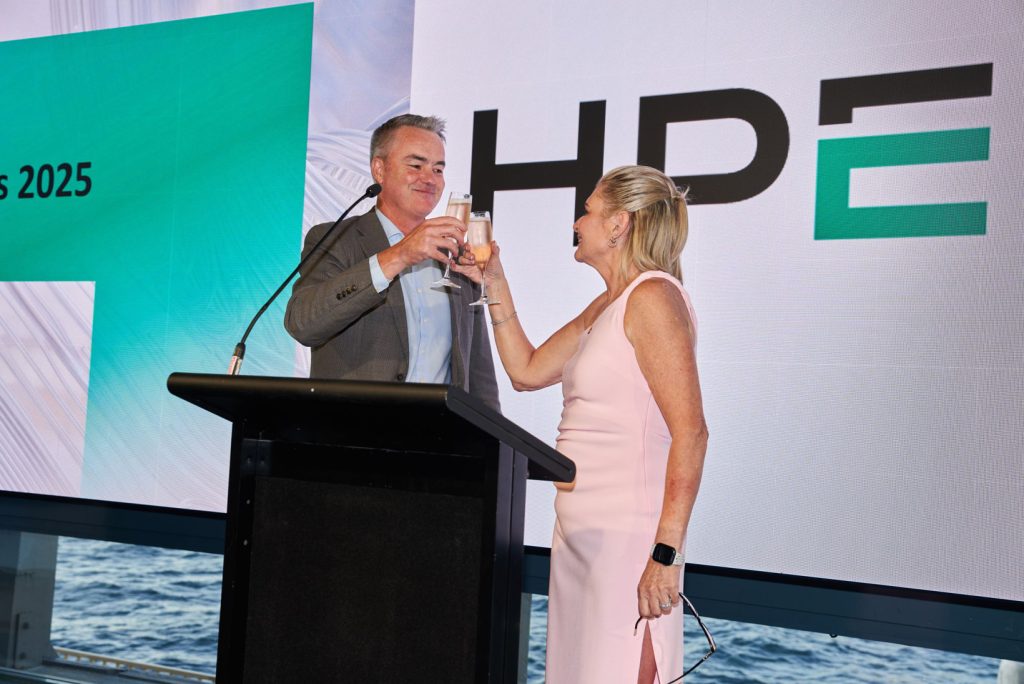
Experience is seldom learned in classrooms. Courses and books provide useful frameworks but real leadership develops through real-life encounters – highs and lows.
Difficult conversations teach empathy. Failed projects teach accountability. Managing uncertainty teaches judgement. Every challenging situation becomes another lesson that no textbook could fully replicate.
Julie is a reflective practitioner – regularly asking what worked, what didn’t and what she would approach differently next time.
Reflection transforms experience into wisdom.
“I’m very self-aware when it comes to my skills,” Julie acknowledged. “I think that’s critical, particularly in leadership. One of the things I learned quite early was that I didn’t need to be great at everything.
“As a leader, you have a set of strengths but you’re never going to be exceptional at every single aspect of the role. The key is recognising that and then building a team around you that complements your strengths and weaknesses.
“If there are areas I’m not particularly strong in, then I want people around me who are. That creates a much stronger team. It also creates an environment where people can learn from one another.”
Fear of public speaking plagued Julie throughout her career. Although it’s remarkably common, affecting experienced executives as much as graduates entering the workforce.
The biggest misconception is that great speakers never feel nervous. In reality, most simply learn how to channel that energy into preparation and presence. Nerves become less about fear and more about focus.
“I hated it,” Julie confirmed. “Absolutely hated it. Getting on stage was never something I enjoyed. Interviews were never something I enjoyed.
“Anything where I was the centre of attention was way outside my comfort zone. I did it because it was part of the job and over time it got easier. I stopped breaking out in hives before every presentation but I never really loved it.”
Over time, confidence grew not because fear disappeared but because experience proved that it could be managed. The willingness to speak despite discomfort often becomes one of the defining characteristics of influential leaders.
“I don’t like being looked at, I don’t like being the centre of attention and I don’t like having all those eyes on me,” Julie added.
“And I’ve never been particularly confident about my memory. I was always worried I’d forget something or lose my train of thought. Then you’re standing there trying to recover and get yourself back on track. That was always in the back of my mind.”
Before one event, a nervous Julie was helped onstage by a staff member – “come one, I’ll hold your hand and walk you to the stage.”
“I thought that was incredibly kind,” Julie recalled. “Once I was up there, I was okay but I never really enjoyed that moment beforehand. The build-up was the worst part.”
Despite the detailed retirement plan, Julie never started out with a comprehensive career blueprint. After studying electronics at TAFE – not university – Digital Equipment Corporation came calling with a role as a break-fix engineer.
“I didn’t really map it out initially,” Julie recalled.
“But after a few years I realised it wasn’t quite what I thought it was going to be. I stayed with it for a while but then I started talking to people across different parts of the organisation as I wanted to understand what everybody else did.
“I was given a chance and moved into sales. That changed everything. From there I moved through different sales roles, partner roles, services roles and eventually leadership positions.”
For Julie, career progression is rarely linear, and trying to accelerate every stage can sometimes slow long-term development.
Focus first on becoming exceptional at the role you’re in before becoming consumed by the next title or promotion. Build capability, earn trust and take opportunities to stretch yourself beyond your job description.
“I think too many people are afraid of sideways moves,” Julie observed.
“A sideways move can actually get you where you want to go because there are many paths to the same destination and you don’t always have to go step-by-step up a ladder.
“Sometimes you move sideways, sometimes you move into a different function and sometimes you learn a completely different skill. All of those things make you more rounded. I’ve always believed there are multiple ways to get where you want to go.”
Younger professionals are often more ambitious than previous generations, which is a positive, but ambition should be matched with patience. Experience cannot be downloaded or fast-tracked.
The most successful careers are built over decades, where consistent learning, resilience and strong relationships ultimately matter far more than how quickly someone climbs the organisational ladder.
“I think the younger generation is certainly more confident,” Julie noted.
“When I joined the workforce, the expectation was that you’d probably spend most of your career with the same company. That was the mindset. Today, younger people join an organisation, learn skills, build experience and then confidently move on to something else. And honestly, I admire that.
“I think it’s fantastic that they’re confident enough to back themselves. Some are very ambitious and some move quickly. But there’s nothing wrong with that. It’s just different.”
Senior leadership comes with accountability, and accountability inevitably brings pressure.
It’s easy to advocate for balance but when critical decisions rest with you, there are real consequences if deadlines are missed or priorities slip. That responsibility is part of the role.
“I always thought – ‘I need to get that done. I need to do this. I need to do that’ – but you know what? I’m wasn’t a surgeon. I wasn’t saving somebody’s life,” Julie challenged.
“Perhaps some things could have waited until the next day when I felt better or had more energy. It’s not typically life-threatening work.
“There’s no point having regrets but if I was giving advice to somebody progressing through their career, I’d encourage them to remember that you can have a life outside of work.
“You need to set boundaries. Those boundaries can move and they can be fluid, but you need to look after yourself first.”
Equally, organisations will often operate at the pace leaders allow. If you’re constantly available, replying to emails late at night and never setting boundaries, most companies won’t tell you to slow down because the work is getting done.
Sustainable leadership requires individuals to define those limits themselves, protecting both their performance and their wellbeing over the long term.
“I don’t think companies necessarily expect it either,” Julie qualified. “I think a lot of the expectations come from ourselves – the pressure to do more, the pressure to keep going and the pressure to give more back to the organisation. I don’t know whether everybody is like that but I certainly was.”
Ultimately, Julie doesn’t consider retirement as the end of a career. This is the beginning of another chapter that deserves just as much planning as the first.
The most successful leaders are not only those who know how to build a meaningful career but those who have the foresight to recognise when it is time to start building a meaningful life beyond it.
Despite retiring, Julie hasn’t become any less busy.
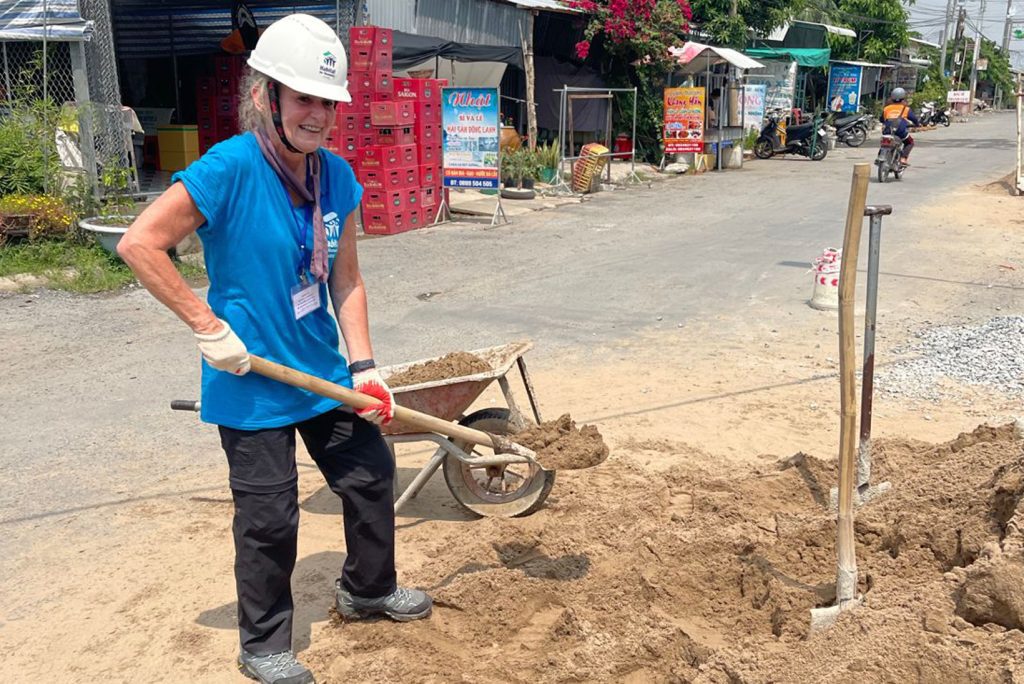
Trips to Japan and Singapore have already been ticked off the list while travel to Spain, Portugal, France and Italy is in the works. Italian lessons continue each week, as do early morning water aerobics. Volunteer work, mentoring and perhaps consulting all remain possibilities.
Julie’s sons, who are both in their 30s, have been encouraging her to slow down for years – ‘it’s about time, mum.’
“They’ve been telling me to retire for years,” Julie laughed.
“They’ve watched me work hard their entire lives and the eldest was only six months old when I went back to work. I’ve always been busy, I’ve always travelled and I’ve always worked.
“But they’ve both built good lives for themselves. They both own their own homes, they both have good jobs, they both work hard and they both save.”
In true Julie style, that is when the interview wraps up… “when you hear all of this back, you’ll probably think it’s not very interesting because even I’m sat here thinking to myself, how boring am I?”
Quite the opposite.
Everyone talks about the deals they closed, the businesses they built, the products they launched and the titles they achieved. Everybody has those stories.
What people don’t often talk about is everything else. The human side.
“Maybe,” Julie smiled. “And we’re all human at the end of the day.”
Inform your opinion with executive guidance, in-depth analysis and business commentary.

