
Home
You’re currently viewing our content for All Regions.
You can switch to a different region:
September 28, 2026
AI adoption has entered a more demanding phase.
Experimentation has helped organisations understand what is possible, test emerging capabilities and identify potential use cases. But pilots alone don’t create enterprise value.
The challenge now is deciding what should move into production, where AI can materially improve business performance and whether the foundations exist to scale it effectively.
Because beneath the pace of adoption sits a more difficult question for boards: is AI becoming an enterprise capability, or simply enterprise-scale experimentation?
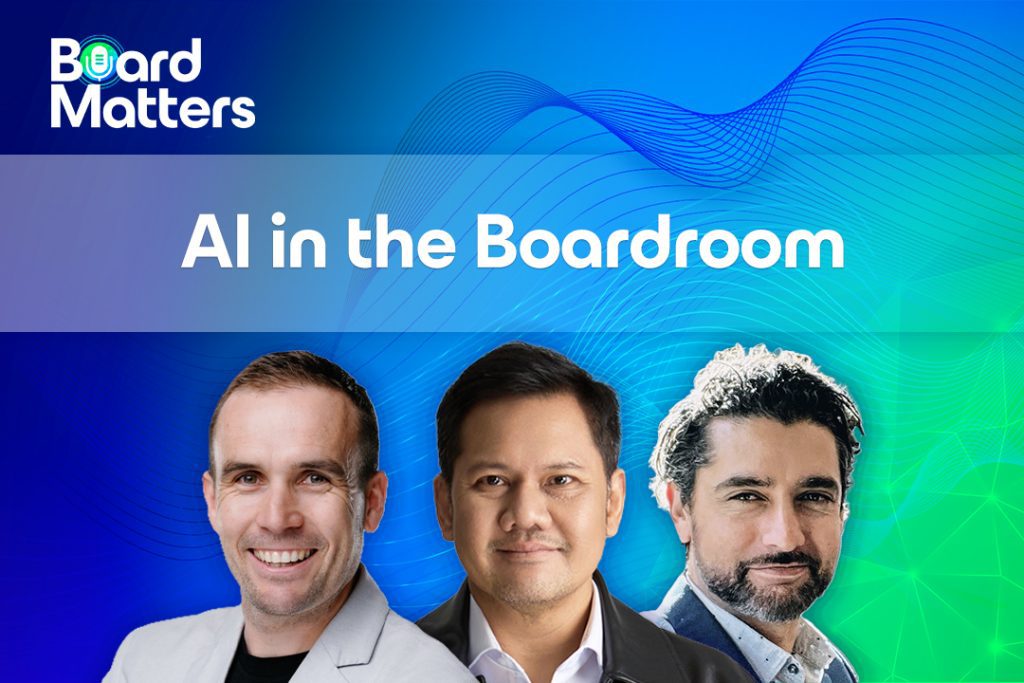
Dr Omer Yezdani – Chief Data Officer at Western Sydney University – described current enterprise AI maturity as mixed.
“We’re finding our way,” he observed. “It’s different in different industries, in different organisations and also inside the same organisation.”
Krating Ruangroj Poonpol – KBank Executive and Innovation Futurist – also acknowledged an equally uneven market. The difference, however, increasingly comes down to whether organisations view AI as another technology cycle or something much more fundamental.
“Is it just another innovation theatre or is this another buzzword that they need to implement?” he asked. “It’s not technology. I think it’s like the new paradigm.”
In a quick-fire opening, Ben Young – Field CTO across Asia Pacific and Japan (APJ) at Veeam – offered perhaps the clearest assessment: enterprise maturity is currently a “fragile medium”.
“Organisations are moving beyond that curiosity phase and tinkering with a few things,” he expanded. “But very few have added proper data foundations, governance or visibility into these systems. And certainly. they’re not ready to gear up to run this at scale.”
To watch the full episode of AI in the Boardroom – click here
The difference between experimenting with AI and creating enterprise value isn’t necessarily the number of use cases deployed. For Krating, the organisations making meaningful progress are moving beyond isolated projects altogether.
“It’s not a use case anymore and it’s not experimentation,” he said. “They are basically focused on the domain level.”
That means applying AI across critical end-to-end business processes and connecting the investment directly to commercial outcomes.
“It has to be business value, and the business has to lead,” Krating continued. “Technology is a partner, but it has to be driven from business.”
That distinction matters. An organisation can accumulate dozens of successful AI pilots without fundamentally changing how the business operates.
But enterprise AI requires something broader.
“It has to be the whole enterprise-level strategy,” Krating added. “It’s not experimentation anymore so don’t focus on the short-term ROI. You need to think long-term as well.”
Data, architecture, platforms, capability and governance all sit underneath that transition. In response, organisations require a clear AI strategy and roadmap rather than allowing short-term experimentation to create longer-term technical debt.
For Dr Yezdani, however, the starting point remains much more fundamental.
“What business are we in?” he questioned.
“What are we trying to achieve? What’s our value proposition? I don’t think we depart from that. That is the fundamental calling of the organisation, whatever it may be.”
Neither does AI remove the data challenges that organisations have been attempting to solve for many years across the region.
“There’s the old saying of garbage in, garbage out,” Dr Yezdani said. “It’s not a great saying, I don’t think, but it is true.”
Because the principles of good data governance aren’t new. Understanding what data an organisation owns, where it resides, who is responsible for it and which information represents the organisation’s crown jewels have been established disciplines for years.
“They haven’t gone anywhere,” Dr Yezdani advised. “But I think they’ve become more important and they’ve become the pillars for AI readiness.
“If AI is on the board agenda, then the underlying data should be there with it. In the same conversation, in the same vein, there should be a discussion about the data that underpins it, the data that feeds the AI models, and what kind of quality we actually have in the organisation.”
In episode two of Board Matters – The Modern Director – executives challenged directors to develop sufficient digital fluency to ask informed questions without pretending to become technologists. AI is rapidly becoming one of the clearest tests of that capability.
Management isn’t waiting for the boardroom to catch up.
“Teams are finding ways to deploy AI with maybe a bit of a gap in board oversight,” Young cautioned. “In a lot of cases, the board is playing catch up. They are a bit late to the party.”
That raises a more consequential question as AI moves into core operations: who remains accountable when it gets something wrong?
For Dr Yezdani, one principle remains clear.
“We currently, at least, can’t be delegating our accountability and our legal obligations to a machine,” he stated.
Instead, preference is a people-first approach in which human agency remains central. As AI becomes increasingly agentic – performing tasks and pursuing goals rather than simply generating content – that accountability becomes even more important.
“AI would need stewardship and it would need accountability for a particular area for someone to be responsible and for someone to have skin in the game to make sure that’s actually going to work,” Dr Yezdani explained.
The board ultimately remains accountable for organisational governance, while responsibility also needs to exist within the functions deploying and operating AI.
“There needs to be a good understanding of what the implications are for that and a strong understanding of functional responsibility for our AI capabilities, and for that to be clearly defined in a governance model,” Dr Yezdani added.
Building on this, Krating describes the relationship between board and management more visually.
“Management is like an accelerator pedal and the board is like a brake,” he said.
“Both share the GPS and share the map. The board is responsible for the framework, but the management is the one that translates that framework into execution.”
The distinction doesn’t make the board a passive observer, however.
Krating argued that directors must understand the principles and “blueprint” underpinning how AI is being built, while considering the interests and risk appetite of customers, regulators, shareholders and wider stakeholders.
“The board has to be able to broaden the perspective of management,” Krating expanded.
“Your ability to take risks should not exceed your capability. If you take more risk than what you really understand, then the board needs to challenge whether that organisation is ready.”
The challenge isn’t choosing between innovation and control – rather scaling one without losing the other. Young highlighted a growing disconnect between AI governance policies and what is actually happening inside enterprise environments.
“A lot of the policies exist at a level of abstraction that sit above the systems and how they work,” Young explained.
“You can have the best AI governance in the world. But if you don’t understand what’s happening underneath the hood… What those AI agents are running? Where are they running? What platforms are they on? What data is that? Does it contain sensitive information? Who’s accessing it?”
Without that visibility, governance becomes difficult to translate into meaningful oversight.
“You can have that best kind of governance policy framework in, but without the observability, that’s a real challenge,” Young added.
Young also referenced organisations moving AI into production before gaining sufficient visibility over the data those systems access. In some cases, tracing a decision back through the data and systems that produced it remains extremely difficult.
“It’s not just a technical problem we’re trying to solve here,” he shared. “It is a governance problem.”
That connects directly with episode one of Board Matters – Cyber Risk is Business Risk – in which executives outlined that resilience must be proven, not assumed.
AI governance faces the same test.
A framework can exist on paper, but directors still require sufficient visibility to understand whether the organisation underneath it is actually resilient.
For Dr Yezdani, however, the answer isn’t to respond by building increasingly restrictive approval structures around AI.
“I think a guardrail approach is a good model rather than lots of gates,” he added. “People will end up going around them if they’re too much of an obstacle, which doesn’t benefit governance at all.”
The objective is therefore not governance for its own sake, rather creating sufficient confidence for the organisation to move.
“If you get this data foundation right, it doesn’t need to be gated,” Young said. “If you stick the right guardrails around it, then it becomes an enabler for the business, but it’s a safe space for that to kind of happen.”
AI is placing boards in an unfamiliar position.
Moving too slowly risks missing a technology-driven transformation with potentially significant implications for productivity, competition and business models. Moving too quickly without understanding data, accountability and organisational capability introduces a different set of risks.
Dr Yezdani believes the answer begins with purpose.
“What’s the why question?” Dr Yezdani asked. “The so what question? That needs to come right up front in the discussion about what AI could be used for.”
In addition, Krating offered board directors and executives a three-part AI framework to implement: “big, long, strong.”
“The board is not an observer,” Krating said. “The board has to play a much more active role in the age of AI.”
For Young, this moment in time also demands harder questions about something organisations have historically viewed as a technology concern.
“Boards that maybe treated the data layer as a purely technical problem will probably look back on this time in the mid-2020s and recognise it was probably the moment that they should have been asking much harder questions,” he concluded.
AI experimentation is becoming easier. Knowing what to scale, why it matters and whether the organisation is genuinely ready is where the boardroom work begins.
To watch the full episode of AI in the Boardroom – click here.
Board Matters – in partnership with Moxie Insights and Veeam – hosts the most forward-thinking directors, chairs and executive leaders to unpack the strategies shaping today’s boardroom.
Inform your opinion with executive guidance, in-depth analysis and business commentary.

