
Home
You’re currently viewing our content for All Regions.
You can switch to a different region:
August 20, 2026
Every part of a business has a number.
Procurement has the acquisition price. IT has the infrastructure budget. Facilities has the energy bill. Operations has the management cost. Sustainability has the carbon calculation. Finance eventually sees the expenditure.
The problem is that nobody necessarily owns the number.
As technology infrastructure becomes denser, more energy intensive and increasingly shaped by AI workloads, calculating total cost of ownership (TCO) requires organisations to connect costs that have traditionally lived in different budgets, teams and conversations.
For Graham Robinson – CTO at Data#3 – that fragmentation is where the calculation starts going wrong.
“There’s a capex cost or infrastructure cost,” Robinson explained.
“There’s the energy cost, which lands in facilities. Then there’s the operational cost, which can land somewhere else again. There are three or more areas which, in aggregate, people are underestimating.
“It’s not necessarily that the individual costs aren’t being considered. The problem is that nobody owns the one total number.”
TCO in technology is often treated as a financial calculation performed once the parameters of an investment are understood. But many of those costs are actually determined much earlier – through decisions about architecture, capacity, operations and infrastructure.
According to Siobhan Delaney-Miller – Strategic Partnerships Lead at Schneider Electric – the same problem also surfaces through the procurement lens. Too often, the starting comparison remains capital cost.
“When people compare one of our solutions with another solution or with a competitor, they’re usually comparing the capex cost,” Delaney-Miller said.
“But the majority of the cost doesn’t necessarily sit there. You need to think about things like the warranty, maintenance, energy consumption and even the physical size of the product and the space that requires.”
The maths itself may be simple. Knowing which numbers belong in the equation is becoming considerably harder, however.
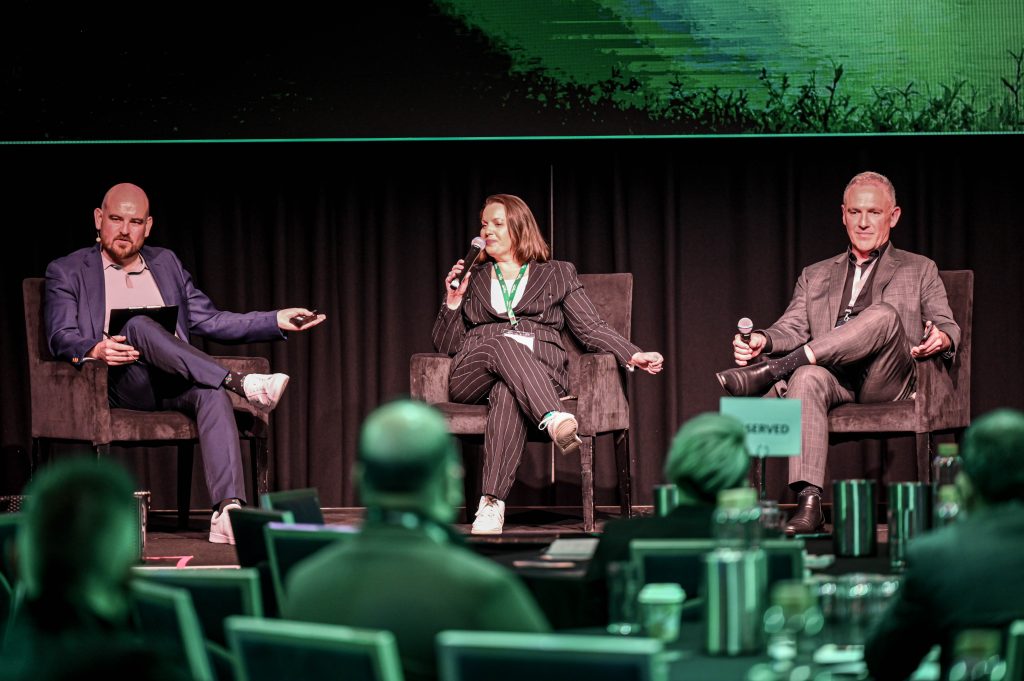
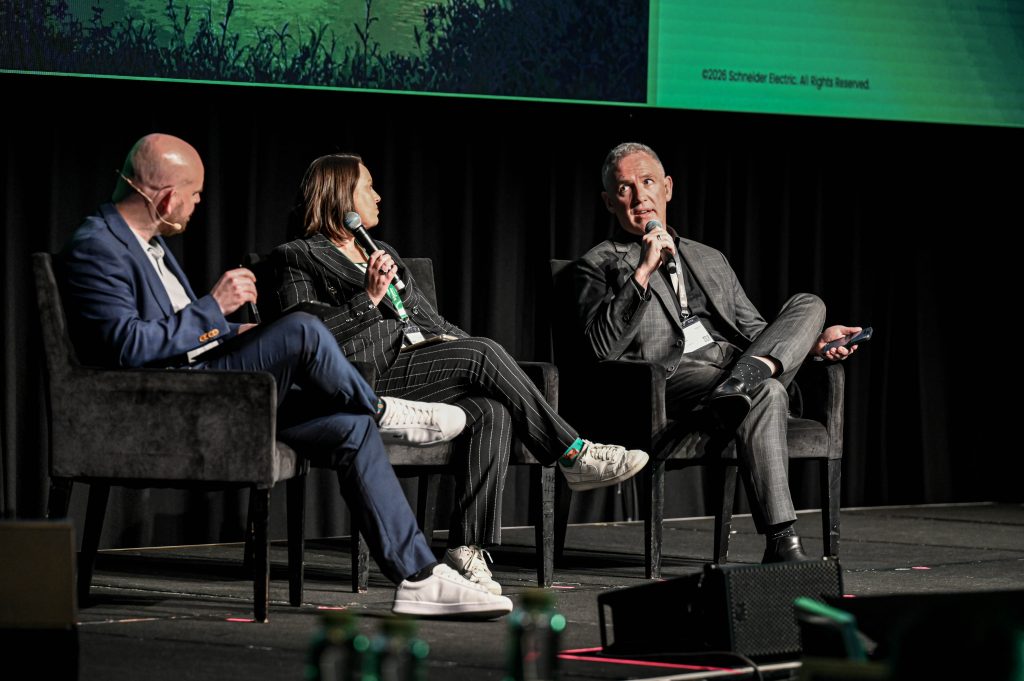
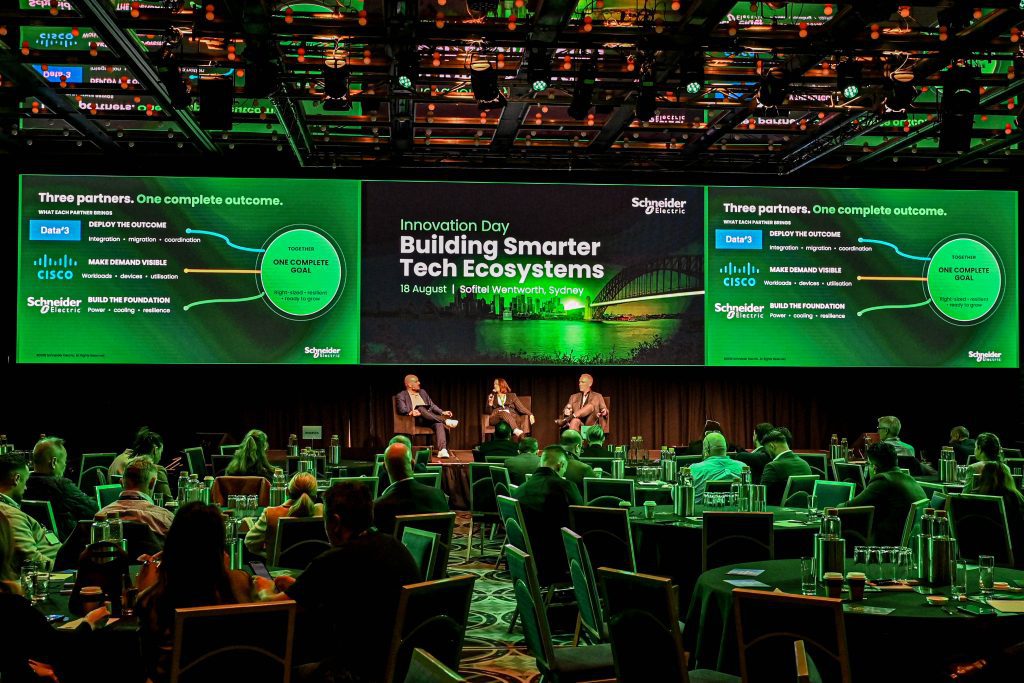
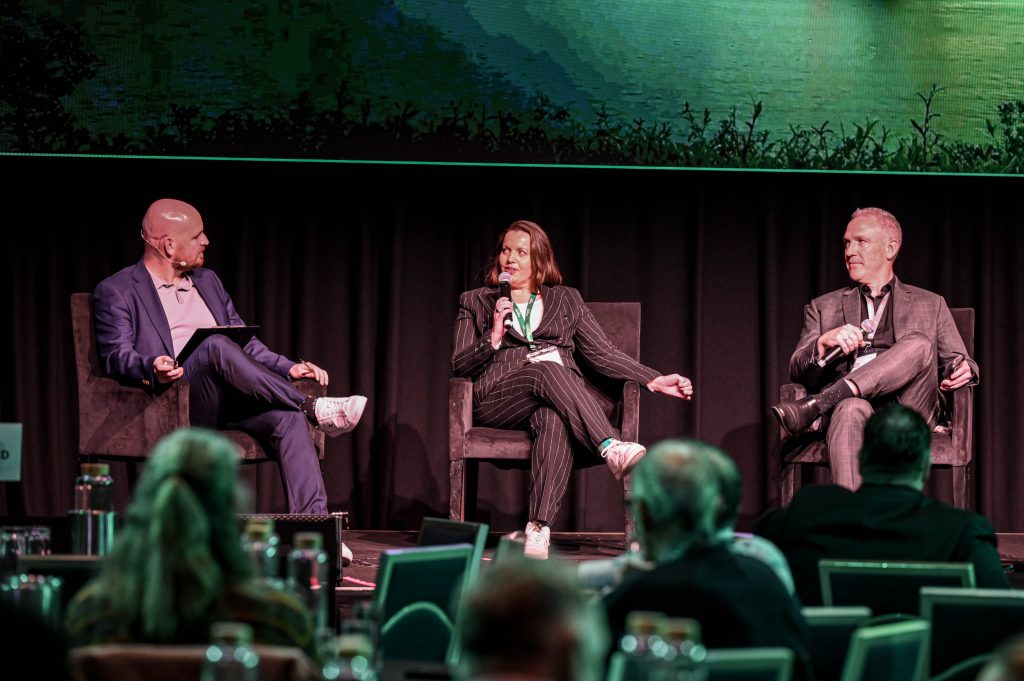
Robinson and Delaney-Miller tacked the topic of procurement, sustainability and TCO at Innovation Day 2026 – Building Smarter Tech Ecosystems – in Sydney.
According to Robinson, three recurring areas exist where infrastructure economics begin to unravel: sequencing, operations and density.
Sequencing is perhaps the most fundamental.
Technology decisions can progress before the infrastructure required to support them has been properly considered. IT and capital expenditure enter early while facilities, cooling and power follow later.
“People don’t talk about the infrastructure until it’s too late,” Robinson acknowledged.
“IT and capex may be an earlier conversation, but facilities, cooling and power happen later. Then you get cost blowouts and delays.”
TCO can therefore be influenced before anyone formally attempts to calculate it.
An architecture selected without understanding power requirements can create additional facilities expenditure. Infrastructure deployed without considering cooling can require subsequent investment. Capacity purchased without understanding future density can create another problem when environments expand.
Robinson sees that particularly clearly in AI infrastructure.
“An environment might have been built for one or two racks,” he added. “What happens when you get to the sixth rack or the seventh rack? It wasn’t designed for it.”
Then comes operations.
Building infrastructure is one calculation. Running it is another.
“Who’s going to manage it?” Robinson asked.
“In an AI world, who manages all the facilities and all the IT? We’re having the same conversation when it comes to AI application workloads. Building these new AI application workloads is great. Anyone can build them. But who’s going to manage them?”
A technology investment does not stop creating costs when implementation finishes because infrastructure has to be operated, maintained, monitored, powered, cooled and eventually refreshed or retired.
The purchase price captures the moment of acquisition. TCO has to capture what follows.
Building on this, Robinson reduced that expanding equation to four considerations: price, cost, risk and utilisation.
They are connected, but they are not interchangeable.
Price captures the transaction. Cost follows the infrastructure through its lifecycle. Risk changes as assets age, environments expand and workload requirements evolve. Utilisation determines whether the organisation is extracting enough productive value from the investment in the first place.
The mistake is calculating one as though it answers the others.
For Delaney-Miller, procurement therefore needs to see beyond the point of acquisition.
Comparing two capital prices provides a straightforward basis for making a purchasing decision. But that comparison becomes less meaningful when products differ materially in energy consumption, maintenance requirements, expected lifespan or physical footprint.
A lower acquisition price can coexist with a higher lifecycle cost.
Conversely, greater upfront investment can potentially reduce expenditure elsewhere.
“You need to think about things like the warranty, maintenance, energy consumption and even the physical size of the product and the space that requires,” Delaney-Miller said.
“Those factors need to be taken into consideration. It’s not just about the capital cost.”
The organisational complication is that the consequences rarely land in the same place.
Procurement may negotiate the capital investment but does not necessarily pay the electricity bill. IT may select the infrastructure but may not own the facilities required to house it. Operations inherits decisions made during architecture and procurement. Sustainability teams increasingly need information about the carbon implications.
Each function can optimise its own number while unintentionally increasing another. TCO only becomes meaningful when those numbers meet.
Finding every hidden cost still does not necessarily produce a complete economic picture. The other side of the equation is utilisation.
Technology infrastructure is generally purchased with assumptions about how much capacity will eventually be consumed. Those assumptions become particularly important when organisations are making significant investments in AI infrastructure.
“When we’re talking about adding these great pieces of infrastructure and calculating how much they cost, everyone is doing that calculation based on the assumption that we’re going to have high utilisation,” Robinson expanded.
“We need to think about what the real utilisation metrics are for our infrastructure.”
Knowing how much infrastructure costs tells an organisation how much it is spending. Knowing how much of that infrastructure is productively used starts to reveal its economics.
Robinson cited encouraging progress across the technology industry in the way vendors and customers think about performance, utilisation and efficiency.
“We’ve evolved the way we think about how much these things cost,” he observed.
“We’re looking at efficiency against data centre cost and, in an AI world, efficiency against things such as price per token. There is great movement in that space.”
But calculating cost without accurately forecasting demand can still produce a misleading answer.
“When we talk about TCO is that you can consider the cost, but you also have to consider the actual demand and performance,” Robinson highlighted.
“Find ways to calculate the cost, but also estimate reasonable demand. Invest in a way that gives you options.”
This becomes especially significant during the early stages of enterprise AI adoption.
Organisations can build infrastructure around expectations of substantial future AI consumption, but the economic result will ultimately depend on whether those workloads materialise and how intensively the capacity is used.
“The usage of the token, the usage of the AI element, the usage of the infrastructure – that needs to be factored into the whole equation, not just the cost side,” Robinson continued.
Cost without utilisation measures expenditure. It does not necessarily measure economics.
Sustainability adds another number to the equation, but both Robinson and Delaney-Miller challenged the assumption that this necessarily places commercial and environmental objectives in conflict.
According to Delaney-Miller, efficiency increasingly connects the two.
“A more efficient product will generally have a longer lifecycle and lower carbon implications,” she said. “In my opinion, they’re one and the same conversation.”
That represents a shift from the way sustainable technology purchasing was historically perceived.
“10 years ago, people thought that if you bought something that was more sustainable, it would automatically cost more,” Delaney-Miller said. “I don’t think that’s the case any longer. And we now have a lot of data to support that.”
Robinson sees the same convergence.
“People expect cost and carbon to move in different directions, but they’re actually converging,” he noted. “I think that’s a really healthy thing.”
Energy provides the most obvious connection. Infrastructure that consumes less electricity can reduce both operating expenditure and emissions associated with energy use.
But the calculation extends further into the lifecycle.
Hardware itself carries an embodied carbon footprint before it is switched on. Manufacturing, materials, transportation and supply chains all contribute to that number.
That creates an economic and environmental question around how long technology should remain in service.
“Think about embodied carbon inside hardware,” Robinson said.
“A very large proportion of the total carbon footprint can be embodied carbon. So, if you think about a three-year lifespan versus a five-year lifespan, and you get more life out of your infrastructure, you’re reducing your carbon footprint per annum across that infrastructure.”
On the surface, the answer appears obvious: keep infrastructure operating for longer. Except the maths does not stop there.
Extending the lifespan of technology can improve the annualised carbon calculation and defer capital expenditure. But ageing infrastructure introduces other variables.
“The challenge is that, as you expand the lifecycle, risk and performance metrics can start moving in the opposite direction,” Robinson said.
“You have older infrastructure that may not be able to power the workloads you need. So these things move in different directions.”
Sustainability cannot simply become an argument for maximising hardware lifespan, just as TCO cannot simply become an argument for minimising capital expenditure.
A server, power system or other piece of infrastructure remaining operational does not necessarily mean keeping it in service represents the best economic or environmental decision.
Newer technology may provide greater performance. It may use energy more efficiently. It may support workloads the existing environment cannot. Older infrastructure may introduce greater operational or reliability risk.
The relevant measure therefore becomes less about maximum life and more about optimal productive life.
How long can an asset continue delivering the required performance at an acceptable level of risk, efficiency, cost and carbon? Sustainability and TCO increasingly become the same optimisation problem viewed through different measures.
Those calculations are also becoming less optional.
Robinson is seeing sustainability move deeper into customer procurement and reporting requirements as Australian organisations respond to expanding sustainability reporting obligations.
“The conversations we’re having with many of our customers are increasingly landing in the Australian sustainability reporting standards space,” he said. “There’s a growing need to report Scope 2 and Scope 3 emissions.
“We’ve had to step up the way we engage our customers, provide more information and work with our vendors to provide more carbon information so that everyone can calculate those emissions.”
Then comes the commercial shift.
“It’s now becoming an accounting consideration,” Robinson added.
When carbon information becomes part of formal reporting, organisations need more than broad sustainability commitments. They need data capable of supporting the calculation.
Customers need information from partners. Partners need information from vendors. Vendors need greater visibility into products and supply chains.
Sustainability therefore encounters exactly the same problem as TCO: you cannot calculate what you cannot see.
Robinson sees Data Centre Infrastructure Management (DCIM) as one practical mechanism for improving that visibility.
“DCIM is a great step in the right direction,” he said.
The significance is less about the individual technology than the information it makes available, however.
Connecting infrastructure data gives organisations a better foundation for understanding performance, utilisation, energy, lifecycle and cost rather than trying to reconstruct those economics retrospectively.
The fragmented nature of the calculation also exposes a wider problem in how technology companies engage customers.
“The key consideration is that you start with the customer outcome,” Robinson said.
“And one of the most important things is the customer experience. If the customer experience is us turning up as separate organisations, they’re not going to achieve the outcome they need.”
The alternative is earlier collaboration.
“What that can look like is everybody turning up separately at the point of fulfilment or the point of sale,” Robinson continued.
“The customer ends up having three different conversations with three different organisations, all with different priorities. When we turn up early and together, the customer has a clear roadmap for how to get to the outcome they’re looking for.”
Delaney-Miller sees the same requirement from Schneider Electric’s position within the ecosystem.
“100% – it’s about being early and having those conversations,” she said.
For Robinson, the objective is straightforward.
“You need to be early and focus on delivering the customer one experience, rather than three disaggregated and disconnected experiences,” he added.
A customer cannot easily arrive at one complete economic calculation when the organisations supplying the technology are making disconnected decisions at different points in the process.
In other words, the individual components may be supplied separately but the customer still pays for their combined consequences.
“There is no perfect way to calculate the cost yet but we’re getting better,” Robinson qualified.
Better infrastructure visibility is allowing organisations to measure environments more accurately. Sustainability reporting is increasing demand for carbon information. AI is forcing businesses to think harder about utilisation and infrastructure economics.
But none of those advances solves the problem if the numbers remain separated.
Price is not cost. Cost without demand does not show utilisation. Extending asset life can reduce embodied carbon while increasing performance risk. Carbon reporting requires information that may sit outside the organisation itself.
The calculation only becomes meaningful when those variables are connected.
Robinson’s advice is considerably less complicated than the problem.
“It is simple, but most people are only measuring half the equation,” he said.
“There are a whole bunch of different things missing from that conversation. So the one thing you need to do — and I’m sorry that this is a really boring statement – is simply measure it. Get visibility across all the different aspects and cost types, and connect them.
“That’s the starting point.”
The true cost of technology isn’t necessarily hidden because the numbers don’t exist. More often, they sit in different systems, different budgets, different teams and different organisations.
The maths becomes simple only when those numbers finally meet.
Inform your opinion with executive guidance, in-depth analysis and business commentary.
