
Home
You’re currently viewing our content for All Regions.
You can switch to a different region:
March 10, 2026
“Carry these poker chips in your pocket. Take two into a meeting and choose when to play them. But remember that you only have two, so be mindful about what you play and when.”
Hope McGarry paused.
“I still have them.”
The recalling of such sound executive advice zoned in on an often misunderstood and under-appreciated leadership asset. Your energy is everything.
“I’m a strong voice at the table and can be more dominant – I don’t mean to be but it’s my default,” Hope continued.
“So this is a way of being cognisant of that and allowing other people the space to speak and share ideas. I won’t lie, I’m still not great at it but it comes from a good place and wanting to attack the problem in play.
“Now I understand how that approach can land for other people and the environment that can create for the team. I don’t have to be the first one to speak and I don’t have to be the first one to attack the problem – I’ve really taken that advice on board.”
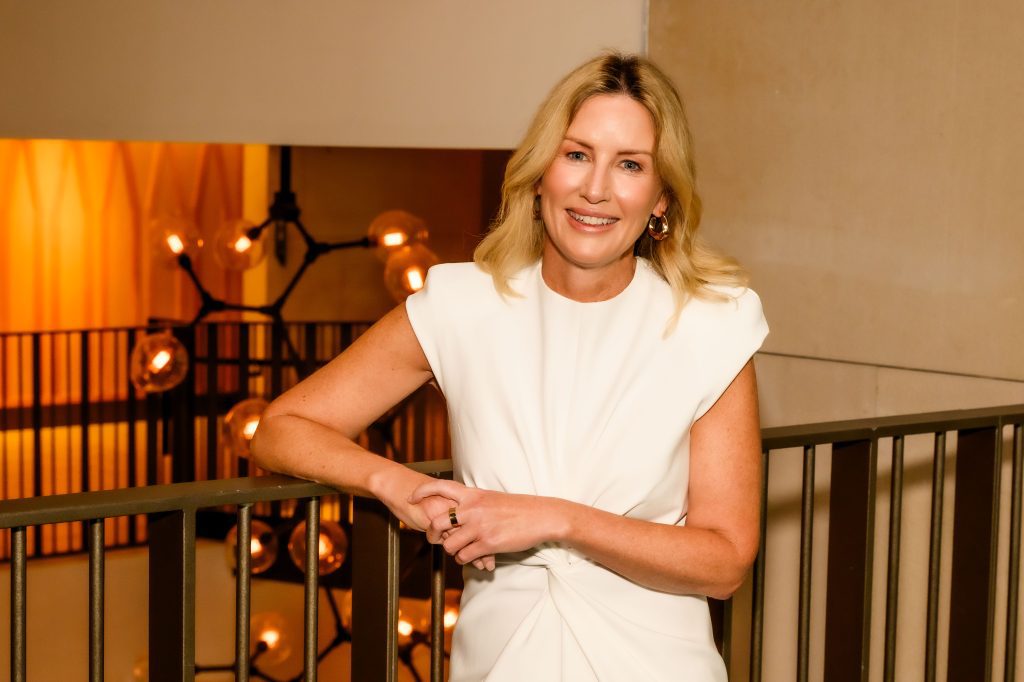
Hope was armed with this observation on the eve of taking the reins of Ingram Micro in Australia – a multi-billion-dollar distribution juggernaut – effective 31 March 2025.
Tim Ament – the outgoing leader who returned to the US business following five years running trans-Tasman operations – shared the advice.
“What a constructive way to give someone feedback about being too dominant,” Hope added.
“Tim could have easily just said, ‘Hope, you’re really domineering and you need to allow people time to talk’ but he coached me in a way that didn’t make me feel small or change who I was. Tim is the first leader that really allowed me to take on-board constructive feedback in a positive way which has really helped me evolve.”
Because as Vice President and Country Chief Executive, your energy matters.
Just ask…
Energy in leadership is often misunderstood as stamina or productivity. But in a room – whether a board meeting, customer conversation or company town hall – energy is actually about presence.
That invisible signal people read before a word is spoken. Upon entering the room, people instinctively scan for cues – Are they calm or tense? Curious or defensive? Focused or distracted?
Leaders rarely realise how much their emotional state shapes the atmosphere around them. Confidence settles a room. Anxiety tightens it. Curiosity opens conversation. Impatience shuts it down.
“I think you have a responsibility to the people around you to manage your energy, both personally and professionally,” Hope shared.
“Absolutely you do. If you walk into a room and someone’s having a bad day for example – and they project that into the room – I actually find that quite selfish. I don’t think other people have to wear your bad day and as a grown up and an adult, you have to manage that.”
This is especially consequential in leadership because organisations don’t move forward on strategy alone, they require confidence, belief and morale.
In the eyes of Napoleon Bonaparte, ‘a leader is a dealer in hope’ – tasked with shaping the emotional outlook of the group beyond decision and direction.
“I’m very conscious of my energy and controlling my energy,” Hope acknowledged. “People pick up on your energy very quickly and if they feel something is off, that’s not a great leadership quality.
“I work very hard to not allow the major things that are going on to impact those around me. A lot of it is down to mindset and attitude because you really have to draw on your resilience, your grit and your determination – people look at you to test the temperature.”
On a hard day at Ingram Micro, there is a common saying in the business. Yes, it’s tough so let’s acknowledge that for a minute – even a second – and then let’s move forward.
“Because the only way is forward,” Hope expanded. “We can all wallow but at some point, we have to move through this and examine the next best step for us to take.
“That’s my mindset and my mentality. That’s what I’ve applied to every challenge that I’ve faced in this role and even in prior roles. What else is there to do other than move forward?”
One of the most enduring leadership lessons is learned long before someone steps into a boardroom. It’s learned at home – watching parents work.
Born and raised on the Central Coast – one of four kids with a twin brother – Hope is a product of her upbringing and environment. Hardwired with a work ethic that isn’t theoretical.
When opportunities don’t arise that often, progress comes through persistence rather than privilege. The early learning is that effort compounds through longer hours, greater preparation and a willingness to outwork the room.
Hard work becomes less of a slogan and more of a survival skill.
“I was just exposed to different things and I saw the world through different eyes because of where I grew up,” Hope shared.
“I came from a low socio economic area that was very blue collar and working class. I lost a lot of friends to drugs, alcohol and crime. There was huge amounts of domestic violence and all of my friends came from broken homes, I was one of the very few that still had parents who were together.
“There was a huge indigenous community so a lot of my friends growing up were indigenous who were dealing with a lot of the challenges that indigenous communities still face today.
“I really did not grow up in a great area.”
But what Hope saw in her parents was hard work.
Her dad was in service to others as a New South Wales (NSW) fireman for more than 20 years, while also working a second job. Shifts of four days on and four days off would allow the chance to earn extra income for the family through additional work outside of firefighting.
“Okay, my dad didn’t wear a suit and tie to work but he created wealth off the back of a lot of hard work,” Hope added. “My parents aren’t wealthy but they are comfortable and I grew up with a lot more comfort in my life because of their work ethic.”
In many households outside elite circles, work is not framed as ambition or career progression. It’s simply what needs to be done.
Parents leave early, come home tired and start again the next day without ceremony or recognition. Children growing up in those environments absorb an unspoken message – effort matters, responsibility matters and nothing meaningful comes without work.
“My mom raised us because my dad was never home and always working,” Hope said. “But I saw my mom drop us at our grandparents at 5:30 in the morning to go and pack meat at Coles. Both of my parents role modelled hard work from day one.”
Hope first entered the world of technology in early 1998, relocating to Sydney as part of the graduate intake at IBM.
“I remember walking through the doors and feeling so insecure and so not ready,” Hope recalled.
“I was just a kid from the Central Coast that had no idea and knew nothing about technology. I was put in the graduate intake but I wasn’t a graduate. At that point, I hadn’t been to university.
“I remember feeling that and it might have just been me. I don’t know if that’s how other people perceived me but that’s how I perceived myself.”
Remember, a university degree carried far greater weight in the hiring process during the 1990s. For many employers, it served as a primary signal of capability.
“I think the industry was booming, they were desperate to hire people and I just got very lucky to be honest,” Hope said.
“How did I even get here? Do they know who they’ve hired? But that feeling fuelled me because I remember looking around the office at everyone going out for drinks on a Friday night and I’d still be there, in that tiny cubicle out in West Pennant Hills.
“I’d be the last person to leave and the hardest working in the room. It probably wasn’t the best output or the most productive but I remember thinking, you have to try harder than everybody else here to be successful.”
Effort became the only lever that Hope could control. In environments where others relied on networks and credentials, all that this kid from the Central Coast had was persistence – there was no margin for error.
“I’ve always felt like I have to be the hardest working person in the room because I didn’t start at the same starting line,” Hope conceded.
“Starting out, I felt like I lacked in other areas. I didn’t have a university degree, I didn’t have a network that comes with going to private schools in Sydney, I didn’t live at home with my parents like many of them and I didn’t have money or nice cars.
“I was living alone and wasn’t earning a lot of money so it was just about trying to pay bills and commute. I was very young and it was a challenging time.”
Fast forward 28 years to today, from those early days in the industry to managing a multi-billion-dollar multinational in Australia. Has that feeling of not being enough changed?
“I think I’ve still got that, I think I’ll always have that,” Hope added.
“I’m very grateful that I grew up on the Central Coast. It’s evolved a lot now as a place but that experience means that today, I show up as well as I possibly can because I don’t have the same background or pedigree.”
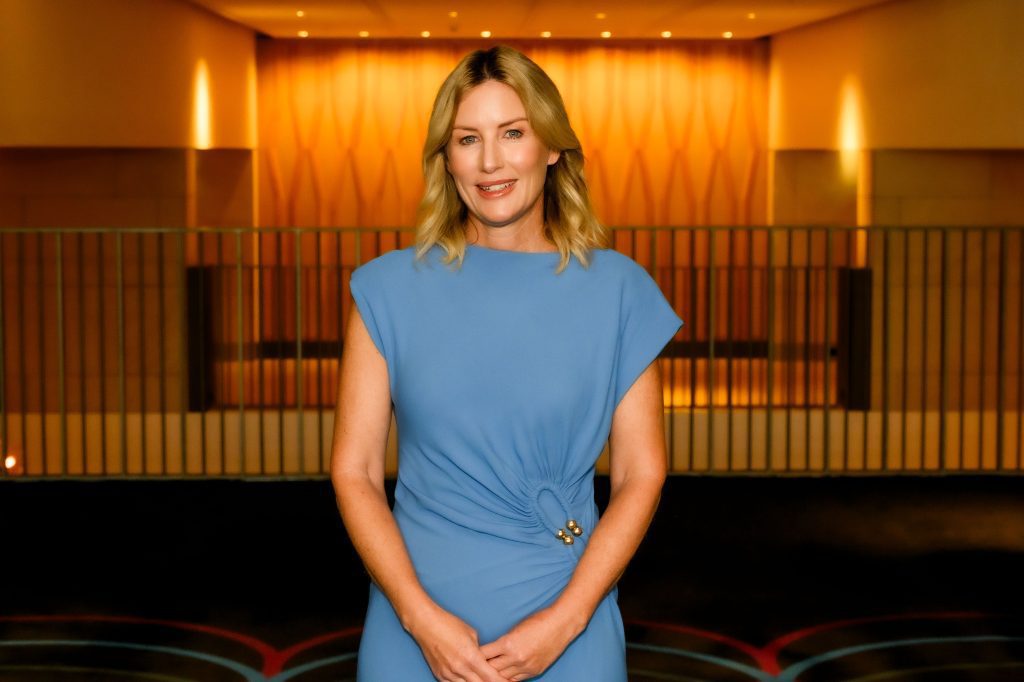
Being raised outside the orbit of major cities – without the scaffolding of elite universities, private school networks or inherited connections – can quietly become a powerful leadership asset.
“We always joke in the office that I’m the least MD, MD,” Hope laughed.
“I say that as a joke but I do think I’m a bit different – someone who is a little quirky and doesn’t always have a great filter. I’m not the most polished MD and that’s okay because I’m just an ordinary person who is fortunate enough to live an extraordinary life.”
On paper, Hope’s path of progression appears straightforward. A standout CV and career spanning more than 25 years has been shaped by high-profile roles at Hewlett Packard Enterprise (HPE), Compaq, IBM, Epson, Arrow ECS and now Ingram Micro.
“I have always gravitated to the role, not the leader,” Hope confirmed.
Roles change, however. Strategies shift, business units restructure and job descriptions evolve quickly. What looks like the perfect role on paper can lose its appeal within months if the environment around it changes.
A strong leader, however, tends to compound value over time. Good leaders teach judgement, provide cover when things go wrong and open doors to opportunities you might not see yourself.
“I’d had some bad experiences coming into Ingram Micro and actually changed my approach for the first time,” Hope acknowledged. “It was less about the role and more about the leader and the culture of the organisation at that point and stage in my life.
“I joined the business because I met Tim.”
Choosing between a role and a leader is one of the most consequential career decisions someone can make. In many cases, the better choice is the leader.
Working for the right leader accelerates development in ways a job title cannot. They challenge your thinking, expose you to decisions above your level and give honest feedback that sharpens your capabilities.
There is also a trust element.
“I felt like I could learn from Tim and I hadn’t felt like that in some time,” Hope admitted. “Tim is very authentic and allowed me to be me – he would always encourage and nurture that instead of trying to make me smaller or polish around the edges.
“I only met him once before making my decision but anyone who’s met Tim will know that he’s a very special human. Zero ego which is very rare. He laughs now and says that he felt I was interviewing him.”
Hope joined the business working towards the goal of assuming the leadership position that Tim would eventually vacate, such was his desire to return to his native US at some point.
“Nothing is ever guaranteed in life and you have to earn it but Tim encouraged me every step of the way,” Hope said.
“I’m a big believer in timing and receiving the right opportunities at the right time. If the business had said that I wasn’t quite ready then I would have respected that.
“It didn’t go that way and I’m in the chair now but the business has always worked hand-in-hand with me and supported me with lots of different opportunities.”
To put that into context, even if Hope hadn’t gotten the role, she would still be at Ingram Micro today.
“Tim is someone that I respect immensely and that’s very important to me – not what they know but how they operate,” Hope added. “By far, he’s the best leader that I’ve ever had and I learned a lot about how to lead.”
On day one as the Australian leader, Hope didn’t overthink it.
As a very driven individual continually benchmarking against an internal standard, the level of self-accountability and internal expectation didn’t change, perhaps it even intensified.
There was no need for a pivot. In fact, the team wouldn’t have responded well to a sudden shift in style.
“The team was very used to seeing me work in the way that I do and I’m a big believer in showing up authentically as myself, otherwise I’m not going to be successful,” Hope explained.
“I’m driven by seeing my team be successful and I’m so grateful to be working with some of the smartest and sharpest people in the industry that I can learn from and be challenged by. I have a lot of gratitude.
“I’m very clear that I don’t know everything and I don’t have all of the answers, that’s why we have subject matter experts in our leadership team.”
Another notable transition has been the switch from peer to leader – one of the most delicate shifts in any career. One day you’re part of the group, the next, you’re responsible for guiding it.
The challenge is seldom technical competence, it’s often psychological.
“Yes, we work together on things but not in the same capacity,” Hope identified.
“That’s on me as the leader to work out how to get to know my team members on a different level because I never had to ask that question before. Of course we collaborated to reach an outcome as peers but that’s very different to understanding what they need from me as a leader to be successful.
“That’s been a key learning to ensure I get the dynamic right.”
Upstream support has also been in full supply. Drawing on regional and global expertise spanning 25 to 30 years is an invaluable asset for any new leader – insights and accessibility are fundamental.
“I feel like I’m being set up to be successful,” Hope confirmed.
Slow down. That was the most profound piece of advice that Tim shared… ‘I know you want to do it all but you can’t do it all at once, so slow down.’
Much like the poker chip guidance – and allowing others the space to talk – slowing down also extends into decision making. Natural decisiveness guided by sound instinct is a strength but not in the extreme.
“I’ve had to hone that because instinct can guide you to a point, then you need to have data and be supported by numbers and facts,” Hope explained.
And there is no shortage of data in the business of distribution. The creation of Xvantage – a digital experience platform ecosystem built from the ground up – is a treasure trove of insights.
By the numbers, Xvantage can be broken down as housing 30+ patents pending, 400+ AI and ML models, four petabytes of data and 32 million lines of code. Now servicing over 1500 vendors and 161,000 customers to support millions of businesses and consumers across the world.
“We’re a very data-driven business and culturally, we take our time to make decisions,” Hope added.
“My natural lean is to be very decisive and very intuition led but I’m coming a little closer to centre on that. Yes, we can become paralysed by the amounts of data that we have but it’s important to strike a balance.
“I can’t just sit here making a captain’s call based on intuition every single time. That might not always be the right approach and even if it is, you have to bring people along for the ride in your decision making.”
The tension between instinct and data sits at the centre of most leadership decisions. In reality, the best leaders rarely choose one over the other – they understand when each should take the lead.
“I can’t just be out running doing what I want to do because I’ll look behind and will have lost the room or lost the team,” Hope noted. “That’s not an effective way to lead so yes, I’ve become very aware of how other people decide.
“In truth, sometimes I get frustrated because we could have made the decision a week ago instead of waiting for the data to tell me something that I already know. But sometimes the data surprises me so I understand the value of a different approach.”
Instinct is not guesswork, however.
At senior levels, it’s often the product of accumulated experience – years of pattern recognition, judgement and exposure to similar situations. Plugged in executives begin to recognise signals others may overlook and sense when something feels right or when the numbers fail to capture the full picture.
“Sales and distribution is a contact sport and you can’t win a contact sport sitting in your office with the door closed,” Hope advised.
“You have to be out in the market, listening to the voice of your customer and your partner, otherwise how do you know how best to support and serve them? Remaining connected is very important and I am conscious of role modelling that to the team.”
The most valuable insights rarely come from dashboards or internal reports. They come from being out in the field – listening to customers, partners, employees and peers.
Over time, that distance can create a dangerous gap between what leadership believes is happening and what the market is actually experiencing. Direct exposure removes that filter.
Sitting on the sidelines is not an option for someone who has built a career on being connected.
“That wouldn’t be me operating at my best or playing to my strengths, nor would it fill my cup,” Hope stated. “Being connected to the industry is how we become better – that’s how we understand, we pivot, we change, we tweak and we grow.”
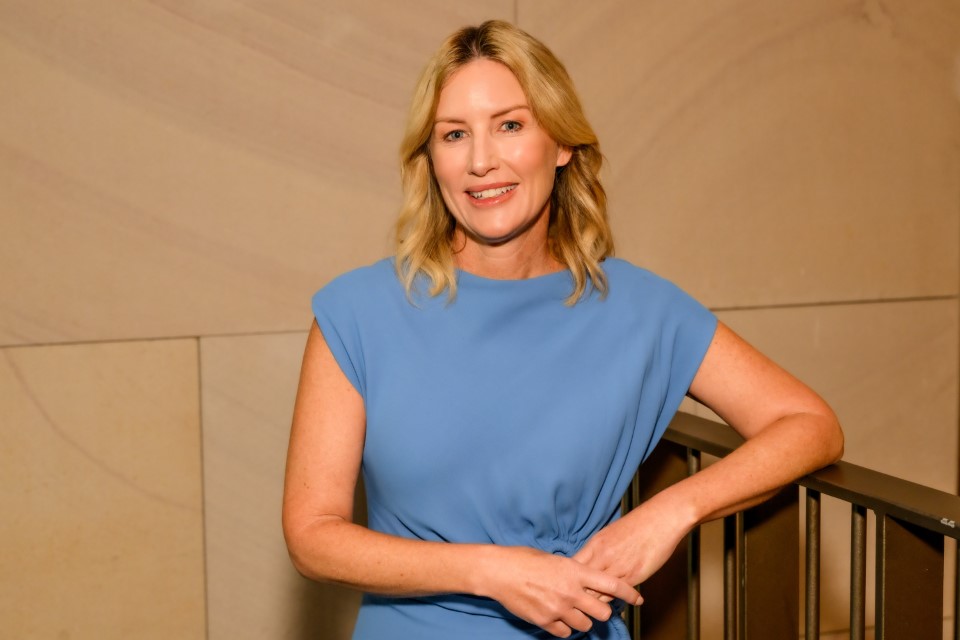
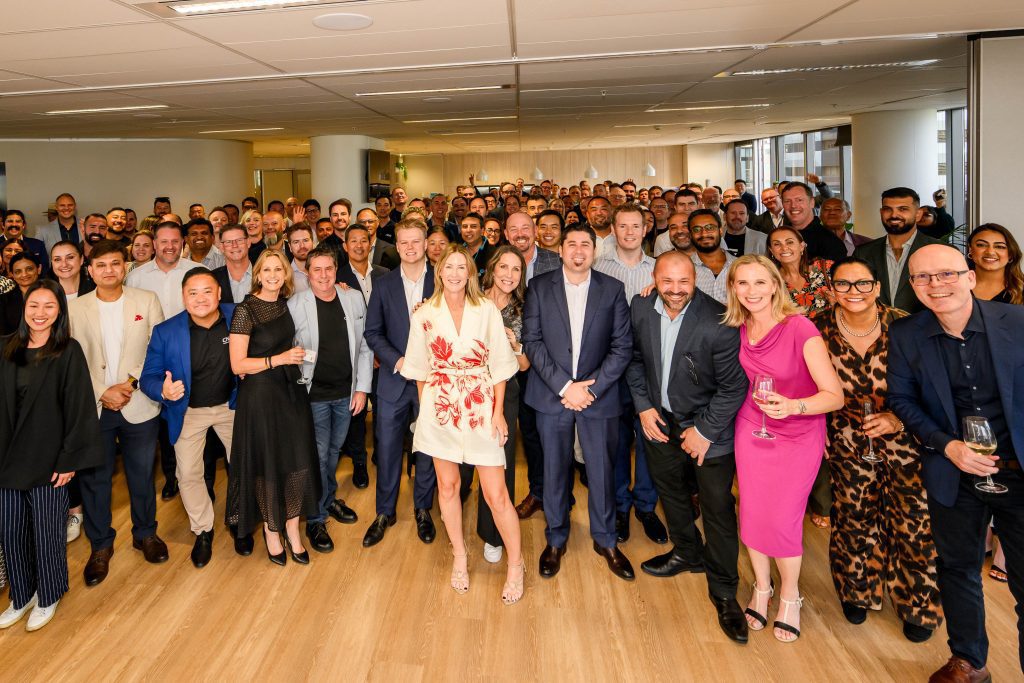
Upon assuming the top role at Ingram Micro, Hope embarked on an ambitious listening tour across the country that included 150 internal team meetings and engaging with over 1200 partners either one-on-one or at scale.
All within the first eight weeks.
“It was a proactive decision because we needed to move fast – there’s areas now that I’m still not completely satisfied with but in looking back, we’ve made enormous progress as a team,” Hope summarised.
“I shouldn’t be in the seat if I’m completely satisfied. There’s always room for continuous improvement.”
Hearing frustrations, expectations and emerging priorities that rarely appear in formal reports. Those conversations often reveal shifts in sentiment long before they show up in revenue numbers or quarterly reviews.
“Hearing the voice of my team was so important,” Hope affirmed. “There were teams that I’d never spoken to in my previous roles so whether collectively or individually, it was crucial to understand how I can best support the team to be successful.
“Then it was about asking questions and talking with our vendors, partners and customers. Always double clicking and double clicking to connect dots from other conversations to find common threads.”
Despite the advice to slow down, this level of pace is to be expected. Operating at lightning speed is commonplace for a self-labelled ‘perfectionist’ who has high expectations.
This is a person who dwells.
“Oh, I’m horrible,” Hope accepted. “If I make a ball call or a mistake then I beat myself up forever, seriously, forever. I don’t need other people to be hard on me because I’m very hard on myself but it’s less about letting myself down, rather letting other people down.
“That kills me knowing a mistake that I’ve made has made life harder for the team. I can’t stand it.”
Expecting a lot from yourself is one thing but holding others to that expectation can be dangerous.
“I have to be careful because not everyone is wired in that way in terms of standards and motivation,” Hope noted.
“It’s unfair to hold people around you to that same internal expectation when they are still delivering the outcome. They’re just doing it in their own way which is different to my way and that is okay. It’s taken me a long time to deal with that.”
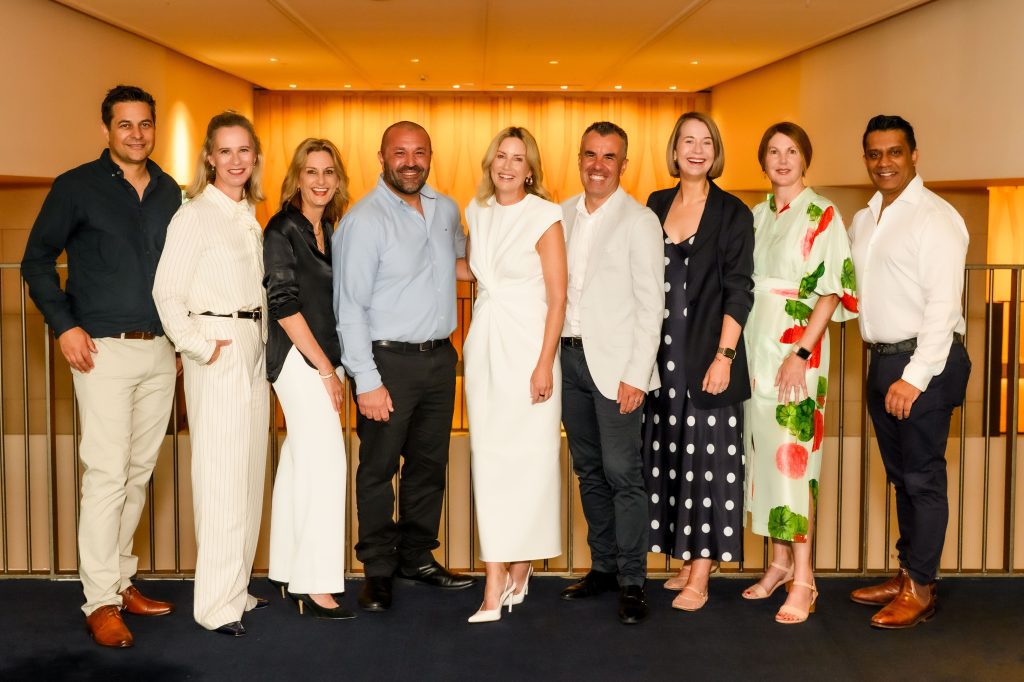
Hence the deliberate decision to embrace diversity within the leadership team. This is less about optics and more about decision quality.
When leaders come from similar backgrounds, they often approach problems in similar ways. That can create speed but it can also create blind spots.
Different perspectives are essential in challenging assumptions and testing whether a strategy truly holds up across different markets, customers and employees.
“100% – diversity of thought, diversity of experience and diversity of style,” Hope outlined.
“We need different types of personalities to ensure that we’re making the best decisions because nothing makes me happier than watching the team succeed.
“Success means different things for different people – for some it’s a trophy, or winning a deal or having a good meeting. It can be intrinsic or extrinsic based on the person.
“That is my purpose, to see our team thrive and by extension, to see our customers and vendors thrive. It sounds clichéd but truly, that is my purpose.”
Inform your opinion with executive guidance, in-depth analysis and business commentary.

