
Home
You’re currently viewing our content for All Regions.
You can switch to a different region:
April 2, 2026
It all started with homework. Two reading assignments designed to challenge CEO thinking.
This wasn’t about adding to an already overloaded schedule however.
The best executive coaches don’t assign generic leadership books. They are prescribed with intent, to interrogate out-dated assumptions and beliefs.
“I had to take a step back and challenge some of the basic logic that had got the business to its current level,” Pieter DeGunst recalled. “Because what got us there wasn’t going to get us where we wanted to be in the future.”
As CEO of Tecala Group, DeGunst pondered over a simple but seismic mandate.
“We’ve just doubled the business, now we have to double the business again,” he stated.
“At the end of FY25 I was thinking about FY26 but also our next three-year plan – ‘Tecala 28’. That led to the question of what FY26, FY27 and FY28 were going to look like.
“During that process, I started an executive coaching engagement with Andrew Laurie who challenged me on some of my thinking. That helped change my mindset and approach to achieving scale.”
On 10x Is Easier Than 2x, authors Dan Sullivan and Dr. Benjamin Hardy advocate that achieving 10x growth is exponentially easier than striving for 2x growth.
Most find this idea confusing but the book reframes growth for CEOs. Scaling isn’t about doing more – it’s about doing less, better.
The core idea is that 2x growth keeps leaders trapped in incremental thinking. It rewards optimisation, busyness and marginal gains.
In contrast, a 10x mindset forces elimination. CEOs must strip away the majority of activities, customers and even revenue streams that don’t align with their highest-value outcomes.
For CEOs, this is a shift from operator to architect.
“I would recommend this book for any entrepreneur and leader because it really challenges your thinking,” DeGunst advised. “The assertion is that if you think bigger about certain challenges, then some of your incremental change programs become completely invalidated.”
The book aims to reframe scale as a discipline. Not growth for the sake of growth but intentional, high-leverage expansion.
For CEOs, it’s a call to lead with clarity, operate with constraint and build a business that grows because of what it excludes – not what it includes.
“Putting this into a growth context, if we tried to grow the business 20% over the next three years, we would make little tweaks here and there,” DeGunst continued.
“But if you approach it as trying to 10x the business, you start to think much bigger and some of those incremental things become completely impossible and no longer a realistic thought process.
“It’s not about chasing 10x in a puristic sense, rather embracing the thinking behind it. That was a penny drop moment.”
One example in the book emphasises spending the majority of time in a ‘unique ability’ zone – where the CEO creates the most value – while delegating or eliminating everything else. This is where scale accelerates.
Importantly, 10x isn’t linear expansion, it’s transformation. It may require redesigning the business model, rethinking pricing or rebuilding the team around outcomes rather than activity.
For CEOs, the takeaway is clear – scale doesn’t come from adding complexity. It comes from radical focus, intentional constraints and the courage to let go of what no longer serves the future.
This exercise brought the North Star back into vision.
After securing funding from Armitage Associates in November 2022, Tecala put $18 million of investment to work executing a strategy centred on two fundamental principles:
That resulted in the acquisition of Sydney-based rapidMATION – completed in September 2023 for a reported fee of $10 million – with the entire team joining Tecala to make a combined 200-strong workforce in Australia.
And so the three-year cycle comes full circle.
“Coming into 2023, we needed to double the business and we achieved that aim through capital raising and acquisition,” DeGunst explained. “Coming into 2026, we have exactly the same aim of doubling the business again but through a different approach.”
Central to this approach is the appointment of Domenico Garfi as Chief Revenue Officer (CRO) and the promotion of Hennie Laubscher as Chief Transformation Officer (CTO).
“We have injected leadership horsepower,” DeGunst added.
“Dom joins the business with the mandate to think differently and accelerate our scale efforts. We’ve just doubled the business so this isn’t a problem statement, rather an opportunity statement to drive change with fresh eyes.
“Hennie is tasked with taking the business through the exact same transformation journey that our customers are going through with AI, data and automation. We’re focused on reimagining our business.”
The appointment of Garfi – who joined the business in December 2025 – marks a continued investment in how Tecala designs and delivers value for customers and partners.
This is a newly created position and central to the future direction of the Sydney-based company as capabilities expand across managed services, cloud, cyber security and ADA – a business unit dedicated to automation, data and AI.
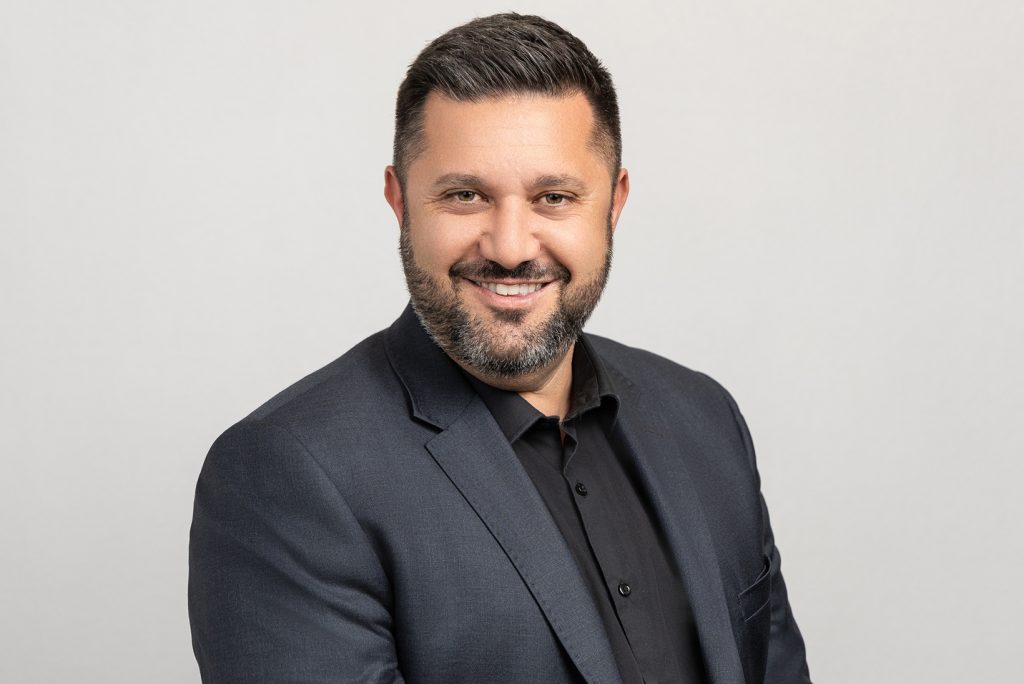
Garfi has a long track record in building high-performing teams, shaping commercial frameworks and enabling sustainable growth positions following 15 years of experience in sales and revenue management at Centorrino Technologies, Ethan Group, Nextgen Group and Optus.
“AI and automation are going to create a tremendous amount of disruption in this industry over the next few years,” Garfi observed. “So, which company is best placed for me to pitch my wagon to and help drive that forward?
“Look at where Tecala has made investments – particularly with rapidMATION – and look at the depth and capabilities that the people within the organisation have.
“This business is best aligned to what technology disruption is going to look like today and in the future – a belief that has only been validated since joining and lifting up the covers. It’s ratified in my mind that this was not only a very good decision but also, of the direction that we’re all heading in.”
At Tecala, Garfi oversees the entire revenue generation process, including sales, marketing and customer success.
“Everything we deliver is of enterprise-grade quality,” Garfi confirmed.
“We don’t believe that any customer should be prevented from advancing beyond technology maturity level zero. This is a paramount principle and a key reason for our success in the market.”
Since joining the business, Garfi has prioritised building a commercial go-to-market strategy that reflects a combination of core and specialist capabilities housed within the organisation.
“Some areas are very traditional such as managed services,” Garfi outlined. “Other areas are a little ‘me too ish’ in terms of our Microsoft strategy but the differentiation there is in our in-house skill sets.
“Then we have complete differentiators through ADA and our AI capabilities.”
Also of importance is perception, with company positioning ‘changing’ at pace both internally and externally.
“My point? If you didn’t know who Tecala was, then you certainly will over the coming months,” Garfi claimed.
“For a long time, we’ve been represented as nice competitors to have – a great bunch of specialists, an engineering-led company, a great set of products. All positive but also a little on the sidelines in terms of taking on the market fully.”
Delivering enterprise-grade quality doesn’t just elevate a business however, it reshapes the entire ecosystem.
When a company commits to high standards – such as innovation and performance – it raises the baseline of what ‘good’ looks like. Customers recalibrate their expectations in response.
“We’re always looking up,” Garfi said.
“We’re looking up at those providers that are bigger than us and we’re assessing their strengths and weaknesses to understand how best to differentiate. Equally, MSPs below us are looking up at Tecala and thinking the same.
“But the most dominant player in Victoria isn’t necessarily the most dominant player in Queensland so that’s a major factor at play.”
Across Australia, customers are increasingly putting MSPs on notice – not because expectations are unreasonable but because the baseline has shifted.
What was once differentiated is now table stakes. It’s expected, not valued.
Layer in the sheer volume of providers – many offering similar services, similar pricing models and similar messaging – and the pressure intensifies. Switching costs are lowering, differentiation is blurring and loyalty is thinning.
“We’re seeing solid organic growth in the market,” DeGunst stated.
According to DeGunst, two core themes are currently in play across Australia:
“A lot of MSPs trade on customer experience which is key because customers are unlikely to change something that isn’t broken,” Garfi noted.
“But during periods of growth, customers do outgrow their MSP – usually because they lack strategic guidance and value in that next phase of the business. You need to be adding value beyond the contract offering and that’s an area I’ve challenged Pieter and the business on.
“We’re not afraid to pivot and change as the market shifts, rather than locking in customers to a technology decision because we specialise in that area. We’re focused on executing as a frontier organisation that is leading the conversation on where technology is going.”
Building on that thread, Garfi acknowledged that competition in this era of change will also be incumbent IT teams within organisations – teams that are sceptical of outsourcing given the generic offerings flooding the market today.
Customers are maturing fast. As they scale, their needs evolve beyond ticket resolution and infrastructure uptime. They want strategic input, security accountability, AI readiness and measurable business outcomes.
In response, MSPs must move up the value chain – owning outcomes, not just services. That means deeper specialisation, clearer positioning and a shift from reactive support to proactive, strategic partnership.
“We have to educate the market on this,” Garfi accepted.
“There’s a strong sense emerging that MSPs can’t be all things to all people so our job is to demonstrate to internal IT teams why partnering with a specialist is the right path forward.”
Selecting the right battlefields also extends to technology partnerships and aligning with a stable of tier-one vendors capable of delivering transformative change.
“You can’t have an AWS story, an Azure story, a GCP story, a Copilot story…” Garfi highlighted.
“It’s impossible in today’s market which is why we’re narrowing our vision and only putting strategic stakes in the ground. MSPs still acting transactionally with a large group of vendors will get left behind.”
Feeding back into the 10x concept, producing scalability beyond the capabilities of an individual CEO in Pieter – who is a self-labelled ‘bottleneck’ – is also paramount.
“All roads lead to Rome and in a lot of cases, company founders or CEOs become Rome,” Garfi explained.
“Hence why we must scale through a strong leadership team. We have to remove the notion of Pieter being a Swiss Army knife who is across everything, instead allowing him to become a precision instrument that is just focused on one thing.
“The same goes for me as CRO. I’m cognisant that I’m only one person which is why we have such strong people already in the business driving our growth agenda.”
Laubscher joined the business as part of the rapidMATION acquisition, having held the role of COO.
Following two years as Head of Operations across Automation, Data and AI – inside the ADA unit – his promotion to Chief Transformation Officer represents a logical next step in the company’s growth journey.
This is the leader who – as part of the Senior Leadership Team (SLT) since day one – was laser-focused on integrating the two businesses post-acquisition.
“That’s now complete and it’s clear that Hennie has horsepower,” DeGunst added.
“We’re taking Tecala through the exact same transformation journey as our customers – notably AI adoption in service delivery – which is where Hennie can add a lot of strategic value.”
Anchored on large investments in ServiceNow – which includes a dedicated team of in-house specialists – Tecala is doubling down on AI to enhance professional services delivery and internal operations.
Whether finance processes, people processes, culture processes or business processes – nothing is off the table in the pursuit of efficiency and excellence. One such example is the creation of a bespoke customer relationship management (CRM) platform to best serve customers.
“We have followed the advice that we give to our customers in having an executive that wakes up every morning with the sole responsibility of transforming our business and evolving our capabilities,” DeGunst continued.
“So, when we looked around the room it was obvious that Hennie was perfect for the role. We had no need to go to the market because he knows the business, he knows the people and crucially, he has experience in running high-impact transformation programs.”
When approaching internal AI transformation, incremental thinking – the 2x mindset – focuses on optimisation such as adding copilots, automating workflows and squeezing marginal productivity gains from existing processes.
A 10x approach forces a different question however – if we rebuilt this business with AI at the core, what would we stop doing altogether?
In practice, 10x is easier because it removes constraints. It demands focus on the few use cases that materially move the business, rather than spreading effort thinly across dozens of pilots. It also aligns people, process and technology around a single direction of travel.
For CEOs, this is the distinction – 2x improves the system but 10x builds the system actually needed for an AI-driven enterprise.
“We’re embracing an AI-first mindset inside our business,” DeGunst shared.
“We’ve been operating for more than 20 years but if we were to start Tecala completely new today, what would we do? How would we reimagine the business? What would we do differently?
“We’re not unique in that our customers are embracing the same mindset. It’s impacting each and every one of our decisions going forward.”
Becoming a frontier organisation is one thing, maintaining such status in a fast-paced and highly-competitive market is another.
The best in the business don’t follow best practice – they set it. They move early, act decisively and build capabilities ahead of demand.
Culturally, they reward curiosity, accountability and progress over perfection.
“Our culture continues to evolve and we have a perfect blend of the old guard collaborating with the new blood,” DeGunst outlined.
“Existing talent that are very deeply capable with institutional knowledge blended with new thinking and new ways of doing things. Of course, we have days when our growth agenda is daunting but we take a deep breath and go again.
“Our team is energised by our ambition and it’s the continuous challenge that keeps this as an exciting place to work.”
In parallel is a career ladder that is limitless. Junior salespeople have scaled to take on larger clients and bigger deals while level one service desk specialists have expanded into AI, automation and cyber security.
Opportunities for advancement are everywhere.
“We talk about scale but we also talk about execution,” DeGunst qualified.
“There are no shortcuts to this and our focus is on engaging with the customer, understanding what they want, solving it for them and moving onto the next engagement at speed. The market demands that approach today.”
According to Moxie Research – AI Outlook: Australia 2026 – enthusiasm for AI initiatives remains strong at the executive leadership team level but that doesn’t always translate into execution.
In other words, sentiment is strong but support is weak – 93% of leadership teams in Australia are in favour of AI yet only 62% are deliberate in driving organisational change from the top.
“The number of organisations that have a cohesive and realistic strategy on how they’re going to reimagine their business with AI is incredibly small in Australia – it’s a low percentage number,” DeGunst commented.
As outlined via Moxie Research, during the next 6-12 months, Australian businesses will adopt a phased approach when prioritising key AI initiatives:
“The market is at the super early stage of true AI transformation when compared to the hype cycle noise that suggests mass deployment,” DeGunst added. “The opportunity is massive but customers need guidance.”
This sentiment is playing out in the data. According to Moxie Research, 42% of Australian businesses will increase partnerships with specialist AI vendors and partners during the next 6-12 months.
But collaboration comes with a caveat.
According to Moxie Research, the most important characteristics that Australian organisations seek when working with an AI partner are:
“Demand is increasing for partners to help businesses navigate AI,” DeGunst said.
“But allow me to qualify that with AI, data and automation because that opportunity is humongous. Every business requires guidance on the right way to approach this beyond the basic questions of whether to use ChatGPT, Claude or Gemini.
“That’s not even the right question to be asking. Go back to Tecala as an example, if you were to reimagine your business as an AI-first business, what would you differently?”
For any strategy to be cohesive, DeGunst advised organisations to build a solid picture around where data resides and how that connects with systems and business processes.
Only then can a future state be designed.
“This is an area of hyper focus for our business,” DeGunst added. “We have a differentiated position in market through the breadth and depth of our AI, data and automation capabilities.”
Inform your opinion with executive guidance, in-depth analysis and business commentary.

