
Home
You’re currently viewing our content for All Regions.
You can switch to a different region:
April 28, 2026
Entrepreneurship is often framed as a story of vision, ambition and growth. But for Geoff Boreland – Founder and Managing Director of Evolution Systems – the more enduring test has been trust.
Trust in people. Trust in culture. Trust in direction.
And, at difficult moments, trust that the business has been built on foundations strong enough to withstand pressure.
For Boreland, the journey of Evolution Systems has not been a straight line. Since launching in 2000, the Sydney-based business has moved through market shocks, technology shifts, economic uncertainty and changing customer expectations.
Yet the through-line has remained consistent: build a business with purpose, protect the culture, and stay close enough to customers to understand what they truly need – not what marketing rhetoric claims they should buy.
“Our purpose is improving people’s lives through technology,” Boreland said. “That aligns with my personal purpose. When you’re working on something you genuinely believe in, it doesn’t feel like work.”
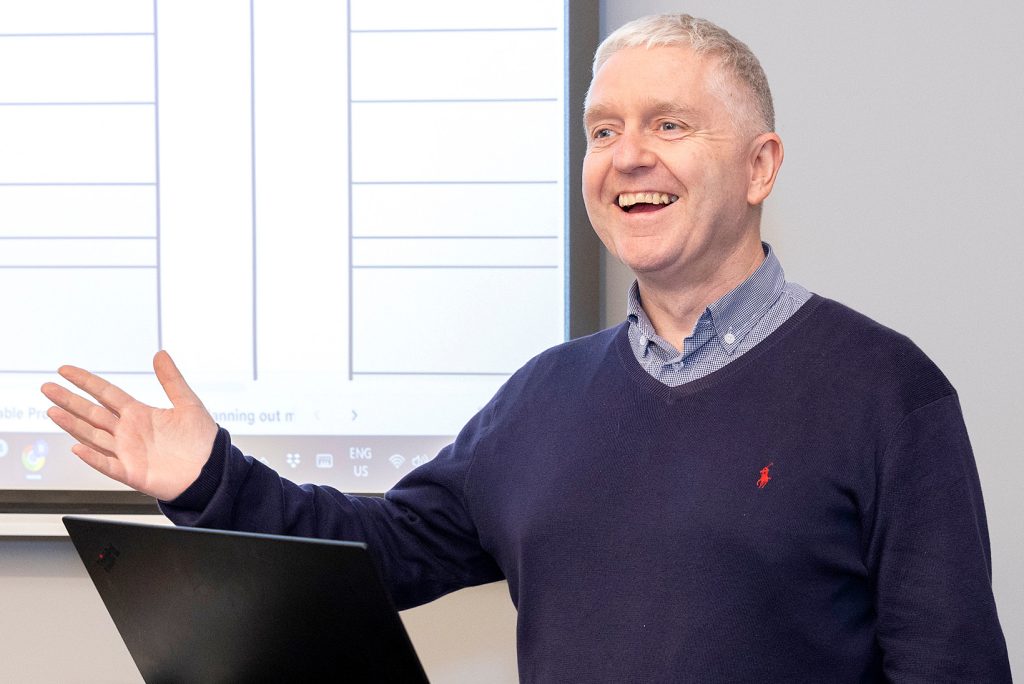
That simple but strong belief has shaped Evolution Systems into a managed services provider (MSP) playing a distinctive role in the Australian market today – notably as organisations rethink cloud strategies in the context of cost, resilience and value.
For Boreland, successful entrepreneurship starts with people, not products. It comes down to inspiration and ensuring the team is behind the founder and aligned to the company vision.
That does not happen through slogans or top-down direction alone. It comes from creating the conditions where people feel safe enough to be honest.
“If you can create a culture where people feel comfortable being open, honest and even vulnerable, that builds trust – and trust is everything,” Boreland advised.
At Evolution Systems, that has meant being deliberate about values, behaviours and clarity. Boreland believes people need to understand not only what is expected of them, but where the company is heading and whether they genuinely want to be part of that journey.
“Everyone needs to know what success looks like and where the company is going,” he added. “People should be able to decide: do I want to be on this journey or not? If the answer is no, it’s better to step off early.”
That clarity also extends to how Boreland sees himself as a leader. He wants to be viewed as “open, honest, dependable and trustworthy” – characteristics considered essential to building long-term relationships.
“I’m very purpose-driven and value-driven,” Boreland explained. “My values guide my decisions. If I stay aligned to those, I know I’m on the right path – both professionally and personally.”
But those values have been tested.
The Global Financial Crisis (GFC) in 2008 remains one of the defining low points in the Evolution Systems story. At the time, the company was heavily services-led, delivering application development and support.
When the crisis hit, discretionary work stopped quickly.
“We went from about 20 people down to four,” Boreland recalled. “That was incredibly tough – especially having never navigated something like that before.”
What helped the business survive was a strategic move made before the crisis fully landed: the shift into managed services.
“We’d started that shift about two years earlier, and without it, we probably wouldn’t have survived,” Boreland acknowledged.
COVID-19 presented a different kind of challenge. Evolution Systems was already capable of working remotely, but Boreland noticed another pressure point – people overworking because they felt the need to prove productivity from home.
Once again, the lesson was trust.
“I heard stories of companies forcing staff to stay on camera all day – and to me, that completely erodes trust,” he noted. “We came out of COVID-19 with a stronger culture because we leaned into trust, not control.”
That same pragmatism now shapes how Boreland sees the current technology market.
While organisations continue to invest, the spending environment remains cautious. Budgets are under pressure. Costs have risen. Customers are scrutinising value more closely.
“It’s still early to say that businesses are opening their wallets again,” he observed. “What we’re seeing is a strong focus on cost. Costs have risen everywhere, so organisations are looking for value in every dollar they spend.”
That does not mean spending has stopped. But it does mean MSPs must be able to clearly demonstrate business value.
“If you can clearly demonstrate value, customers will invest,” Boreland said. “But overall, it’s still cautious.”
Nowhere is that scrutiny more visible than in cloud. After years of market momentum behind public cloud migration, Boreland believes the pendulum has shifted back towards a more balanced position.
“We’re well past the point where the pendulum is firmly in public cloud,” he noted. “If I had to place it, we’re now in a hybrid cloud world.”
The reason is simple: many organisations moved quickly to the cloud – especially during COVID-19 – and are now reassessing cost, performance and fit.
“But now we’re seeing bill shock because costs aren’t always what people expected,” Boreland qualified.

Such market dynamics is driving a wave of cloud repatriation across Australia – workloads moving from public cloud back into hybrid, private cloud or on-premise environments.
“Cloud isn’t the right fit for every application,” Boreland recommended. “Some workloads perform well in public cloud – others don’t. Cost and performance are major factors.”
This shift is not anti-cloud, however. It is more mature than that and anchored in placing the right workload in the right environment.
“What we’re seeing now is organisations reassessing: where should this application really live?” Boreland shared.
“Moving workloads out of public cloud isn’t simple. It requires careful planning and it can be expensive due to data egress costs. Repatriation requires planning, technical expertise and a clear commercial understanding.”
In this market context, Boreland sees Evolution Systems playing a specific role aligned to a modernised services play.
“Our approach is simple – there’s no one-size-fits-all,” he continued. “We sit down with customers, understand their challenges, and design a tailored solution.”
That tailored approach matters because hybrid cloud is not a product category alone; it is an operating model. Customers need flexibility, scalability and predictable value.
“Everything is built around flexibility and scalability,” Boreland added. “Customers can scale up or down based on demand, and costs adjust accordingly.”
Evolution Systems has built private cloud capability across two core environments: one for IBM i, AIX and Linux workloads, and another for traditional Windows workloads on x86.
“The focus has always been on staying current with technology to drive efficiency,” Boreland said.
Recent investments, including Dell PowerFlex and IBM Power10, are part of that strategy – helping customers achieve higher performance with fewer resources.
“As infrastructure improves, customers can achieve the same outcomes with fewer resources – which directly reduces cost,” Boreland expanded.
“This also aligns with a broader market shift from ownership to consumption. Enterprise technology is following the same pattern already embedded in consumer behaviour – the world has shifted from owning to consuming.
“Customers want flexibility. They want to pay for what they use, and they want the ability to scale.”
That model extends beyond cloud into managed services and cyber security but Boreland is clear that the business does not operate alone. Vendor and distributor relationships remain essential to delivering customer outcomes.
“The ecosystem – vendors and distributors – are critical,” he noted. “We see our ecosystem as an extension of our own team. It’s very much one team, one mission.”
As the market looks ahead, Boreland expects cyber security, resilience and AI adoption to dominate customer priorities. On cyber security, the focus is shifting beyond prevention.
“It’s no longer just about prevention – it’s about recovery,” he added. “How quickly can an organisation respond and recover from an incident?”
AI is another major area of focus, but Boreland sees uncertainty around practical implementation.
“AI is everywhere – but there’s still uncertainty around how to implement it effectively,” he added. “That’s going to be a major focus.”
For Evolution Systems, the opportunity sits at the intersection of all these forces: hybrid cloud, managed services, cyber security, AI and consumption-based technology. But the strategy still comes back to the same foundation that shaped the business from the beginning.
Trust.
Trust with employees. Trust with customers. Trust with partners. And trust that technology should serve a broader purpose.
“Our purpose is improving people’s lives through technology,” Boreland summarised.
In a market crowded with platforms, providers and promises, that may be Evolution Systems’ clearest point of difference – a MSP built not just around technology capability, but around the relationships and resilience required to make that capability matter.
Inform your opinion with executive guidance, in-depth analysis and business commentary.

