
Home
You’re currently viewing our content for All Regions.
You can switch to a different region:
April 30, 2026
“M&A becomes a muscle. You get better at quickly understanding a business – its financials, where it’s making or losing money, and the opportunity within it.”
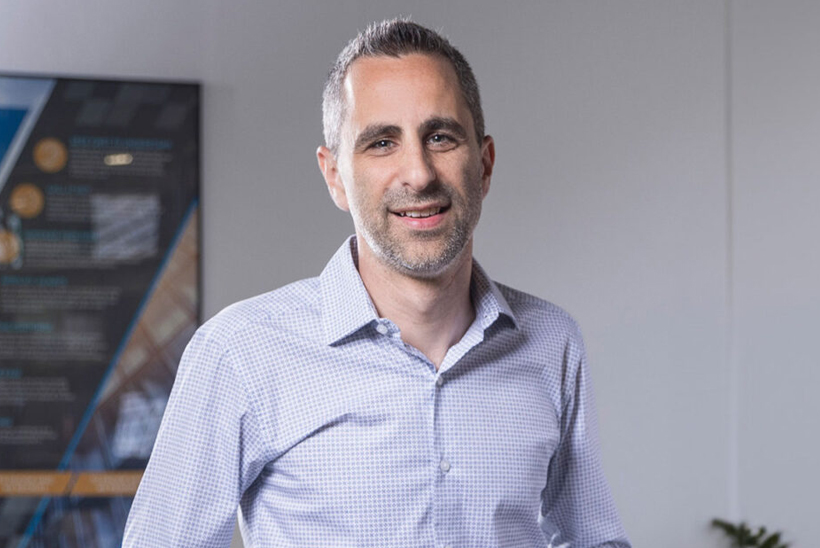
Ross Sardi is forever swinging on that pure-play pendulum.
The skill to spot a good business from a distance, the knack of avoiding a bad one almost instantly.
“You need to balance realism with opportunity,” shared Sardi, speaking as CEO of First Focus. “It’s easy to be overly cautious or overly optimistic – you need both perspectives.”
Growth through acquisition is often misunderstood.
At one end of the market, it’s seen as a shortcut – buying revenue instead of building it. At the other, it’s viewed as scale at any cost, a race to stitch together disparate businesses under a single brand.
Sardi sits somewhere else entirely.
Under his leadership, First Focus has become one of the most acquisitive managed service providers (MSP) in Australia and New Zealand (A/NZ) – completing 15 acquisitions in six years.
That includes Enact MSP, eStorm, The Specializt, MSP Ordyss, Flexnet, Rock IT, Lettscomm, Enee and Section Group. Plus, Xari Group, Tie Networks, Cool Chilli, Tech Help Direct, Red IT and CNX.
Offices now span Sydney, Melbourne, Brisbane, Perth, Adelaide, Gold Coast, Newcastle, and Canberra, in addition to Auckland and Manila.
Now the business has combined with Integris – and Rashaad Bajwa as CEO of Integris – in a move that signals even greater ambition.
But this isn’t a story about deal volume.
It’s a lesson about mindset – how a CEO should think about customers, capability and control. And why getting that right matters far more than how many businesses are acquired.
M&A is a discipline.
Strip away the strategy decks and financial models, and Sardi reduces acquisition success to one core principle: the customer.
“For us, it’s all about the customer,” he qualified.
“If the customer base aligns with our ideal profile, that’s the biggest factor. Our core customer sits between 20 and 500 staff – most commonly 50 to a few hundred. That’s where we can deliver the most value.”
It’s a segment often underserved – too complex for small providers, too small for enterprise focus.
“In that segment, businesses can’t build a full internal IT function,” Sardi continued. “We can effectively become their 400-person IT department. That’s where we make the biggest difference.”
In this context, acquisition becomes less about scale and more about completeness.
“We’re building out capabilities that every customer in that segment needs – AI, security, infrastructure, unified communications, SharePoint, software development etc,” Sardi said.
It’s a deliberate broadening of scope designed to turn a traditional MSP into something closer to a full-service technology partner.
“The goal is to cover every technology requirement for a business of that size,” Sardi continued. “That includes both repeatable services and bespoke work. Some services are productised, others are consulting-led, but the intent is to be their complete technology partner.”
For all the strategy, acquisition success ultimately plays out in one place: the customer relationship.
“When you acquire a business, the customers didn’t choose you – they chose someone else,” Sardi acknowledged.
“So you have to respect that. We typically see three types of customers… some are excited, most are neutral, and a small group resists the change. Our job is to maintain that intimacy and trust while adding broader capability.”
According to Moxie Research – Partner Outlook: Australia 2025 / 2026 – 80% of partners are currently operating amid high levels of competition in market.
For 28%, competition is “extremely high” which means margins are under constant pressure while the majority (52%) cite competition as “high” with differentiation difficult but possible.
The main challenges that Australian partners face when competing in such a highly competitive market is:
Hence why a mindset shift is underway with 26% of the ecosystem embracing a “Transformer” philosophy anchored on business model reinvention to add value. More than half (54%) are committed to a “Challenger” position by finding creative ways to differentiate.
“Our goal is to be the number one MSP – not just the biggest, but the best,” Sardi stated.
“There’s no point having the most customers if they’re only with you because it’s too hard to leave. We want customers to stay because they genuinely have the best experience.”
As evidenced by Sardi, acquisition isn’t opportunistic – it’s structured, deliberate, and constantly evolving.
The first two buyouts came in 2020. After that, the business took about 18 months to step back, learn and refine what worked and what didn’t. Then from late 2022, things accelerated again.
That pause mattered.
In a market where speed is often celebrated, First Focus deliberately slowed down early – learning before scaling. The result is a model built not on momentum, but on repeatability.
“The first acquisition was a small business with six staff,” Sardi recalled. “That was manageable – you can meet everyone, speak to customers and integrate relatively easily. It almost feels like a structured hiring exercise.
“The second one was larger and, in hindsight, a step too far too soon. I think a lot of companies make that mistake. You do one, gain confidence, and then overreach.”
It’s a familiar pattern for many acquisitive MSPs, early success followed by overconfidence. The clarity only comes with the benefit of hindsight.
“The biggest lesson was around customer alignment,” Sardi outlined. “If the customer profile fits, everything else can fall into place. If it doesn’t, integration becomes much harder.”
In other words: not all growth is equal.
Beyond this, execution is where most acquisition strategies break down. First Focus treats integration as a defined, repeatable process.
“Our goal is to integrate within six months,” Sardi noted. “That gets you about 90% there.”
Broken down, that typically involves legal and back-end considerations in month one. Months two and three focus on staff transition and customer alignment.
Around month four is the major systems cutover. Then months five and six are about documentation and optimisation.
“But the integration doesn’t stop there,” Sardi qualified. “We deliberately go back after one or two years to clean things up – cross-training, documentation, ensuring everything is fully embedded.”
It’s a recognition that integration isn’t a project – it’s an ongoing commitment. And it comes with real operational pressure.
“The hardest part is the staff,” Sardi summarised.
“They’re learning new systems while still supporting customers. You can’t drop the ball. As soon as you acquire a business and start dropping balls… that’s when customers leave.
“On the people side, communication is also critical. You have to over-communicate vision and purpose constantly.”
Six years of strategic acquisitions have resulted in an agreement for First Focus and Integris to combine, bringing together two leading managed AI and IT services businesses across Australia, New Zealand and the United States.
The move brings together two businesses that have worked closely over time and share a clear view of where the market is heading, with a similar approach to people, culture and customer relationships.
Both believe the future of managed services will be defined in three core areas:
“This is about building a stronger AI-enabled managed services business for the future,” Sardi said.
“AI is changing how great service organisations operate, how customers use technology, and where value will be created over the next decade.
“We believe customers will increasingly want a partner that can help them adopt AI in practical ways, strengthen security, and support them across markets without losing the local relationship that matters every day.”
In short, the agreement is anchored on a commitment to build for where the market is going, not simply increasing scale.
Sardi will continue to lead the business on both sides of the Tasman and also take on the role of Chief Innovation Officer for the group, helping accelerate AI capability across the organisation – notably in how AI is applied both inside the business and in the services delivered to customers.
“For our customers, this means deeper capability, broader support and better outcomes,” Sardi continued. “For our business, it creates a stronger platform for growth in A/NZ and gives us the capacity to continue investing in innovation, talent and future acquisitions across the region.”
Building on this, the combination will deliver deeper AI expertise, stronger security capability, broader international support and best-in-class 24/7 service.
“First Focus has built a highly respected business with a strong culture and deep expertise across managed AI and IT services,” added Bajwa of Integris.
“We share a common view on how the market is evolving, and together we’re well positioned to deliver even greater value to customers as security and service expectations continue to rise. A/NZ is an important growth market, and we’re excited to support Ross and the team as they continue to scale the business.”
Peter Paddon – Founder of First Focus – will remain a significant shareholder in the combined entity, which is subject to regulatory approval. Over time, the business is expected to unify its branding under the Integris name.
Despite achieving significant scale, First Focus occupies an estimated 1.5% of market share in the local market – highlighting the high levels of fragmentation that continue to play out in the industry.
Armed with the acquisition of customers, capability and talent, the business is primed to tackle the “huge opportunity” ahead because if fragmentation defined the past decade, AI will define the next.
“AI and automation are driving a new wave of consolidation,” Sardi observed.
“Smaller MSPs simply can’t invest at the same level. Businesses are at a crossroads – either invest heavily and scale, or consider exiting.”
At the same time, the role of the MSP is evolving.
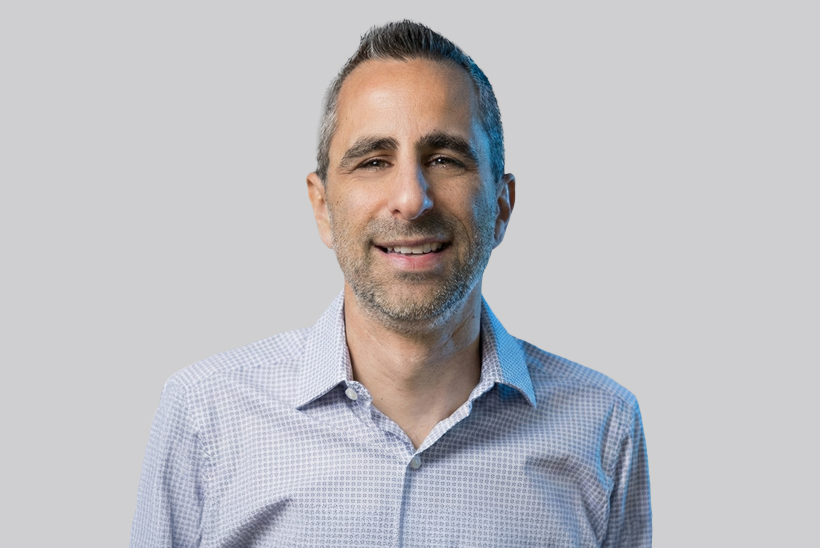
As outlined in Moxie Research – Partner Outlook: Australia 2025 / 2026 – 63% of partners now acknowledge a shift in customer buying behaviour with trusted advisors (not just suppliers) now a leading end-user priority.
In response, the modern partner must possess the following key attributes:
“We’re now able to do far more for customers, but sometimes they’re not ready for it,” Sardi added. “We’re having conversations that go beyond IT and into business strategy. That’s a shift. Some customers embrace it, others aren’t quite there yet.
“Technology is now central to business outcomes. Around 96% of organisations need it to achieve their goals.”
That shift is reflected in where demand is concentrating around First Focus in market – AI, security and SharePoint.
“Security is no longer a hard sell – customers understand it now,” Sardi said.
“SharePoint is everywhere, but often poorly implemented. And AI is driving both curiosity and hesitation – most customers are interested, but many are still unsure about ROI.”
According to Moxie Research – AI Outlook: Australia 2026 – 71% of Australian organisations are currently identifying high-impact AI uses while 68% are deploying small pilot projects.
The most common AI use cases in play are in business automation through document analysis (56%) and process digitisation (55%); decision intelligence in the form of strategy data / input (55%) and executive intelligence (48%); customer experience via chatbots (58%) and voice assistance (50%) and employee experience with improved productivity (52%) and workforce optimisation (49%).
“We’re seeing a mix – Copilot, OpenAI, custom solutions,” Sardi noted.
“Some use cases are universal – like accessing internal knowledge or automating processes. Others are highly specialised, like research or operational automation that can replace manual effort.”
In looking ahead, a successful year at First Focus will not entirely be attributed to growth.
Remember, customer experience is everything and where the next layer of differentiation lies. In a world of increasing automation, the human layer becomes more – not less – important in a highly competitive MSP market.
“We’re investing heavily in digital experience and treating service like software,” Sardi detailed.
“We have a roadmap, features, and ongoing improvements, similar to a SaaS model. In the long term, experience becomes the differentiator because as more gets automated, how customers feel about working with you matters most.”
Inform your opinion with executive guidance, in-depth analysis and business commentary.

