
Home
You’re currently viewing our content for All Regions.
You can switch to a different region:
May 26, 2026
The concept of value is often misunderstood in the channel – a loosely attributed label attached to every partner without scrutiny or merit.
In an ecosystem of 10,000 players in Australia, no business deliberately goes to market as a run of the mill, transactional provider. All company websites advertise uniqueness, showcase differentiation and champion innovation.
On paper, this is a market exceeding expectations. In reality however, this is an industry fighting against commoditisation amid a crashing wave of consolidation.
Because true value is scarce and subject to conditions.
Customers are no longer in short supply of technology, nor are they devoid of partnering options. Choice is everywhere and competition is heightening.
“There is definitely a customer reset happening,” observed Mathew Howard, General Manager of Channel across Australia and New Zealand (A/NZ) at Crayon.
“This is no longer a simple environment that we operate in and that’s where the shift starts to happen. This is no longer a market where customers are simply looking for help acquiring technology.
“Customers have better access to technology and self-service tools today than they’ve ever had before. But what they can’t do is navigate their way through complexity and that’s what they’re increasingly leaning on partners for.”

According to Moxie Research, the ecosystem is currently navigating the headwinds of increased levels of market competition. Of the 218 channel partners in Australia surveyed, consensus is clear that competition is:
The domino effect is a channel challenged in differentiating solutions and services (55%), maintaining customer loyalty and retention (54%) and preventing margin erosion and price pressure (43%).
In other words, 63% of partners now acknowledge that customers want ‘trusted advisors, not just suppliers’ in the age of AI.
“Customers are no longer looking for partners that can simply sell them technology,” continued Howard, speaking at Crayon Connect 2026 in Sydney.
“They’re looking for partners who can connect technology to real business outcomes. They want partners who can help them prioritise where they should invest and help them make better decisions in a much more complex environment than we’ve ever operated in before.
“Again, that’s where the shift starts to happen in the channel, because the modern partner is no longer transactional. The modern partner has become far more strategic.”
Moxie Research mirrors that of Crayon in Asia Pacific, as outlined via the Future of Operations 2025 report – 87% of businesses are increasing budgets for third-party service expertise and 72% of SMBs across the region are prioritising tech-enabled experimentation to stay competitive.
This is a market on the move.
“AI and cloud adoption are accelerating, which shouldn’t surprise anyone,” Howard added.
“But what is also accelerating at the same pace is complexity. That’s really where the shift starts to happen in the market because there are more investments happening in third-party expertise and more hybrid environments that need to be managed. Plus, security, data and privacy are now absolutely critical inside organisations.”
According to the Future of Operations 2025, 76% of businesses rank security and data privacy as ‘critical’ to sustaining digital gains while 70% of organisations are planning to ‘unlock the full value of data’ through cloud and AI investments.
As a result, 47% of companies plan to run workloads on hybrid cloud within two years, driving new integration needs via the partner ecosystem.
Australia stands at an inflection point in AI adoption. After years of experimentation, pilots and cautious exploration, businesses are shifting from curiosity to capability-building.
“Let’s be honest, AI is in every conversation we have right now,” Howard acknowledged.
“It’s in every boardroom discussion. It’s in every vendor roadmap session. But when you step back from the noise, AI is doing two things at the same time.”
On the one hand, Howard said that AI is creating the “single biggest opportunity” in many years for the local ecosystem. On the other, this is also the “biggest disruptive force” to impact the channel.
In short, the AI pendulum is swinging between risk and reward as partners weigh up the benefits against the barriers to adoption.
“We’ve never had a technology wave driving this level of innovation, productivity and automation the way AI is today,” Howard continued.
“AI isn’t just adding capability. It’s changing how technology is consumed, how decisions are made, and ultimately how value is created in the market.”
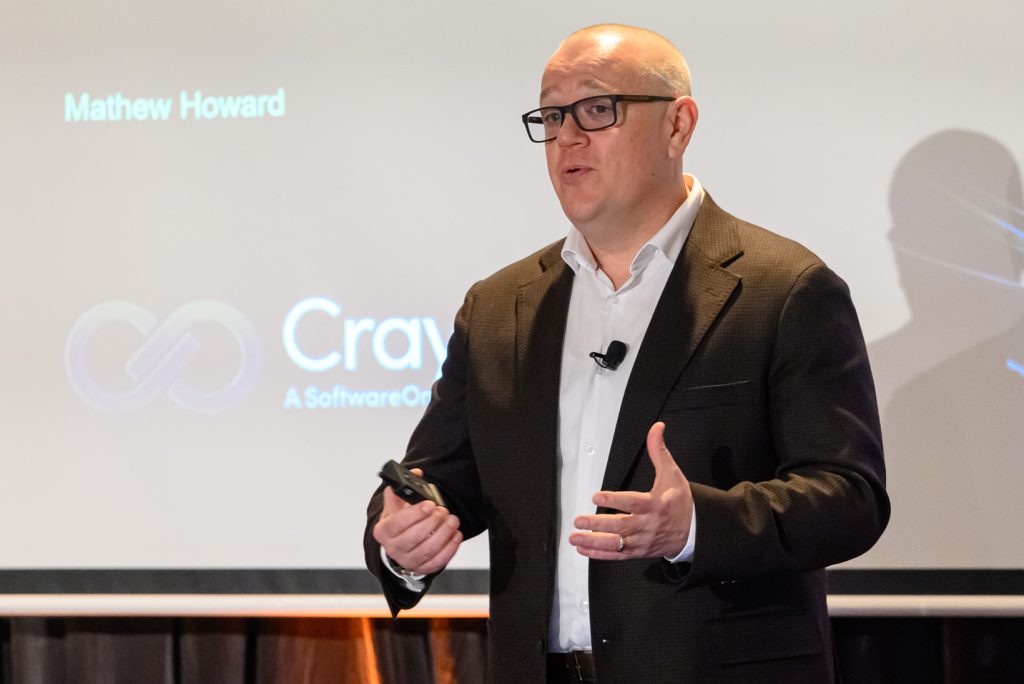
The domino effect of rapid AI acceleration is more complexity, faster change and higher expectations from customers. It’s also changing the traditional value that the channel used to create.
“AI represents the biggest opportunity but it also represents the biggest risk if we don’t adapt properly,” Howard added.
“The question is no longer whether AI will impact your business – it already has. The question is how you reshape your model moving forward to align with that shift.”
Building on that thread, Howard shared three technology consumption trends playing out in the Australian channel today:
“When you bring those three factors together – vendor margin pressure, automation and platforms and more informed customers – it fundamentally shifts the value that we can offer in the channel,” Howard detailed.
“If we remain purely focused on platforms, we risk commoditising the value we once brought. The future will not come from simply moving technology. It will come from the value that partners wrap around that technology.”
According to MiT, 95% of AI use cases are delivering zero business value.
That is despite $30-40 billion in enterprise investment into GenAI alone. Just 5% of integrated AI pilots are extracting millions in value, while the vast majority remain stuck with no measurable P&L impact. This divide does not seem to be driven by model quality or regulation, but seems to be determined by approach.
“Why do they fail?” Howard asked.
“They don’t fail because the technology doesn’t work, they fail because there wasn’t enough focus, attention and understanding around the complexity. What is wrapped around the technology – implementation, integration, governance, security – were all underplayed.
“AI has moved beyond the tools and the models. That part is becoming easier. What’s becoming harder is making AI work in a meaningful and sustainable way.”
Because of this, AI is accelerating capability and complexity in tandem which in turn, is disrupting what customers traditionally considered value.
Partners helping businesses move from early pilot stages to viable investment strategies – underpinned by strong levels of governance, security and integration – are taking a lead role in AI conversations centred on delivering business outcomes.
“That’s the value the channel can bring today, and certainly in the future,” Howard said. “AI is not reducing the value the channel brings to market, it’s raising the bar.”
Supporting that statement is MiT which highlighted the ‘implementation advantage’ created by the 5% of businesses already realising true ROI through AI – ‘external partnerships see twice the success rate of internal builds’.
According to Moxie Research – AI Outlook: Australia 2026 – the AI ecosystem is expanding rapidly, moving beyond standalone tools to an interconnected landscape of models, data platforms, infrastructure, governance frameworks and industry-specific applications.
No single vendor can deliver end-to-end capability. As a result, partners are becoming essential orchestrators – bridging strategy, technology, industry context and operational execution for businesses that lack in-house AI maturity.
The most important characteristics that Australian organisations seek when working with an AI partner are:
“The partners that can guide, not just deliver, are the ones that will continue to differentiate,” Howard advised.
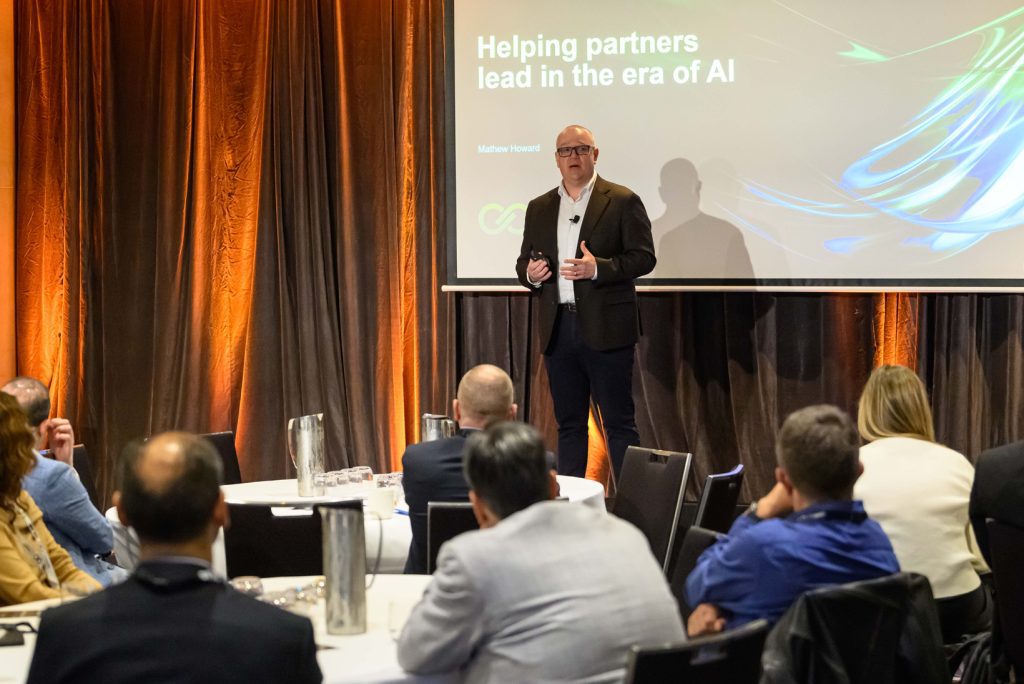
Translated into personas, Howard outlined that successful AI partners typically fall into one of three categories:
“The models are different but there’s a common thread across all three – they’ve moved beyond the transaction,” Howard explained. “These partners are building capability around decision-making, governance and helping customers realise value.”
Many partners have historically earned income through software resale and while the “money is still there” the market has moved on from simply rewarding the transaction.
The buckets of money have changed and partners solely focused on this area are now “earning a fraction” of what they used to as vendor incentives shift towards implementation and managed services. Additional revenue is available but the ecosystem must first understand the new rules of engagement.
“Partners are conceptually aware that they need to change but the mechanisms keep changing, and it’s not easy,” Howard identified.
“Enablement is the biggest issue. Many partners are simply not aware because vendor programs can be very complex and change every couple of years. The environment is incredibly fluid now.”
This is where the value of modern distribution plays out – working with partners around specialisation and accreditation to unlock rebates that build profitability back into the business.
“Those rebates are incredibly valuable,” Howard advised. “They are essentially buckets of money sitting there waiting to be claimed and if partners do not know how to access them, they’re leaving that revenue behind.
“There are multiple forces driving this shift. Customer demands are changing. Vendor expectations are changing. Margin structures are changing – they still exist but they have just moved.”
For growth-hungry partners seeking expansion into new market segments or solution areas, Howard outlined three choices:
“Partner-first is the easiest way to understand how a new capability might fit within a partner business,” Howard explained.
“Partners can understand how engagements are delivered, where the follow-up opportunities are and how to transition project work into recurring managed services. We can take partners on that journey.”
One example is in the AI space through Microsoft Fabric. SMBs want to accelerate AI adoption but don’t know where to start.
“The best starting point is often addressing their data environment,” Howard continued.
“We have the capability to deliver those assessments and services, and Microsoft has programs that fund some of the initial assessments within customer environments. What we typically find is that these engagements open up multiple conversations – security, migration, future AI work and more.
“The partner can then decide which opportunities they want to own directly and which they want us to support.”
The core advantage of collaboration is that partners can learn while building a practice, allowing the transition from point A to point B to not only be faster but carry less risk.
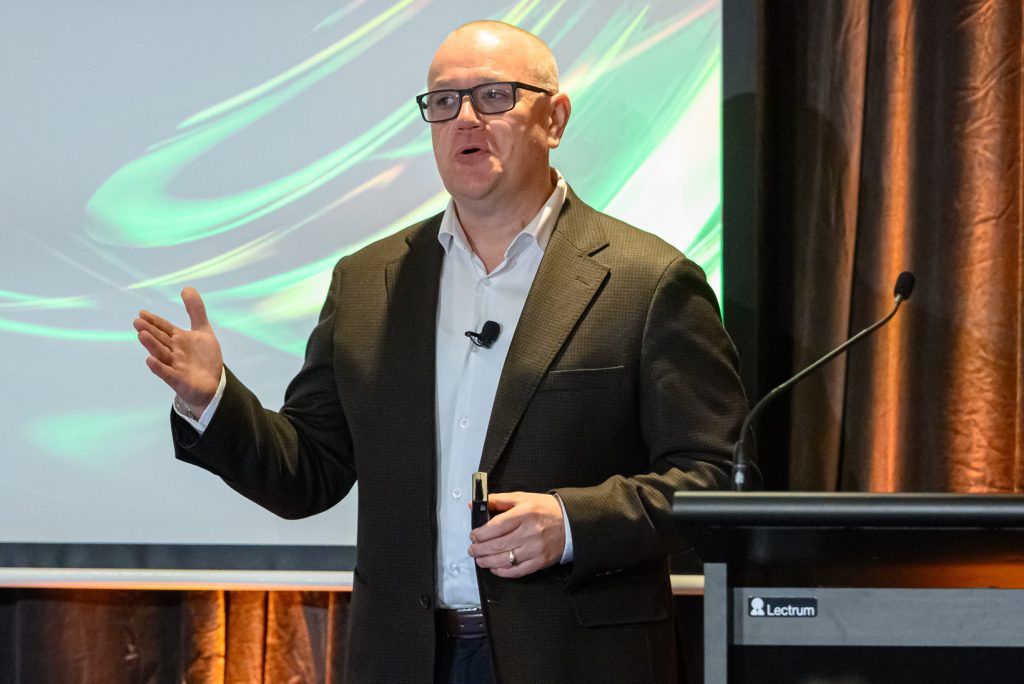
According to Moxie Research, 81% of channel partners in Australia have reported a ‘significant increase’ in the cost of salaries and labour. A comparative look at average technical salaries from 2020 to 2025 – spanning networking, cloud and security – highlights a double-digit increase almost across the board in Sydney, Melbourne and Brisbane.
“Some partners still face capacity issues even after building capability internally, so they continue bringing us into larger projects for specific components,” Howard said.
“We work extremely well within that partnership model. Once the practice is mature, we can either step back entirely and let partners run it themselves, or continue supporting where needed.”
For many partners in Australia, partnership is no longer optional – it’s a viable growth strategy as trusted ecosystems take centre stage in delivering new solutions in response to new customer demands.
“Most partners don’t have large technology teams to lean on internally,” Howard added.
“But it’s significantly easier to grow within an existing customer than to win a brand new one. The more areas that a partner can help a customer with, the better – that doesn’t necessarily need to become core to what they do.
“Because if they say no, it opens the door for somebody else to come in. Once that competitor gets in, partners then have a genuine competitor that can land, expand and build experience within that customer.”
The channel business of Crayon in Australia represents the largest channel business in the world for the distributor – primarily focused on SMB with approximately 50,000 customers across the country, scaling down to 10 to 20 seats.
Now SoftwareOne – following its multi-billion-dollar acquisition which closed in July 2025 – the combined business is a Swiss-army knife in terms of services and solutions following a spate of local buyouts.
Before Crayon acquired rhipe for $408 million in 2021, the Australian-born distributor had purchased Parallo, a managed services for software companies and emt Distribution, which specialised in cyber security.
“Our organisation has gone through significant change but what has never changed is our desire to do distribution differently,” Howard stated. “We never wanted to look like a traditional distributor and instead, wanted to add meaningful value to partners operating under margin pressure in an increasingly complex environment.”
SoftwareOne is predominantly a professional services and managed services business in the local market with approximately 70% of revenue services-focused and traditionally aligned to enterprise customers.
“There is an enormous amount of intellectual property and experience within that organisation,” Howard added.
“One of the great things for our partners is that they will never be guinea pigs when we roll out new services. We have already delivered these services repeatedly – often into some of the largest enterprise organisations in the world – before introducing them into the channel.
“Bringing these two organisations together gives us greater capability than any other partner in the market, particularly on the services side, and we are looking at how we scale that capability through the channel.
“I also want to be very clear on one point. The SoftwareOne business is not here to compete with our channel business. It is here to complement our channel business.”
For Howard, the “combination of strengths” allows the business to deliver broader solution coverage for cloud, data and cyber security, underpinned by stronger regional service delivery across Asia Pacific. Plus, unified partner enablement programs and platforms as well as global scale with leading hyperscaler partnerships.
“But the reality is that, from a distribution perspective, we as an industry haven’t evolved fast enough,” Howard acknowledged.
“Most partners view their distributor as interchangeable rather than as strategic and that’s a problem, that’s a significant gap. If you look at traditional distribution, most distributors continue to focus on logistics, pricing and fulfilment but that has now become table stakes.”
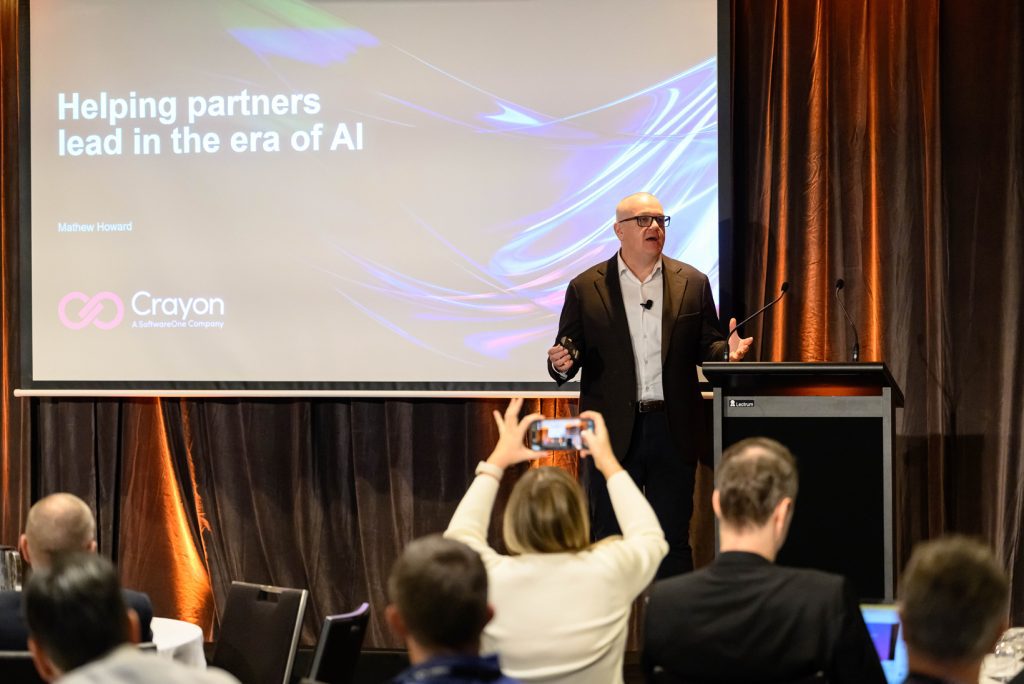
Instead, Howard said partners require support in rebuilding margin.
Such sentiment is consistent with Moxie Research data, with business operating costs increasing for 88% of channel partners in Australia.
Consequently, that means 40% of channel partners remain deep in ‘survival mode’ – still struggling to overcome lingering economic conditions, notably the cost of doing business crisis that is particularly plaguing homegrown players. Every aspect of running a partner business has become more expensive.
In response, Howard shared five key questions that modern distributors should be asking – and answering – to mitigate against such challenges:
“If partners don’t have those things, it slows their business down, creates margin pressure and prevents them from moving at the pace required in the market,” Howard added. “On the flip side, it creates an opportunity for a distributor that sees distribution differently.”
The concept of ‘Distribution, Done Differently’ is anchored on the belief that partner value can best be measured through enablement, expertise and services, supported by strong relationships, communities and platforms.
“We were one of the first distributors to invest heavily in technical teams and pre-sales capabilities and today, we have the largest security pre-sales team in the market,” Howard added.
“Whether it’s pre-sales expertise, technical capability, professional services, marketing support or helping bring new leads into your business – we want partners to be able to lean on our investments while they assess the addressable market and build capability internally.”
This commitment extends into services capabilities with additional internal expertise built around AI, optimisation, security and cloud managed services.
“We’re creating opportunities for partners to grow their business and potentially expand into new areas,” Howard continued.
“This helps partners create much stickier relationships with customers because they don’t need to say ‘no’ as often and allow competitors into accounts. They may instead say ‘that’s not part of what we do’ but they can bring in a trusted partner with those capabilities rather than allowing a competitor to take that position.”
Cloud-iQ is one example, a platform that helps businesses buy, manage and optimise cloud services from across Microsoft, Amazon Web Services (AWS), Google Cloud and Adobe environments.
“At its core, Cloud IQ helps partners run their cloud business more effectively,” Howard said.
“It connects procurement, billing, reporting and customer management into one platform but the most important piece is how the platform helps partners grow their business.
“Through customer usage insights, partners can identify optimisation opportunities and more importantly, use those savings to drive innovation with customers. Plus, identify growth and upsell opportunities through the platform.”
Such sizeable investment in partner platforms and services will not reduce focus on personalised engagement however, given the importance of “people before product” in the local channel.
“I still want partners to have an account manager at the end of the phone,” Howard added. “I still want partners to have someone who can come and meet with them, understand their business, understand their growth opportunities and work with them in partnership to achieve those outcomes.”
In looking ahead, Howard summarised that the next era of the channel – in the next 10 years – will not be defined by selling more technology.
The “real shift” is happening in where decisions are made and where value is created.
“The partners that will win are the ones who can help customers make better decisions, understand where to invest and navigate complexity with confidence,” Howard said. “The winners will be the partners who can help customers turn innovation into real business outcomes.”
In that context, Howard closed with a simple message:
“Because the partners that get this right are the ones that will define the market for the next decade,” Howard concluded.
Inform your opinion with executive guidance, in-depth analysis and business commentary.

